Black History Month Spotlight – Healthcare Pioneers

UALR Trail HealthcareThe new Arkansas Civil Rights History Audio Tour was launched in November 2015. Produced by the City of Little Rock and the University of Arkansas at Little Rock allows the many places and stories of the City’s Civil Rights history to come to life an interactive tour.  This month, during Black History Month, the Culture Vulture looks at some of the stops on this tour which focus on African American history.

The Arkansas Civil Rights Heritage Trail was launched in 2011 by the UALR’s Institute on Race and Ethnicity.  Each year, a theme is chosen to honor a particular group of people who were active in Arkansas’s civil rights movement.  Year by year, the trail grows.  The plan is that over time the trail will stretch from the current starting point at the Old State House, down West Markham Street and President Clinton Avenue to the Clinton Presidential Library and Museum, and then back up the other side of the street to opposite the Old State House.

Healthcare

Healthcare has long been a civil rights issue. In the age of segregation, many blacks were denied healthcare by white physicians and hospitals under Jim Crow laws. African American physicians-such as Cleon A. Flowers, Sr., and John Marshall Robinson-played important roles in serving the black community. Nurse Lena Lowe Jordan founded the Lena Jordan Hospital in Little Rock in the 1930s. Edith Mae Irby desegregated the University of Arkansas Medical School in Little Rock in 1948. Dr. Irby paved the way for other black students and professors at the school. Thomas A. Bruce promoted access to quality healthcare to the underserved. Henry W. Foster became dean of Meharry Medical College in Tennessee. Billy Ray Thomas and Phillip Leon Rayford worked to increase underrepresented groups in the medical profession. Samuel Lee Kountz pioneered organ transplants. Joycelyn Elders, a UAMS graduate and director of the Arkansas Department of Health, served as the surgeon general of the United States during the presidency of Bill Clinton.

The app, funded by a generous grant from the Arkansas Humanities Council, was a collaboration among UALR’s Institute on Race and Ethnicity, the City of Little Rock, the Mayor’s Tourism Commission, and KUAR, UALR’s public radio station, with assistance from the Little Rock Convention and Visitors Bureau.

Little Rock Look Back: NINE FROM LITTLE ROCK wins Documentary Oscar

AMPAS Nine from LROn April 5, 1965, the Academy Award for Best Documentary, Short Subject went to the film “Nine from Little Rock.”

Narrated by Jefferson Thomas, Charles Guggenheim’s documentary looks at the nine African-American students who enrolled in Little Rock Central High School in 1957. Thomas, one of the students reflects on the state of race relations in the seven years that had elapsed (up to 1964).  The film also focuses on Ernest Green, Elizabeth Eckford and Thelma Mothershed.

Guggenheim both directed and co-wrote the film. The latter credit was shared with Shelby Storck, who also produced the film.   The film had been commissioned by George Stevens, Jr., for the United State Information Agency.

The Oscar that night was Guggenheim’s first of four.  His others would be for: 1968’s “Robert Kennedy Remembered” (Live Action Short), 1989’s “The Johnstown Flood” (Documentary Short) and 1994’s “A Time for Justice” (Documentary Short).  His son Davis Guggenheim won the Oscar for Documentary, Feature for An Inconvenient Truth.

The film was digitally restored by the Motion Picture Preservation Lab for the 50th anniversary of its win for Best Short Documentary at the 1965 Academy Awards.  It is available for purchase on DVD and can also be viewed in its entirety on YouTube

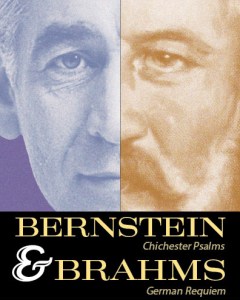
Bernstein and Brahms this weekend with the Arkansas Symphony Orchestra

ASO B&BThe Arkansas Symphony Orchestra, Philip Mann, Music Director and Conductor, presents the fifth concert of the 2015-2016 Masterworks series: Bernstein & Brahms, 7:30 p.m. Saturday, February 27 and 3:00 p.m. Sunday, February 28 at the Maumelle Performing Arts Center at Maumelle High School. Eight collegiate choruses join the ASO to perform Brahms’s German Requiem and Bernstein’s Chichester Psalms. Bernstein & Brahms is sponsored by CHI St. Vincent. The Masterworks Series is sponsored by the Stella Boyle Smith Trust.

Tickets are $19, $35, $49, and $58; active duty military and student tickets are $10 and can be purchased online at www.ArkansasSymphony.org; at the Maumelle Performing Arts Center box office beginning 90 minutes prior to a concert; or by phone at 501-666-1761, ext. 100. All Arkansas students grades K-12 are admitted to Sunday’s matinee free of charge with the purchase of an adult ticket using the Entergy Kids’ Ticket, downloadable at www.ArkansasSymphony.org/freekids

Choral Ensembles
The ASO will collaborate with choirs from around the state of Arkansas for Bernstein & Brahms. The University of Arkansas at Pine Bluff Vesper Choir is featured on Bernstein’s Chichester Psalms, and Brahms’s German Requiem features choirs from Arkansas State University, Harding University,  Lyon College, Southern Arkansas University at Magnolia, University of Arkansas at Little Rock, University of Central Arkansas, and the Arkansas Chamber Singers.

Concert Conversations
All concert ticket holders are invited to a pre-concert lecture an hour before each Masterworks concert. These talks feature insights from the Maestro and guest artists, and feature musical examples to enrich the concert experience.

Shuttle service is available
The ASO provides shuttle service from Second Presbyterian Church in Pleasant Valley to the Maumelle Performing Arts Center and back after the concert. For more information and to purchase fare at $10 per rider per concert, please visit https://www.arkansassymphony.org/concerts-tickets/shuttle-service


Program
Bernstein            Chichester Psalms
with the University of Arkansas at Pine Bluff Vesper Choir

Brahms                 Ein Deutsches Requiem
with mass collegiate choir and the Arkansas Chamber Singers

Program notes
Bernstein composed Chichester Psalms during a sabbatical from conducting in 1965. In his own words, “I wrote a lot of music, twelve-tone music and avant garde music of various kinds, and a lot of it was very good, and I threw it all away. And what I came out with at the end of the year was a piece called Chichester Psalms, which is simple and tonal and tuneful and as pure B-flat as any piece you can think of.” Ein Deutsches Requiem was not composed for the people of Germany, but in the German language and was intended to be addressed to all mankind. Breaking from the historic requiem form, in which there is a strong focus on Judgment and the seeking of forgiveness, Brahms instead concentrates on offering consolation to the living who are mourning their departed loved ones.

Black History Month Spotlight – Downtown Desegregation

Ozell Sutton, one of the honorees

Ozell Sutton, one of the honorees

The new Arkansas Civil Rights History Audio Tour was launched in November 2015. Produced by the City of Little Rock and the University of Arkansas at Little Rock allows the many places and stories of the City’s Civil Rights history to come to life an interactive tour.  This month, during Black History Month, the Culture Vulture looks at some of the stops on this tour which focus on African American history.

The Arkansas Civil Rights Heritage Trail was launched in 2011 by the UALR’s Institute on Race and Ethnicity.  Each year, a theme is chosen to honor a particular group of people who were active in Arkansas’s civil rights movement.  Year by year, the trail grows.  The plan is that over time the trail will stretch from the current starting point at the Old State House, down West Markham Street and President Clinton Avenue to the Clinton Presidential Library and Museum, and then back up the other side of the street to opposite the Old State House.

Downtown Desegregation

In January 1963, Little Rock set in motion a process that ended segregation in its downtown businesses.  Following student sit-ins coordinated by the Student Nonviolent Coordinating Committee and Philander Smith College students, in November 1962 white businessmen and merchants formed a secret Downtown Negotiating Committee to set out a timetable for change in consultation with black community representatives.  On January 1, 1963, lunch counters in downtown Little Rock began to serve black customers on an equal basis.  Downtown hotels desegregated their facilities.  Drinking fountains and restrooms had their “White” and “Colored” signs removed.  In June, movie theaters desegregated.  In October, city restaurants desegregated.  That same year, Robinson Auditorium, the Arkansas Arts Center, and city parks desegregated.  In April 1963, in Jet magazine, James Forman, executive secretary of the Student Nonviolent Coordinating Committee, hailed the city as “just about the most integrated…in the South.”

The app, funded by a generous grant from the Arkansas Humanities Council, was a collaboration among UALR’s Institute on Race and Ethnicity, the City of Little Rock, the Mayor’s Tourism Commission, and KUAR, UALR’s public radio station, with assistance from the Little Rock Convention and Visitors Bureau.

Tonight at Mosaic Templars – Spoken Word with Foreign Tongues

mtcc ftFan favorite, Foreign Tongues Poetry Troupe will be performing at Mosaic Templars Cultural Center tonight (2/27) at 6pm.

Foreign Tongues is an artistic organization that travels, conducts workshops, and performs poetry in Arkansas and throughout the United States. The group is composed of authors, educators, entertainers, actors, visual artist, playwrights, award-winning slam poets, hip-hop artist, and entrepreneurs. The group is a diverse collective linked by a common thread, which is their love of poetry.

Admission is free, but seating is limited.

For more information, contact Tameka Lee at 501.683.3620 or tameka@arkansasheritage.org

Clinton School Team Continues Work on the Delta Visual Arts Show

Clinton-School-of-Public-Service-LogoA University of Arkansas Clinton School of Public Service student team-based project is continuing work on the Delta Visual Arts Show this weekend.

Started eight years ago by Clinton School students, the Newport Downtown Revitalization and Improvement Volunteer Effort (D.R.I.V.E.) and the Newport Economic Development Commission (NEDC), the Delta Visual Arts Show featured 13 local artists in its first year.

Now in its eighth year, The Delta Visual Arts Show will take place this Saturday, February 27th, from 10:00 a.m. to 6:00 p.m. in downtown Newport, Ark., and will feature more than 180 artists from around the Delta.

Over the past eight years, multiple teams and projects have continued and expanded work in Newport and the surrounding area, including the creation of an alumni database, the study of Newport’s Blue Bridge, and the coordination of the first Delta Visual Arts Show.

This year, a Clinton School team will be helping with logistics during the Delta Visual Arts Show and will develop a fundraising plan to create a visual arts center in downtown Newport, continuing the collaboration started by the first team in 2008.

Students participating this year are Stacy Cox (Little Rock, Ark.), Zachary Glembin (Milwaukee, Wis.), Beau Papan (Little Rock, Ark.), and Keith Preciados (Miami, Fla.).

For more information on the show, visit www.newportaredc.org or call (870) 523-1009.

Black History Month Spotlight – Freedom Riders and Sit-In Demonstrators

UALR Trail Sit inThe new Arkansas Civil Rights History Audio Tour was launched in November 2015. Produced by the City of Little Rock and the University of Arkansas at Little Rock allows the many places and stories of the City’s Civil Rights history to come to life an interactive tour.  This month, during Black History Month, the Culture Vulture looks at some of the stops on this tour which focus on African American history.

The Arkansas Civil Rights Heritage Trail was launched in 2011 by the UALR’s Institute on Race and Ethnicity.  Each year, a theme is chosen to honor a particular group of people who were active in Arkansas’s civil rights movement.  Year by year, the trail grows.  The plan is that over time the trail will stretch from the current starting point at the Old State House, down West Markham Street and President Clinton Avenue to the Clinton Presidential Library and Museum, and then back up the other side of the street to opposite the Old State House.

Freedom Riders and Sit-In Demonstrators

In 1961, the Freedom Rides spread across the South to place pressure on local communities and the federal government to implement court-ordered desegregation of bus terminal facilities.  Little Rock’s first Freedom Riders, a contingent of five members of the St. Louis branch of the Congress of Racial Equality, arrived on the evening of July 10 at the Mid-West Trailways bus station at Markham and Louisiana.  A plaque there marks the site and tells the story of the Little Rock Freedom Rides.  The pressure exerted by the Freedom Rides, together with an Interstate Commerce Commission order to desegregate, led to the integration of all Little Rock’s bus terminals on November 1, 1961.  Five markers also commemorate Philander Smith College students involved in sit-in demonstrations between 1960 and 1962, as well as members of the Arkansas Student Non-violent Coordinating Committee.  SNCC was active in Arkansas from 1962 to 1967.

The app, funded by a generous grant from the Arkansas Humanities Council, was a collaboration among UALR’s Institute on Race and Ethnicity, the City of Little Rock, the Mayor’s Tourism Commission, and KUAR, UALR’s public radio station, with assistance from the Little Rock Convention and Visitors Bureau.