Little Rock Look Back: Adolphine Fletcher Terry

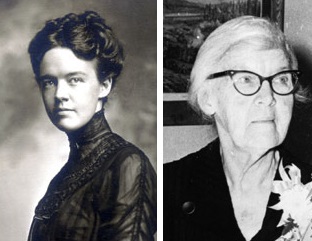
Photos from the collection of the Butler Center

Photos from the collection of the Butler Center

Adolphine Fletcher Terry was born on November 3, 1882 to former Little Rock Mayor John Gould Fletcher and his wife Adolphine Krause Fletcher.

Raised in Little Rock, in 1889 she moved into the Albert Pike House on East 7th Street, when her aunt transferred the title to her father. That house would be her primary residence the rest of her life.  Her sister Mary Fletcher Drennan never lived in Arkansas as an adult after marriage. Her brother John Gould Fletcher spent much of his adulthood in Europe before returning to Little Rock and establishing his own house, Johnswood.

At age 15, Adolphine attended Vassar. She later credited that experience as broadening her views on many issues.  After graduating at age 19, she returned to Little Rock.  Her parents both died prior to her 1910 wedding to David D. Terry, which took place at what was then known as the Pike-Fletcher House (and today is known as the Pike-Fletcher-Terry House).

She is perhaps best known today for establishing the Women’s Emergency Committee in 1958 and for her subsequent deeding of the family house to the City for use by the Arkansas Arts Center.  But her entire life was based on civic engagement.

She was instrumental in establishing the first juvenile court system in Arkansas and helped form the first school improvement association in the state. She was long an advocate for libraries, serving 40 years on the Little Rock public library board.  Through her leadership, the library opened its doors to African Americans in the early 1950s. Today a branch of the Central Arkansas Library System (the successor the Little Rock public library) is named after her.  Another branch is named after her Pulitzer Prize winning brother.

Adolphine formed the Little Rock chapter of the American Association of University Women, the Pulaski County tuberculosis association and the Community Chest.

In 1958, when the Little Rock public high schools were closed instead of allowing them to be desegregated again, she called Harry Ashmore the editor of the Gazette and exclaimed, “the men have failed us…it’s time to call out the women.”  With this, she formed the Women’s Emergency Committee to Open Our Schools. This group played a major role in getting the four high schools open the following year.

From 1933 to 1942, David Terry served in the U.S. Congress. During that time, Adolphine alternated her time between Washington DC and Little Rock. But she spent much time in Little Rock raising her five children.

After her husband’s death in 1963, she continued to remain active in civic affairs. In the 1960’s, she and her sister deeded the Pike-Fletcher-Terry House to the City of Little Rock for use by the Arkansas Arts Center upon both their deaths.  Following Adolphine Fletcher Terry’s death in 1976, Mary turned over the title to the City.

Adolphine Fletcher Terry is buried in Mount Holly Cemetery alongside her husband. Three of her children are also buried in that plot.  Her parents and brother are buried in a nearby plot.

Her son William Terry and his wife Betty continue to be active in Little Rock. Their daughters and their families also carry on Adolphine Fletcher Terry’s commitment to making Little Rock better.

Little Rock Look Back: Mayor W. E. Lenon, father of LR City Hall

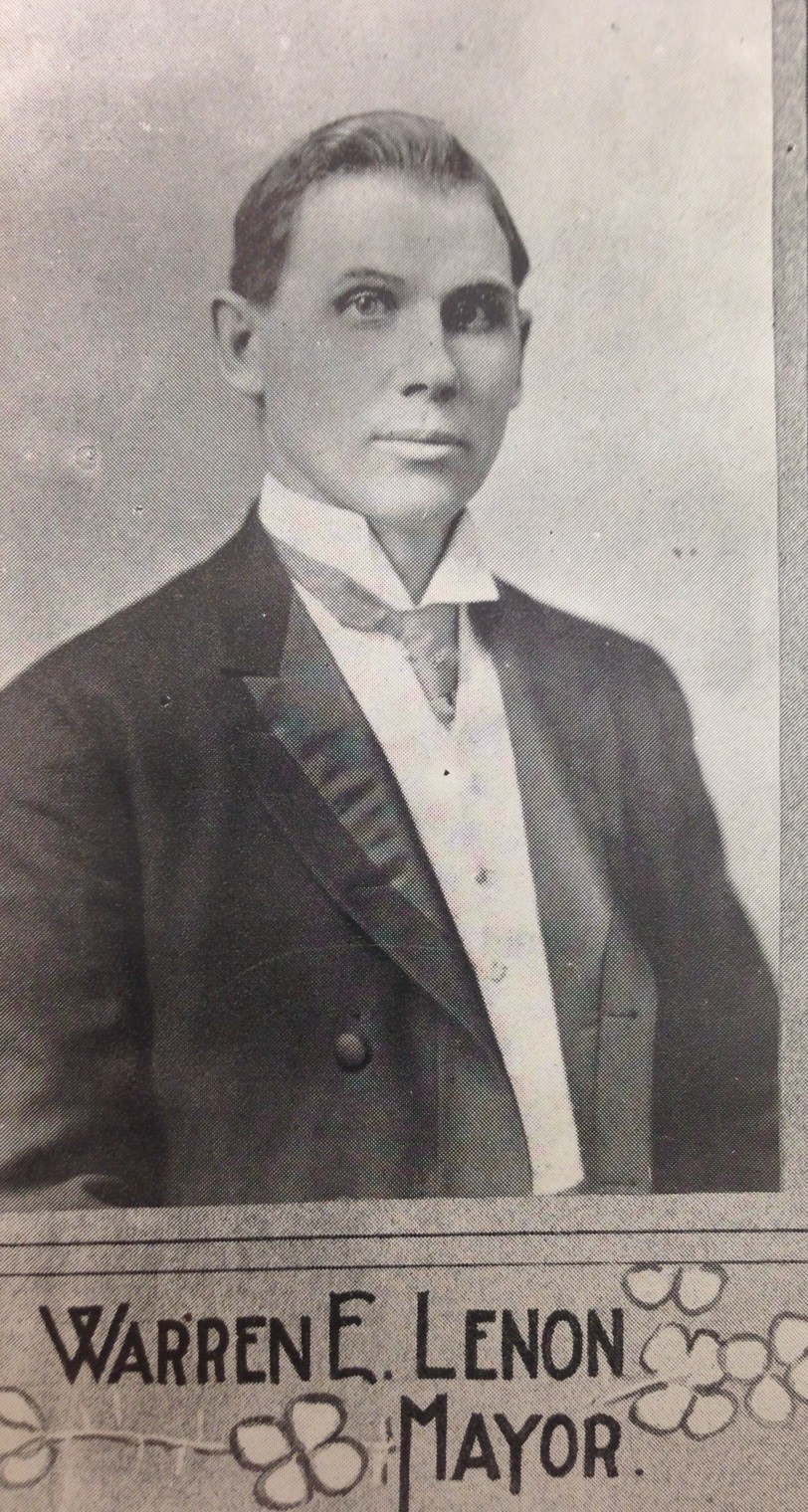
OMayor Lenonn October 8, 1867 in Panora, Iowa, future Little Rock Mayor Warren E. Lenon was born.  He was one of eleven children of John D. and Margaret M. Long Lenon.

Lenon came to Little Rock in 1888 after finishing his schooling in Iowa.  He helped set up an abstract company shortly after his arrival.  In 1902 he organized the Peoples Savings Bank.  Among his other business interests were the City Realty Company, the Factory Land Company, the Mountain Park Land Company, and the Pulaski Heights Land Company.

From 1895 to 1903, he was a Little Rock alderman, and in 1903, he was elected Mayor of the city. A progressive Mayor, he championed the construction of a new City Hall which opened in 1908.  At the first meeting of the City Council in that building, Mayor Lenon tendered his resignation.  His duties in his various business interests were taking up too much of his time.

Mayor Lenon had been a champion for the establishment of a municipal auditorium. He had wanted to include one in the new City Hall complex. But a court deemed it not permissible under Arkansas finance laws at the time.  He also worked to help establish the first Carnegie Library in Little Rock which opened in 1912.

Mayor Lenon continued to serve in a variety of public capacities after leaving office.  In the 1920s, he briefly chaired a public facilities board for an auditorium district. It appeared he would see his dream fulfilled of a municipal auditorium.  Unfortunately the Arkansas Supreme Court declared the enabling legislation invalid.

In 1889, he married Clara M. Mercer.  The couple had three children, two of whom survived him.  A son W. E. Lenon Jr., and a daughter Vivian Mercer Lenon Brewer.  Together with Adolphine Fletcher Terry (also a daughter of a LR Mayor), Mrs. Brewer was a leader of the Women’s Emergency Committee.

Mayor Lenon died June 25, 1946 and is buried at Roselawn Cemetery.  Lenon Drive just off University Avenue is named after Mayor Lenon.

Creative Class of 2015: Eliza Borné

Eliza BorneEliza Borné was named Interim Editor of Oxford American magazine earlier this year.  She had been the Managing Editor of the magazine.  Currently, she is at work on the annual OA music issue, which this year will feature Georgia.

A Little Rock native and graduate of Central High School, she wrote Children’s Theatre reviews for the Arkansas Times while in high school.  While a student at Wellesley College, she interned for OA.  After graduation, she was an associate editor at BookPage.  In February 2013, she joined the OA as an editor.  When he was in Little Rock earlier this year, author Harrison Scott Key praised Borné’s skills as an editor.  At that appearance, he also lauded her skills as an interviewer. She has also used these skills serving as a moderator for the Arkansas Literary Festival.


While her talents as a writer and editor have been honed through hard work, she is also carrying on a family tradition in promoting Little Rock’s cultural life. A great-grandmother, Adolphine Fletcher Terry, was a member of the Little Rock Public Library Board (a forerunner of CALS) for decades.  Much could be written about what various ancestors have done to help Little Rock, but Borné is not one to rely on the family name as she forges her own career.  Instead, she uses her skills and love of Little Rock to promote good writing, good music and good living.

Little Rock Look Back: Congressman David D. Terry

david_terry_fOn January 31, 1881, future U.S. Congressman David Dickson Terry was born in Little Rock.  He was the son of William Leake Terry, who would serve in Congress from 1891 until 1901.  At the time David was born, his father was Little Rock City Attorney.  His mother was Mollie C. Dickson Terry. His parents also had two other sons, and after his mother’s death and his father’s remarriage, David had a half-sister.  He attended school in Virginia, and studied law in Little Rock and Chicago.

In 1910, he married Adolphine Fletcher, daughter of a former Little Rock mayor.  They had four children: David, Sarah, William and Mary. They later adopted a fifth child, Joseph.  The family lived in the Albert Pike Mansion, now known today as the Pike-Fletcher-Terry House.

In 1918, at the age of 37, David enlisted for service in World War I.  During the war, he would remain stateside.  Due to some family health issues, after the war he split his time between Little Rock and Massachusetts.  By the late 1920s, he had returned to Little Rock pretty much full time.

Continuing with his family’s commitment to public service, he served as president of the Little Rock Boys Club beginning in 1928. He oversaw a fundraising drive which raised $150,000 to replace a building destroyed by fire in 1930.  From 1929 until 1933, he served on the Little Rock School Board.

In 1933, David began service in the Arkansas House of Representatives.  The next year, he was elected to Congress to fill a vacancy in a hotly-contested election.  After the primary, he had barely made it into a runoff with Brooks Hays. But he ended up defeating Hays by 625 votes. Hays and his supporters protested due to election irregularities in Yell County, but David Terry was declared the winner.

Though he often was fiscally very conservative, he was also a strong advocate for the New Deal. His first bill in congress was to provide relief for financially strapped Arkansas schools.  In 1942, he decided to run for the Senate, but lost to John L. McClellan.  He ran unsuccessfully for Governor in 1944.  The winner that year, Ben Laney, appointed David Terry to lead the Flood Control, Water and Soil Conservation office. He held this position until 1953.

In later years, he kept a lower profile, even as his wife continued to raise her profile.  Arguably more people in Little Rock today are familiar with Adolphine Fletcher Terry and her efforts to reopen the Little Rock public schools than with the Congressman.

He died on October 6, 1963 and is buried at Mount Holly Cemetery.

The Terry Lock and Dam and the Little Rock School District’s Terry Elementary are both named for the former Congressman.

Little Rock Look Back: John Gould Fletcher, LR 32nd Mayor

IMG_4006Future Little Rock Mayor John Gould Fletcher was born on this date in 1831. The son of Henry Lewis and Mary Lindsey Fletcher, he later served as a Captain in the Capital Guards during the Civil War. One of his fellow soldiers was Peter Hotze.

Following the war, he and Hotze began a general merchandise store in Little Rock. They were so successful that they eventually dropped the retail trade and dealt only in cotton. Peter Hotze had his office in New York, while Fletcher supervised company operations in Little Rock. In 1878 Fletcher married Miss Adolphine Krause, sister-in-law of Hotze.

John Gould Fletcher was elected Mayor of Little Rock from 1875 to 1881. He was the first Mayor under Arkansas’ new constitution which returned all executive powers to the office of the Mayor (they had been split under a reconstruction constitution). Following his service as Mayor, he served one term as Pulaski County Sheriff. Mayor Fletcher also later served as president of the German National Bank in Little Rock.

Mayor and Mrs. Fletcher had five children, three of whom lived into adulthood. Their son was future Pulitzer Prize winning poet John Gould Fletcher (neither father nor son used the Sr. or Jr. designation). Their two daughters who lived to adulthood were Adolphine Fletcher Terry (whose husband David served in Congress) and Mary Fletcher Drennan.

In 1889, Mayor Fletcher purchased the Pike House in downtown Little Rock. The structure later became known as the Pike-Fletcher-Terry House. It was from this house that Adolphine Fletcher Terry organized the Women’s Emergency Committee which worked to reopen the Little Rock public schools during the 1958-1959 school year.

In the 1960s, sisters Adolphine Fletcher Terry and Mary Fletcher Drennan deeded the house to the City of Little Rock for use by the Arkansas Arts Center. For several decades it served as home to the Arts Center’s contemporary craft collection. It now is used for special events and exhibitions.

Mayor Fletcher died in 1906 and is buried in Mount Holly Cemetery along with various members of his family. His grandson William Terry (son of Adolphine Fletcher Terry) and members of his family still reside in Little Rock.

Little Rock Look Back: Adolphine Fletcher Terry

Photos from the collection of the Butler Center

Photos from the collection of the Butler Center

Adolphine Fletcher Terry was born on November 3, 1882 to former Little Rock Mayor John Gould Fletcher and his wife Adolphine Krause Fletcher.

Raised in Little Rock, in 1889 she moved into the Albert Pike House on East 7th Street, when her aunt transferred the title to her father. That house would be her primary residence the rest of her life.  Her sister Mary Fletcher Drennan never lived in Arkansas as an adult after marriage. Her brother John Gould Fletcher spent much of his adulthood in Europe before returning to Little Rock and establishing his own house, Johnswood.

At age 15, Adolphine attended Vassar. She later credited that experience as broadening her views on many issues.  After graduating at age 19, she returned to Little Rock.  Her parents both died prior to her 1910 wedding to David D. Terry, which took place at what was then known as the Pike-Fletcher House (and today is known as the Pike-Fletcher-Terry House).

She is perhaps best known today for establishing the Women’s Emergency Committee in 1958 and for her subsequent deeding of the family house to the City for use by the Arkansas Arts Center.  But her entire life was based on civic engagement.

She was instrumental in establishing the first juvenile court system in Arkansas and helped form the first school improvement association in the state. She was long an advocate for libraries, serving 40 years on the Little Rock public library board.  Through her leadership, the library opened its doors to African Americans in the early 1950s. Today a branch of the Central Arkansas Library System (the successor the Little Rock public library) is named after her.  Another branch is named after her Pulitzer Prize winning brother.

Adolphine formed the Little Rock chapter of the American Association of University Women, the Pulaski County tuberculosis association and the Community Chest.

In 1958, when the Little Rock public high schools were closed instead of allowing them to be desegregated again, she called Harry Ashmore the editor of the Gazette and exclaimed, “the men have failed us…it’s time to call out the women.”  With this, she formed the Women’s Emergency Committee to Open Our Schools. This group played a major role in getting the four high schools open the following year.

From 1933 to 1942, David Terry served in the U.S. Congress. During that time, Adolphine alternated her time between Washington DC and Little Rock. But she spent much time in Little Rock raising her five children.

After her husband’s death in 1963, she continued to remain active in civic affairs. In the 1960’s, she and her sister deeded the Pike-Fletcher-Terry House to the City of Little Rock for use by the Arkansas Arts Center upon both their deaths.  Following Adolphine Fletcher Terry’s death in 1976, Mary turned over the title to the City.

Adolphine Fletcher Terry is buried in Mount Holly Cemetery alongside her husband. Three of her children are also buried in that plot.  Her parents and brother are buried in a nearby plot.

Her son William Terry and his wife Betty continue to be active in Little Rock. Their daughters and their families also carry on Adolphine Fletcher Terry’s commitment to making Little Rock better.


Terry Library Reopens Today; Open House set for Thursday, January 9

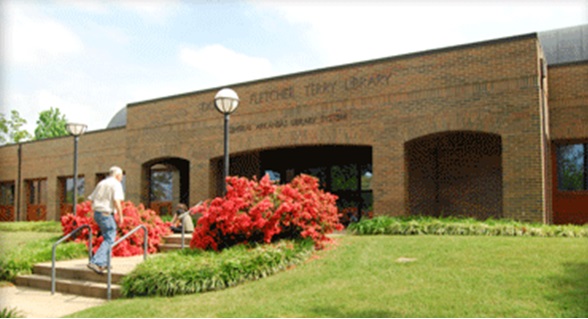
TerryLibTerry Library has a new look for 2014. The Central Arkansas Library System’s (CALS) Adolphine Fletcher Terry Library, 2015 Napa Valley, will reopen on Monday, January 6, after a makeover. New carpet and expanded lighting has been installed, the meeting room was updated, and a significant remodel created a larger audio-visual section and a new young adult area.

An Open House will be held on Thursday, January 9 from 3-6 p.m. Patrons visiting the library beginning on Monday, January 6, can register for a gift certificate to River Market Books & Gifts and a gift card to Wal-Mart, which will be given away at the Open House.

Rearrangement of existing shelves and additional furniture resulted in more comfortable reading areas and tables for working and studying, as well as a lighter and more spacious feeling to the existing building. The new children’s area features colorful new paint, carpet, and tile as well as furniture. A new Young Adult (YA) space provides for the increased number of books and DVDs geared to YA readers. An expanded audio visual area allows for more comfortable browsing of DVDs and books on CD.

Adam Clemons, Terry Library branch manager, said, “We have missed seeing our patrons, and the staff is looking forward to seeing their reactions to the wonderful new space. They loved the building as it was, but they will enjoy their library visits even more with more light and comfortable reading areas.”

In early 2013, CALS completed a satisfaction survey to determine the way library services were accessed and used by library patrons, and why non-users did not take advantage of library services. Modern libraries are community centers that provide a broad range of services beyond lending books. Input from the survey was used to design the remodel of the Terry Library. Items that are used most heavily are more prominently featured and sightlines within the main reading area have been opened up, allowing better access to the services used by patrons.

Funds from a 2012 capital improvement bond refinance were used to cover the $325,000 cost of the remodel and update.

The Terry Library was opened in 1990 to serve the west Little Rock community and was expanded to 19,030 square feet in 2001. The library was named for Adolphine Fletcher Terry, a Little Rock native, who was a library advocate and served as a trustee of the Little Rock Public Library for more than 40 years. She was a proponent of advancing Arkansas’s school system, forming the first school improvement association in the state. She was the daughter of Little Rock Mayor John Gould Fletcher, the wife of Congressman David D. Terry and also the sister of Pulitzer Prize-winning poet John Gould Fletcher.