June 4 Architeaser: Justice Building Rotunda

IMG_5749Today’s photo features the rotunda of the 1976 annex of the Justice Building on the State Capitol grounds. This section was dedicated in January 1976 and was designed by Noland Blass. The circular building houses the Supreme Court chambers. It is surrounded by a hallway which wraps around the chamber and is sheathed by panels of glass .  Notice how the glass reflects the surroundings but also allows for a clear view through to the sculpture on the interior wall.

The original portion of the Justice Building was dedicated on June 10, 1958.  Before the Court Room was built, the Supreme Court held court in a temporary (for nearly 18 years) court room in the south end of the Justice Building.

On a personal note, it was in this building in 1986 that I served as Chief Judge of the Court of Appeals at Arkansas Boys State.  I don’t remember the “case” we heard or how we ruled.  But I do remember getting to wear a black judge robe over by Boys State T-shirt.

May 30 Architeaser: National Old Line Building

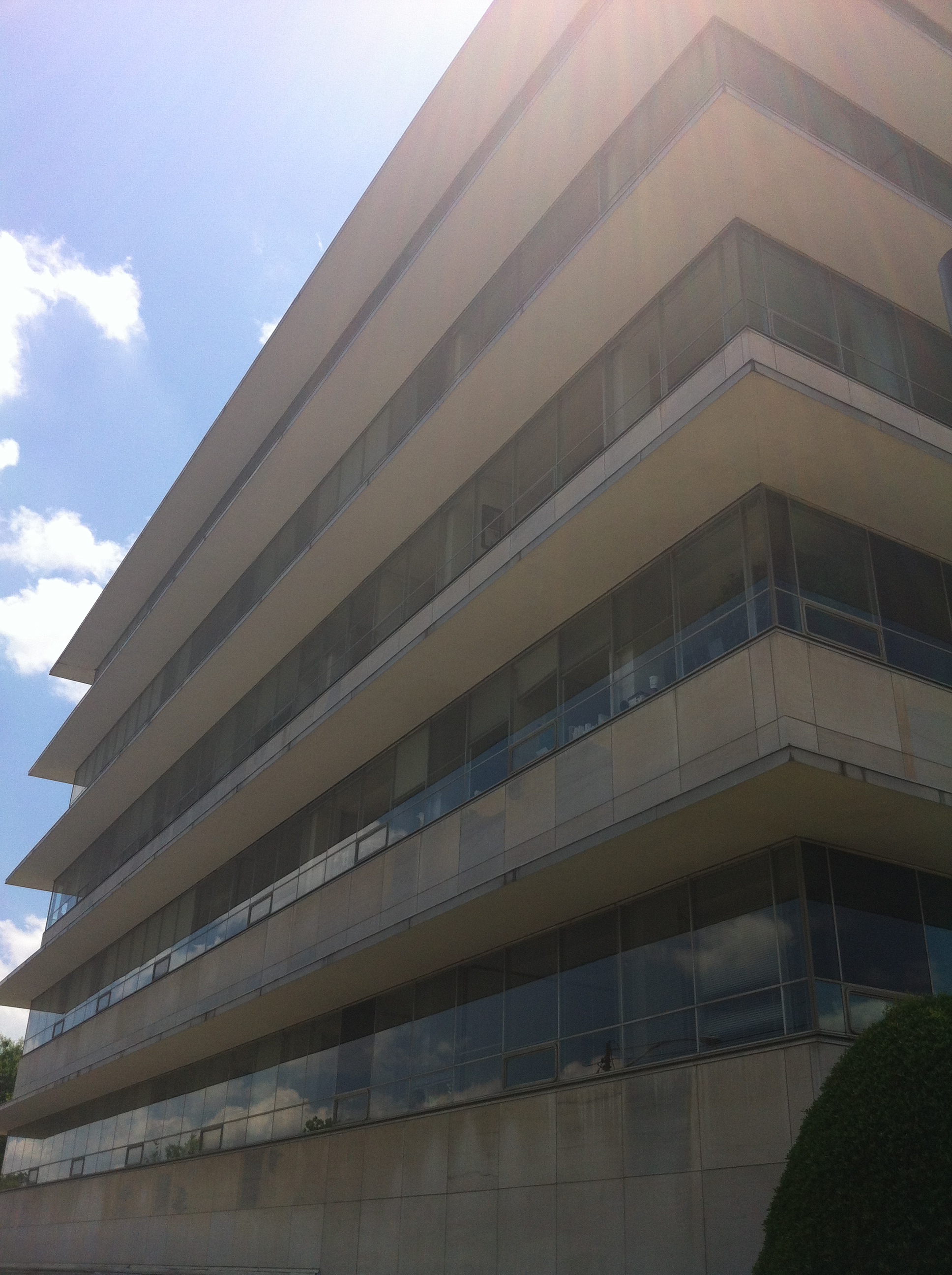
In 1955 the National Old Line Insurance Building was opened.  This seven story structure has been described as “perhaps the finest example of the International Style of architecture in Arkansas.”  Over the years, the building has switched ownership and changed names several times.

Over the years the building has generated controversy. Because of its height (7 stories) and architectural style, it has often been derided as detracting from the look of the adjacent Arkansas State Capitol Building.  There have been several suggestions that the building be torn down and replaced by a parking lot or a lower and more architecturally-sympathetic building.  Conversely, there have also been attempts to expand the building.  Neither school of thought has succeeded.

Today the building is known as the 501 Building (an homage to its address on Woodlane as well perhaps as a nod to the area code of Central Arkansas).  It houses many state offices.IMG_5660

May 28 Architeaser: AP&L Building

20130527-140356.jpg

The Arkansas Arts Center just opened an exhibit on Bauhaus architecture. Though Little Rock doesn’t have any strictly Bauhaus style buildings, there are a few buildings designed in the International Style which was related to Bauhaus.

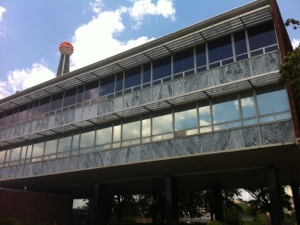
The Arkansas Power & Light Building on Louisiana and 9th Streets was announced in 1953 and completed in 1959. The design was by Fred Arnold of the Wittenberg Delony & Davidson firm. The reason for the delay was due to uncertainty regarding a rate case and labor contracts.

The four story building features a combination of glass, marble and brick. The second and third stories float over an open space as they extend eastward. In 2010, the marble panels on the second and third stories were replaced because of buckling. They were replaced with marble from the same quarry as the original marble.

The orb atop the building once bore the likeness of Reddy Kilowatt, a mascot used by AP&L as well as many other electric utilities in the post-World War II era. When AP&L changed its name to Entergy Arkansas (as part of the system-wide rebranding of various companies into Entergy), the orb was replaced with one which features a three-dimensional version of the Entergy logo.

May 21 Architeaser

IMG_5553

Today’s architeaser looks at the unique water spouts on the Museum Center building.  Built as a railroad terminal in 1927, it later served as the press building for the Arkansas Democrat. In 1998, a $12 million adaptive reuse was completed. The building is now home to restaurants, offices and the namesake Museum of Discovery.

One of the other occupants of the building is Riverfest.  The staff and volunteers are busy at this time getting ready for the three day festival this weekend.

May 16 Architeaser: Mosaic Templars Cultural Center

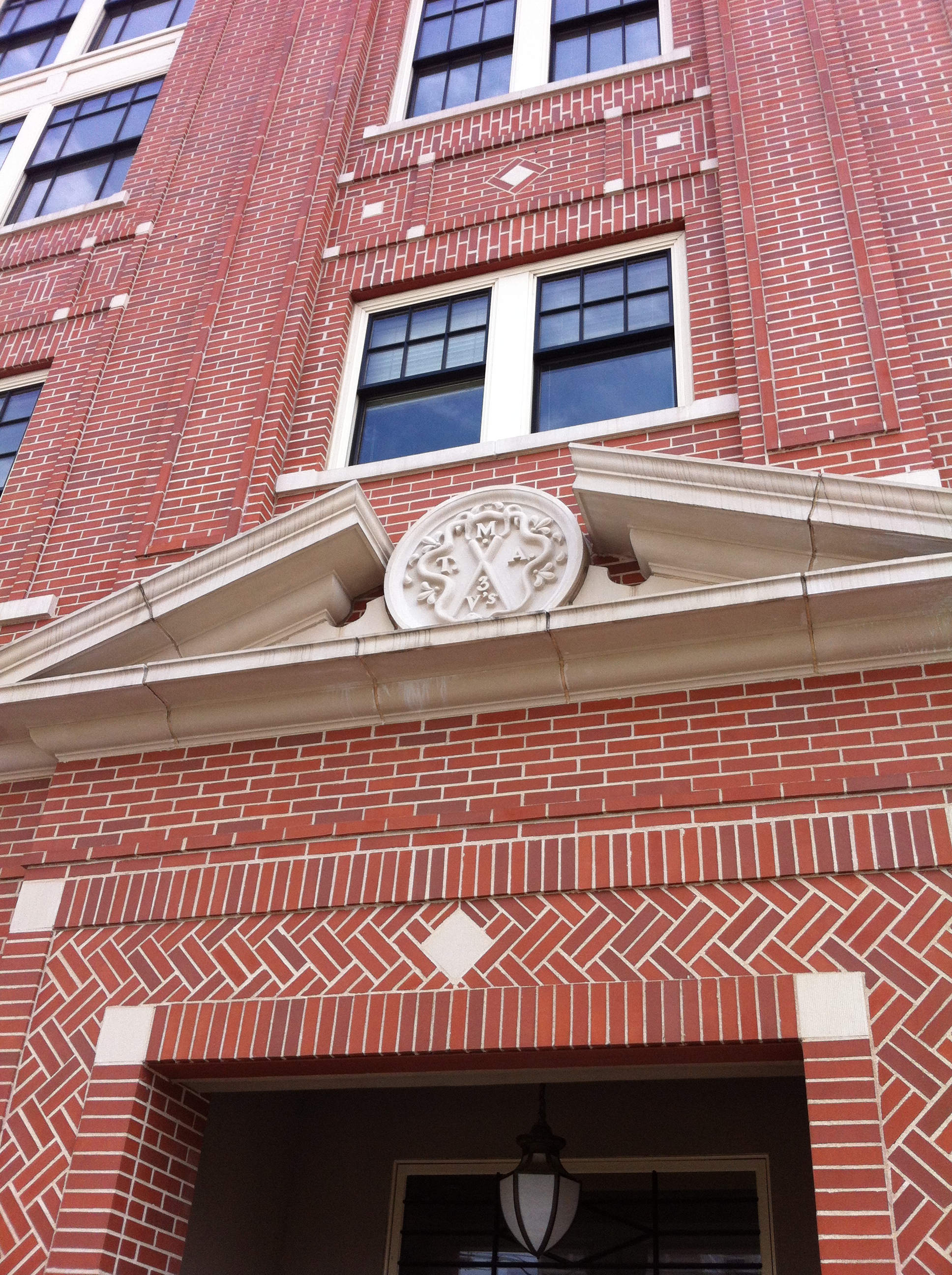
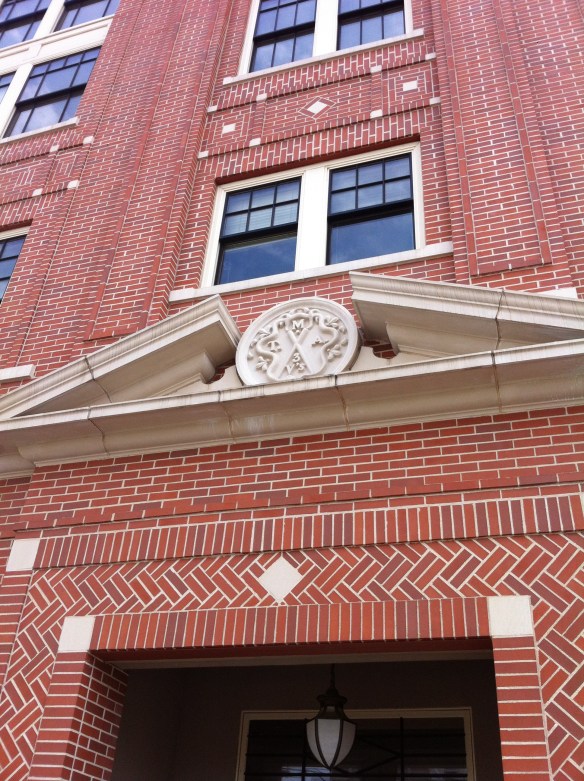
IMG_5421As part of Arkansas Heritage Month, today’s Architeaser focuses on the cornice over the entrance to the Mosaic Templars Cultural Center.

The Mosaic Templars Cultural Center began as a dream by community leaders who had grown up attending events at the Mosaic Templars of American National Grand Temple. This had been a centerpiece of African American life not just for Little Rock but for the mid-south.

In 1992, the building was slated for demolition so that a fast-food restaurant could be built on the lot. In late 1993, the City of Little Rock purchased the building for $110,000  to save it from demolition as organizers were raising funds for the restoration.  In 2001, the City transferred ownership to the State of Arkansas for the establishment of the Mosaic Templars Cultural Center.

Originally, the Center planned to restore the 1913 Mosaic Templars of America National Grand Temple, but the original building was destroyed by fire in March 2005. The new 35,000 square feet interior is a state-of-the-art museum complex with exhibits, classroom, staff offices, and an Auditorium that seats 400 people. The façade of the new structure is a facsimile of the 1913 building complete with the Annex building façade, which burned in 1984.

The cornice which is featured today is a copy of the original cornice.  The original cornice, as well as the cornerstone, are some of the few things which survived the 2005 fire.  The original cornice is on display.

A museum of the Department of Arkansas Heritage, the Mosaic Templars Cultural Center is dedicated to collecting, preserving, interpreting, and celebrating African American history, culture and community in Arkansas from 1870 to the present, and informs and educates the public about black achievements – especially in business, politics and the arts.

Through special events, education programs, ongoing research and exhibits such as the Arkansas Black Hall of Fame, the museum celebrates Arkansas’s African American heritage. Tours of the museum provide a detailed look at the history of African Americans in Little Rock and Arkansas.

 

May 14 Architeaser

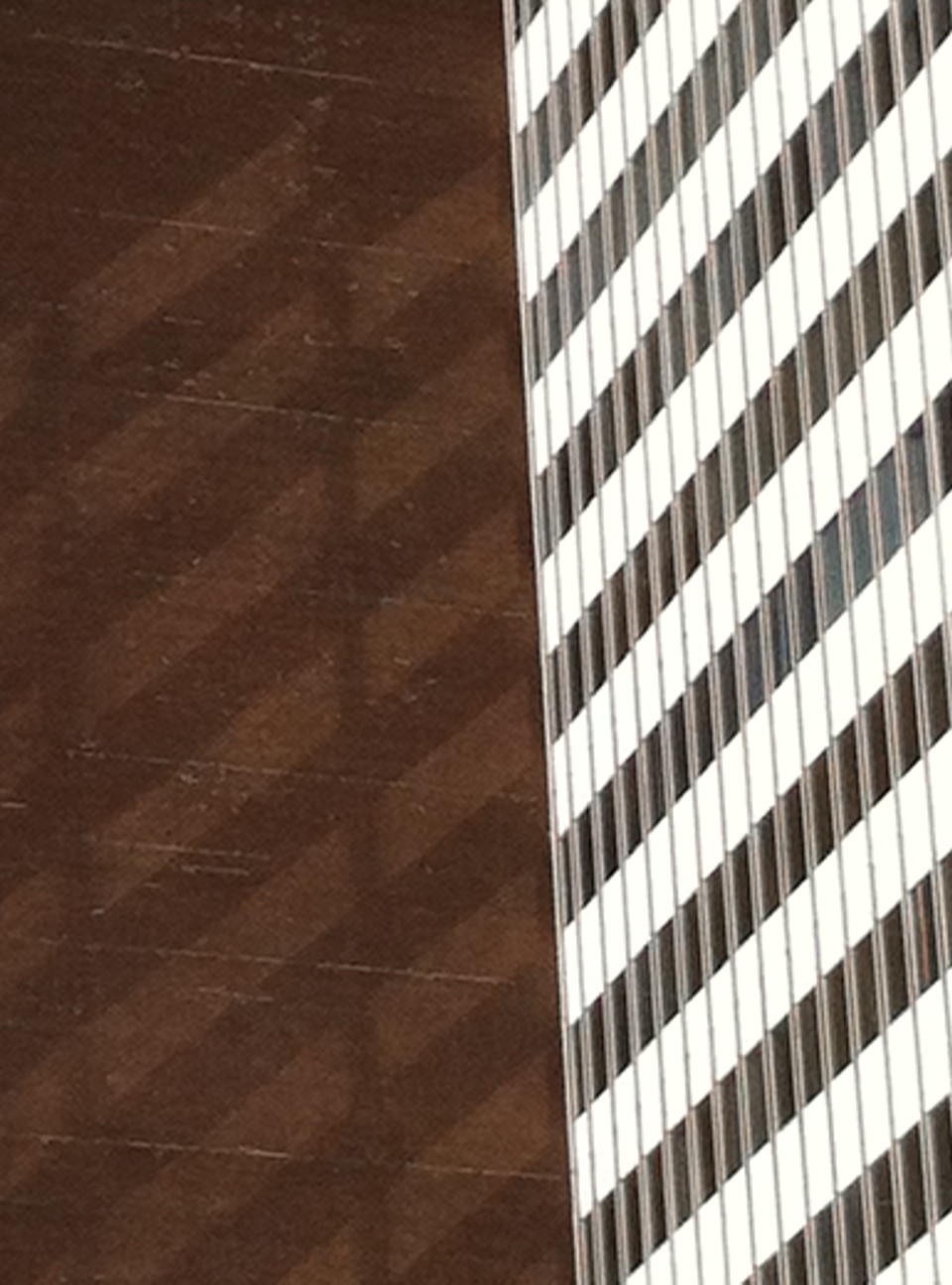
towerNot only is the Catlett-Prien Tower Building a great example of the International school of architecture, it is also home to the Department of Arkansas Heritage and several of its agencies, including the Arkansas Historic Preservation Program.  Because of this, it is today’s Architeaser feature (as part of Arkansas Heritage Month).  It is also home to the non-profit Historic Preservation Alliance of Arkansas.

The Tower Building was designed by Dallas architect Harold A. Berry in collaboration with Little Rock architect Frank Eugene Withrow. The Tower Building was Withrow’s first big project.  The building was the brainchild of future Arkansas Governor Winthrop Rockefeller.

Construction of the Tower Building began in 1958 and finished in 1960 for a cost of $4 million.  At 18 stories, it would be Little Rock’s tallest building from 1960 until 1968 when the Union Bank Building was completed.


May 7 Architeaser

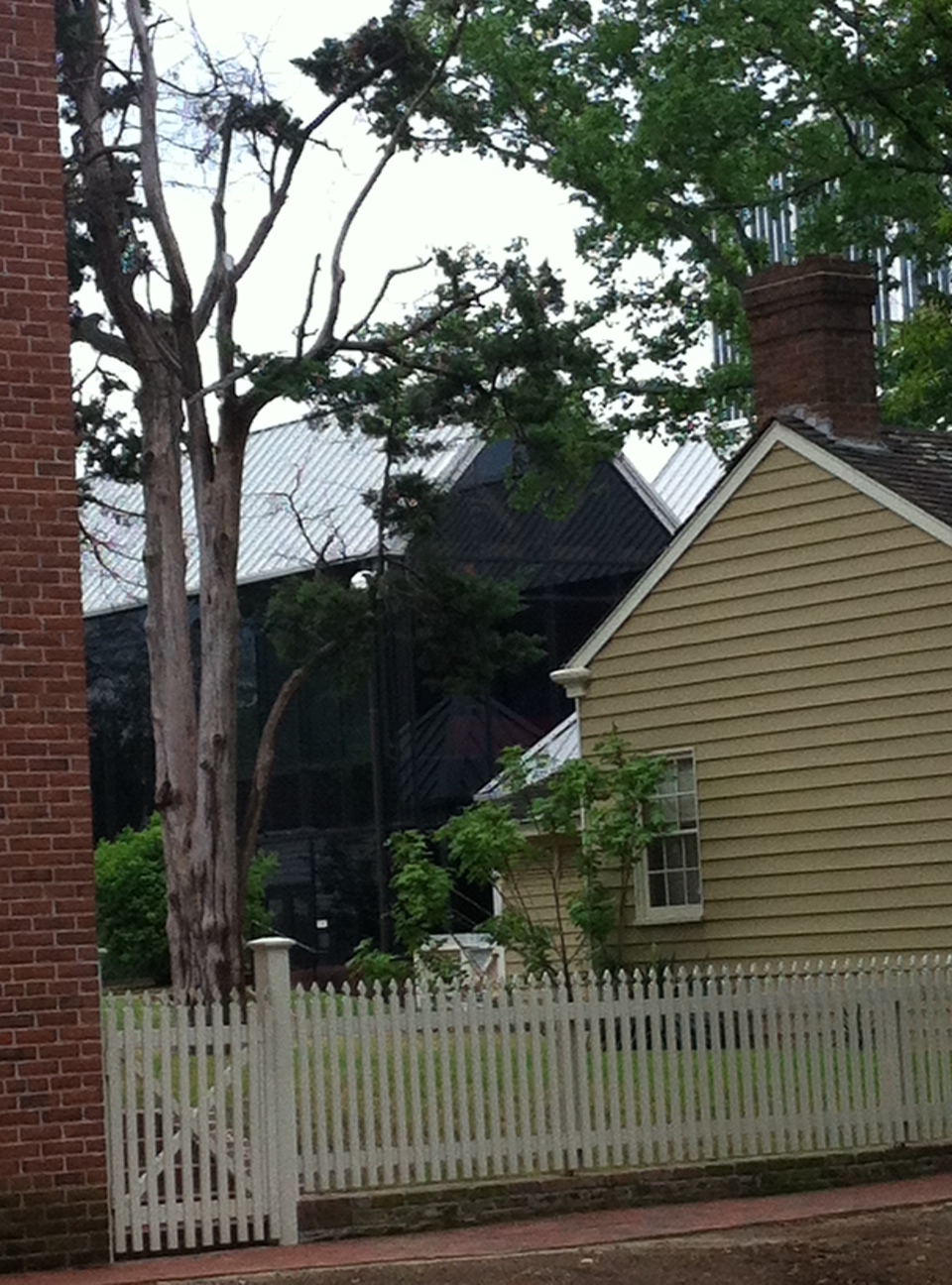
hamMay is Arkansas Heritage Month.  As a way to celebrate it, the next few Architeasers will focus on facilities connected to the Department of Arkansas Heritage.

Today’s Architeaser features architecture from the past and present.  These structures sit side by side on the city block which is home to part of Historic Arkansas Museum.  The center of the photo is anchored by the 2001 expansion to the museum which was designed by the firm of Polk Stanley Yeary (now Polk Stanley Wilcox). Framing the building on either side of the photo are some of Little Rock’s oldest structures.

Historic Arkansas Museum opened in July 1941 as the Arkansas Territorial Restoration.  It includes Little Rock’s oldest structure, the Hinderliter Grog Shop, built in 1827.  In 2001, the name was changed to Historic Arkansas Museum in conjunction with the opening of a 51,000 square foot museum center which capped off a three phase capital building program.