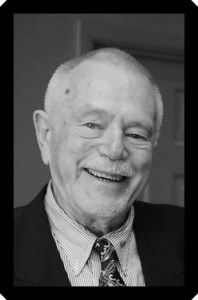
Little Rock Look Back: Mayor John Gould Fletcher

IMG_4006Future Little Rock Mayor John Gould Fletcher was born on this date in 1831. The son of Henry Lewis and Mary Lindsey Fletcher, he later served as a Captain in the Capital Guards during the Civil War. One of his fellow soldiers was Peter Hotze.

Following the war, he and Hotze began a general merchandise store in Little Rock. They were so successful that they eventually dropped the retail trade and dealt only in cotton. Peter Hotze had his office in New York, while Fletcher supervised company operations in Little Rock. In 1878 Fletcher married Miss Adolphine Krause, sister-in-law of Hotze.

John Gould Fletcher was elected Mayor of Little Rock from 1875 to 1881. He was the first Mayor under Arkansas’ new constitution which returned all executive powers to the office of the Mayor (they had been split under a reconstruction constitution). Following his service as Mayor, he served one term as Pulaski County Sheriff. Mayor Fletcher also later served as president of the German National Bank in Little Rock.

Mayor and Mrs. Fletcher had five children, three of whom lived into adulthood. Their son was future Pulitzer Prize winning poet John Gould Fletcher (neither father nor son used the Sr. or Jr. designation). Their two daughters who lived to adulthood were Adolphine Fletcher Terry (whose husband David served in Congress) and Mary Fletcher Drennan.

In 1889, Mayor Fletcher purchased the Pike House in downtown Little Rock. The structure later became known as the Pike-Fletcher-Terry House. It was from this house that Adolphine Fletcher Terry organized the Women’s Emergency Committee which worked to reopen the Little Rock public schools during the 1958-1959 school year.

In the 1960s, sisters Adolphine Fletcher Terry and Mary Fletcher Drennan deeded the house to the City of Little Rock for use by the Arkansas Arts Center. For several decades it served as home to the Arts Center’s contemporary craft collection. It now is used for special events and exhibitions.

Mayor Fletcher died in 1906 and is buried in Mount Holly Cemetery along with various members of his family. His grandson William Terry (son of Adolphine Fletcher Terry) and members of his family still reside in Little Rock.

Committee for Arts and History Kicks off Campaign for Arts Center, Military Museum & MacArthur Park today at noon

Today at Noon Campaign Kick-Off

Join us in supporting Arts + History at the official campaign kick-off

Tuesday, January 5 at 12 p.m.

The Arkansas Arts Center outside of the Children’s Theatre entrance

The Committee for Arts and History is a group of citizen advocates campaigning for Little Rock residents to vote FOR a bond issue backed by an already approved hotel tax on out-of-town visitors to improve the Arkansas Arts Center, MacArthur Museum of Arkansas Military History, and MacArthur Park in a special election on February 9, 2016.

The improvements are of vital importance for the Arkansas Arts Center to keep its accreditation in 2016, to preserve a National Historic Landmark, and for Little Rock citizens to protect our cultural attractions.


Final day to see Arkansas Arts Center Collectors Show

arkartsThe New York gallery scene returned to Little Rock with the 47th Collectors Show and Sale.  Today is the final day to see this eclectic exhibition at the Arkansas Arts Center!

This selling exhibition features a selection of nearly 150 artworks carefully curated from more than 20 galleries, including old friends such as Debra Force Fine Art, Kraushaar Galleries, and Hirschl & Adler Gallery (all specializing in early-American modernism) and four galleries that are first-time participants: Morgan-Lehman Gallery (contemporary), Cecilia de Torres, Ltd. (modern and contemporary Latin American), Muriel Guepín Gallery (contemporary), and McKenzie Fine Art (contemporary).

Perfect for seasoned buyers to add to their collections and for new collectors to enter the field, all works in the show are for sale and range from under $1,000 up to $100,000.

While you are there, you can also view Our America: The Latino Presence in American Art which is on display for two more weeks.

2015 In Memoriam – Tillie “Mumaw” Anderton

1515 Mumaw

In these final days of 2015, we pause to look back at 15 who influenced Little Rock’s cultural scene who left us in 2015.

She was never a resident of Little Rock, but for the last several of her 101 years, Tillie Anderton was a frequent visitor.  She would often be found at Arkansas Arts Center events or attending the Arkansas Repertory Theatre while in town to visit her grandson Laine Harber.

Mumaw, as she was known to everyone, enjoyed seeing the art, attending a Children’s Theatre performance, or taking part in the crafts. She also enjoyed the chance to socialize with her many well-wishers who stopped by to chat with her.  As longtime Arts Center supporter Jeane Hamilton once remarked, “I want to be her when I grow up!”

Mumaw loved to learn, so she viewed a trip to the Arts Center or the Rep as a chance to learn more – both from experiencing the art and from visiting with people.

On the occasion of her 100th birthday, “Tillie ‘Mumaw’ Anderton Day” was declared in Little Rock in recognition of her contributions as a participant in, and ambassador of, Little Rock’s cultural life.

2015 In Memoriam – Susan Purvis

1515 PurvisRemembering Susan Turner Purvis, Artist and Teacher – by Judy Baker Goss

From the bulletin, “A Service of Resurrection and Thanksgiving to God for Susan Turner Purvis:”

In our life there is a single color, as on an artist’s palette, which provides the meaning of life and art. It is the color of love. 

-Marc Chagall

On July 22, there were many reasons that an overflowing crowd filled the sanctuary of Pulaski Heights United Methodist Church to memorialize the radiant life of Susan Turner Purvis. I believe that her large heART was the root of them all. A native of Hope who lived in Little Rock over forty years, Susan’s love deeply touched family, friends, fellow teachers and artists, and students.

Fortunately, I knew Susan for half a century. We met as Hendrix freshmen living in Galloway Hall, where she was the ringleader for fun. Packed three girls to a room, we were the last class to endure Hendrix’s version of orientation “hazing.” When commanded, “Button, Freshman,” we fell to a knee in dresses, one hand touching beanie cap, and sounded off, “Good afternoon, Miss Jones, m’am, I’m freshman Susan Turner from Hope, Arkansas, m’am.”  An “upperclasswoman” told Susan and her roomies to “fly like birds” into the dining hall for supper, but Susan topped that comical idea. Looking adorably innocent, Susan’s impulses were extremely impish. She made bloody bandages from huge gauze pads dripping with red lipstick blood, which they taped to their knees. They boldly flapped in that evening, giggling in front of the astonished crowd! Wherever Susan went, there was laughter, and many anecdotes prove that she never sought sainthood. The blessings she showered on others, however, gave her the aura of cherished guardian angel.

Susan knew she was an artist in college, as I was stepping into theatre, and she always encouraged my dreams. We know this was her nature, too. During her twenty-eight year career as Art Specialist at Gibbs International Studies Magnet School, which she began with no classroom and, rather, one table and a box of Mardi Gras beads, she not only provided excellent art education, but she aligned her efforts with others, enhancing the creative potential of all.  Discovering that a former Gibbs custodian, Eddie Lee Kendrick, was a self-taught artist, she facilitated his joining her for a year at Gibbs and then co-curated a show of his work with the New Orleans Museum of Art and the Arkansas Arts Center. When she worked with a project of the Rockefeller Foundation, UALR and the Japanese-American Museum in Los Angeles dealing with the Japanese-Americans who were relocated during World War II, especially to the Arkansas camps at Jerome and Rowher, she co-wrote curriculum for social studies and art teachers based on those internees’ experiences. Her Gibbs students made a wonderful quilt reflecting their encounters with this curriculum. Susan brought people together to move forward, through art, to greater human understanding.

Her approach to learning always demonstrated curiosity and creativity, making something new from what was at hand. By no accident did her methods produce remarkable results time and again. Her students won many awards, some in the exclusive International Children’s Art Exhibition sponsored by Pentel.  In nineteen of the twenty-six years that Gibbs students’ work was accepted in the Young Arkansas Artists (YAA) exhibition through the Arkansas Arts Center, they won “Best in Class.” In 2015, Susan’s retirement year, two Gibbs group projects won awards. Also beloved by her professional peers, she was twice named Arkansas Elementary Art Educator of the Year and once as Arkansas Art Educator of the Year.

Bright and well-educated, Susan’s contributions were never limited to theory; her talented efforts blossomed through personal relationships: Susan provided her full self. She convinced students that they were artists by opening their hearts to believe it and coaxing their visions into art objects, the solid evidence. She presented core ideas which students could research and expand and for which they could imagine inclusive group participation to produce results. Their remarkable achievements sprang from authentic shared creativity. I agreed with Susan that there is no higher educational goal. The outpouring on Facebook by young adults whom Susan taught at Gibbs often referenced specific examples of her inspired teaching, which still nurtures them today.

One of my happiest memories of Susan is a joyful collaboration on a music and arts project with other young mothers at our church in 1986. We guided elementary students, including our children, to create their own Christmas pageant.  They wrote a script from Bible stories, selected songs, built props and acted the play in the sanctuary. Susan and I loved the children’s interpretations, especially their decision that someone should BE the star of Bethlehem, and “it should move.” With Susan’s direction, they created a stunning orb, which was carried atop a pole down the center aisle, one of the high points in “Starry, Starry Night.” Yes, think Van Gogh, too, for Susan added art history along the way. It’s apt to say we followed Susan, our star.

Time and again, I saw that Susan’s vision of the power of self-expression was all-encompassing. It mattered to her how others experience the world, and her empathy for them, especially for children, opened the heavens for us all.

Great grief pours from great joy and love, and though the light of her life will not fade, Susan is deeply missed in this community. I treasure reminders of Susan: the faces of her family and friends, the photos and stories we’ll share over and over, her voice in my mind’s ear, and her artist’s spirit tucked deep in my heart.

2015 In Memoriam – Fred Poe

1515 Poe

In these final days of 2015, we pause to look back at 15 who influenced Little Rock’s cultural scene who left us in 2015.

Fred Poe was a world traveler who spent his lifetime sharing his love of travel with others.

Poe’s first solo trip at age nine on the Rock Island’s “Doodlebug” from Little Rock to El Dorado, Poe visited 168 countries (a country being defined as one which issues its own postage stamps) include such arcane destinations as Tristan da Cunha, the Faroe Islands, Afghanistan’s Wakkan Corridor and Upland Togo. Poe Travel was the first American travel agency to arrange tourist travel to the Peoples’ Republic of China as that nation’s Cultural Revolution wound down with son Tony Poe led an early group of Americans to North Korea. He loved automobile trips and drove in each of the 50 states and every province and territory of Canada save Nunavut which he visited only by air.

After growing up in Little Rock, he graduated from Vanderbilt University where he wrote the college musical comedy. Upon graduation he moved to San Francisco becoming part of the Beatnik subculture and playing ragtime and jazz piano in clubs. Drafted, he served as a translator in Germany in the US Forces and did graduate work at Mainz University in Eastern European History. In 1961, he opened Poe Travel in Little Rock, likely the youngest travel agency owner in the US at the time.  The firm continues today.

Poe was active in the Civil Rights Struggle among other accomplishments having sat-in at the Memphis Airport Restaurant which resulted in its racial integration. He is a member of the ACLU, a former president of the Little Rock SKAL club made up of travel professionals and was a lifetime member of the Country Club of Little Rock. As a travel writer he enjoyed great success in local publications, published at Bicentennial Guide to the USA for the German speaking market and was frequently quoted in such publications as The New York Times, Wall Street Journal, Travel and Leisure, and Conde Nast Traveler.  He was a serious scholar with a fine library on the subject of the Nazi Holocaust and a dedicated art collector with especially significant items from the Russian Avant Garde and 20th Century Austrian schools.

With Jeane Hamilton, he led Arkansas Arts Center patrons on many trips including to China, Egypt and Cuba.  Just weeks before he died, he was in the front row at the Clinton School as Jeane Hamilton and Skip Rutherford discussed her lifetime support of the Arts Center. Jeane often referred to Fred in to fact check when they discussing some of the travel seminars.


2015 In Memoriam – Dugald MacArthur

1515 MacArthur

In these final days of 2015, we pause to look back at 15 who influenced Little Rock’s cultural scene who left us in 2015.

Though his contributions to Arkansas’ theatre scene are now largely forgotten, Dugald MacArthur played a pivotal role in establishing professional theatre in Arkansas.

A native of Birmingham, Alabama, he received a bachelor’s degree from Dartmouth and an MBA from Harvard.  He did not enjoy the corporate world. After seeing an innovative theatrical production, he enrolled at Baylor and received a master’s degree.

After graduating from Baylor, he was hired by Winthrop Rockefeller to come to Little Rock and establish a professional theatre program at the Arkansas Arts Center. One of the people who participated in that program was Cliff Baker, who would go on to found the Arkansas Repertory Theatre a few years later.  In a remembrance after MacArthur died, Baker recalled, “He opened my eyes to directing. He will forever have a very special place in my heart!”

MacArthur was interested in using theatre to explore social issues. This would ultimately lead to his exit from Arkansas.  At the Arts Center, he created a play that explored problems with the prison system in Arkansas.  As Mr. Rockefeller was by now Governor Rockefeller and in charge of the prisons, this did not — needless to say — sit well with some members of the Arts Center board and the greater Little Rock business community.  Before the show opened, the production was cancelled.  (It eventually was repurposed into the movie Brubaker starring Robert Redford.)

MacArthur left Arkansas to lead the Theatre program at San Francisco State University. He later helped found the California Institute of the Arts before taking over the MFA program at Temple University, from which he would retire after 25 years.  Everywhere he went, he was lauded for his teaching, directing and mentoring. In 2009, he was honored with a Barrymore Award in for Lifetime Achievement.