Little Rock Look Back: Lottie Shackelford, LR’s 68th Mayor

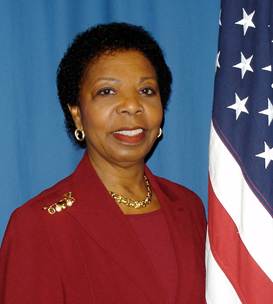
Mayor Lottie_ShackelfordOn April 30, 1941, future Little Rock Mayor Lottie Shackelford was born. Throughout her career in public service she has been a trailblazer.

Active in community activities and politics, she ran for the City Board in 1974 and lost.  But she was appointed to the Little Rock City Board in September 1978 to fill a vacancy.  This made her the first African American woman to serve on he City Board, and indeed on any governing board for the City (during Reconstruction, there were at least three African Americans on the City Council, but they were all men.) She was subsequently elected to a full-term on the City Board in 1980 winning 55% of the vote over three male candidates.

She was subsequently re-elected in 1984 (unopposed) and in 1988 (with 60% of the vote).

In January 1987, Shackelford became the first female mayor of Little Rock when she was chosen by her colleagues on the City Board to serve in that position. She was Mayor until December 1988.

From 1982 until 1992, she served as Executive Director of the Arkansas Regional Minority Purchasing Council.  She left that position to serve as Deputy Campaign Manager of Clinton for President.  She subsequently served on the Clinton/Gore transition team. She later served on the Overseas Private Investment Corporation from 1993 to 2003. She was the first African American to be in that position.

A graduate of Philander Smith College, she has also studied at the Arkansas Institute of Politics at Hendrix College and the Kennedy School of Government at Harvard University.

Mayor Shackelford has also served on numerous boards including the Little Rock Airport Commission, Philander Smith College, Chapman Funds (Maryland) and Medicis Pharmaceutical Corporation (Arizona).  She has been the longest serving Vice-Chair of the Democratic National Committee.

Mayor Shackelford was in the first class of inductees for the Arkansas Black Hall of Fame.

ROCKing the TONYS – Lawrence Hamilton

Rock the Tonys LawrenceHamiltonLawrence Hamilton

Little Rock connection: Arkansas native, former Philander Smith College faculty member, acted at Arkansas Repertory Theatre in The Piano Lesson, To Kill a Mockingbird and Looking over the President’s Shoulder and directed Arkansas Rep’s production of Crowns, appeared with the Arkansas Symphony Orchestra as well as numerous other performances and events throughout Little Rock and Arkansas.  He also brought his friends to Little Rock to perform including Jessye Norman.  He was inducted into the Arkansas Black Hall of Fame and the Arkansas Entertainers Hall of Fame.

Tony Awards connection: Appeared on Broadway in Tony winning productions of Jelly’s Last Jam, Sophisticated Ladies, Ragtime and Tony-nominated productions of Play On!, Uptown…It’s Hot!, and Porgy & Bess.

CLYBOURNE PARK at Ark Rep closing this weekend

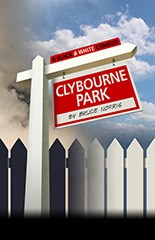
ClybourneIn real estate, “closing” is a good thing. In theatre, “closing” means a production is ending. Bruce Norris’ Pulitzer and Tony winning Clybourne Park closes its run this Sunday.

A few seasons ago, the Arkansas Rep produced Lorraine Hansberry’s seminal work A Raisin in the Sun. Clybourne Park explores events which happened before and after Hansberry’s play.

Clybourne Park is a bitingly funny and fiercely provocative play about the volatile combination of race and real estate. Written by Bruce Norris and directed by Rep founder Cliff Baker, its searing wit, intriguing plot twists and hard hitting social commentary make Clybourne Park a theatrical tour de force not to be missed.

In 1959, a white couple sells their home to a black family (the fictional Younger family from A Raisin in the Sun), causing an uproar in their middle-class neighborhood. Fifty years later in 2009, the same house is changing hands again, but the stakes have changed.

As neighbors wage a hilarious and pitched battle over territory and legacy, Clybourne Park reveals just how far our ideas about race and identity have evolved.

The cast includes Shaleah Adkisson, Ryan Barry, Katie Cunningham, Lawrence Evans, LeeAnne Hutchison, Robert Ierardi, Jason O’Connell, and David Tennal.

The creative team includes scenic designer Mike Nichols, costume designer Yslan Hicks, lighting designer Yael Lubetzky, sound designer Allan Branson and properties designer Lynda J. Kwallek.

The play was first performed in 2010 at Playwright’s Horizons. Following that production Norris received the 2011 Pulitzer Prize for Drama. A subsequent production was mounted on Broadway in 2012. The Broadway production was nominated for four Tony Awards and won the Tony for Best Play.

Clybourne Park is made possible in part by a grant from the Arkansas Black Hall of Fame Foundation, a component fund of the Arkansas Community Foundation.

For a review of Clybourne Park, read this.

Prize winning CLYBOURNE PARK at Ark Rep opens tonight

ClybourneA few seasons ago, the Arkansas Rep produced Lorraine Hansberry’s seminal work A Raisin in the Sun.  Tonight the Rep opens a production of Bruce Norris’ prize winning play Clybourne Park which explores events which happened before and after Hansberry’s play.

Clybourne Park is a bitingly funny and fiercely provocative play about the volatile combination of race and real estate. Written by Bruce Norris and directed by Rep founder Cliff Baker, its searing wit, intriguing plot twists and hard hitting social commentary make Clybourne Park a theatrical tour de force not to be missed.

In 1959, a white couple sells their home to a black family (the fictional Younger family from A Raisin in the Sun), causing an uproar in their middle-class neighborhood. Fifty years later in 2009, the same house is changing hands again, but the stakes have changed.

As neighbors wage a hilarious and pitched battle over territory and legacy, Clybourne Park reveals just how far our ideas about race and identity have evolved.

The cast includes Shaleah Adkisson, Ryan Barry, Katie Cunningham, Lawrence Evans, LeeAnne Hutchison, Robert Ierardi, Jason O’Connell, and David Tennal.

The creative team includes scenic designer Mike Nichols, costume designer Yslan Hicks, lighting designer Yael Lubetzky, sound designer Allan Branson and properties designer Lynda J. Kwallek.

The play was first performed in 2010 at Playwright’s Horizons. Following that production Norris received the 2011 Pulitzer Prize for Drama.  A subsequent production was mounted on Broadway in 2012.  The Broadway production was nominated for four Tony Awards and won the Tony for Best Play.

Clybourne Park is made possible in part by a grant from the Arkansas Black Hall of Fame Foundation, a component fund of the Arkansas Community Foundation.

Little Rock Look Back: Mayor Charles Bussey

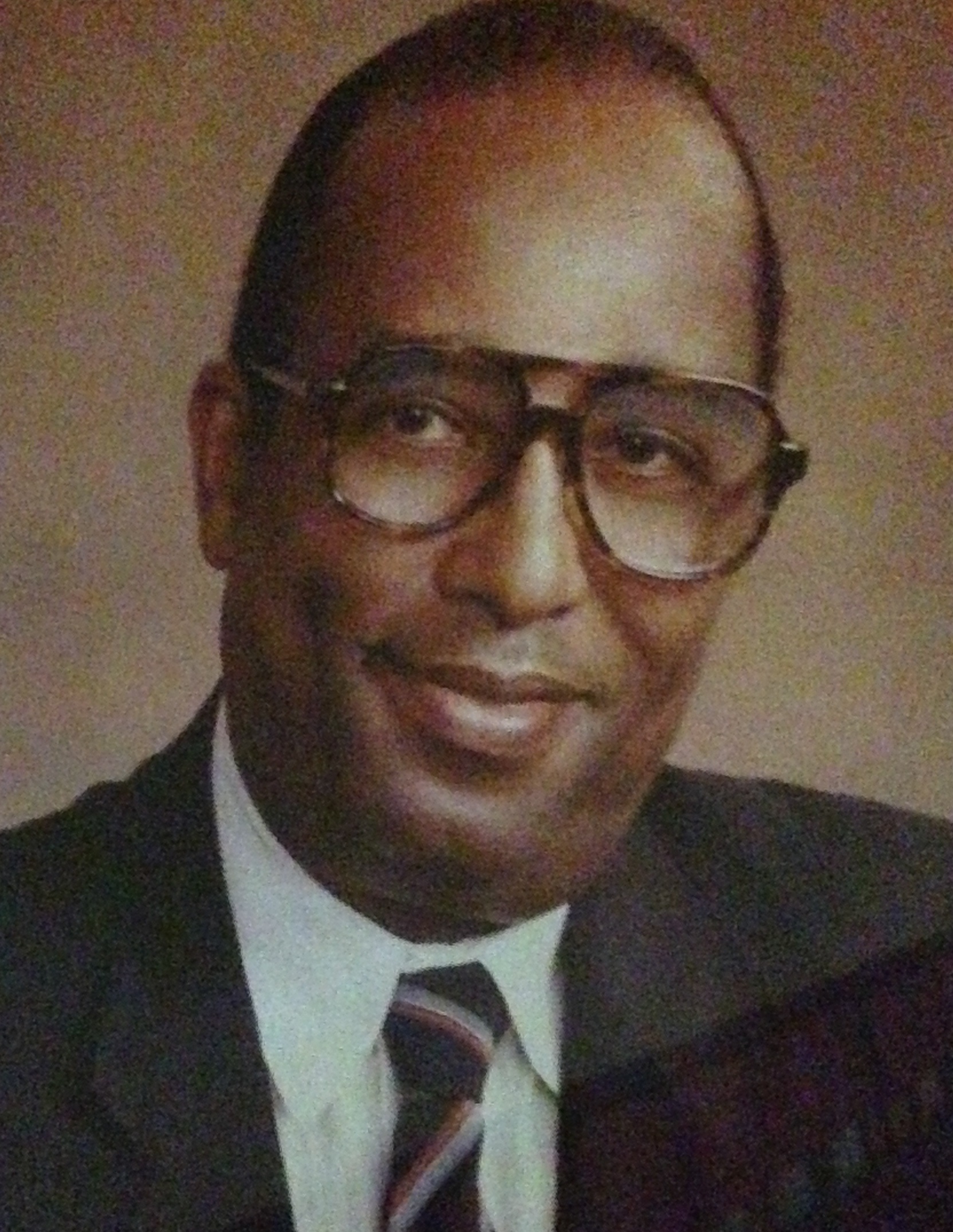
Mayor BusseyFuture Little Rock Mayor Charles Bussey was born on December 18 in 1918.  Throughout his life he was a trailblazer.  He was the first African American Sheriff’s Deputy in Pulaski County and expanded the Junior Deputy program into the African American community.

In 1968 he became the first African American elected to the Little Rock City Board of Directors. He was not the first African American to run for the City Board, but he was the first to win a race.  Mr. Bussey sought support not just from the African American community, but from all sectors of Little Rock.  He served from 1969-1977 and again from 1979 through 1991.  In 1981 he was selected by his fellow City Directors to serve as Little Rock’s Mayor, which made him the first African American Mayor of Little Rock.  He served as Vice Mayor of Little Rock for a total of 8.5 years which is the longest of anyone in the City’s history.

Throughout his lifetime Mayor Bussey championed youth outreach efforts.  He also was active in the Arkansas Municipal League, National League of Cities, West Little Rock Rotary Club, Elks, Shriners and many other organizations.

In 2006 he was posthumously inducted into the Arkansas Black Hall of Fame.  The previous year, 20th Street in Little Rock was renamed in his honor.

GEE’S BEND at Arkansas Rep

Quilts are not just coverings for warmth, they often tell a story.  The quilts and quilters of Gee’s Bend, Alabama are the focus of the play Gee’s Bend, which opened on Friday night at the Arkansas Rep and continues through February 1

Gee’s Bend was written by Elyzabeth Gregory Wilder.  It follows a group of women as they turn to quilting to provide comfort and creative expression to their lives. Pieced together from discarded clothes and seasoned with laughter and tears, the women sew a patchwork of inventive abstract designs in rich, blazing colors.

The play opens in 1939, with the beginning of the era of African-American land ownership. The story then advances to 1965, in the midst of the Civil Rights movement and the historic visit to Gee’s Bend by the Rev. Martin Luther King, Jr. The production concludes in 2002, on the eve of the unveiling of “The Quilts of Gee’s Bend” exhibition organized by the Museum of Fine Arts in Houston, Texas.

Gee’s Bend was commissioned by the Alabama Shakespeare Festival’s Southern Writers Project, where it received a staged reading in 2006 and premiered in January 2007. A graduate of the dramatic writing program at New York University, Wilder received the American Theatre Critics Association’s 2008 Elizabeth Osborn New Play Award for an emerging playwright.

Gee’s Bend is directed by Gilbert McCauley, who has directed several plays previously at the Rep.  The cast features Corey Jones, Nambi E. Kelley, Shannon Lamb and Monica Parks.   The design team includes Mike Nichols (scenery), Yslan Hicks (costumes), John Horner (lighting), Allan Branson (sound) and Lynda J. Kwallek (props). Robert Hupp is the Producing Artistic Director of the Arkansas Rep.

The Rep’s production of Gee’s Bend is supported and sponsored by The Design Group, Philander Smith College, Arora, Delta Airlines and the Little Rock Convention and Visitor’s Bureau.  It is also made possible in part by a grant from the Arkansas Black Hall of Fame Foundation, a component fund of the Arkansas Community Fund.

Little Rock Look Back: Mayor Charles Bussey

Future Little Rock Mayor Charles Bussey was born on this date in 1918.  Throughout his life he was a trailblazer.  He was the first African American Sherriff’s Deputy in Pulaski County and expanded the Junior Deputy program into the African American community.

In 1968 he became the first African American elected to the Little Rock City Board of Directors. He served from 1969-1977 and again from 1979 through 1991.  In 1981 he was selected by his fellow City Directors to serve as Little Rock’s Mayor, which made him the first African American Mayor of Little Rock.

Throughout his lifetime Mayor Bussey championed youth outreach efforts.  He also was active in the Arkansas Municipal League, National League of Cities, West Little Rock Rotary Club, Elks, Shriners and many other organizations.

In 2006 he was posthumously inducted into the Arkansas Black Hall of Fame.  The previous year, 20th Street in Little Rock was renamed in his honor.