Little Rock Look Back: Mayor Jim Dailey

cna_commissioner_daileyOn July 31, 1942, future Little Rock Mayor Dalton James “Jim” Dailey, Jr. was born to Dalton and Ellen Dailey.  After graduating from Little Rock Catholic High School, he attended the University of Arkansas at Fayetteville.  He graduated with a Bachelor of Science degree in Business Administration. He joined his father in the family business, Dailey’s Office Furniture.

In 1974, Dailey was elected to the City of Little Rock Board of Directors.  He served one four-year term. The last two years of that term, he was the Vice Mayor of Little Rock.

Following that term, he remained engaged in civic activities including serving in leadership capacities in community campaigns.  He also served as president of the National Office Products Association – the first Arkansan to do so.  Dailey also served as the founding chair of Leadership Greater Little Rock.

In 1988, Dailey was elected to return to the City Board.  He was reelected in 1992.  Dailey served as Vice Mayor in 1991 and 1992.  In January 1993, he was chosen by his fellow City Directors to serve a two year term as Mayor.  Under his leadership, the Future-Little Rock goal-setting process took place.

Following a voter-approved change to the City structure, the position of Mayor was changed to be elected by the people while maintaining the City Manager form of government.  On January 1, 1995, Jim Dailey was sworn in as the first popularly-elected Mayor of the City of Little Rock in over 38 years.

cityoflr_img_mayor_01Dailey has served on the Board of Directors for the Little Rock Regional Chamber of Commerce, Metroplan, Communities in Schools, Arkansas BioVentures and New Futures for Youth. He was appointed to the National League of Cities Board of Directors and the Municipalities in Transition on Public Finance.

As Mayor, he served as Chair of the Intergovernmental Advisory Committee of the Federal Communications Commission. He was also a member of the United States Conference of Mayor’s Communications Task Force.  He also served as president of the Arkansas Municipal League in 2002 and 2003.

While he was Mayor of Little Rock, he was a strong proponent of the development of the River Market and worked to locate the Clinton Presidential Library in Little Rock.  He also worked to increase public safety support.  He also oversaw the establishment of Central Arkansas Water, the development of downtown headquarters for Acxiom Corporation and Heifer International, and the creation of Prevention, Intervention and Treatment programs.  In addition, he was instrumental in leading the efforts for the 40th anniversary of the integration of Little Rock Central High in 1997.

Mayor Dailey was re-elected in 1998 and 2002.  His fourteen years as Mayor of Little Rock set a longevity record.  Upon his retirement the City’s fitness center was renamed the Jim Dailey Fitness and Aquatic Center.  This was in recognition of his lifelong interest in wellness activities.

Since leaving office, he has continued his civic involvement by serving as a member of the Little Rock Airport Commission which oversees the Bill and Hillary Clinton National Airport. He is also involved in commercial real estate.

Since 1965, he has been married to the former Patti Murphy.  They have four children and six grandchildren.

Little Rock Look Back: President Truman returns to LR

trumansmallOn July 1, 1952, President Harry S. Truman returned to Little Rock for the last time in his presidency.  He landed at Adams Field. After a short ride to the Missouri Pacific train station, he boarded a train for Newport where he made remarks.  Later that evening, the presidential train arrived at Norfork where Mr. Truman spent the night on the train.

The next morning, he went by car to the Norfork Dam before heading to Bull Shoals Dam where he gave an address.  An outdoor luncheon followed the Bull Shoals address.  After lunch, he got back on the train.  Truman made a whistle stop visit in Batesville before arriving back in Newport.  He boarded a plane in Newport and returned to Washington DC.

Congressmen James W. Trimble and Wilbur D. Mills accompanied the President on the entire trip from and to Washington.  Governor McMath joined the party once they were in Little Rock.  The press corps on the trip included the New York Times, Washington Star, Baltimore Sun, New York Herald-Tribune, Chicago Tribune, Associated Press, CBS Radio, NBC Radio, ABC Radio and NBC Television.  The local press included reporters and photographers from both the Arkansas Gazette and the Arkansas Democrat as well as KLRA Radio and the Memphis Commercial-Appeal.

Little Rock Look Back: Mayor J. V. Satterfield

SatterfieldOn May 14, 1902, future Little Rock Mayor John Vines Satterfield, Jr. was born in Marion.   He grew up in Little Rock and Earle. J.V. was a star quarterback for the Earle football team and is featured in a painting of that team by respected painter Carroll Cloar.

Following high school, J.V. taught (including, much to his family’s amusement, a course in penmanship) and coached and sold Fords.  He then moved to Little Rock and sold insurance and later securities.  In 1931 he opened his own business; that same year he built a house at 40 Beverly Place in Little Rock, which would serve as his home until his death.

J. V. Satterfield was elected to serve as Mayor of Little Rock in 1939 and served one term, until 1941.  He was credited with saving the City from bankruptcy because of his fiscal policies. Among his efficiencies were the creation of a central purchasing office and using grass moved from the airport to feed the Zoo animals.  Though as a private citizen he had voted against the creation of a municipal auditorium in 1937, Mayor Satterfield fought valiantly to ensure that Robinson Auditorium opened to the public once he took office.  Shortly after he became Mayor, it was discovered that there were not sufficient funds to finish the construction. After the federal government refused to put in more money, he was able to negotiate with some of the contractors to arrange for the building to be completed. He also oversaw a successful special election to raise the money to finish the project.

Satterfield was a staunch supporter of the airport and worked to expand it.  He would serve as the chair of the first Municipal Airport Commission.  He also established the Little Rock Housing Authority (on which he would later serve on the board).  Mayor Satterfield also served as President of the Arkansas Municipal League in 1941.

Following the outbreak of World War II, Satterfield enlisted in the Army and was given the rank of a Major. He later was promoted to a Colonel and worked in the Pentagon during its early days.

In the late 1940s Satterfield became president of a small Little Rock bank called People’s Bank.  The bank changed its named to First National Bank when it moved into new offices at 3rd and Louisiana in 1953.  By focusing on smaller customers and courting corporate customers, Satterfield grew the bank into one of the state’s largest banks.  He maintained his desk in the lobby of the bank so he could interact with the customers and ensure they were having a positive experience.

Due to chronic health issues, Satterfield retired from the bank in 1964. He died in March 1966.

Little Rock Look Back: Mayor Lottie Shackelford

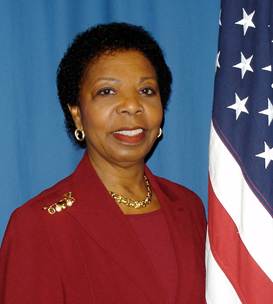
Mayor Lottie_ShackelfordOn April 30, 1941, future Little Rock Mayor Lottie Shackelford was born. Throughout her career in public service she has been a trailblazer.

Active in community activities and politics, she ran for the City Board in 1974 and lost.  But she was appointed to the Little Rock City Board in September 1978 to fill a vacancy.  This made her the first African American woman to serve on he City Board, and indeed on any governing board for the City (during Reconstruction, there were at least three African Americans on the City Council, but they were all men.) She was subsequently elected to a full-term on the City Board in 1980 winning 55% of the vote over three male candidates.

She was subsequently re-elected in 1984 (unopposed) and in 1988 (with 60% of the vote).

In January 1987, Shackelford became the first female mayor of Little Rock when she was chosen by her colleagues on the City Board to serve in that position. She was Mayor until December 1988.

From 1982 until 1992, she served as Executive Director of the Arkansas Regional Minority Purchasing Council.  She left that position to serve as Deputy Campaign Manager of Clinton for President.  She subsequently served on the Clinton/Gore transition team. She later served on the Overseas Private Investment Corporation from 1993 to 2003. She was the first African American to be in that position.

A graduate of Philander Smith College, she has also studied at the Arkansas Institute of Politics at Hendrix College and the Kennedy School of Government at Harvard University.

Mayor Shackelford has also served on numerous boards including the Little Rock Airport Commission, Philander Smith College, Chapman Funds (Maryland) and Medicis Pharmaceutical Corporation (Arizona).  She has been the longest serving Vice-Chair of the Democratic National Committee.

Mayor Shackelford was in the first class of inductees for the Arkansas Black Hall of Fame.

Little Rock Look Back: MacArthur Returns….to Little Rock

General MacArthur and Mayor Remmel

General MacArthur and Mayor Remmel

On Sunday, March 23, 1952, General Douglas MacArthur made his only post-infancy visit to Little Rock. He had previously been scheduled to visit Mississippi, and Little Rock Mayor Pratt Remmel had persuaded him to add a visit to Little Rock to the agenda. The fact that Little Rock now had a Republican mayor had apparently piqued the General’s interest.

General MacArthur, accompanied by his wife and son as well as several journalists and members of his military retinue, arrived at Little Rock Airport at 10:40 am. He was met by a delegation of civic leaders including Mayor Remmel. Alderman James Griffey made welcoming remarks on behalf of the city. Then the General and Mayor boarded an open car and led a motorcade from the airport to downtown.

The motorcade’s destination was Christ Episcopal Church at Capitol and Scott streets. It was at this church that MacArthur had been baptized as an infant. The delegation was greeted by the Episcopal Bishop R. Bland Mitchell, Rector J. Hodge Alves, and Rector Emeritus W. P. Witsell. (While he had been Rector, Dr. Witsell had garnered national attention by issuing an Easter blessing to Gen. MacArthur as he had been evacuating the Philippines at the height of World War II.) In order to gain admittance to the church that morning, church members and guests had to have tickets.

Following the worship service, the General and his party went to three events in the park named in his honor. The first was a tour of the Museum of Natural History (now the Museum of Discovery and located in the River Market; the current tenant of the building is the MacArthur Museum of Arkansas Military History), which was located in the building in which the General had been born. After the tour, he spoke at a dedication of a small rose garden adjacent to the museum. It was sponsored by the Little Rock City Beautiful Commission and the Garden Clubs of Greater Little Rock.

Though every stop of the General’s visit had featured crowds, the largest was at the third location in MacArthur Park. A crowd of several thousand greeted the General as he spoke from the Foster Bandshell in the park’s southwest corner. Chamber of Commerce president Richard C. Butler (brother-in-law of Mayor Remmel) was the master of ceremonies. Following an invocation by Methodist Bishop Paul Martin, the only other speaker was the General. In his remarks he spoke of his Southern heritage and of his appreciation for the support of the citizens of Little Rock over the years.

Several gifts were bestowed upon the MacArthurs at the ceremony. The City of Little Rock presented Mrs. MacArthur with an engraved silver serving tray.

Following the events in MacArthur Park, the family retired for a brief respite to the Hotel Marion. They then attended a luncheon buffet in their honor at the home of Howard and Elsie Stebbins on Edgehill Road. The General and Mrs. MacArthur circulated through the house greeting guests and then eschewed a special table in favor of balancing their plates on their laps and sitting in wingback chairs. Meanwhile Arthur MacArthur stayed upstairs and discussed stamp collecting and other hobbies with the Stebbins’ two teenage sons.

Following the luncheon, the MacArthur party went back to the airport and by 4:00pm, the plane was in the air.

Though this visit was coming at the end of a whirlwind of activities, by all accounts, the General and Mrs. MacArthur were very gracious and accommodating. The General was being mentioned as a potential GOP candidate for President, but purposefully steered clear of any political comments in his remarks. He and Mrs. MacArthur dutifully posed for photos not only for the media but also for amateur photographers. At lunch, the General even asked a Gazettephotographer to take a photo of him with his Little Rock Police motorcycle escorts so that they could have a souvenir of the visit.

Little Rock Look Back: St. Patrick’s Day with Mayor Pat L.  Robinson 

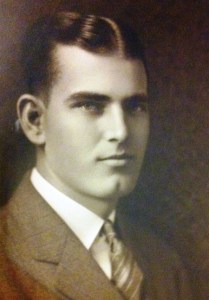
On this date in 1900, future Little Rock Mayor Pat L. Robinson was born.  While I cannot verify that he was indeed named after St. Patrick, it would be fairly reasonable to assume there might be a connection, especially given the fact that he was Catholic.

Robinson was a rising star of Little Rock Democratic politics.  In April 1929, just weeks after his 29th birthday, he was elected Mayor.  He had twice been elected as City Attorney (1926 and 1928) and was one of the youngest to serve in that position.

During Mayor Robinson’s tenure, he announced plans to construct a new airport.  That project led to the creation of what is now the Bill and Hillary Clinton National Airport.  Mayor Robinson was also involved in helping Philander Smith College secure the property where it is now located.  In addition, during his tenure, what is now the Museum of Discovery was folded into the City of Little Rock.

Single at the time he was in office and generally considered good looking, Mayor Robinson was sometimes referred to as the “Jimmy Walker of the Southwest.” Walker was the handsome and charming Mayor of New York City at the time.

Mayor Robinson ran afoul of some of the Democratic party leaders. Records don’t seem to indicate exactly what actions he took or did not take.  One thing that is brought up is that the City went into financial distress during his tenure.  Considering the Wall Street crash happened shortly after he took office, that financial state was not unique to Little Rock.

IMG_4532During this era in Little Rock, it was customary for an incumbent mayor to be given a second term. But City Clerk Horace Knowlton challenged Robinson in the primary.  It was a bitter campaign with Robinson linking Knowlton to disreputable denizens and Knowlton charging Robinson with “an orgy of spending.”  Robinson initially came out 17 votes ahead. But after a review and a lawsuit, it was found that Knowlton ended up with 10 more votes and became the nominee.  At the time, being the Democratic nominee was tantamount to election.

After he left office, Robinson practiced law for a few years in Little Rock and then left the city.  Records do not indicate where he went but he no longer appeared in the City of Little Rock directory by the early 1940s.

LR Cultural Touchstone: Kay Kelley Arnold

(Photo courtesy of Bill & Hillary Clinton National Airport)

(Photo courtesy of Bill & Hillary Clinton National Airport)

Little Rock’s rich cultural history has been influenced by many outstanding men and women.  This October, during Arts & Humanities Month 2014, the Culture Vulture is looking at 31 outstanding women who have shaped cultural life in Little Rock…and beyond.

Kay Kelley Arnold.  While attending law school, she worked at the Arkansas Arts Council.  As she relayed to Soiree, she helped artists who taught in schools. Through that job, she met many creative people “and developed a love of all types of artistic expression.”  During Bill Clinton’s first term in office as Governor, she was on his staff. In that capacity, she served as his liaison to what is now known as the Department of Arkansas Heritage.  When he left office in January 1981, so did she.

In 1986, Governor Clinton tapped Arnold to lead the Department of Arkansas Heritage.  In addition to supervising six cultural departments, she stepped into the job as plans were being made for Arkansas’ Sesquicentennial. She also oversaw those efforts which were heavily tilted toward artistic and historic events.

During the 1987 Arkansas General Assembly, Arnold led the successful effort for the legislators to approve a real estate transfer tax.  The legislation proved immensely beneficial to historic properties.  She entered the corporate world in 1988 joining Arkansas Power & Light. While serving in various capacities for AP&L and Entergy, Arnold split her time between Little Rock and Washington DC.  She maintained close ties to Little Rock’s cultural community including service on the Arkansas Symphony Orchestra Board.  She served as Chair of the ASO Board at a crucial time in the organization’s history.  In addition, she has served as a member of the Arkansas Natural Heritage Commission.

Arnold has recently completed two terms on the Little Rock Airport Commission.  During her time on that body, the airport purchased and installed several pieces of public art.

Now retired from Entergy, she is often seen around Little Rock enjoying cultural events.