Black History Month Spotlight – Arkansas Studies Institute

ASI CALS UALRThe new Arkansas Civil Rights History Audio Tour was launched in November 2015. Produced by the City of Little Rock and the University of Arkansas at Little Rock allows the many places and stories of the City’s Civil Rights history to come to life an interactive tour.  This month, during Black History Month, the Culture Vulture looks at some of the stops on this tour which focus on African American history.

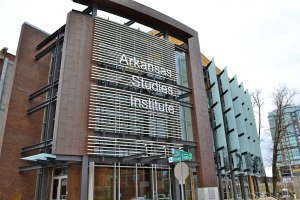
The Arkansas Studies Institute building is a Central Arkansas Library System (CALS) facility. It houses both the Butler Center for Arkansas Studies (a CALS department) and the Center for Arkansas History and Culture, a department of the University of Arkansas at Little Rock (UALR).

Exterior and interior panels are featured showing Arkansas African American life through historic photographs. Both archives offer genealogy and photography collections, and visual, audio and reference materials relating to African American history and civil rights topics in Arkansas. The Encyclopedia of Arkansas History and Culture, a Butler Center project, has many entries on African American history.

The Arkansas Sounds music collection contains materials relating to black musicians William Grant Still, Florence Price, Louis Jordan, Sister Rosetta Tharpe, and Al Bell. The Butler Center’s galleries feature local art, jewelry and crafts, many by Arkansas black artists.

The UALR Center for Arkansas History and Culture contains extensive archives, including virtual exhibits relating to the Civil War, Gov. Winthrop Rockefeller, and the city of Little Rock. Adding another dimension to the struggle for civil rights are documents and art from the World War II Japanese American Relocation Camps at Rohwer and Jerome, Arkansas, and two large Jewish history collections.

The app, funded by a generous grant from the Arkansas Humanities Council, was a collaboration among UALR’s Institute on Race and Ethnicity, the City of Little Rock, the Mayor’s Tourism Commission, and KUAR, UALR’s public radio station, with assistance from the Little Rock Convention and Visitors Bureau.
Black History Month Spotlight – Sue Cowan Williams Library

sue_cowan_williamsThe new Arkansas Civil Rights History Audio Tour was launched in November 2015. Produced by the City of Little Rock and the University of Arkansas at Little Rock allows the many places and stories of the City’s Civil Rights history to come to life an interactive tour.  This month, during Black History Month, the Culture Vulture looks at some of the stops on this tour which focus on African American history.

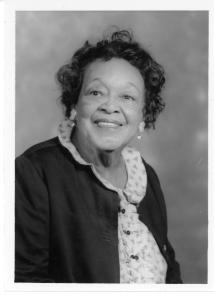
In 1945, Sue Cowan Williams successfully sued the Little Rock School District for equal pay for black and white teachers. The existing inequality in pay clearly did not meet the stipulation of “separate but equal” treatment of African Americans required by the law.

Williams was chair of the English Department at Dunbar High School. She had attended Spelman College in Atlanta, Talladega College in Alabama, and the University of Chicago. These impressive credentials made her an ideal standard bearer for the suit. Local lawyers, along with the NAACP’s Thurgood Marshall, successfully appealed Williams’ case to the Eighth Circuit Court of Appeals in St. Louis. In the meantime, however, Williams’ contract was not renewed at Dunbar.

After working several other jobs, she was eventually rehired in 1952. She remained at Dunbar until her retirement in 1974. Williams died in 1994. In 1997, the tenth library in the Central Arkansas Library System was dedicated as the Sue Cowan Williams Library in her honor.

The app, funded by a generous grant from the Arkansas Humanities Council, was a collaboration among UALR’s Institute on Race and Ethnicity, the City of Little Rock, the Mayor’s Tourism Commission, and KUAR, UALR’s public radio station, with assistance from the Little Rock Convention and Visitors Bureau.

Heeeere’s THE SHINING – tonight at the CALS Ron Robinson Theater

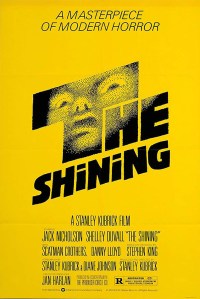
RRT shiningStanley Kubrick’s 1980 thriller The Shining will be chilling the big screen tonight at the Ron Robinson Theatre at 7pm.

Based on the Stephen King novel, The Shining was directed by Kubrick from a screenplay he wrote with Diane Johnson.

Jack Nicholson is appropriately cerebral and scary as he alternates between wrestling with writer’s block and wielding an ax.  Shelley Duvall, Danny Lloyd, Scatman Crothers, Barry Nelson, Anne Jackson and Joe Turkel are also in the cast.  Set largely in a desolate hotel, the movie was a chore for the actors due to the incredibly long hours of shooting each day.  As a director, Kubrick was overly exacting.  But the result of the hard work comes through on the screen.

Though he was excruciatingly demanding on Duvall, Kubrick took cares to make it a pleasant filming experience for six-year-old Lloyd.  It was not until a decade later that Lloyd realized it had been a horror film, because Kubrick and others kept him out of the way during the more violent scenes.

See it all on the big screen tonight.

Go Off to see THE WIZARD OF OZ this afternoon at the CALS Ron Robinson Theater

RRT Wizard_of_oz_movie_poster“Follow the Yellow Brick Road”

“There’s No Place Like Home”

“I’ll Get You, My Pretty”

“And Toto, too!”

Those are just a few of the famous lines from the iconic 1939 MGM Technicolor classic The Wizard of Oz.  The CALS Ron Robinson Theater will be screening it today (February 13) at 2pm for $5.  Concessions are available for purchase.

Based on the L. Frank Baum novel (which launched a series of books), this film was directed by Victor Fleming (who also received credit for directing another 1939 classic – Gone with the Wind – but that’s another story).  For Judy Garland, Ray Bolger, Bert Lahr, Jack Haley and Margaret Hamilton – this film was the source of their iconic roles.  Frank Morgan played the titular role, while Billie Burke essayed the role of Glinda.

The movie was nominated for six Oscars, and picked up two – Best Score (Herbert Stothart) and Best Song (E. Y. “Yip” Harburg and Harold Arlen for “Over the Rainbow”).  The year 1939 has largely been considered the best  year for movies during the Golden Age of Hollywood, so picking up two Oscars in the year of Gone with the Wind, Ninotchka, Mr. Smith Goes to Washington, Stage Coach, Wuthering Heights, Intermezzo, and The Hunchback of Notre Dame is quite an accomplishment.

While now viewed as a classic, it took 14 writers and five directors as well as several re-castings to get the movie finished.  This afternoon is the chance to see it again on the big screen.

DRIVING MISS DAISY at CALS Ron Robinson Theater tonight

RRT driving-miss-daisy-posterThe Oscars are later this month, but tonight is a chance to see the winner of the 1989 Best Picture Oscar – DRIVING MISS DAISY. It will screen tonight at 7pm at the CALS Ron Robinson Theater.

Tickets are $5.  Concessions are available for purchase.

Based on the 1988 Pulitzer Prize winning play, Driving Miss Daisy tells the story of a textile factory owner who insists on hiring an ever-patient chauffeur for his aging head-strong mother. The Jewish woman and her African American driver eventually build a relationship over many years.

In addition to winning the Oscar for Best Picture, star Jessica Tandy won the Oscar for Best Actress.  Morgan Freeman and Dan Aykroyd each earned Oscar nominations for their performances.  Others in the cast include Patti LuPone and Esther Rolle.

Directed by Bruce Beresford (who surprisingly did not pick up a nomination for Best Director), the film was adapted by Alfred Uhry from his original stage play. Uhry won an Oscar for his writing. The film also earned a fourth Oscar for Best Makeup.  In addition to the nominations for Freeman and Aykroyd’s performances, it picked up nominations for Art Direction, Costumes, and Editing.

Arkansas and the Southern Manifesto explored at Butler Center’s Legacies & Lunch today

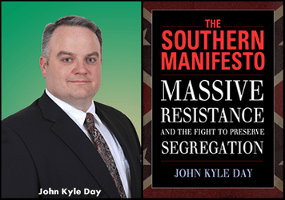
southern_manifestoAt Legacies & Lunch, John Kyle Day, associate professor of history at University of Arkansas at Monticello, will discuss the efforts of the United States Congress to delay desegregation in the 1950s and onward.  The program will take place today (February 3) at 12 noon at the Darragh Center on the CALS campus.

On March 13, 1956, ninety-nine members of the United States Congress promulgated the Declaration of Constitutional Principles, popularly known as the Southern Manifesto. This document formally stated opposition to the landmark United State Supreme Court decision Brown v. Board of Education, and the emergent civil rights movement. This allowed the white South to prevent Brown‘s immediate full-scale implementation and, for nearly two decades, set the slothful timetable and glacial pace of public school desegregation. The Southern Manifesto also provided the Southern Congressional Delegation with the means to stymie federal voting rights legislation, so that the dismantling of Jim Crow could be managed largely on white southern terms.

Day’s book, The Southern Manifesto: Massive Resistance and the Fight to Preserve Segregation, narrates this single worst episode of racial demagoguery in modern American political history and considers the statement’s impact upon both the struggle for black freedom and the larger racial dynamics of postwar America.

Legacies & Lunch is free, open to the public, and supported in part by the Arkansas Humanities Council. Programs are held from noon-1 p.m. on the first Wednesday of each month. Attendees are invited to bring a sack lunch; drinks and dessert are provided. For more information, contact 918-3033.

Arkansas Sounds presents Mad Nomad and Ghost Bones at the CALS Ron Robinson tonight

arkansas_sounds_2013Tonight at the CALS Ron Robinson Theater, Arkansas Sounds presents Mad Nomad and Ghost Bones.

This evening evening of fresh, energetic, indie rock music will begin at 7pm.  Tickets are $10.

Mad Nomad performs melodic, high powered, heavy rock music that has been described as “informed by…the Replacements, Built to Spill, Dinosaur Jr. and unabashedly guitar-centric.” (Robert Bell, Arkansas Times) The band’s style has also been classified as “a cohesive mix of hard rock, punk, scream metal, ’90s pop rock and even twinges of ’80s metal, all held together with an accessible and undeniable sense of melody.” (Sean Clancy, Arkansas Democrat-Gazette) Based in Little Rock and founded in September 2012, Mad Nomad won the 2014 Arkansas Times Musicians Showcase.

Ghost Bones plays post-punk, alternative dance rock music that may be described as urgent, angular, and inspired by art school sensibilities. It is a young and experimental band that strives to create an original sound that appeals to a mass audience. At a time when the alternative rock scene is dominated by male bands, Ghost Bones has drawn attention as a female-fronted band. Based in Hot Springs and founded in September 2014, Ghost Bones won the 2015 Arkansas Times Musicians Showcase.