
 The final Arkansas Rep production in its original home was Robert Harling’s STEEL MAGNOLIAS. Demand for tickets was so strong that the run was extended by over a week even before the show opened. (Having the next show opening in the new space probably allowed for this extension to be possible because there was not a concern about an overlap of space needs.)
This tale of six Southern women of varying ages featured Victoria Holloway and Casey Alexander as a mother and daughter, Theresa Quick and Francine Thomas as the owner of a beauty salon and her employee, with Francis Kemp and Candyce Hinkle as a pair of lifelong friends rounding out the cast.
Selected by Cliff Fannin Baker, the show was still running Off Broadway and had not yet been made into a movie when it was announced for the Rep’s season. The show was directed by Cathey Crowell Sawyer. The creative team included Mike Nichols (set), Mark Hughes (costumes), Robert A. Jones (lighting) and Sheri Bethel (sound).
Nichols and Hinkle would reunite with this title when the Rep mounted it to kick off the 30th season in 2005.
 An Oscar winner performing on the Arkansas Rep stage is a rarity. To have one playing the same role she played in a national tour — well, that has only happened once.
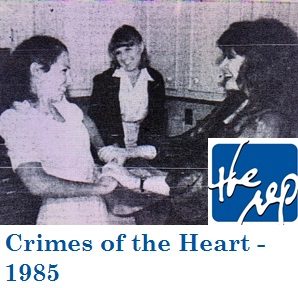 Since at least Chekov, playwrights have been fascinated with a trio of women at the center of a play. Southerner Beth Henley put her own twist on this concept with her 1981 Pulitzer Prize winner Crimes of the Heart.
 Since at least Chekov, playwrights have been fascinated with a trio of women at the center of a play. Southerner Beth Henley put her own twist on this concept with her 1981 Pulitzer Prize winner Crimes of the Heart.
 It is not often that an Oscar winner has appeared in a play on a Little Rock stage. But in the spring of 1986, Mercedes McCambridge starred in Marsha Norman’s ‘night, Mother at Arkansas Repertory Theatre.
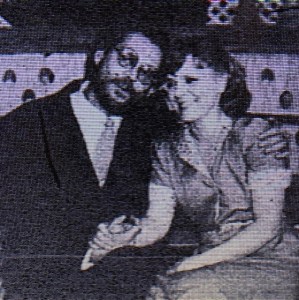 Lanford Wilson’s two person play Talley’s Folly has one of the smallest casts of a Pulitzer Prize winning play. It is a prequel to Wilson’s Fifth of July giving a backstory that is only touched upon the earlier play.
 Little Rock Culture Vulture