Little Rock Look Back: MacArthur Returns

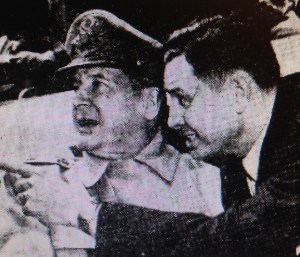
General MacArthur and Mayor Remmel

On Sunday, March 23, 1952, General Douglas MacArthur made his only post-infancy visit to Little Rock. He had previously been scheduled to visit Mississippi, and Little Rock Mayor Pratt Remmel had persuaded him to add a visit to Little Rock to the agenda. The fact that Little Rock now had a Republican mayor had apparently piqued the General’s interest.

General MacArthur, accompanied by his wife and son as well as several journalists and members of his military retinue, arrived at Little Rock Airport at 10:40 am. He was met by a delegation of civic leaders including Mayor Remmel. Alderman James Griffey made welcoming remarks on behalf of the city. Then the General and Mayor boarded an open car and led a motorcade from the airport to downtown.

The motorcade’s destination was Christ Episcopal Church at Capitol and Scott streets. It was at this church that MacArthur had been baptized as an infant. The delegation was greeted by the Episcopal Bishop R. Bland Mitchell, Rector J. Hodge Alves, and Rector Emeritus W. P. Witsell. (While he had been Rector, Dr. Witsell had garnered national attention by issuing an Easter blessing to Gen. MacArthur as he had been evacuating the Philippines at the height of World War II.) In order to gain admittance to the church that morning, church members and guests had to have tickets.

Following the worship service, the General and his party went to three events in the park named in his honor. The first was a tour of the Museum of Natural History (now the Museum of Discovery and located in the River Market; the current tenant of the building is the MacArthur Museum of Arkansas Military History), which was located in the building in which the General had been born. After the tour, he spoke at a dedication of a small rose garden adjacent to the museum. It was sponsored by the Little Rock City Beautiful Commission and the Garden Clubs of Greater Little Rock.

Though every stop of the General’s visit had featured crowds, the largest was at the third location in MacArthur Park. A crowd of several thousand greeted the General as he spoke from the Foster Bandshell in the park’s southwest corner. Chamber of Commerce president Richard C. Butler (brother-in-law of Mayor Remmel) was the master of ceremonies. Following an invocation by Methodist Bishop Paul Martin, the only other speaker was the General. In his remarks he spoke of his Southern heritage and of his appreciation for the support of the citizens of Little Rock over the years.

Several gifts were bestowed upon the MacArthurs at the ceremony. The City of Little Rock presented Mrs. MacArthur with an engraved silver serving tray.

Following the events in MacArthur Park, the family retired for a brief respite to the Hotel Marion. They then attended a luncheon buffet in their honor at the home of Howard and Elsie Stebbins on Edgehill Road. The General and Mrs. MacArthur circulated through the house greeting guests and then eschewed a special table in favor of balancing their plates on their laps and sitting in wingback chairs. Meanwhile Arthur MacArthur stayed upstairs and discussed stamp collecting and other hobbies with the Stebbins’ two teenage sons.

Following the luncheon, the MacArthur party went back to the airport and by 4:00pm, the plane was in the air.

Though this visit was coming at the end of a whirlwind of activities, by all accounts, the General and Mrs. MacArthur were very gracious and accommodating. The General was being mentioned as a potential GOP candidate for President, but purposefully steered clear of any political comments in his remarks. He and Mrs. MacArthur dutifully posed for photos not only for the media but also for amateur photographers. At lunch, the General even asked a Gazettephotographer to take a photo of him with his Little Rock Police motorcycle escorts so that they could have a souvenir of the visit.
Little Rock Look Back: Gordon N. Peay, Little Rock’s 23rd Mayor

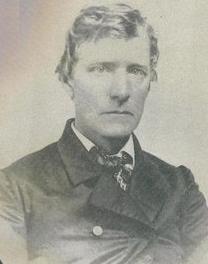
Mayor PeayOn December 12, 1819, future Little Rock Mayor Gordon Neill Peay was born.  The Peay family arrived in Arkansas from Kentucky in 1825.  They quickly became one of Little Rock’s leading families.  Mayor Peay’s father, Nicholas Peay served on the Little Rock Board of Trustees (which existed before the town was incorporated) and later served on the City Council and was acting mayor.

Godon N. Peay served as mayor of Little Rock from 1859 to 1861.  During the Civil War, Peay served as Captain and later Colonel of the Capital Guard.  He later received a pardon from the federal government.  In the days leading up to the Civil War and during it, Mayor Peay was one of a select group of civic leaders who corresponded with President Lincoln and other Union leaders. It has been said that this conciliatory tone is a reason that Little Rock fared better during Federal occupation and Reconstruction than did many other Confederate cities.

The Peay family owned the Peay Hotel, Little Rock’s first hotel, and were also co-founders of what became Worthen Bank.  They were also a founding family of Christ Episcopal Church. Mayor Peay later served as Pulaski County Chancery Clerk.

He died on December 14, 1876, and is buried at Mount Holly Cemetery along with many members of his family.  A nephew of his, Ashley Peay, served on the City Council in the 1920s.  Mayor Peay’s great-grandson Joseph Barber Hurst, Sr. served on the Little Rock City Board of Directors from 1967-1971. One of Mr. Hurst’s sons, Howard, was born on Mayor Peay’s birthday.

Creative Class 2016: Thomas Alexander

cc16-alexanderOctober is National Arts & Humanities Month. So the Culture Vulture returns to daily postings by featuring each day a member of the 2016 Creative Class.  First up is the youngest member, Thomas Alexander.

While still a student at Hendrix College, Thomas is currently serving as Interim Director of Music and Organist at St. Luke’s Episcopal Church.  This past summer he was an Organ Scholar at Christ Church in downtown Little Rock.  An accomplished organist (who creates outstanding improvisational pieces on the organ) and choral director, he is the founder and director of the Compline service at Hendrix.  In addition to being a full-time student at Hendrix, where he is a junior, he serves on the Executive Council of Province VII of the Episcopal Church (which encompasses Arkansas and part or all of six other states).


2015 In Memoriam – Bert Parke

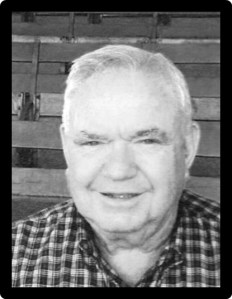
1515 ParkeBert Parke enjoyed music.  While he may have been better known for listening to the organ at the baseball park (first Ray Winder Field, then Dickey-Stephens Ballpark), he also enjoyed the organ at Christ Episcopal Church.  Of course his affection for the church organ cannot be separated from the fact that his beloved Ann Blair was often in the choir singing with the organ.

To many in Arkansas (and — let’s be honest, beyond Arkansas), Bert was known for his decades-long association with the Arkansas Travelers. He was part of the small group of businessmen who kept baseball in Little Rock in the 1960s by turning the Travelers into the nation’s only community-owned professional baseball team. In the 1970s, he served as Treasurer of the Travelers before being elected as President in 1980. For the next 30 years, he served in that capacity until becoming President Emeritus in 2010. Just weeks before he died, Bert was elected to the Texas League Hall of Fame.

As a businessman, he led Democrat Printing & Lithograph through many innovations and changes. Through it all, he made sure it continued to serve its customers. He passed this on to his sons Frank and John. To his children and grandchildren, he also passed on to his family the importance of philanthropy and serving the community.  He and Ann Blair co-chaired the first Opus Ball for the Arkansas Symphony Orchestra. At the time, there were very few black tie balls in Little Rock, so their leadership was crucial to the success of the event.

Bert also was involved in the MacArthur Museum of Arkansas Military History; he was named an Honorary Lifetime Commissioner of that museum. A life-long member of Christ Episcopal Church, he held many leadership positions in the church and the Episcopal Diocese of Arkansas.

These words do poor service to the man who was Bert Parke. He had a perpetual twinkle in his eye. His mouth was always curled ready to burst into one of his generous smiles. He met no strangers.  For a while in 2015, he and I both were using walkers as we trudged down the side aisle at Christ Church. Well, I trudged. Bert reveled in the affection as he worked the crowd in a way that would be the envy of most politicians who try to work a rope line.  Each week, he would check on my progress as I recovered from a broken ankle.

For a better job at capturing the spirit of Bert Parke, here is the Rev. Scott Walters’ outstanding homily which was delivered at his service.

Little Rock Look Back: Mayor Gordon N. Peay

Mayor PeayOn December 12, 1819, future Little Rock Mayor Gordon Neill Peay was born.  The Peay family arrived in Arkansas from Kentucky in 1825.  They quickly became one of Little Rock’s leading families.  Mayor Peay’s father, Nicholas Peay served on the Little Rock Board of Trustees (which existed before the town was incorporated) and later served on the City Council and was acting mayor.

Godon N. Peay served as mayor of Little Rock from 1859 to 1860.  During the Civil War, Peay served as Captain and later Colonel of the Capital Guard.  He later received a pardon from the federal government.

The Peay family owned the Peay Hotel, Little Rock’s first hotel, and were also co-founders of what became Worthen Bank.  They were also a founding family of Christ Episcopal Church. Mayor Peay later served as Pulaski County Chancery Clerk.

He died on December 14, 1876, and is buried at Mount Holly Cemetery along with many members of his family.  A nephew of his, Ashley Peay, served on the City Council in the 1920s.  Mayor Peay’s great-grandson Joseph Barber Hurst, Sr. served on the Little Rock City Board of Directors from 1967-1971. One of Mr. Hurst’s sons, Howard, was born on Mayor Peay’s birthday.

Creative Class of 2015: Scott Walters

scottwaltersOctober may have ended yesterday. But since this is about Creativity, the Creative Class stretches into November for one day this year.  Scott Walters uses his position as Rector of Christ Church to build connections and raise awareness of a variety of art forms and creative disciplines.

Through his leadership and encouragement, two different public gallery spaces have been created at Christ Church, an Arts at Christ Church series has been launched (featuring all types of music from Grammy winning soul to Renaissance chamber), the basement has been turned into The Undercroft music venue with regular performances, and a partnership with the Arkansas Literary Festival has been undertaken.

Concerned with the built environment, he has led walking tours of downtown which have focused not only on the history of the neighborhood but also looking at its present and envisioning its future possibilities.  Because Christ Church is at a hub of development in the River Market, Creative Corridor, SoMa, MacArthur Park and Hanger Hill, he is exploring ways to more actively integrate the church into its greater community.

Interested in historic preservation, he is currently shepherding an effort to restore the historic stained glass windows at the church. A student of poetry, philosophy and urban planning, he can often be found engaged in discussions about those topics.  But he is just as likely to discuss comedians, YouTube videos, and the local music scene.

Little Rock Look Back: Little Rock takes first steps to becoming a city

CLR oct271825Little Rock started functioning as the capital of Arkansas in June 1821. But by 1825 the settlement know as Little Rock was little more than a loosely defined group of structures. One hundred and ninety years ago today, on October 27, 1825,Territorial Governor George Izard signed legislation which started establishing a framework for Little Rock to function as a city.

It established that Little Rock citizens could elect a board of trustees to decide matters. Those trustees would choose one of their own to be a presiding officer. Though Little Rock would not be officially incorporated until 1831, this was the first step towards incorporation. The first trustees, elected for 1826, were Robert Crittenden, Joseph Henderson, Nicholas Peay, Bernard Smith and Isaac Watkins. Smith was chosen to be the presiding officer.

Crittenden had been largely responsible for the relocation of the capitol to Little Rock, where he owned a lot of land. He was a major political force in Arkansas politics during the territorial days. Watkins was a nephew of a signer of the Declaration of Independence. He had established the first tavern in Little Rock in 1821 and later he first mill in 1826. He was murdered in 1827 and the perpetrator was never captured.

Peay bought the tavern from Watkins in 1826 and continued in the tavern and hotel business the rest of his life. He later served on the Little Rock City Council and was acting mayor. His son Gordon Neill Peay served as Mayor of Little Rock. The Peay family also cofounded Worthen Bank and Christ Episcopal Church. Members of several branches of Mr. Peay’s descendants including the Worthen and Hurst families remain active in Little Rock affairs.