
 Many months behind schedule, it was 80 years ago today (December 8, 1939) that the construction of the Joseph Taylor Robinson Memorial Auditorium was declared “substantially finished.”
On December 8, 1939, the work of the general contractor was complete. The building’s utilities were all fully connected as the steam line and electric transformer were hooked up. While the work of the general contractor was through, there was still much work to be done.
Though there were still unfinished portions of the structure, the exterior was complete and finished surfaces had been installed on the interior. Until the building was officially turned over to the City, the federal Public Works Administration still had to give approval for any uses of the building.Mayor J. V. Satterfield, Jr. told the press that he wasn’t sure when the City would formally accept the building. The connection of the utilities had used up the remaining funds, so there was uncertainty as to when the final tasks would be completed.
When it was built, Robinson Auditorium was the first municipal auditorium in the south central United States to be air conditioned. However, the air conditioning unit was not sufficient to cool both the music hall and the convention hall at the same time. In warm weather months concurrent events would not be able to take place on the two levels.
 You are invited to join the Arkansas Historic Preservation Program’s next “Sandwiching in History” tour, which will visit one of Little Rock’s oldest standing structures, the Arsenal Tower Building, now home to the MacArthur Museum of Arkansas Military History on 9th Street in MacArthur Park in Little Rock beginning at noon on Friday, December 6, 2019.
 On November 23, 1808, future Mayor Charles P. Bertrand was born in New York. He was the son of Pierre and Eliza Wilson Bertrand; his father died in 1809 in an uprising in Haiti and his mother eventually remarried. With her new husband, Dr. Matthew Cunningham, she and the family moved to Little Rock in 1820.
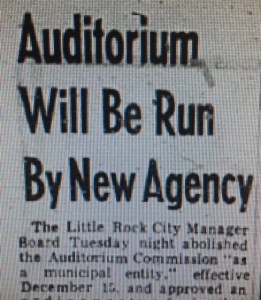 On November 16, 1971, the City of Little Rock Board of Directors abolished the Auditorium Commission which oversaw Robinson and transferred duties to the Advertising and Promotion Commission. This was done with the full support of both commissions. The transfer took place immediately, with all assets and loose ends to be wrapped up by December 15, 1971.
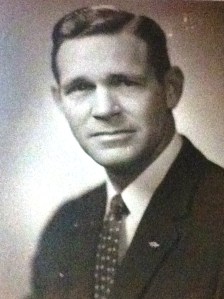 Future Little Rock Mayor Woodrow Wilson Mann was born on November 13, 1916, in Little Rock. His tenure at Little Rock mayor was tumultuous from both things of his doing as well as events that catapulted him onto the international scene.
 On November 7, 1950, Little Rock voters approved the creation of the Little Rock Airport Commission. This was an extremely rare initiated ordinance.
 Little Rock Culture Vulture