Arkansas Heritage Month – Jim Dailey

cna_commissioner_daileyDuring his years of public service, Little Rock Mayor Jim Dailey was a dedicated supporter of the arts. He has been involved in support of the arts prior to and after leaving office, but he was a 2005 Governor’s Arts Awards recipient in recognition of his work while in office.

Mayor Dailey’s understanding of the importance of the arts was essential to the revitalization of downtown Little Rock and the development of the River Market district. Little Rock’s arts district has become home to several art galleries and the 2nd Friday Night Art Walk and provides venues for local and regional musicians.

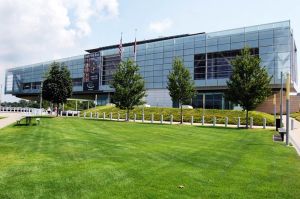
Other examples of Mayor Dailey’s leadership in the arts include the City of Little Rock’s support of the expansion and renovation of the Arkansas Arts Center and support of the establishment of the Kramer School Artists Cooperative, which provides residential and studio space for artists.  He was also a key player in the location of the Clinton Presidential Center in Little Rock.

The City of Little Rock doubled the number of art institutions it helps fund under Mayor Dailey’s tenure and has developed an Arts & Culture Commission to continue to integrate the arts into the daily fabric of city life. Mayor Jim Dailey has demonstrated outstanding leadership and commitment to the development of the arts community in Little Rock.

While in office, most Tuesday nights he would be a City Hall presiding over a City Board meeting. But many Monday nights he would be found at the Arkansas Arts Center taking a class a the museum school.

Since leaving office, Mayor Dailey has continued to explore art galleries and museums as he travels throughout the United States.  He also served as one of the three co-chairs for the successful campaign to renovate Robinson Center Music Hall. The building is set to reopen in November 2016.

International Jazz Day – Bryan Massey’s JAZZ PLAYER

Massey JazzApril 30 is International Jazz Day.

In commemoration of that, here is Bryan Massey, Sr.’s Jazz Player.  It is located in the Vogel Schwartz Sculpture Garden in Riverfront Park.

Massey, who is an artist and art professor at the University of Central Arkansas, created this piece in honor of Bill Clinton and his love of jazz.  It was sculpted in 2009 in honor of the fifth anniversary of the opening of the Clinton Presidential Center.

The sculpture is placed next to another piece of Massey’s called Uptown Saturday Night which depicts a couple dancing to music.  Together they present a celebration of music, dance, and having fun.

Sculpture Vulture: Harriet Tubman

With news that Harriet Tubman will replace Andrew Jackson on the $20, it is a good chance to revisit Little Rock’s Harriet Tubman sculpture.

In preparation for the opening of the Clinton Library in 2004, a series of sculptures were placed which linked a walkway between the River Market and the Clinton Presidential Park.

One of these sculptures is entitled Harriet Tubman.  Since she was from the era of President Lincoln, it seems fitting to feature this sculpture on this, Lincoln’s birthday.

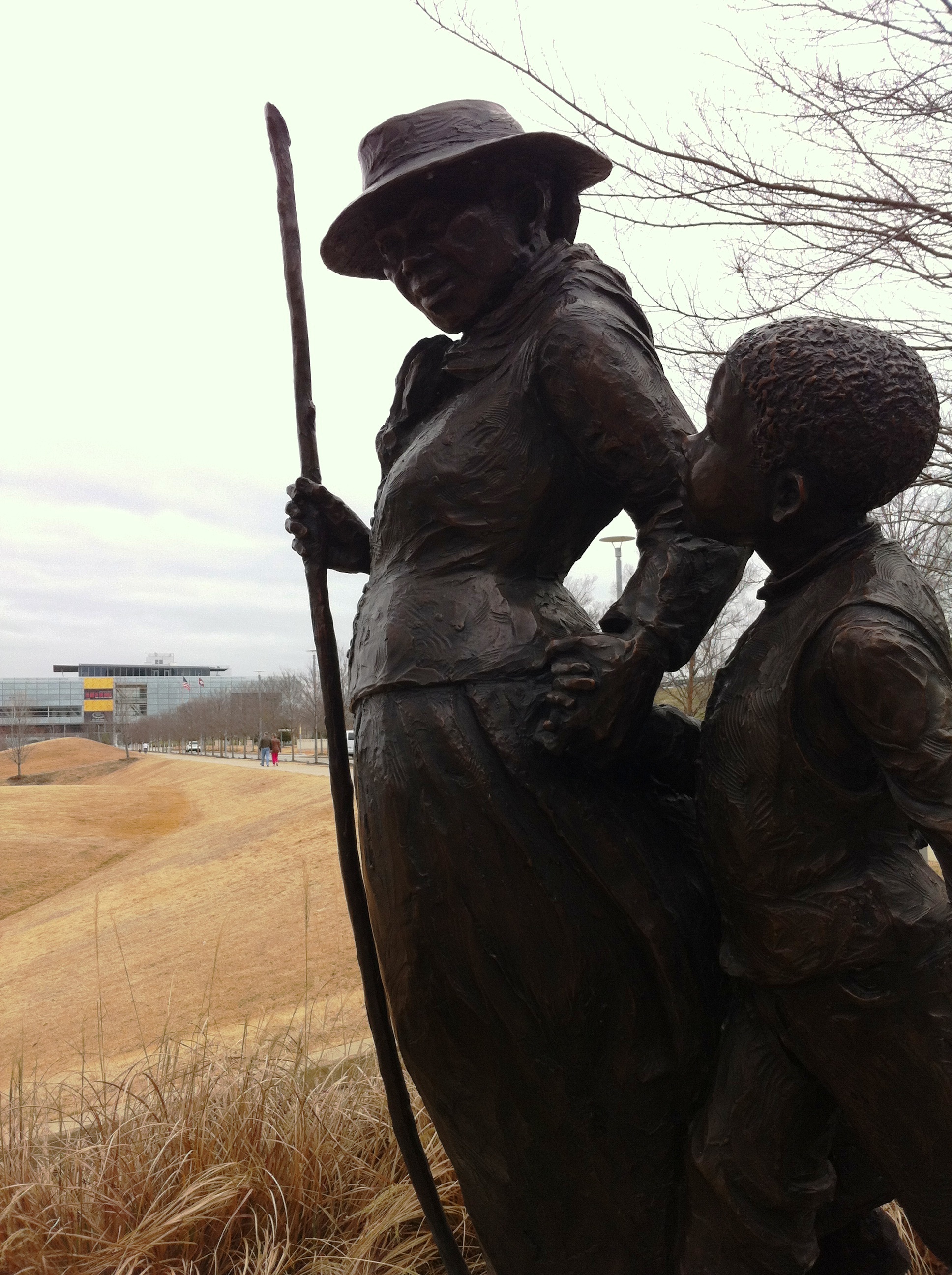
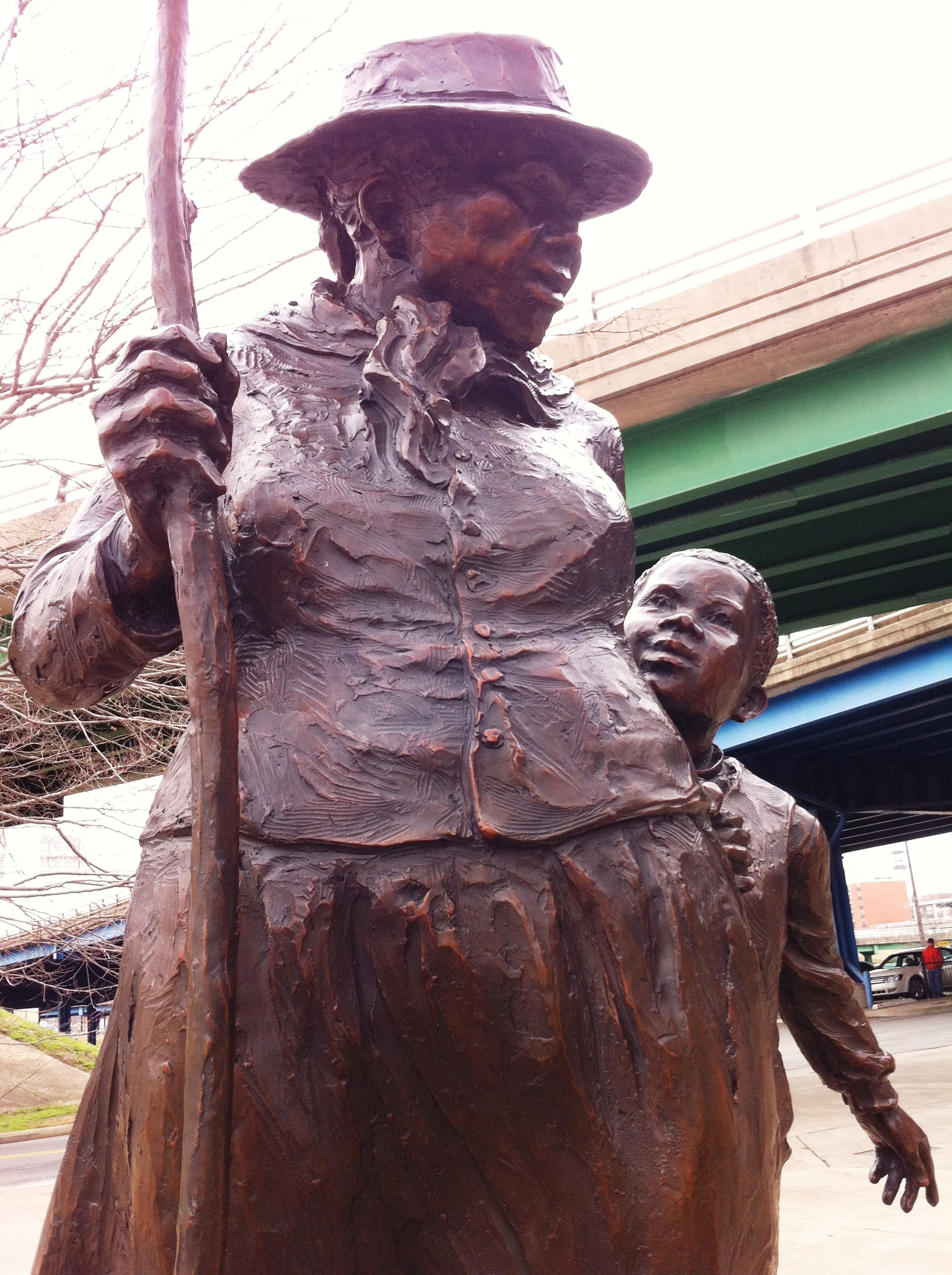
The bronze sculpture, by Jane DeDecker, depicts Miss Tubman grasping the hand of a young boy and leading him on a walk.  DeDecker captures both compassion and a steely determination in the features of Miss Tubman’s face.  The folds of their clothes indicate that they are on a journey.

Whether their walk is a part of the Underground Railroad or simply a walk along the path in post-war times is immaterial. Miss Tubman understood that there is always some form of oppression one must struggle against.

Etched into the base of the statue (and repeated on plaque on the pedestal) is a quote attributed to Miss Tubman.  “Children, if you are tired, keep going; if you’re hungry, keep going; if you’re scared, keep going. If you want a taste of freedom, keep going.”

The statue was originally located in Riverfront Park near the site of the current Game and Fish Nature Center.  It was relocated during the construction of that facility and now anchors the entrance to Clinton Presidential Park.  Harriet Tubman was a gift of Haskell and Peggy Dickinson to the City of Little Rock.

Mendelssohn String Symphony No. 10 tonight at Arkansas Symphony River Rhapsodies Series at Clinton Presidential Center

ASO NewThe Arkansas Symphony Orchestra, Philip Mann, Music Director and Conductor, presents the fifth concert of the 2015-2016 River Rhapsodies Chamber Music Series: Mendelssohn’s String Symphony No. 10, at 7 PM Tuesday March 1, 2016 at the Clinton Presidential Center’s Great Hall.

ASO musicians present a chamber music showcase in the beautiful Great Hall of the Clinton Presidential Center, featuring works from Prokofiev, Beethoven, Mendelssohn, and Bach in various ensembles.

A cash bar is open at 6 PM and at intermission, and patrons are invited to carry drinks into the hall. Media sponsor for the River Rhapsodies Chamber Music Series is KUAR/KLRE.

Tickets are $23; active duty military and student tickets are $10 and can be purchased online at www.ArkansasSymphony.org; at the Clinton Presidential Center beginning 60 minutes prior to a concert; or by phone at 501-666-1761, ext. 100.

Artists

Geoffrey Robson, violin/conductor
Rockefeller Quartet:

  • Trisha McGovern Freeney, violin
  • Katherine Williamson, violin
  • Katherine Reynolds, viola
  • Aaron Ludwig, cello

Vernon Di Carlo, tenor
Tatiana Roitman, piano
Andrew Irvin, Kiril Laskarov, Eric Hayward, Meredith Maddox Hicks, Leanne Day-Simpson, Sandra McDonald, Yennifer Correia, violins
Ryan Mooney, Katrina Weeks, violas
David Gerstein, Ethan Young, cellos
Barron Weir, bass
Carl Anthony, harpsichord


Program

PROKOFIEV – Sonata for Two Violins in C Major, Op. 56

BEETHOVEN  – String Quartet in C minor, Op. 18 No. 4

MENDELSSOHN – Selection of Songs for Voice and Piano

BACH – Brandenburg Concerto No. 3 in G Major, BW 1048

MENDELSSOHN – String Symphony No. 10 in B minor

Little Rock Look Back: George Washington

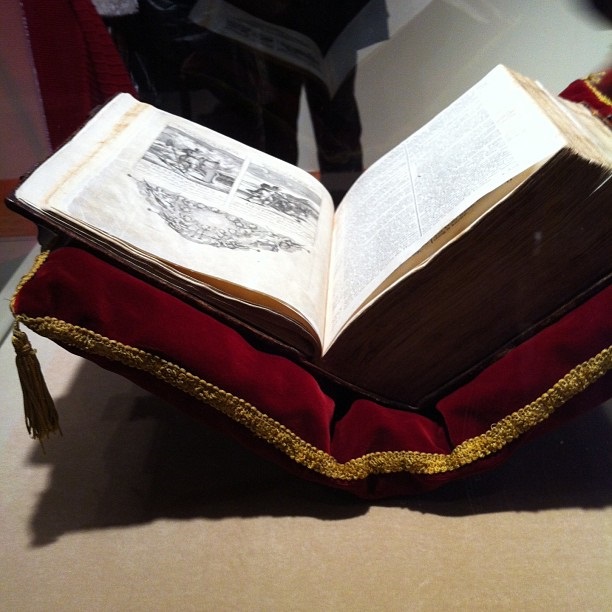
The Washington Inaugural Bible

Washington1George Washington was born on February 22, 1732, in Westmoreland, Virginia. He is one of only two American Presidents to not have any authority over the land now known as Little Rock. Washington never ventured west of the Mississippi River, so never visited Arkansas.

As the first President and Father of his Country, he has many things named after him. In Little Rock, Washington Street is named in his honor.

In 2013, two Little Rock museums highlighted George Washington artifacts. Historic Arkansas Museum displayed the Washington family Bible for several months. At the start of that time, they also showcased the Bible on which Washington swore his first oath as President (the inaugural inaugural?).

A few months later, the Clinton Presidential Center featured Washington’s personal annotated copy of the 1789 “Acts Passed at a Congress of the United States of America.” This artifact had been purchased by the Mount Vernon Ladies Association in 2012.

Free admission at Clinton Center today

Clinton Library 3The Clinton Presidential Center is free today in honor of the George Washington Birthday Federal Holiday.  Also free are audio tours narrated by President Clinton.

This is a wonderful opportunity to see the final day of the temporary Coca-Cola exhibits.

Illustrations of an American Original is located in the Garden View Room and focuses the now-iconic images and advertising campaigns that have helped define the Coca-Cola brand.  An American Original at 100 is housed in the Temporary Gallery, bringing together historic bottle “firsts.” It features a 13-bottle chronology, including an original glass bottle produced in 1902, a replica of the prototype contour bottle created by the Root Glass Company in 1915, and a prototype of the aluminum bottle that debuted in 2008.
In addition to Illustrations of an American Original and An American Original at 100, the Center is also displaying a full-size antique Coca-Cola delivery truck produced in 1949 by the White Motor Company and a spectacular hanging installation comprised of more than 750 3D-printed, ribbon-shaped interpretations of the bottle’s classic shape.

Final 2 Days of Coca Cola exhibit at Clinton Center

Coca-Cola-Bottle-History-v2-hiThe Clinton Presidential Center celebrates the art and history of the Coca-Cola Bottle’s 100-year anniversary during its upcoming temporary exhibit, Coca-Cola: An American Original. The exhibit closes on Monday, February 15.
The exhibit is divided into two sections and occupies both the Garden View room, located on the first floor, and the Temporary Gallery, located on the third floor.
Illustrations of an American Original will be located in the Garden View Room and will have as its focus the now-iconic images and advertising campaigns that have helped define the Coca-Cola brand. Illustrations will include three original paintings by Norman Rockwell, an American artist who created a total of six paintings that were ultimately used in finished Coca-Cola ads. The three others, known as the “Missing Rockwells,” have yet to be located. Additionally, Illustrations feature several images of Santa Claus, including the first Coca-Cola Santa painted by Fred Mizen that appeared in The Saturday Evening Post in December of 1930, as well as nine original Haddon Sundblom illustrations.
An American Original at 100 is housed in the Temporary Gallery, bringing together historic bottle “firsts.” It features a 13-bottle chronology, including an original glass bottle produced in 1902, a replica of the prototype contour bottle created by the Root Glass Company in 1915, and a prototype of the aluminum bottle that debuted in 2008.
Also, the exhibit showcases pop art by Andy Warhol—including videos, photographs, prints, and other original works—and folk art by Howard Finster, who incorporated the Coca-Cola bottle into dozens of his pieces over his prolific career. Another portion of this exhibit is dedicated to American presidents and their connection to the global brand. An American Original at 100 was recently on display at the High Museum of Art Atlanta.


In addition to Illustrations of an American Original and An American Original at 100, the Center is also displaying a full-size antique Coca-Cola delivery truck produced in 1949 by the White Motor Company and a spectacular hanging installation comprised of more than 750 3D-printed, ribbon-shaped interpretations of the bottle’s classic shape.
Coca-Cola: An American Original is the Center’s 42nd temporary exhibit. It will close on February 15, 2016.  Admission to temporary exhibits is included in the price of Library admission.