Little Rock Look Back: Ben Piazza

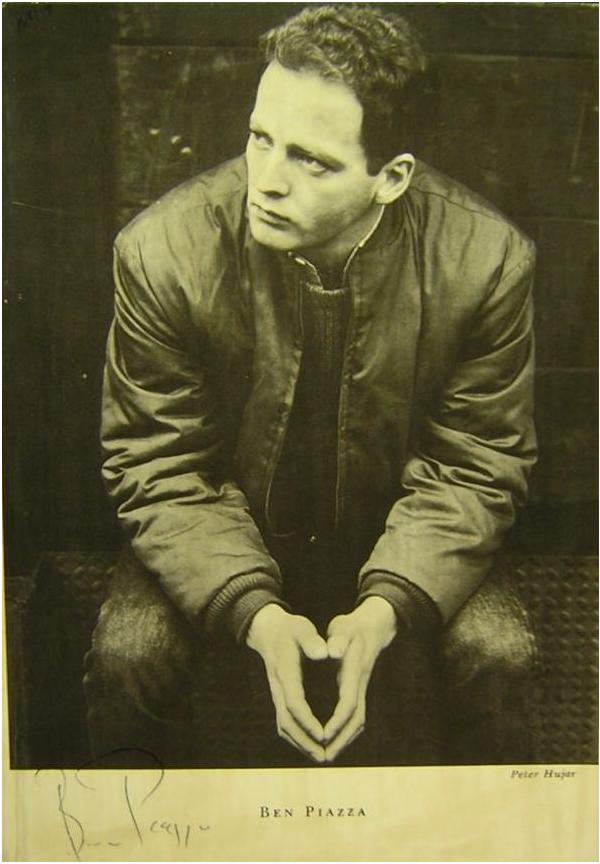
BdP book photo

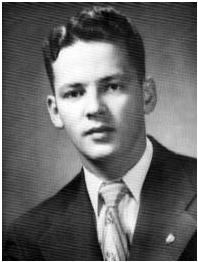
BDP LRHS

Piazza at LR High School

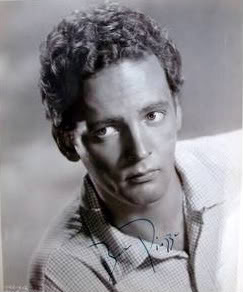
Actor-director-playwright Ben Piazza was born on July 30, 1933, in Little Rock.  Piazza graduated from Little Rock High School in 1951 as valedictorian. He also had starred in the senior play that year (The Man Who Came to Dinner) and edited the literary magazine.

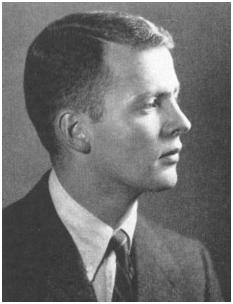
Keeping the Tiger as his mascot, Piazza attended college at Princeton University.  While there he continued acting, including an appearance in a Theatre Intime production of Othello.  Following his 1955 graduation, he moved to New York City and studied at the Actor’s Studio.
BDP PU

Piazza at Princeton

Piazza was an understudy in the 1956 play, Too Late the Phalarope at the Belasco Theatre.  In February 1958, he starred in Winesburg, Ohio sharing the National (now Nederlander) Theatre stage with James Whitmore, Dorothy McGuire, and Leon Ames. Other cast members included Claudia McNeil (who originated the part of Lena in A Raisin in the Sun) and Sandra Church (who originated the part of Gypsy Rose Lee in Gypsy).

In April 1959, Piazza starred in Kataki at the Ambassador Theatre. This two actor play also featured Sessue Hayakawa, who played a Japanese soldier who spoke only his native language.  Therefore, Piazza’s part was largely a very lengthy monologue.  For his performance, Piazza received one of the 1959 Theatre World Awards.

As the 1960s dawned, Piazza joined a small cadre of actors who had achieved status on Broadway who then also returned to acting Off Broadway.  Colleen Dewhurst, George C. Scott, and James Earl Jones were others in this select group who helped establish Off Broadway as an entity in itself, instead of being just a farm team for Broadway.

Piazza started the 1960s on Broadway starring at the Eugene O’Neill Theatre in A Second Stringwith Shirley Booth, Jean-Pierre Aumont, Nina Foch, Cathleen Nesbitt, and Carrie Nye.   Following that, he started his association with Edward Albee by appearing as the title character inThe American Dream.  That play opened at the York Playhouse in January 1961.  Later that year, he appeared in Albee’s The Zoo Story opposite original cast member William Daniels at the East End Theatre.

piazza

Also in 1961 Piazza starred in several plays during a South American tour sponsored by the American Repertory Company.  He played Christopher Isherwood in I Am a Cameraand Chance Wayne in Sweet Bird of Youth.  In 1962, he starred in a series of plays at the Cherry Lane Theatre.  Piazza returned to Broadway to star along with Jane Fonda and Dyan Cannon in The Fun Couple at the Lyceum Theatre. This play had a troubled rehearsal period, which was documented in a short film about Jane Fonda.

Ben Piazza stayed on Broadway and returned to Albee in February 1963.  He took over the role of Nick in the original run of Who’s Afraid of Virginia Woolf? when original actor George Grizzard left to play Hamlet at the Guthrie Theatre.  (He had participated in earlier readings of the play prior to it being mounted on Broadway.)

This play was at the Billy Rose Theatre, which marked a return for Piazza. He had acted at this theatre when it was the National while doing Winseburg.  Piazza played Nick for the remainder of the run and acted with Uta Hagen, Arthur Hill, fellow Arkansan Melinda Dillon, Eileen Fulton, Nancy Kelly, Mercedes McCambridge, Rochelle Oliver and Sheppard Strudwick.

Exact and Very Strange cover

During the run of this show, Piazza’s novel The Exact and Very Strange Truth was published.  It is a fictionalized account of his growing up in Little Rock during the 1930s and 1940s.  The book is filled with references to Centennial Elementary, Westside Junior High, Central High School, Immanuel Baptist Church and various stores and shops in Little Rock during that era.  The Piazza Shoe Store, located on Main Street, was called Gallanti’s.

Following Virginia Woolf, he starred in The Zoo Story at the Cherry Lane Theatre in 1965.  In August of 1967, his play The Sunday Agreement premiered at LaMaMa.  This was Piazza’s first playwright output to be professionally staged.

As Sunday Agreement was opening, Piazza was in rehearsal for his next Broadway opening. He appeared with Alfred Drake in The Song of the Grasshopper in September 1967.  In 1968, he returned to Albee and starred in The Death of Bessie Smith and The Zoo Story in repertory on Broadway at the Billy Rose Theatre.

Later that season, in March 1969, a double bill of his one-acts: Lime Green/Khaki Blue opened at the Provincetown Playhouse.  It was directed by future Tony nominee Peter Masterson and starred Louise Lasser, Robert Walden (starred in the 2013 production of Death of a Salesman at Arkansas Repertory Theatre), Clinton Allmon and Dolores Dorn-Heft, to whom Piazza was married at the time.

Throughout the 1960s and early 1970s, Piazza toured in many plays nationally and internationally. He also appeared in major regional theatres as an actor and a director.  During this time period he was in productions of Bus Stop, Who’s Afraid of Virginia Woolf?, You Know I Can’t Hear You when the Water’s Running  and Savages.  In 1970, he starred as Stanley Kowalski in a production of A Streetcar Named Desire in New Orleans.  As the 1970s progressed, he turned his focus to television and movies.
BDP early

Piazza headshot for HANGING TREE

Piazza’s film debut was in a 1959 Canadian film called The Dangerous Age. That same year, his Hollywood film debut came opposite Gary Cooper, Karl Malden, Maria Schell and George C. Scott in The Hanging Tree.  Though he received positive reviews for his performances, Piazza chose to return to New York and perform in stage and TV productions.

Throughout the 1950s and 1960s, he appeared in a number of TV shows including Studio One, Kraft Theatre, Zane Grey Theatre, The Naked City and Dick Powell Theatre.  He had a recurring role during one season of Ben Casey and appeared on the soap opera Love of Life.

In the 1970s, he starred in the films Tell Me That You Love Me, Junie Moon; The Candy Snatchers and I Never Promised You a Rose Garden.  He also starred as the City Councilman who recruits Walter Matthau to coach a baseball team in The Bad News Bears.

Among his numerous TV appearances in the 1970s were The Waltons, Mannix, Switch, Barnaby Jones, Gunsmoke, Mod Squad and Lou Grant (where he was reunited with Walden).

BDP final

Piazza in the late 1980s

In the 1980s, he appeared in The Blues Brothers, The Rockford Files, Barney Miller, Hart to Hart, Family Ties, The Winds of War, Dallas, Dynasty, Too Close for Comfort, The A Team, Saint Elsewhere, Santa Barbara, The Facts of Life, Mr. Belvedere, Moonlighting and Matlock.

Piazza’s final big screen appearance was in the 1991 film Guilty by Suspicion.  He played studio head Darryl Zanuck in this Robert DeNiro-Annette Bening tale of Hollywood during the Red scare.

Ben Piazza died on September 7, 1991.

Final week to see DEATH OF A SALESMAN at Ark Rep

Salesman (1)This is the final week to see the much-praised production of Arthur Miller’s Pulitzer, Tony and New York Drama Critics Circle winning Death of a Salesman at the Arkansas Repertory Theatre.  The production runs through May 12.

Death of a Salesman has been hailed as the greatest American play.  The central character, Willy Loman, has been compared to heroes in Aristotlean proportions.

But at the heart of all the hype is family bound by love and crushed by disappointments as they struggle to make sense of life.  Though set in the post World War II era, these themes resonate today.

Arkansas Rep Producing Artistic Director Robert Hupp is directing this production.  He has assembled a powerhouse cast led by Robert Walden as Willy Loman.  In her Arkansas Rep debut, Broadway vet Carolyn Mignini plays Linda Loman, his wife.  Their two sons are played by Avery Clark and Craig Maravich.  Clark has quickly become a Rep audience favorite through his performances in Hamlet, The 39 Steps and Henry V.  Maravich is making his Rep debut.

Others in the cast are Broadway vet William Metzo, Arkansas Rep vets Jay E. Raphael and Joe Menino, and Christopher Ryan and Kevin Sebastian, Stephanie Gunderman , Rachael Small and Andi Watson.

The design team includes Mike Nichols (sets), Rafael Colon Castanera (costumes), Allan Branson (sound), Lynda J. Kwallek (props) and Kenton Yeager (lighting).  Hupp commissioned a new recording of Alex North’s iconic score for this production.

The show plays at 7pm on Wednesday and Thursday, 8pm on Friday and Saturday, and 2pm and 7pm on Sunday.  For more on the production see this review.

Ark Rep’s SALESMAN featured at Clinton School Lecture on May 1

Salesman (1)The Arkansas Repertory Theatre works in partnership with the Clinton School of Public Service to participate in the UACS’s Distinguished Speaker Series, hosting educational panel discussions on various Rep productions. The latest in these takes place today,  Wednesday, May 1 at 12 noon at Sturgis Hall in Clinton Presidential Park.

Join Rep Producing Artistic Director and Death of a Salesman director Robert Hupp as he hosts the cast from The Rep’s current production. Why do critics call Death of a Salesman the greatest American play, and what relevance can audiences draw from this 50 year-old production? Call the Clinton School at (501) 683-5239 for reservations.

Death of a Salesman opened last Friday night and  runs through May 12. Wednesday, Thursday and Sunday evening performances are at 7 p.m., Friday, Saturday evening performances are at 8 p.m. Sunday Matinees performances are at 2 p.m.

clinton-school-logo

Sold on SALESMAN

Salesman (1)Death of a Salesman has been hailed as the best American play. Ever. So the stakes are high for any production.

For the greatest American play, director Robert Hupp has assembled arguably the strongest cast ever on stage at the Arkansas Repertory Theatre. They offer a master class in acting that is both explosive and restrained, both naturalistic and ethereal.

From the Loman family which dominates the stage throughout the play to the assorted other characters who drift in and out, these actors form a seamless unit to tell Arthur Miller’s story of dreams and desperation.

Robert Walden’s Willy Loman is rumpled, careworn and creased. His presence shows the wear and tear of every mile he has driven and every sales visit he has made. Walden’s Loman evokes sympathy and frustration. His eyes alternate between twinkling and deadness. Though the hero of the play, Walden is not noble – he honestly portrays the flaws that ultimately lead to the play’s climax and dénouement.

As Linda Loman, Willy’s wife, Carolyn Mignini leaves no doubt that she loves her husband. She is loyal and protective. Her smile is more a part of her armor than a talisman of emotion. Her eyes alternate between shimmering with affection, glowering with anger and sinking with disappointment. Mignini and Walden have great chemistry together ; they are comfortable with each other like a long married couple should be.

Avery Clark and Craig Maravich play the two Loman sons. Like their father, they are trapped in an earlier world and cannot truly face reality. As older boy Biff, Clark adds another fine portrayal to his appearances at the Rep. He is at turns deliberately spiteful and other times straining to break free of the past. Maravich makes a Rep debut on a high note as the aptly named Happy Loman. He is blissfully complicit in the family pastime of falsehoods. During flashback scenes, Clark and Maravich actually seem to have grown younger. They are so invested in their characters, they seem to have found a secret fountain of youth. They too have great chemistry with each other and with the actors playing their parents. This is truly a family unit.

Jay E. Raphael plays Charley, Loman’s neighbor and sometime confidant. At first he seems merely to be a likeable eccentric, an avuncular presence and foil for Loman. But toward the end he has two powerful scenes and pulls everything together from earlier appearances. As Charley’s son Bernard, Kevin Sebastian ably captures both the bookish youth and the successful attorney he becomes. As an adult, he seems to literally shrink with discomfort over the delusions in which the Lomans seem to abide.

As Willy’s brother Ben, William Metzo appears to have the most fun of any actors on stage. He exists only in Willy’s memory and imagination. He is both angel and devil on Willy’s shoulder. Metzo clearly relishes the chance to be an eccentric adventurer, storyteller and conscience for Willy.

Christopher Ryan plays Willy’s boss, the son of his former boss. His character is meant to be callous and unlikable, which Ryan captures. But in his portrayal, the character is not evil. He realizes that time has marched on and doesn’t seem to know how to relate to people like Willy who haven’t grasped it. In their brief moments, Joe Menino, Stephanie Gunderman, Rachael Small and Andi Watson offer fully-fleshed out characters who interact with and have impact on the Lomans.

Hupp’s direction is seamless. He keeps the action moving while trusting the actors, audience and script to allow for silence when it is needed. This is not a revolutionary staging, but it is also not a museum piece. Under Hupp’s leadership, this production approaches the play as if it were a new work. This lends a freshness and vitality to the production. It also adds to the timeless appeal of the period piece. Hupp directs the play with a loving and respectful touch, but with his own vision.

Mike Nichols’ set is an homage to Jo Mielziner’s iconic original Broadway set. But Nichols, being the master artist that he is, creates a set that is his own. On the Rep’s small stage, he creates not only the Loman’s cramped and comfortable post-World War I house, but also evokes the looming encroachment of post-World War II “progress.”

Rafael Castanara Colon’s costumes are spot-on. They are tailor made for characters, most of whom lived in an off-the-rack world. Lynda J. Kwallek’s props also help establish the time and place of the action. These very matter-of-fact representations combine with the evocative sound design of Allan Branson and lighting of Kenton Yeager to shift not only through time and space but also between the harsh reality of the Lomans’ world and the characters’ fantasies and reminiscences. Hupp commissioned a newly recorded version of Alex North’s original Broadway score which enhances the production.

The Arkansas Rep production of Death of a Salesman is not to be missed. Don’t let the fact that it is a drama dissuade you – Hupp and his cast have mined Miller’s text for many honestly humorous moments. This may be an “important” play which was taught in school – but it has many lessons to teach us about ourselves and others.

The play raises many questions and offers hints of answers, but no final solutions. In the end, two of the characters offer contradictory assessments of the life of Willy Loman. Both are right, but yet both are wrong. Walden’s performance and Hupp’s direction play no favorites with these competing views. They leave it to the audience to ponder. This is a production which will stay with audience members long after they have left the theatre.

Death of a Salesman runs through May 12 at the Arkansas Repertory Theatre. To borrow a line from the play “Attention must be paid.” While there are no answers which are “free and clear” (to borrow another line), it is a journey well worth taking for audiences and the actors.

Ark Rep’s DEATH OF A SALESMAN this week!

Salesman (1)Arthur Miller’s Pulitzer, Tony and New York Drama Critics Circle winning Death of a Salesman opens at the Arkansas Repertory Theatre this week.  Previews are Wednesday and Thursday night before Friday’s opening night.  The production runs through May 12.

Death of a Salesman has been hailed as the greatest American play.  The central character, Willy Loman, has been compared to heroes in Aristotlean proportions.

But at the heart of all the hype is family bound by love and crushed by disappointments as they struggle to make sense of life.  Though set in the post World War II era, these themes resonate today.

Arkansas Rep Producing Artistic Director Robert Hupp is directing this production.  He has assembled a powerhouse cast led by Robert Walden as Willy Loman.  In her Arkansas Rep debut, Broadway vet Carolyn Mignini plays Linda Loman, his wife.  Their two sons are played by Avery Clark and Craig Maravich.  Clark has quickly become a Rep audience favorite through his performances in Hamlet, The 39 Steps and Henry V.  Maravich is making his Rep debut.

Others in the cast are Broadway vet William Metzo, Arkansas Rep vets Jay E. Raphael and Joe Menino, and Christopher Ryan and Kevin Sebastian, Stephanie Gunderman , Rachael Small and Andi Watson.

The design team includes Mike Nichols (sets), Rafael Colon Castanera (costumes), Allan Branson (sound), Lynda J. Kwallek (props) and Kenton Yeager (lighting).

Prior to the performances on Wednesday, April 24 and Thursday, April 25, a preshow talk will take place on the set with Hupp and members of the creative team. It will be from 6:15pm to 6:45pm.  There will be another opportunity to learn more about the production on May 1 at the Clinton School at 12 noon.

The Arkansas Democrat-Gazette presents The Rep’s “Pay What You Can Night” on Wed., April  24 Patrons can pay any amount they wish for their ticket. Tickets must be purchased in person at the Box Office at 601 Main Street the day of the performance. The Box Office will be open from 9 a.m. until curtain. Tickets are limited to (2) two per person. Offer is based on seating availability.

Performance times are Wednesday and Thursday evenings at 7pm, Friday and Saturday evenings at 8pm, and Sundays at 2pm and 7pm.

LR Film Fest Rooftop Screening of BLOODY MAMA

lrff_mp_hdr_logoThe Little Rock Film Festival is hosting its first ever Rooftop Screening featuring ‘Bloody Mama’- a classic gangster film featuring Robert De Niro and Robert Walden. It will be tonight at 7pm atop the River Market Tower.

What better way to spend an evening under the stars than watching a movie with a star in the audience? Actor Robert Walden will join the audience on the rooftop for this special screening and will discuss his role in the film.

The event is free, but purchase of an 2013 LRFF pass is required to attend this screening.

Directed by Roger Corman, Bloody Mama was filmed in the Ozark mountains of Arkansas and tells the story of  machine gun totin’ Ma Barker, who lead her family gang (her sons) on a crime spree in the Depression era.Robert Walden plays Fred Barker in the film, who has just been released from prison, and Robert De Niro plays Lloyd Barker, a spaced-out drug addict who sniffs glue if nothing better is around.

During his long an successful career as a Hollywood actor, three time Emmy nominated actor Robert Walden has acted alongside many of the Hollywood greats including George C. Scott, Anthony Hopkins and Dusti Hoffman and has worked with director such as Woody Allen,, Martin Scorcese and Alan Pakula.

Walden currently stars in the new TV land sitcom, Happily Divorcedwith Fran Drescher and Rita Moreno. He will also star in the Arkansas Repertory Theater’s version of Death of a Salesman as Willy Loman, running April 24th to May 12th www.therep.org


Reel Classics with the Rep: DEATH OF A SALESMAN

717deathLater this month, Robert Walden opens in Death of a Salesman at Arkansas Rep.  In conjunction with that, the Reel Classics with the Rep series returns for this month’s installment.

The monthly series showcases films which share connections with productions currently on stage at the Arkansas Repertory Theatre.

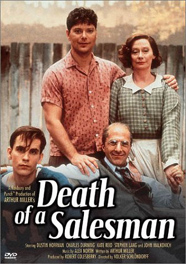
Tonight’s film is the 1985 version of Death of a Salesman.  This version was filmed for television and is adapted from the 1984 Tony winning revival.  It stars Dustin Hoffman as Willy Loman.  Kate Reid, John Malkovich and Stephen Lang play other members of the Loman family. Other standouts in the cast include Charles Durning and Louis Zorich.

The program begins tonight at 6pm with a discussion of the Rep’s production led by members of the Rep’s staff.  Following that, at 6:30, the film will be screened.  It takes place at Laman Library.

The Rep’s production, directed by Robert Hupp, begins performances on April 24 and runs through May 12.  Opening night is April 26.