Heritage Month – Knoop House

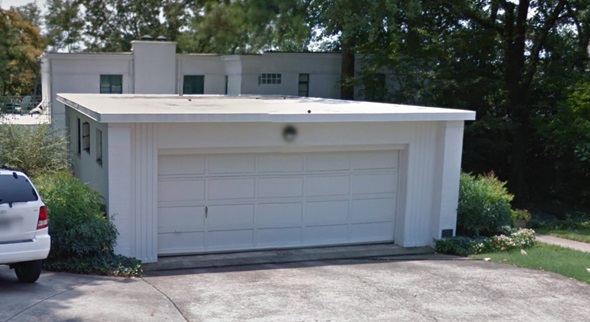
Knoop HouseToday’s historic property is unique for Little Rock.  It is one of the only (if not the only) Art Moderne style residences in Little Rock.

The Knoop House was built in 1936-1937 in Hillcrest for Werner and Faith Knoop. Designed by the architectural firm of Brueggeman, Swaim & Allen, the Art Moderne style of the house departed dramatically from, the mere typical period revival styles of the Hillcrest neighborhood. The Knoop House was (and still is) an outstanding Modernistic architectural statement in an area filled predominantly with English Revival, Colonial Revival, American Four Square, and Bungalow styles.

The house was built by Werner and Faith Knoop in 1936-1937.  In 1948, the original garaged was enlcosed and a new garage was added to the front of the house. Mr. Knoop was a mechanical engineer and founding principal in what is now the Baldwin & Shell Construction Company.  After having served on the school board, in 1957 Mr. Knoop became the first Mayor of Little Rock under the “new” city manager form of government and continued to serve the City on various committees even after his term as Mayor ended. Faith Yingling Knoop was a well-published author of magazine articles, textbooks, and children’s books.

The Knoop House’s simple, restrained detailing is typical of the Art Moderne style, as is the emphasis upon large uninterrupted expanses of smooth wall surface, the preference far a light palette and the selection of such modern materials as metal casement windows and glass block.

The Knoop House was added to the National Register of Historic Places in August 1990.

Little Rock Look Back: B47 Bomber explodes over Little Rock

An LRPD officer talks to bystanders next to a piece of debris

An LRPD officer talks to bystanders next to a piece of debris

The peaceful morning of March 31, 1960, was interrupted by a horrendous noise over Hillcrest around 6:00am.  A six-engine B47 from the Little Rock Air Force Base exploded mid-air.

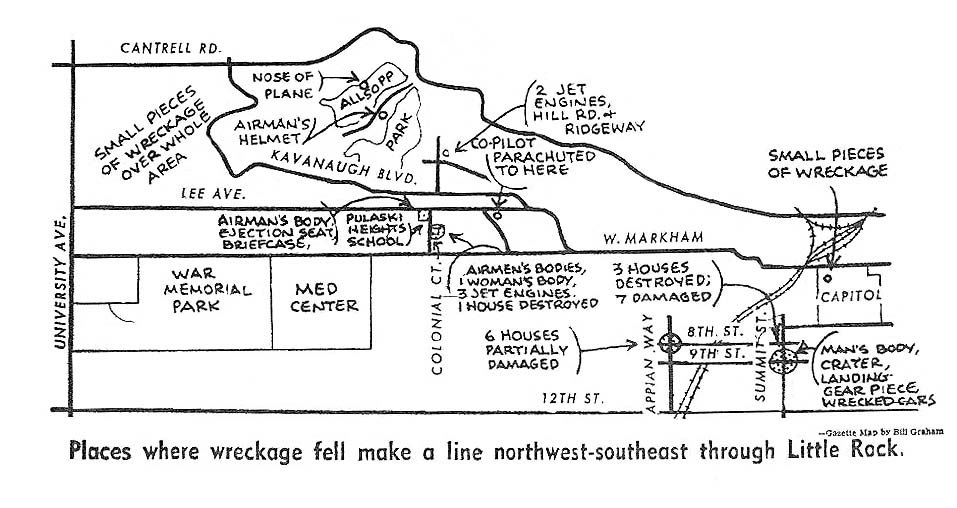
Flaming debris fell from Allsopp Park all the way to the State Capitol grounds and stretched from Cantrell to 12th Street.  Other debris was found as far away as the Country Club of Little Rock.  The next day the Arkansas Gazette ran a map which showed the extent of the damage.

Three airmen died in the explosion and two civilians were killed when debris fell on their homes.  The only survivor from the crew, 1st Lieutenant Thomas Smoak, was found dangling from a tree in his parachute at Kavanaugh and Martin.  He was treated by a nurse, Jimmye Lee Holeman, in whose yard he had landed.

Many vehicles and homes were damaged, some were destroyed by debris.  The damage estimate was put around $4 million.

Police and fire crews were quickly on the scene to secure impacted areas, fight fires and rescue injured persons.

The Strategic Air Command’s edited account of the incident noted:

A B-47 was climbing after takeoff in day VFR weather.  At about 15,000 feet, the copilot suddenly realized that the aircraft was in a very steep left bank, that the nose was well below the horizon, and that the airspeed was excessive.  He pulled the throttles to idle, punched the interphone button and shouted at the aircraft commander.

Almost immediately, the nose came up, the wings leveled, and the aircraft disintegrated.  In the cockpit section, which had separated intact from the rest of the aircraft, the copilot tried to eject, but the clamshell initiator pin had not been removed.  The copilot then unfastened his seat belt.  The canopy blew off at about 10,000 feet.  The unconscious copilot was thrown out at 4,000 feet and his parachute opened automatically.

The aircraft commander ejected at 2,000 feet, but his parachute had been fused by fire and he died upon impact.  The fourth man was found near the wreckage and did not survive.  The navigator was killed in his position.  The falling wreckage killed two civilians and caused serious damage to property.”

Those who perished were Captain Herbert Aldridge, Lieutenant Colonel Reynolds Watson, Staff-Sergeant Kenneth Brose, and civilians Alta Lois Clark and James Hollabaugh.

Arkansas Gazette map of debris and damage

Arkansas Gazette map of debris and damage

Little Rock Look Back: LR Mayor Werner Knoop

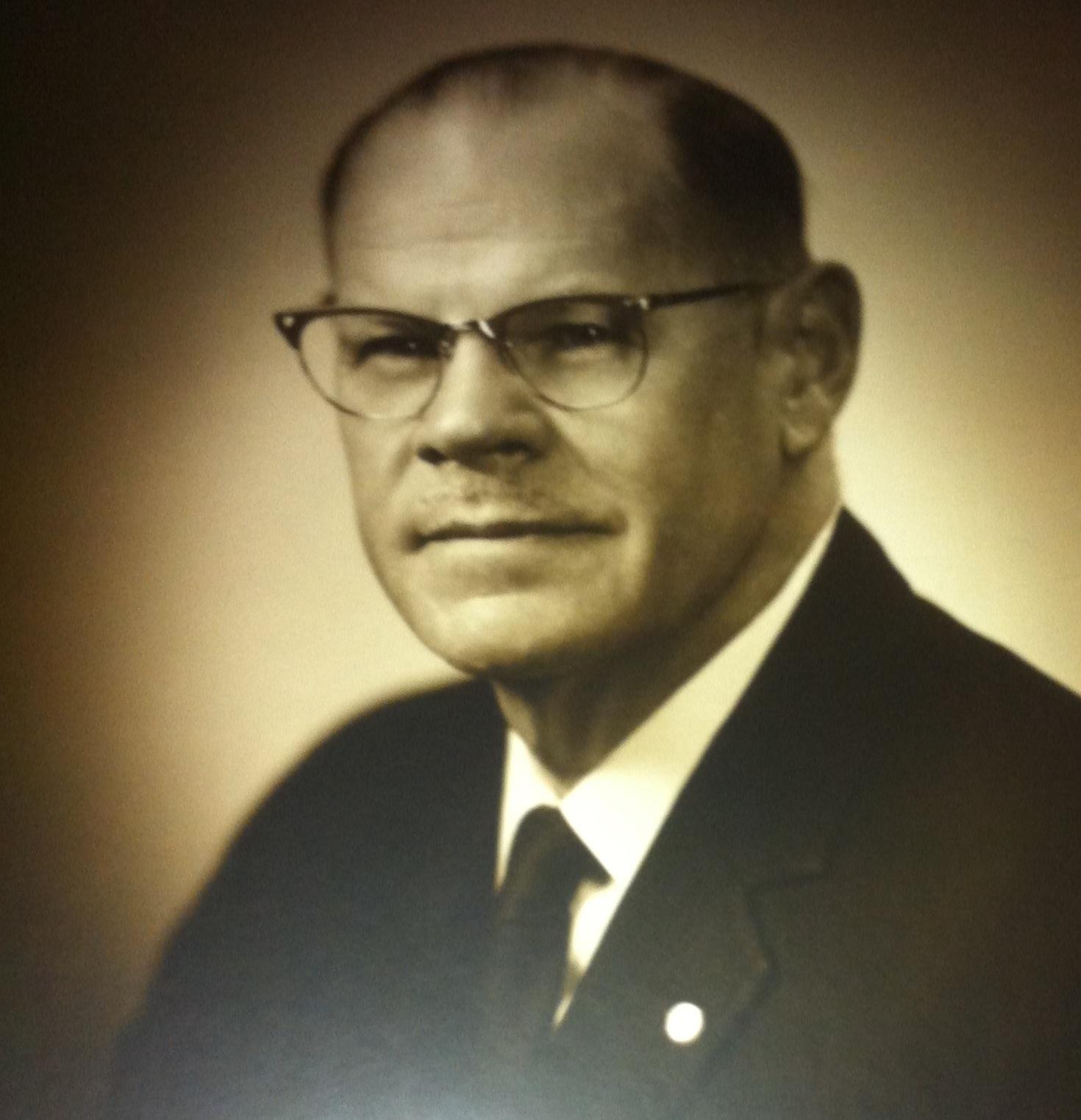
Mayor KnoopTo Little Rock citizens under a certain age, the name Knoop means Knoop Park — a picturesque park tucked away in a pocket of Hillcrest.  There are, however, still many who remember Werner C. Knoop as a business and political leader who helped shape Little Rock as a modern city.

Knoop was born on March 30, 1902.

In 1946, Knoop joined with Olen A. Cates and P. W. Baldwin to form Baldwin Construction Company in Little Rock.  Knoop had previously founded Capital Steel Company and established his business reputation there.  From 1945 through 1951, he served on the Little Rock School Board.

Following a series of political scandals, efforts were undertaken for Little Rock to shift from Mayor-Council to City Manager form of government.  Even before the desegregation of Little Rock Central put the city in the eyes of the world, an election for new leaders had been set for November 1957.  Knoop was on a “Good Government” slate and was one of the members elected.

At the first meeting of the new City Board, Werner C. Knoop was chosen by his fellow directors to serve as Little Rock Mayor.  Knoop served as Mayor until December 1962.  For the first several months in office, Little Rock had no City Manager so Knoop oversaw the transition of City staff as the forms of government changed.

Though City Hall generally stayed out of school district matters, that did not mean that the public viewed the two entities separately.  In September 1959, the Baldwin Construction offices were bombed as part of a series of terrorist activities protesting the desegregated reopening of all Little Rock high schools.

Downtown LR as viewed from Knoop Park

Downtown LR as viewed from Knoop Park

After two terms on the City Board, Knoop decided against seeking a third term.  He concluded his elected public service on December 31, 1962.  Following his time on the City Board, Knoop did not retire from Civic Affairs.  In 1970, he served as Chairman of the Little Rock Chamber of Commerce.   The previous year he served as President of the Arkansas Chapter of Associated General Contractors.

Mayor Knoop died in July 1983.  He is buried at Roselawn Memorial Park next to his wife Faith Yingling Knoop, a renowned author.

In the 1930s, Knoop moved into an Art Moderne house on Ozark Point in Hillcrest.  It was adjacent to Little Rock Waterworks property which was developed around the same time.  Eventually much of the land was deeded to the City for creation of a park.  In 1989, it was named in tribute to long-time neighbor Knoop in honor of his lifetime of service to Little Rock.

Little Rock Look Back: Werner Knoop – LR’s 54th Mayor

Mayor KnoopTo Little Rock citizens under a certain age, the name Knoop means Knoop Park — a picturesque park tucked away in a pocket of Hillcrest.  There are, however, still many who remember Werner C. Knoop as a business and political leader who helped shape Little Rock as a modern city.

Knoop was born on March 30, 1902.

In 1946, Knoop joined with Olen A. Cates and P. W. Baldwin to form Baldwin Construction Company in Little Rock.  Knoop had previously founded Capital Steel Company and established his business reputation there.  From 1945 through 1951, he served on the Little Rock School Board.

Following a series of political scandals, efforts were undertaken for Little Rock to shift from Mayor-Council to City Manager form of government.  Even before the desegregation of Little Rock Central put the city in the eyes of the world, an election for new leaders had been set for November 1957.  Knoop was on a “Good Government” slate and was one of the members elected.

At the first meeting of the new City Board, Werner C. Knoop was chosen by his fellow directors to serve as Little Rock Mayor.  Knoop served as Mayor until December 1962.  For the first several months in office, Little Rock had no City Manager so Knoop oversaw the transition of City staff as the forms of government changed.

Though City Hall generally stayed out of school district matters, that did not mean that the public viewed the two entities separately.  In September 1959, the Baldwin Construction offices were bombed as part of a series of terrorist activities protesting the desegregated reopening of all Little Rock high schools.

After two terms on the City Board, Knoop decided against seeking a third term.  He concluded his elected public service on December 31, 1962.  Following his time on the City Board, Knoop did not retire from Civic Affairs.  In 1970, he served as Chairman of the Little Rock Chamber of Commerce.   The previous year he served as President of the Arkansas Chapter of Associated General Contractors.

Mayor Knoop died in July 1983.  He is buried at Roselawn Memorial Park next to his wife Faith Yingling Knoop.

In the 1930s, Knoop moved into an Art Moderne house on Ozark Point in Hillcrest.  It was adjacent to Little Rock Waterworks property which was developed around the same time.  Eventually much of the land was deeded to the City for creation of a park.  In 1989, it was named in tribute to long-time neighbor Knoop in honor of his lifetime of service to Little Rock.

LR from Knoop Park

Downtown Little Rock as viewed from Knoop Park

2 times 13 photos of 2013

Here are 26 of the Culture Vulture’s favorite photos from 2013.

Mount Holly Cemetery in January 2013.

Mount Holly Cemetery in January 2013.

A former movie theatre at 13th and Pine.

A former movie theatre at 13th and Pine.

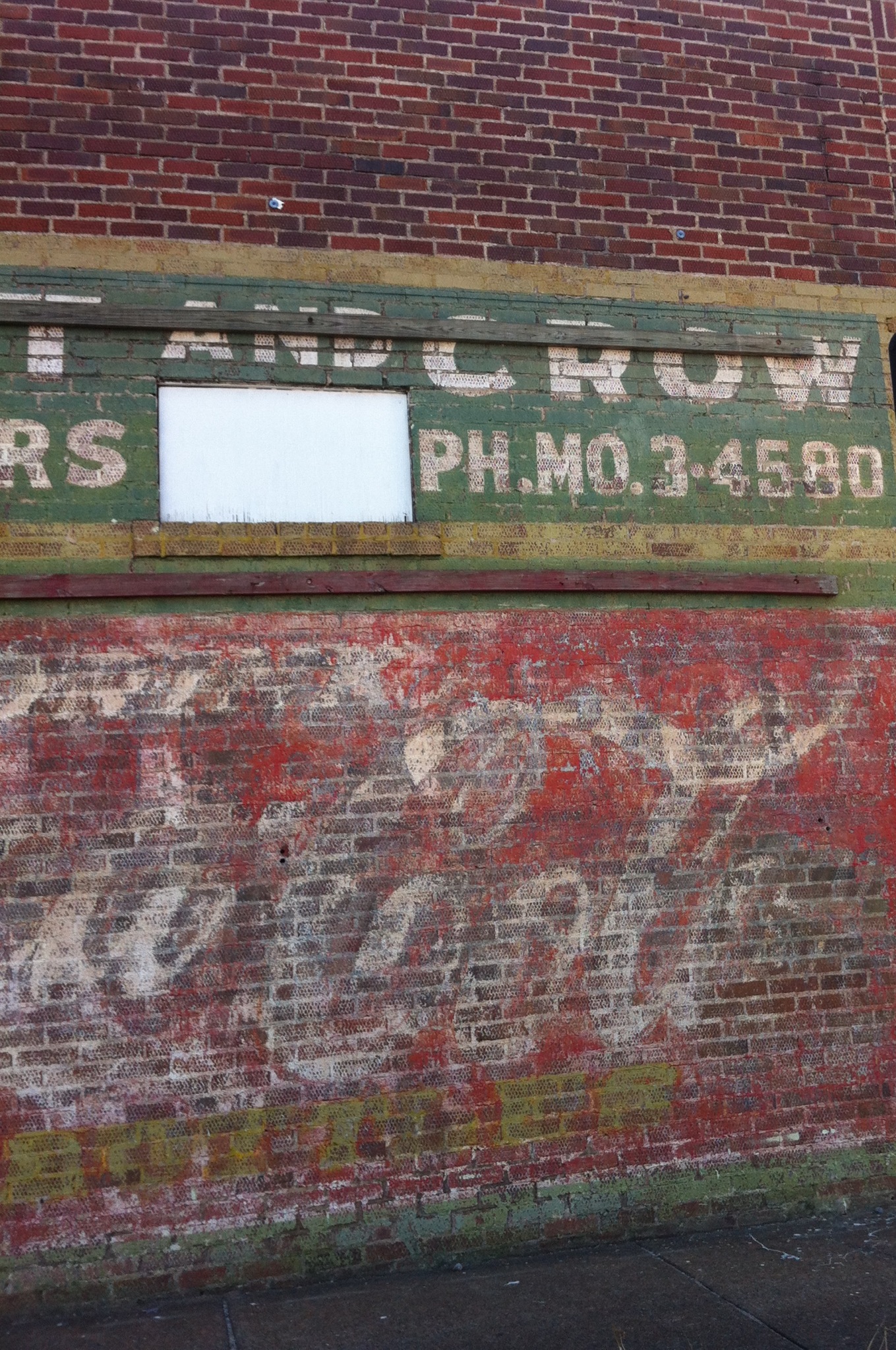
Faded advertisement at 12th and Cedar.

Faded advertisement at 12th and Cedar.

A father and daughter enjoying time together at the Arkansas Arts Center.

A father and daughter enjoying time together at the Arkansas Arts Center.

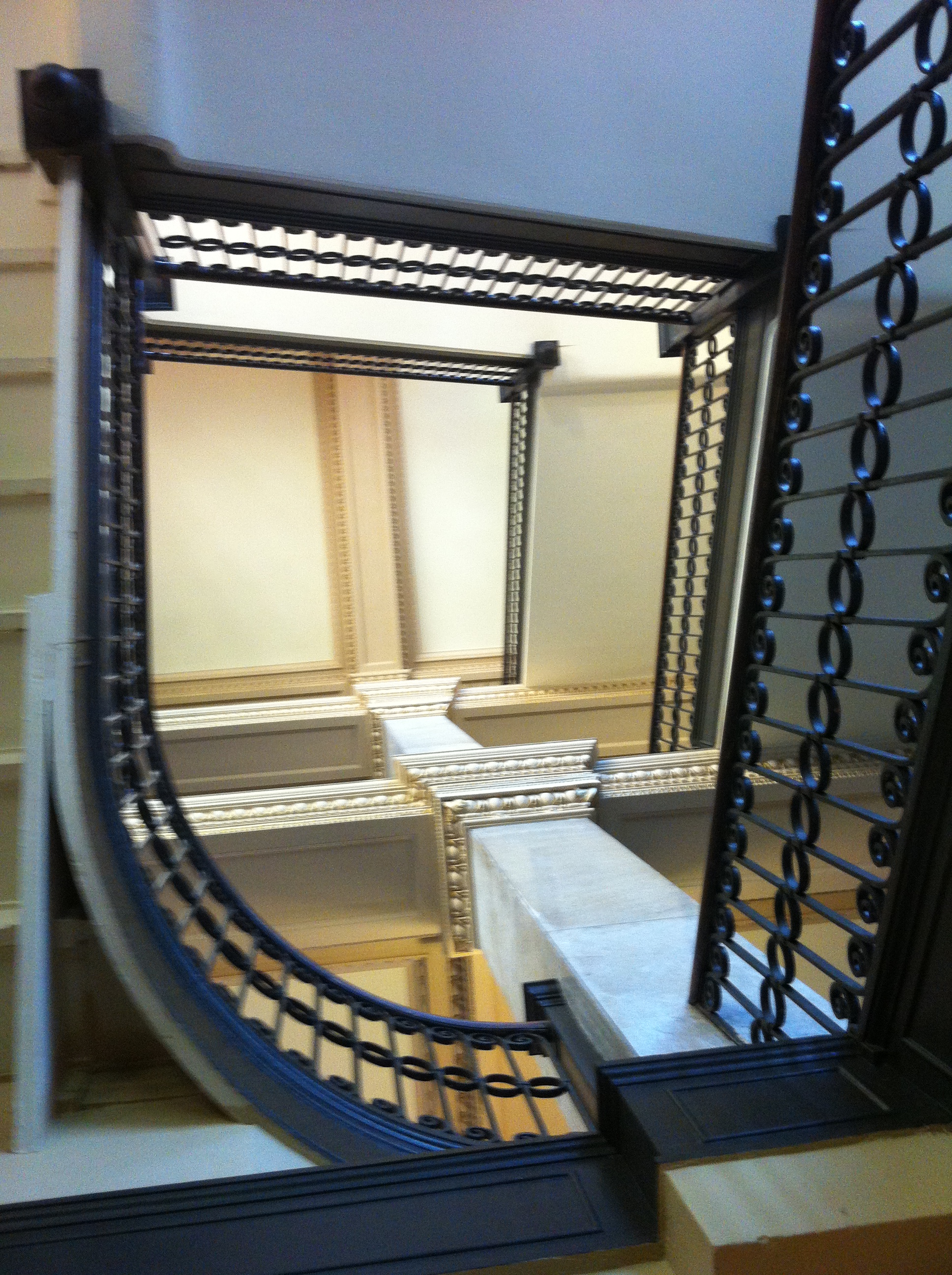
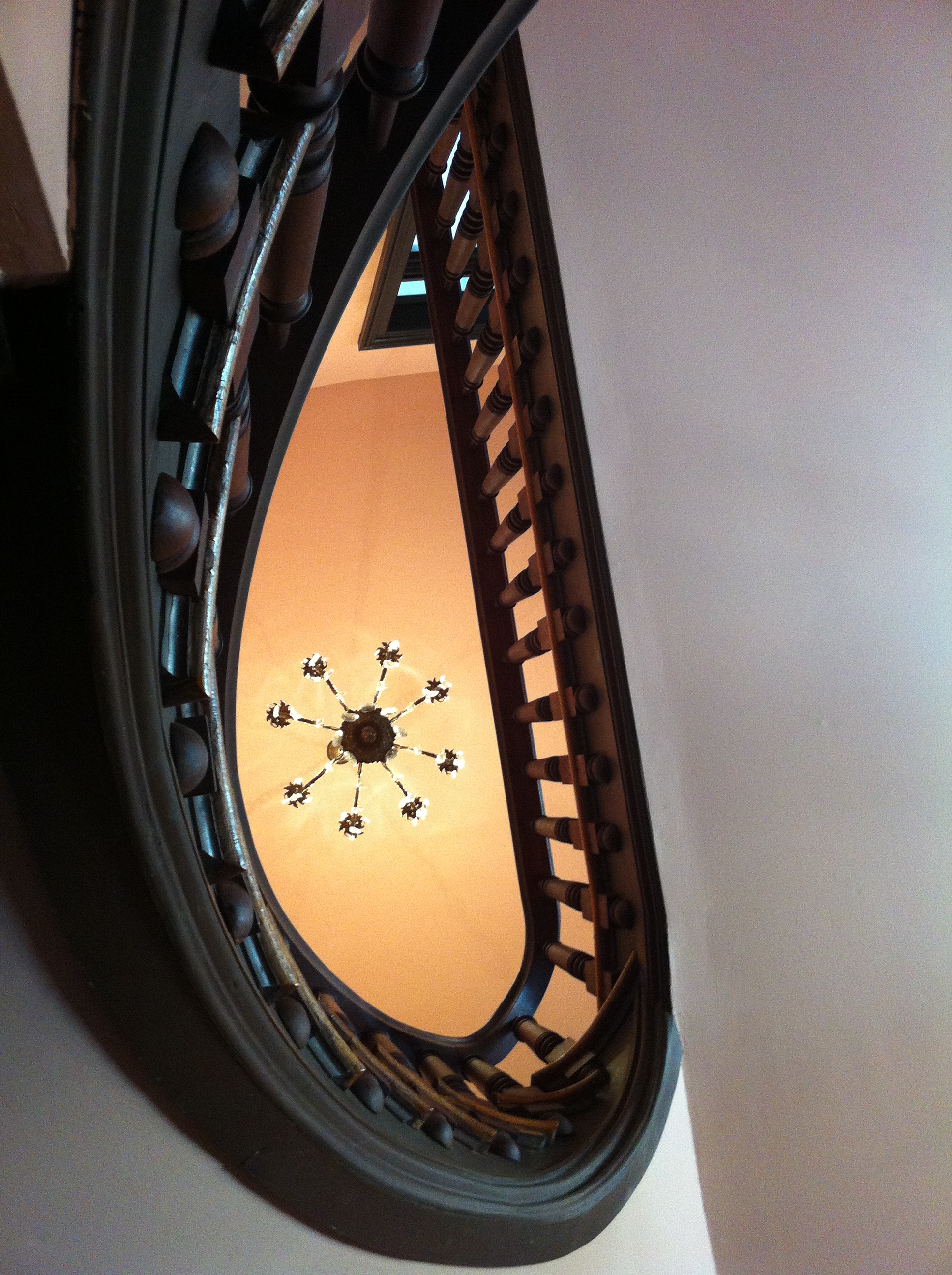
Looking up through the grand staircase at Little Rock City Hall.

Looking up through the grand staircase at Little Rock City Hall.

Peering through a piece of public art in the River Market.

Peering through a piece of public art in the River Market.

Doorways

Doorways

Inside one of the houses on the Quapaw Quarter Spring Tour.

Inside one of the houses on the Quapaw Quarter Spring Tour.

A Superhero and his mother leaving the library after checking out books and games.

A Superhero and his mother leaving the library after checking out books and games.

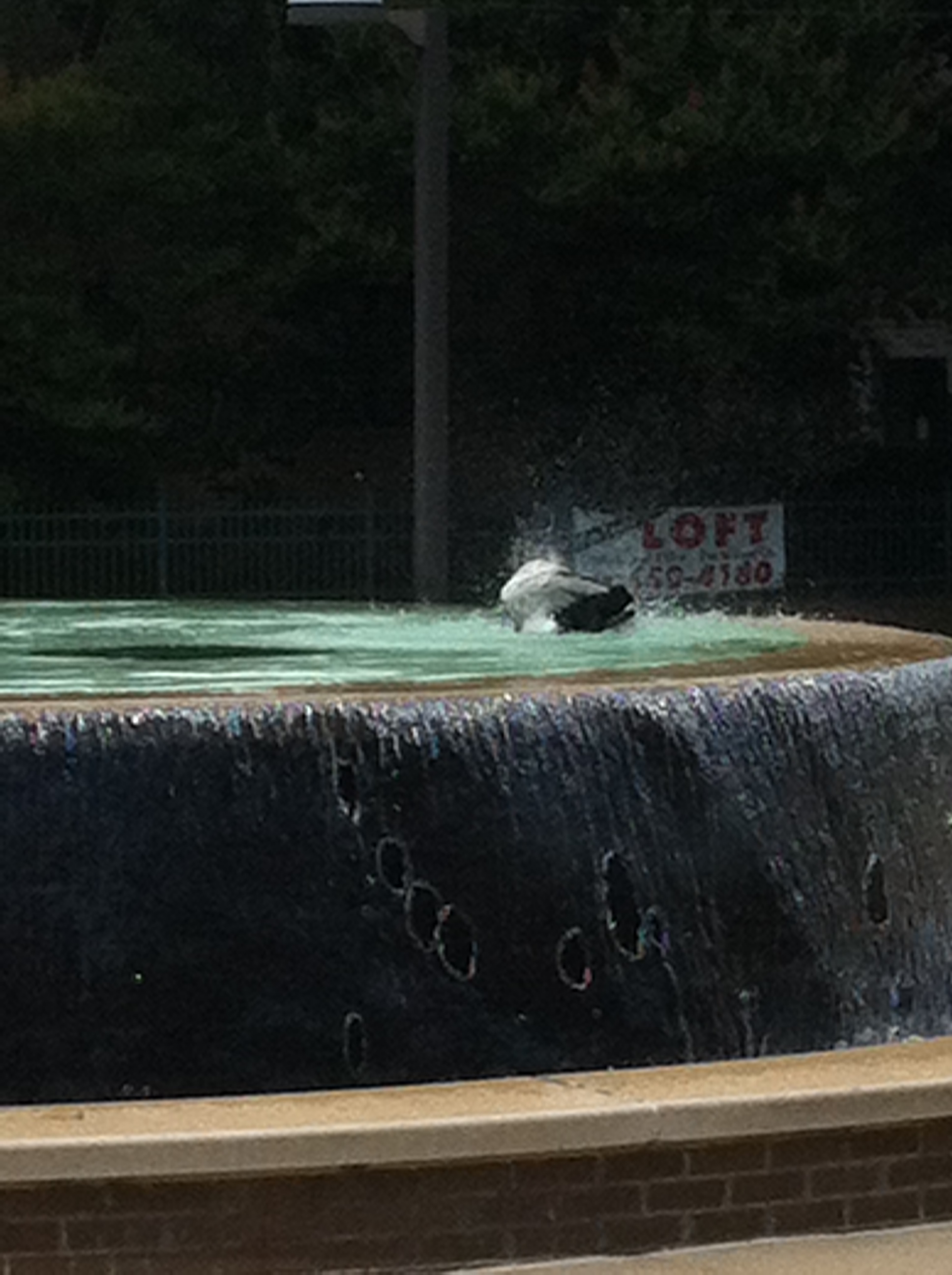
A duck enjoying the Carrie Remmel Dickinson Fountain at the Arkansas Arts Center.

A duck enjoying the Carrie Remmel Dickinson Fountain at the Arkansas Arts Center.

The stairwell in the Villa Marre.

The stairwell in the Villa Marre.

A downtown streetsign.

A downtown streetsign.

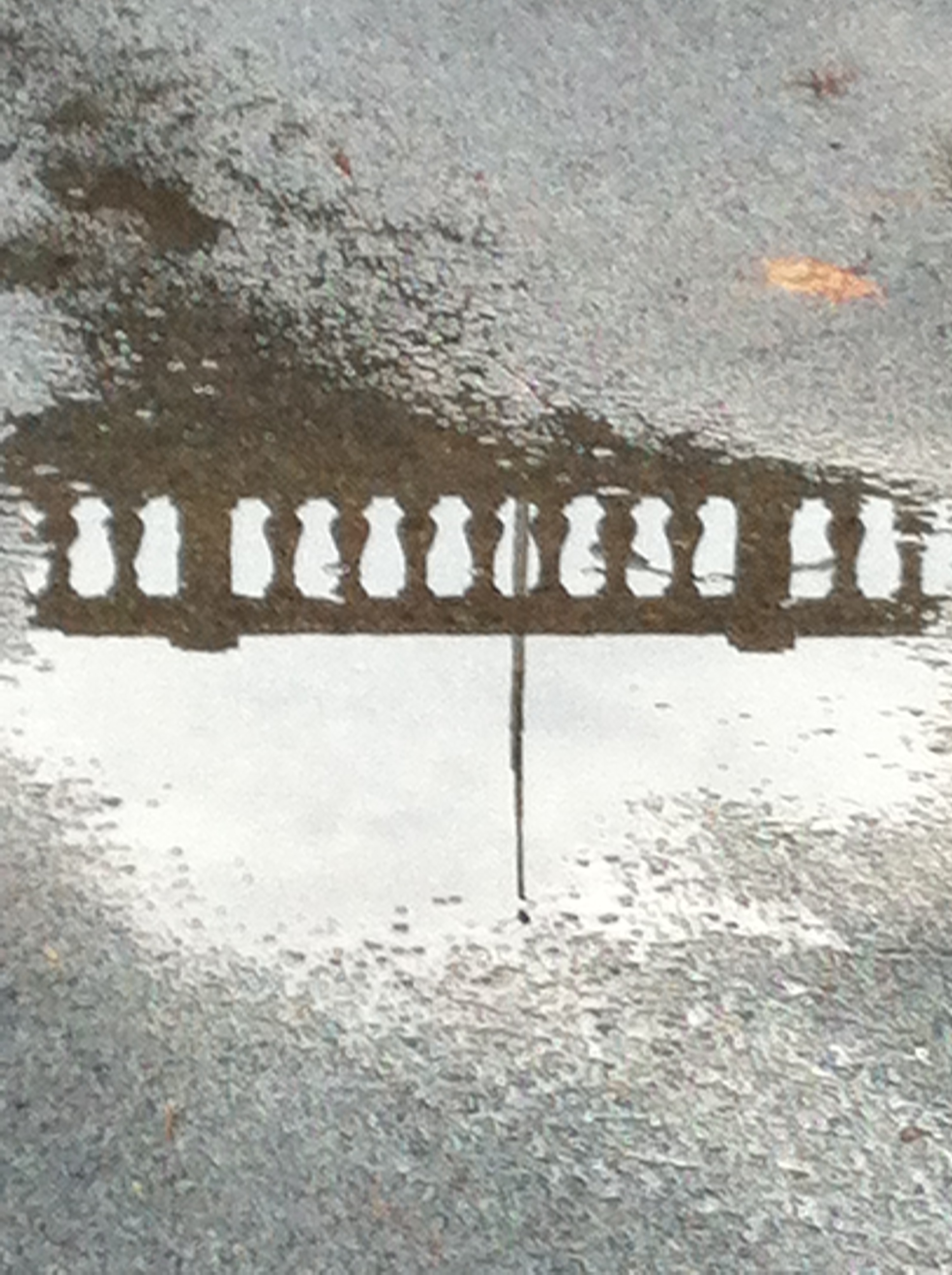
The Broadway Bridge balustrade reflected in a rain puddle.

The Broadway Bridge balustrade reflected in a rain puddle.

The stairwell in the auditorium on the Philander Smith campus.

The stairwell in the auditorium on the Philander Smith campus.

The Tower Building.

The Tower Building.

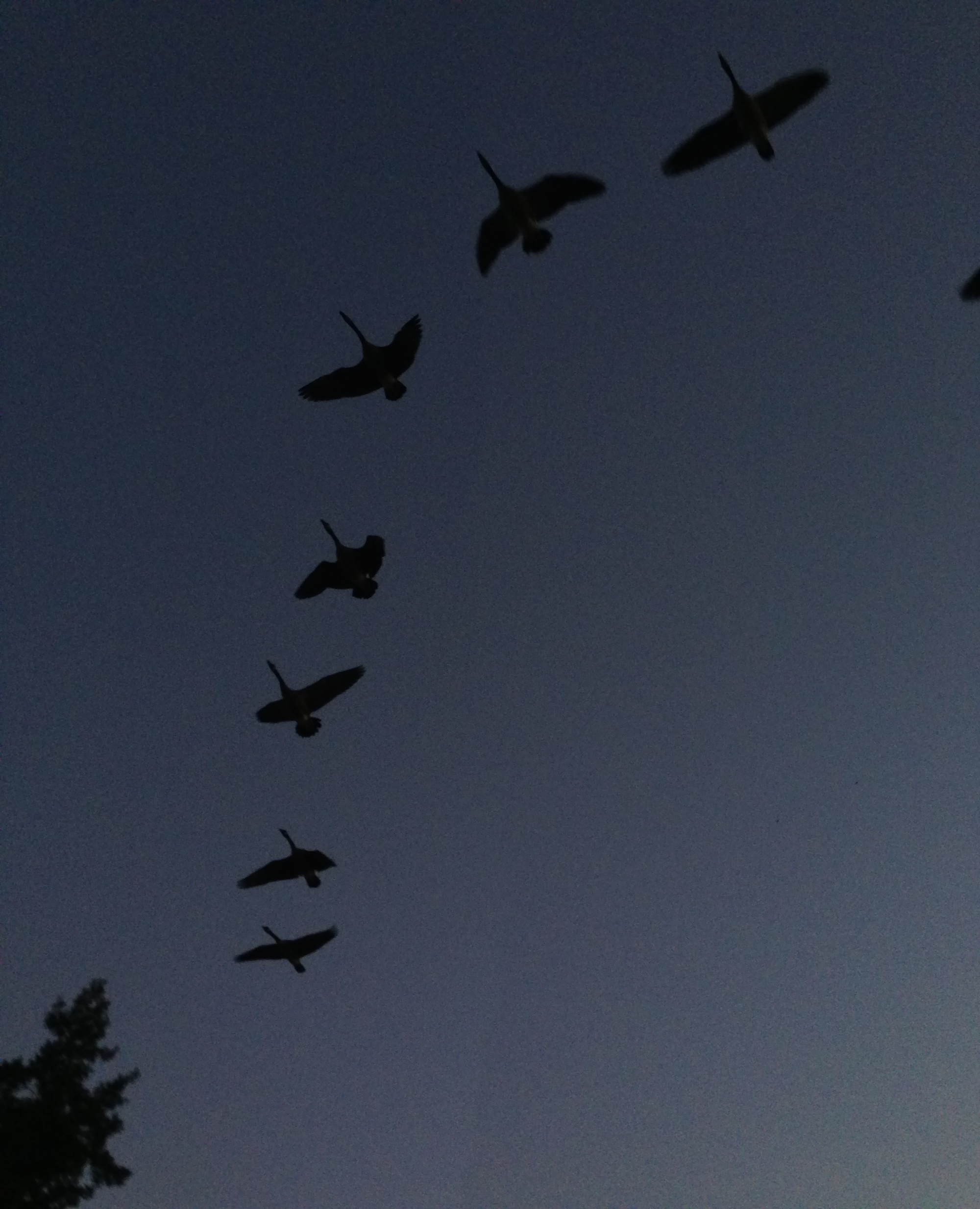
Geese at dusk over MacArthur Park.

Geese at dusk over MacArthur Park.

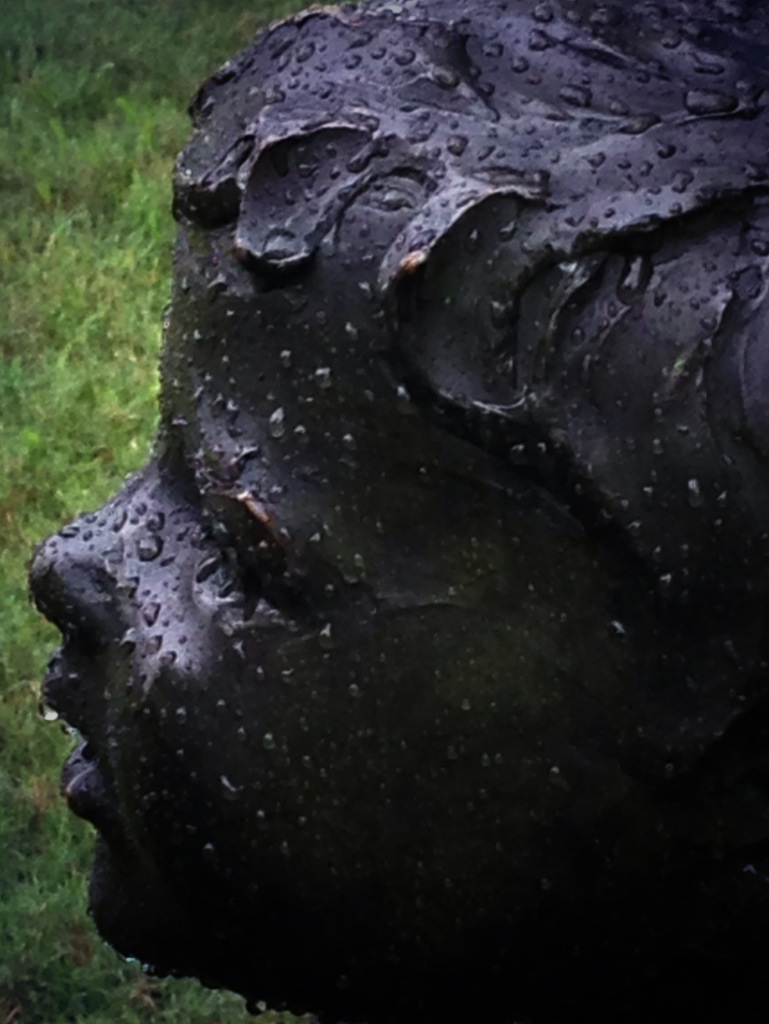
Raindrops rest on the new Patty Cake sculpture in Riverfront Park.

Raindrops rest on the new Patty Cake sculpture in Riverfront Park.

The Capital Hotel.

The Capital Hotel.

A pigeon at City Hall.

A pigeon at City Hall.

Birds alighting on transformer wires.

Birds alighting on transformer wires.

A downtown sidewalk.

A downtown sidewalk.

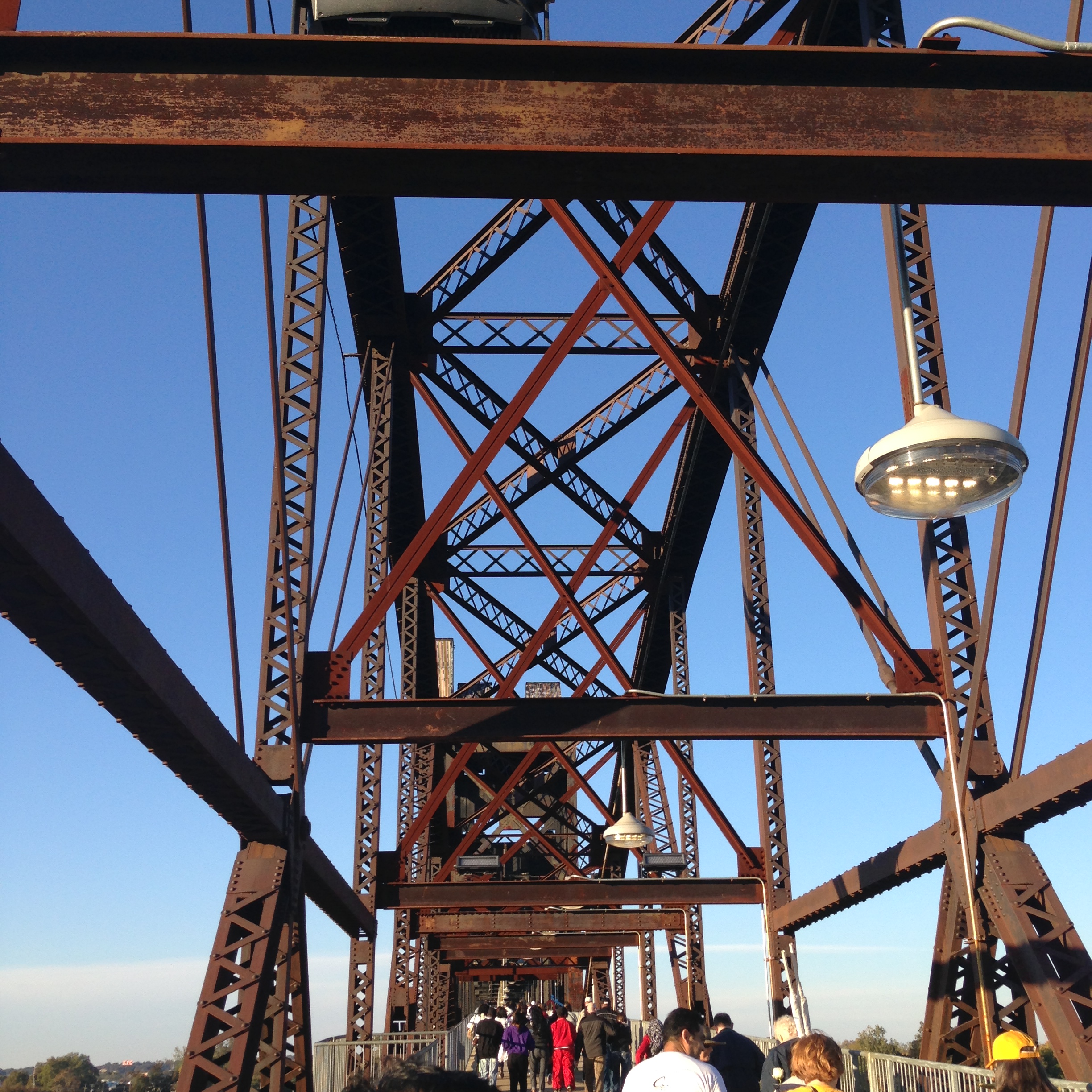
The Clinton Presidential Bridge during the JCA Walk for CommUNITY.

The Clinton Presidential Bridge during the JCA Walk for CommUNITY.

Gingko leaves in Hillcrest.

Gingko leaves in Hillcrest.

Robinson Auditorium

Robinson Auditorium

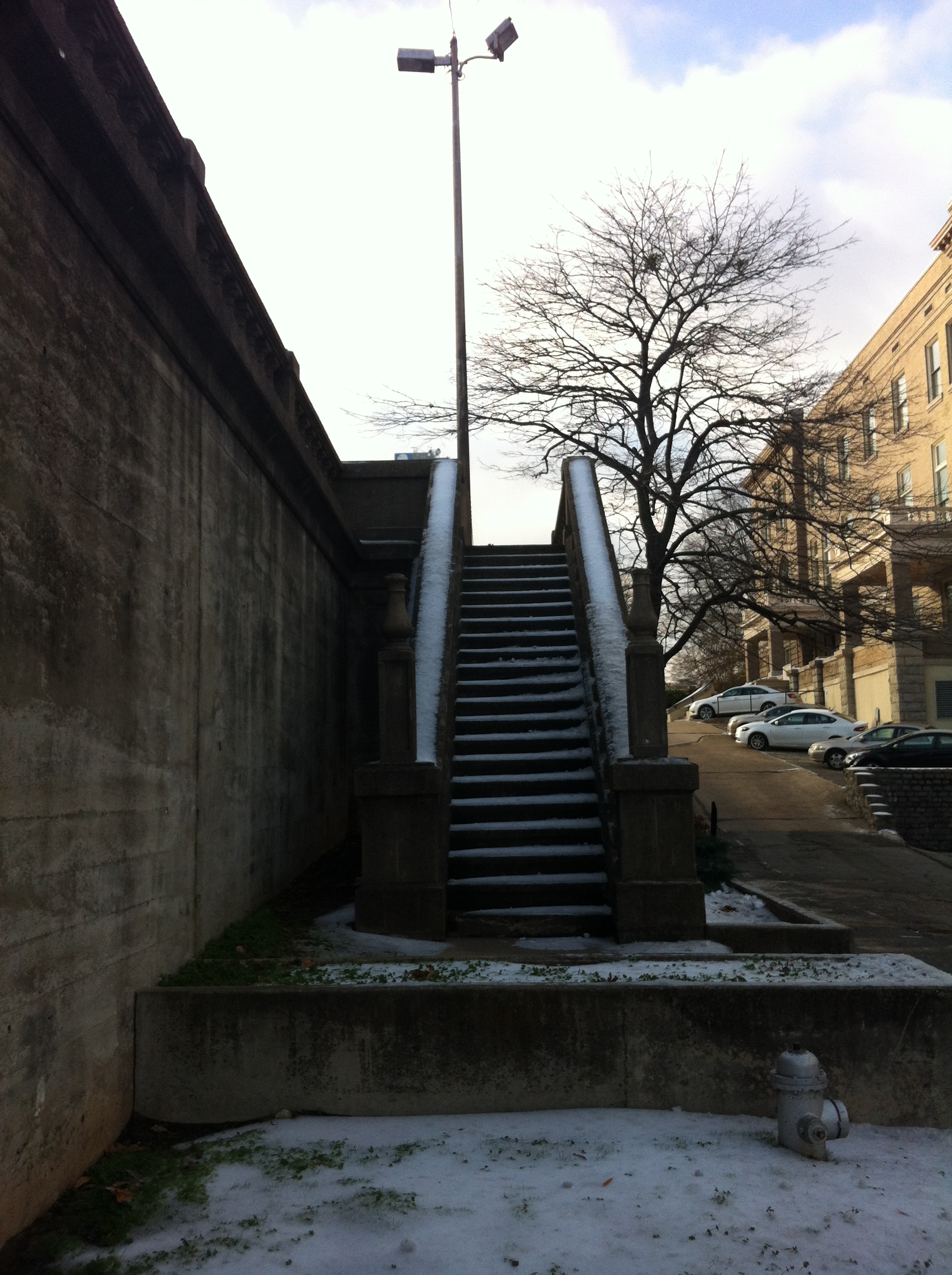
Steps along the Broadway Bridge after the December snow.

Steps along the Broadway Bridge after the December snow.

A December sunset in midtown Little Rock.

A December sunset in midtown Little Rock.

Architecture and Design Network presents HIGHLIGHTING HILLCREST: History, Architecture and a Sense of Community

HillcrestThe monthly Architecture and Design Network lecture takes place tonight. This month’s topic is “HIGHLIGHTING HILLCREST: History, Architecture and a Sense of Community.”  The program begins at 6pm at the Arkansas Arts Center following a 5:30pm reception.

In 1891 two young  Michigan attorneys purchased 800 acres of land northwest of the city of Little Rock. Within a year, ten blocks were platted on a section of that acreage by the Pulaski Heights Land Company. Other suburban developments, including Hillcrest, followed.

A diversity of housing styles prevailed in those turn-of-the-century neighborhoods. A generous sampling of the area’s homes, including Colonial Revival and Craftsman style dwellings as well as vernacular  “pyramid cottages”, survive. Hillcrest’s historic housing stock includes  a variety of architecturally significant structures, built between 1893-1940. All are part of the Historic Hillcrest District, an area of the city listed on the National Register of Historic Places.

The story of Hillcrest, a popular Little Rock neighborhood, distinguished by its history, its architecture and its unrivaled  community spirit, will be explored by Rachel Silva, Preservation Outreach Coordinator for the Arkansas Historic Preservation Program, Tommy Jameson, an architect whose firm focuses on the restoration, rehabilitation and adaptive reuse of historic buildings, and Jim McKenzie, executive director of Metroplan and a  founder of the Hillcrest Residents  Association.

While demographics may provide information about an area’s population and its proclivities, it is the mindset of people who live in a particular section of town that determines the parameters, both social and physical, of a neighborhood.

Supporters of the Architecture and Design Network include the Arkansas Arts Center, the University of Arkansas Fay Jones School of Architecture and the Central Chapter of the American Institute of Architects.

Little Rock Look Back: Werner C. Knoop

Mayor KnoopTo Little Rock citizens under a certain age, the name Knoop means Knoop Park — a picturesque park tucked away in a pocket of Hillcrest.  There are, however, still many who remember Werner C. Knoop as a business and political leader who helped shape Little Rock as a modern city.

Knoop was born on this date in 1902.

In 1946, Knoop joined with Olen A. Cates and P. W. Baldwin to form Baldwin Construction Company in Little Rock.  Knoop had previously founded Capital Steel Company and established his business reputation there.  From 1945 through 1951, he served on the Little Rock School Board.

Following a series of political scandals, efforts were undertaken for Little Rock to shift from Mayor-Council to City Manager form of government.  Even before the desegregation of Little Rock Central put the city in the eyes of the world, an election for new leaders had been set for November 1957.  Knoop was on a “Good Government” slate and was one of the members elected.

At the first meeting of the new City Board, Werner C. Knoop was chosen by his fellow directors to serve as Little Rock Mayor.  Knoop served as Mayor until December 1962.  For the first several months in office, Little Rock had no City Manager so Knoop oversaw the transition of City staff as the forms of government changed.

Though City Hall generally stayed out of school district matters, that did not mean that the public viewed the two entities separately.  In September 1959, the Baldwin Construction offices were bombed as part of a series of terrorist activities protesting the desegregated reopening of all Little Rock high schools.

After two terms on the City Board, Knoop decided against seeking a third term.  He concluded his elected public service on December 31, 1962.  Following his time on the City Board, Knoop did not retire from Civic Affairs.  In 1970, he served as Chairman of the Little Rock Chamber of Commerce.   The previous year he served as President of the Arkansas Chapter of Associated General Contractors.

Mayor Knoop died in July 1983.  He is buried at Roselawn Memorial Park next to his wife Faith Yingling Knoop.

In the 1930s, Knoop moved into an Art Moderne house on Ozark Point in Hillcrest.  It was adjacent to Little Rock Waterworks property which was developed around the same time.  Eventually much of the land was deeded to the City for creation of a park.  In 1989, it was named in tribute to long-time neighbor Knoop in honor of his lifetime of service to Little Rock.