Little Rock Look Back: Mayor John Gould Fletcher

IMG_4006Future Little Rock Mayor John Gould Fletcher was born on this date in 1831. The son of Henry Lewis and Mary Lindsey Fletcher, he later served as a Captain in the Capital Guards during the Civil War. One of his fellow soldiers was Peter Hotze.

Following the war, he and Hotze began a general merchandise store in Little Rock. They were so successful that they eventually dropped the retail trade and dealt only in cotton. Peter Hotze had his office in New York, while Fletcher supervised company operations in Little Rock. In 1878 Fletcher married Miss Adolphine Krause, sister-in-law of Hotze.

John Gould Fletcher was elected Mayor of Little Rock from 1875 to 1881. He was the first Mayor under Arkansas’ new constitution which returned all executive powers to the office of the Mayor (they had been split under a reconstruction constitution). Following his service as Mayor, he served one term as Pulaski County Sheriff. Mayor Fletcher also later served as president of the German National Bank in Little Rock.

Mayor and Mrs. Fletcher had five children, three of whom lived into adulthood. Their son was future Pulitzer Prize winning poet John Gould Fletcher (neither father nor son used the Sr. or Jr. designation). Their two daughters who lived to adulthood were Adolphine Fletcher Terry (whose husband David served in Congress) and Mary Fletcher Drennan.

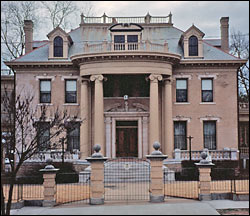
In 1889, Mayor Fletcher purchased the Pike House in downtown Little Rock. The structure later became known as the Pike-Fletcher-Terry House. It was from this house that Adolphine Fletcher Terry organized the Women’s Emergency Committee which worked to reopen the Little Rock public schools during the 1958-1959 school year.

In the 1960s, sisters Adolphine Fletcher Terry and Mary Fletcher Drennan deeded the house to the City of Little Rock for use by the Arkansas Arts Center. For several decades it served as home to the Arts Center’s contemporary craft collection. It now is used for special events and exhibitions.

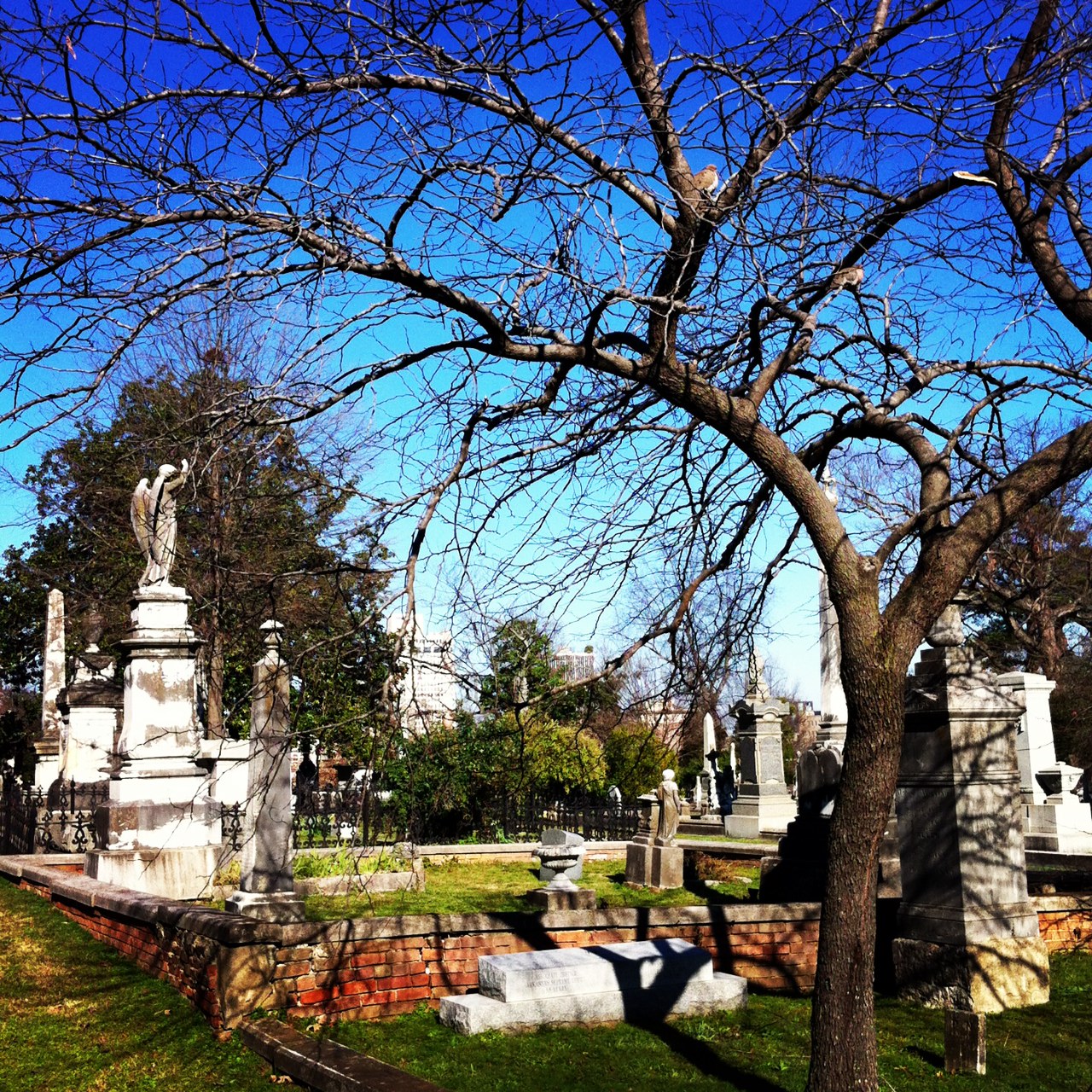
Mayor Fletcher died in 1906 and is buried in Mount Holly Cemetery along with various members of his family. His grandson William Terry (son of Adolphine Fletcher Terry) and members of his family still reside in Little Rock.

Little Rock Look Back: Adolphine Fletcher Terry

Photos from the collection of the Butler Center

Photos from the collection of the Butler Center

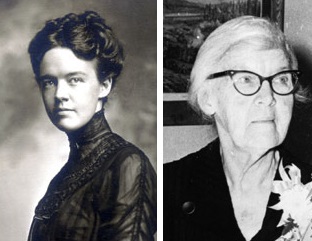
Adolphine Fletcher Terry was born on November 3, 1882 to former Little Rock Mayor John Gould Fletcher and his wife Adolphine Krause Fletcher.

Raised in Little Rock, in 1889 she moved into the Albert Pike House on East 7th Street, when her aunt transferred the title to her father. That house would be her primary residence the rest of her life.  Her sister Mary Fletcher Drennan never lived in Arkansas as an adult after marriage. Her brother John Gould Fletcher spent much of his adulthood in Europe before returning to Little Rock and establishing his own house, Johnswood.

At age 15, Adolphine attended Vassar. She later credited that experience as broadening her views on many issues.  After graduating at age 19, she returned to Little Rock.  Her parents both died prior to her 1910 wedding to David D. Terry, which took place at what was then known as the Pike-Fletcher House (and today is known as the Pike-Fletcher-Terry House).

She is perhaps best known today for establishing the Women’s Emergency Committee in 1958 and for her subsequent deeding of the family house to the City for use by the Arkansas Arts Center.  But her entire life was based on civic engagement.

She was instrumental in establishing the first juvenile court system in Arkansas and helped form the first school improvement association in the state. She was long an advocate for libraries, serving 40 years on the Little Rock public library board.  Through her leadership, the library opened its doors to African Americans in the early 1950s. Today a branch of the Central Arkansas Library System (the successor the Little Rock public library) is named after her.  Another branch is named after her Pulitzer Prize winning brother.

Adolphine formed the Little Rock chapter of the American Association of University Women, the Pulaski County tuberculosis association and the Community Chest.

In 1958, when the Little Rock public high schools were closed instead of allowing them to be desegregated again, she called Harry Ashmore the editor of the Gazette and exclaimed, “the men have failed us…it’s time to call out the women.”  With this, she formed the Women’s Emergency Committee to Open Our Schools. This group played a major role in getting the four high schools open the following year.

From 1933 to 1942, David Terry served in the U.S. Congress. During that time, Adolphine alternated her time between Washington DC and Little Rock. But she spent much time in Little Rock raising her five children.

After her husband’s death in 1963, she continued to remain active in civic affairs. In the 1960’s, she and her sister deeded the Pike-Fletcher-Terry House to the City of Little Rock for use by the Arkansas Arts Center upon both their deaths.  Following Adolphine Fletcher Terry’s death in 1976, Mary turned over the title to the City.

Adolphine Fletcher Terry is buried in Mount Holly Cemetery alongside her husband. Three of her children are also buried in that plot.  Her parents and brother are buried in a nearby plot.

Her son William Terry and his wife Betty continue to be active in Little Rock. Their daughters and their families also carry on Adolphine Fletcher Terry’s commitment to making Little Rock better.

Little Rock Look Back: H. L. Fletcher, 35th Mayor of Little Rock

Mayor H L Fletcher

On September 15, 1833, future Little Rock Mayor Henry Lewis Fletcher was born in Saline County.  His parents were Henry Lewis and Mary Lindsey Fletcher.  One of his siblings was future Little Rock Mayor John Gould Fletcher.  The Fletcher brothers are the only set of siblings to serve as Mayors of Little Rock.

Though the life of John Gould Fletcher is fairly well documented, not much information is available on his brother Henry Lewis (and some of what is out there is incorrect).  He married Susan Bricelin August 30, 1855, in Pulaski County.  During the Civil War, he served as a sergeant in the cavalry for the Confederate Army in Captain Ed Nowland’s Company.

As a civic leader, Fletcher oversaw Arkansas’ contribution to the Philadelphia Centennial Exposition in 1876. The building received as a prize a cast-iron fountain. A replica of that stands in front of the Old State House Museum.

Fletcher served as Mayor of Little Rock from 1891 to 1893.  When Fletcher became Mayor he appointed a new Police Chief (as most Mayors did) and the entire police force was dismissed.  A new police force was hired by E. H. Sanders, who served as chief for 18 months.  Upon his resignation, Frank MacMahon (who had been dismissed from the force when Fletcher came to office), was appointed Chief by Mayor Fletcher.  He would serve from 1892 until 1905.

Mayor Fletcher died on June 30, 1896 and is buried at Oakland Cemetery next to his wife (who died in 1911).

Heritage Month – Hotze House

Hotze hosueThe Hotze House, located at 1619 Louisiana in Little Rock’s historic Quapaw Quarter district, was built by one of Arkansas’ most successful and prominent businessmen.  Designed by Charles L. Thompson, Little Rock’s most prominent architect and constructed in 1900, the house reflects the Beaux Arts tradition combined with Georgian influence.  The interior was reputed to have been designed by Tiffany Studios of New York.  The house has been remarkably well preserved and remains practically unaltered.

Peter Hotze was born in Innsbruck, Austria, on October 12, 1836.  He was young at the time of his father’s death, but Mrs. Hotze’s inheritance made it possible for her three sons to attend the University of Innsbruck.  In 1857 Peter Hotze moved to Little Rock and went into the general merchandise business.

Returning to Little Rock after service and imprisonment in the Civil War, Hotze went into a business as a merchant in partnership with Capt. John G. Fletcher, who had been his company commander.  Each man put $2,500 into the business.  After a while, they limited their business exclusively to the cotton trade.  In 1873 it was decided that Hotze should move to New York to handle that end of the firm’s business.  He lived there for 27 years, in a fashionable neighborhood near Central Park.

In 1900, Hotze retired and returned to Little Rock.  Upon his return in 1900 he built the large house in which he lived with his daughter Clara and son Frederick until his death on April 12, 1901.  He chose to build his home directly behind the small frame house he had built about l869 and lived in during his previous residence in Little Rock.

The Hotze House is one of the finer homes remaining in the state which expresses the opulence of the period in which it was constructed, particularly in the interiors, which are extraordinarily rich in quality. Resting on three and one-half lots, the Hotze House is remarkably well preserved and appears practically the same as when it was first constructed.

It was added to the National Register of Historic Places on August 11, 1975.


Annual Mount Holly RIP (Rest in Perpetuity) Picnic Tonight

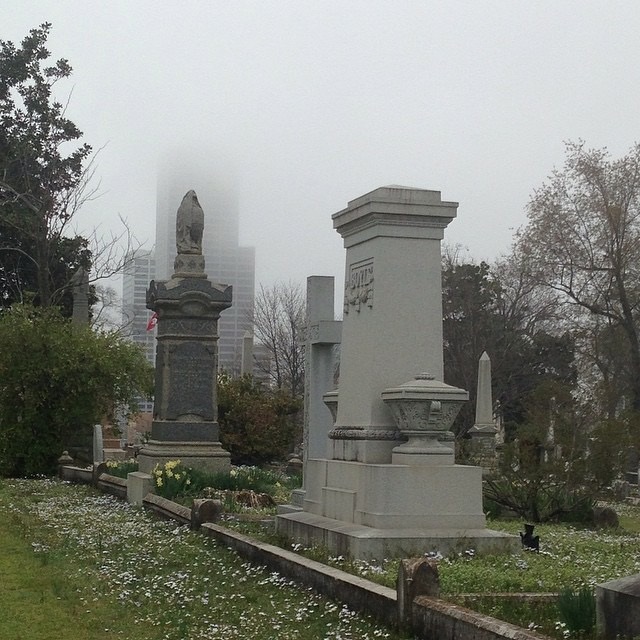
MtHollyMount Holly Cemetery is like an aging, but gracious Southern lady. She is in need of ongoing maintenance! Funds raised at the picnic will help maintain this historic landmark. Visitors will walk in Little Rock’s historical footsteps at the 10th Annual Mount Holly Cemetery Picnic this evening from 5pm to 7pm.

The Mount Holly Cemetery Association calls this event Rest in Perpetuity. The Culture Vulture lovingly refers to it as Dining with the Dead.

Festivities will include:

  • Appetizers
  • Dinner
  • Wine
  • Turn of the century picnic “delicacies”
  • Live music
  • Silent auction of tours, elegant dinner parties and opportunities for exclusive events at Mount Holly Cemetery and many other items.

Guests will have the opportunity to join in a historic tour of the cemetery, featuring famous and infamous residents of Mount Holly Cemetery or guests can enjoy a naturalist tour!

This is the annual fundraiser to raise funds to maintain this historic landmark.
Tickets are $100 for adults, $25 for children under 12.

In case of rain, the event will be moved to Trinity Cathedral.

Dating to 1843, but with grave sites that date much earlier, Mount Holly is a “living and breathing” historical treasure in the heart of Little Rock’s Historic District. Interred within the rock walls of Mount Holly are 11 state governors, 15 state Supreme Court justices, four Confederate generals, seven United States senators and 22 Little Rock mayors, two Pulitzer Prize recipients, as well as doctors, attorneys, prominent families and military heroes. Also included are Eliza Cunningham, the first female resident of Little Rock (who later became the first First Lady of Little Rock) and her son Charles, who was the first baby born in Little Rock. There are veterans from all wars: Revolutionary, War of 1812, Mexican, Civil War, Spanish-American, World War I and II, Korean, Vietnam and Desert Storm.

On Pulitzer Day – Prizing Mount Holly

The Pulitzer Prizes are to be announced today.  Mount Holly Cemetery not only touts that it is the site of a whole host of elected officials, it is also the only place in Arkansas where two Pulitzer Prize recipients are buried. The cemetery is open every day, but a special visit to these two prize winner gravesites can be made next Sunday during the Mount Holly Cemetery Association’s annual “Rest in Perpetuity” fundraiser picnic.

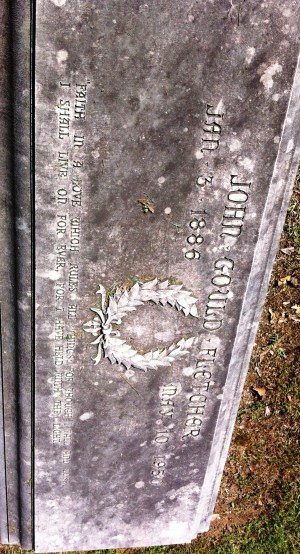
In 1939, John Gould Fletcher became the first Southern poet to win the Pulitzer Prize for Poetry.  He was born into a prominent Little Rock family in 1886.  Fletcher was awarded the prize for his collection Selected Poems which was published by Farrar in 1938.  Two years earlier, he had been commissioned by the Arkansas Gazette to compose an epic poem about the history of Arkansas in conjunction with the state’s centennial.

Fletcher is buried next to his wife, author Charlie May Simon and his parents (his father was former Little Rock Mayor John Gould Fletcher).  Other relatives are buried nearby in the cemetery.

The other Pulitzer Prize winner buried in Mount Holly is J. N. Heiskell, the longtime editor of the Arkansas Gazette.  It was Heiskell, in fact, who asked Fletcher to compose the poem about Arkansas.  Heiskell served as editor of the Gazette from 1902 through 1972.  He died at the age of 100 in 1972.

Under his leadership, the Gazette earned two Pulitzer Prizes for its coverage of the 1957 desegregation of Little Rock Central High.  One was for Harry Ashmore’s editorial writing and the other was for Public Service.

Heiskell remained in charge of the Gazette until his death in 1972.  He is buried alongside his wife with other relatives nearby.  Also not too far from Mr. Heiskell are two of his nemeses, proving that death and cemeteries can be the great equalizer. In the early days of his Gazette stewardship, he often locked horns with Senator (and former Governor) Jeff Davis. Later in Mr. Heiskell’s career, he vehemently disagreed with Dr. Dale Alford, who had been elected to Congress on a segregationist platform.

Poetry Month: John Gould Fletcher & “In Mount Holly”

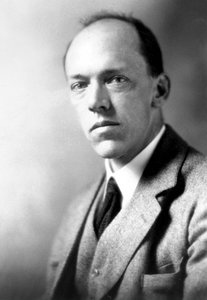
John_Gould_Fletcher poetThe Pulitzer Prizes will be announced tomorrow.  Arkansas poet John Gould Fletcher became the first Arkansan to win a Pulitzer and the first Southern poet to win the Pulitzer for Poetry.

The scion of a leading family of Little Rock, Fletcher was most known for his association with the Imagism movement in poetry.

Below is his 1929 poem “In Mount Holly.”  This cemetery is the final resting place of many members of his family. Fletcher and his wife Charlie May Simon (an award winning children’s author) are buried next to his parents in Mount Holly.

Supporters of Mount Holly will gather next Sunday (April 26) for the Rest in Perpetuity picnic in the cemetery.  It is a fundraiser sponsored by the Mount Holly Cemetery Association.


Mount Holly grey“In Mount Holly”

Here beyond hope is all that death shall hold of me,
This brown Arkansas hillside, dreaming through depth of mid-winter, alone in the southland;
Under the dove-grey low-swung cloud come up from the Gulf to scatter
Its benediction of deep rain, endlessly flashing and pouring;
Here, in the drift of the years,
From the seas I have crossed, and the lands I have known, and the struggles
I have faced with the steady river of time marching on through my vitals,
I have come back to this point of repose, to these stones side by side in the grass,
Turning as the earth turns against far Orion’s fierce whirlwind of stars.

They greet me unseeing, these graves,
Mute symbols of life accomplished, made noiselessly perfect,
Quieted by the cold hands of death that suddenly seize on the body
In an hour unexpected, as a thief in the night, running free with the tale of man’s days;
Yet not to be loosed from the soil till the sphere splits its core and is shattered
Like a ripe seed pod crammed full with thick seed of expectancies, memories, and failures;
Their dumb thought trails on in the soil while I in the high world above them
Lift up thin eager hands to the sky and cry to the sun’s dying splendor.

Here beyond hope is all that death shall take of me,
The blood that is mine, and yet theirs, the tower, the base and the framework;
The building not reared by man’s hands, but shaped in the night and the silence,
The framework of the body fashioned as theirs, for the blood through the generations
Repeats the same tale of Eden lost and Paradise darkly forgotten:
When the stars hang low in the sky and two souls become as one body
Straining past hope and despair to a timeless consummation,
Which is as the wedding-song of God mating the stars without number.
Here does the last life wait,
Crouched in its stronghold of bone behind the slow-vanishing sinew,
A spark without issue, a last ache of lust, a slow tide merging and dying
Into the running of quick hidden sap and the thin dumb flame of the grass.

Out of what chasms of fire,
Out of what lavalike torrents life sprung at the outset neither I nor these graves can remember;
They have become turf-covered dumb mouths opening below to the waters under the earth,
Which burst forth but once in the flood, and since then have ever been silent.
Into what dark seas we flow
I know not at all—I remember
Only the sunlight that lays a soft pencil of shadow to sleep on the grass;
The tramp of the black-clad pallbearers, the words spoken or sung, the lowering of the coffin to earth.

Here beyond hope, beyond dreams,
Under this soft and lazy sky dreaming in depth of midwinter,
Where the sweetgum casts to the earth its brown prickly balls, where the holly
Flashes its scarlet clusters, where the feathery pine sways its thin needles,
Where the red haw blazes with berries threaded bright on long outspraying stems,
Where the conelike fount of the magnolia spreads downwards a billion of star-rayed leaves,
Where the acorn lies split on the stone, its yellow sustenance wasted:
Here was I fashioned and made
By those who now sleep in the earth at my feet, as they by others forgotten.
Their speech was my speech, their dream was my dream, it was given
Beyond the cloud’s arbitrament of rain to create, or the slow earth’s power to destroy.
And I pause ere I go,
And stretch out my hands to these worn stones, smoothing them over and over,
Repeating their names which no one but I now remembers,
Praying that they may somehow bless me;
These who have given me life and so many dreams
On this brown Arkansas hillside, quiet in depth of midwinter:
Out of this army of graves facing eastward I single out but these two stones,
I wailingly beseech them
With the tears of the spirit torn against life and its days,
In this place where so many tears have been shed and mortal lives brought to the awe
Of the open portals of death, beyond hope, beyond dreams;
I kneel and weep as a man weeps,
I cry out loud as a man cries,
Let that which is mine and yet yours, this memory transient, this passion,
Marked by the cross of Christ on those stones, marked in my heart by time’s ebbing,
Be with me now forever wherever I go.