Six Pioneers, Other Leaders honored by National Park Service Tonight

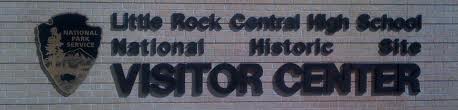
NPSLRCHTomorrow, September 25, marks the 56th anniversary of the desegregation of Little Rock Central High School.  Each year the school and the National Park Service schedule a series of events to commemorate this.

This year, commemoration activities start this evening.  At 6pm at Philander Smith College, there will be a panel to discuss the Six Pioneers. These were the first six African-American students to desegregate the University of Arkansas at Fayetteville (U of A) School of Law.  The descendants of the Six Pioneers will discuss the role of moral courage and the change that occurred in the hills of northern Arkansas over 65 years ago.  George Haley, the sole living pioneer will give remarks as well.

Their footsteps on the foothills of conviction cleared a path for the desegregation of Hoxie Elementary in 1955 and Little Rock Central High School in 1957. The U of A School of Law was the first southern white university to accept African-American students since Reconstruction.

The Six Pioneers, The Honorable Rodney Slater, Attorney John W. Walker, Sr., Judge Wiley A. Branton, Jr., Sanford Tollette IV, Dr. Sybil Jordan Hampton and Robin Woods Loucks will all be recipients of the Soul of Humanity Award given in recognition of outstanding commitment and service to social justice and lifelong action in the struggle for civil rights.

The evening will close with remarks from Reena Denise Evers-Everette, daughter of civil rights activist and martyr Medgar Evers.

The event will take place at the Kendall Science and Health Mission Center on the Philander Smith College campus.


Little Rock Look Forward: LR 9 Foundation establishes Clinton School Scholarship

clinton-school-logoThough normally there are “Little Rock Look Back” posts, this one is truly more a look to the future.

Today the Little Rock Nine Foundation, which has awarded scholarships to deserving young people for the past 16 years, has set up a scholarship fund at the University of Arkansas Clinton School of Public Service to continue the foundation’s legacy. The Foundation was established in 1997 and since that time has awarded 60 college scholarships to high school students all over the United States.

“Because of our great appreciation for President Clinton, and in recognition of the extraordinary public service work performed by Clinton School students, we have now decided to make the Clinton School our educational philanthropic focus,” said Carlotta Walls Lanier, the foundation’s spokesperson. “The Clinton School prepares its students in the global arena and what better way to keep our story alive than through those we assist.”

Nine African American students–Lanier, Melba Pattillo Beals, Elizabeth Eckford, Ernest Green, Gloria Ray Karlmark, Terrence Roberts, Minnijean Brown Trickey, Thelma Mothershed Wair and the late Jefferson Thomas became known as the Little Rock Nine when they integrated  Little Rock Central High School in 1957. The resistance of Arkansas Governor Orval Faubus and protests by large groups of segregations forced the intervention of President Dwight Eisenhower who the sent the military’s finest, the 102 Airborne Division, to protect the students.

It was an historical moment and was the first the time the President of the United States sent the military to enforce a United States Supreme Court order, in this case the historic Brown v. The Board of Education decision.

“We are honored and are most grateful to the Little Rock Nine for the establishment of this scholarship fund,” said Clinton School Dean Skip Rutherford. “Over the years the Little Rock Nine–as a group and individually–have participated in Clinton School programs and met with our students. Spirit Trickey, the daughter of Minnijean Brown Trickey, is one of our graduates.”

The Clinton School is the nation’s first to offer a Master of Public Service (MPS) degree. It is located on the campus of the William J. Clinton Presidential Center in downtown Little Rock.

Little Rock Look Back: Mayor Jim Dailey

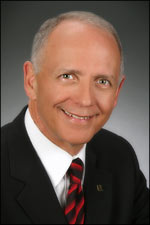
cityoflr_img_board_dailyOn July 31, 1942, future Little Rock Mayor Dalton James “Jim” Dailey, Jr. was born to Dalton and Ellen Dailey.  After graduating from Little Rock Catholic High School, he attended the University of Arkansas at Fayetteville.  He graduated with a Bachelor of Science degree in Business Administration. He joined his father in the family business, Dailey’s Office Furniture.

In 1974, Dailey was elected to the City of Little Rock Board of Directors.  He served one four-year term. The last two years of that term, he was the Vice Mayor of Little Rock.

Following that term, he remained engaged in civic activities including serving in leadership capacities in community campaigns.  He also served as president of the National Office Products Association – the first Arkansan to do so.  Dailey also served as the founding chair of Leadership Greater Little Rock.

In 1988, Dailey was elected to return to the City Board.  He was reelected in 1992.  Dailey served as Vice Mayor in 1991 and 1992.  In January 1993, he was chosen by his fellow City Directors to serve a two year term as Mayor.  Under his leadership, the Future-Little Rock goal-setting process took place.

Following a voter-approved change to the City structure, the position of Mayor was changed to be elected by the people while maintaining the City Manager form of government.  On January 1, 1995, Jim Dailey was sworn in as the first popularly-elected Mayor of the City of Little Rock in over 38 years.

cityoflr_img_mayor_01Dailey has served on the Board of Directors for the Little Rock Regional Chamber of Commerce, Metroplan, Communities in Schools, Arkansas BioVentures and New Futures for Youth. He was appointed to the National League of Cities Board of Directors and the Municipalities in Transition on Public Finance.

As Mayor, he served as Chair of the Intergovernmental Advisory Committee of the Federal Communications Commission. He was also a member of the United States Conference of Mayor’s Communications Task Force.  He also served as president of the Arkansas Municipal League in 2002 and 2003.

While he was Mayor of Little Rock, he was a strong proponent of the development of the River Market and worked to locate the Clinton Presidential Library in Little Rock.  He also worked to increase public safety support.  He also oversaw the establishment of Central Arkansas Water, the development of downtown headquarters for Acxiom Corporation and Heifer International, and the creation of Prevention, Intervention and Treatment programs.  In addition, he was instrumental in leading the efforts for the 40th anniversary of the integration of Little Rock Central High in 1997.

Mayor Dailey was re-elected in 1998 and 2002.  His fourteen years as Mayor of Little Rock set a longevity record.  Upon his retirement the City’s fitness center was renamed the Jim Dailey Fitness and Aquatic Center.  This was in recognition of his lifelong interest in wellness activities.

Since leaving office, he has continued his civic involvement by serving as a member of the Little Rock Airport Commission which oversees the Bill and Hillary Clinton National Airport.  He is also involved in commercial real estate.

Mayor Dailey has been married to Patti Murphy since 1965. They have two daughters, two sons and six grandchildren…a set of quadruplets, plus two.

Little Rock Look Back: Ben Piazza

BdP book photo

BDP LRHS

Piazza at LR High School

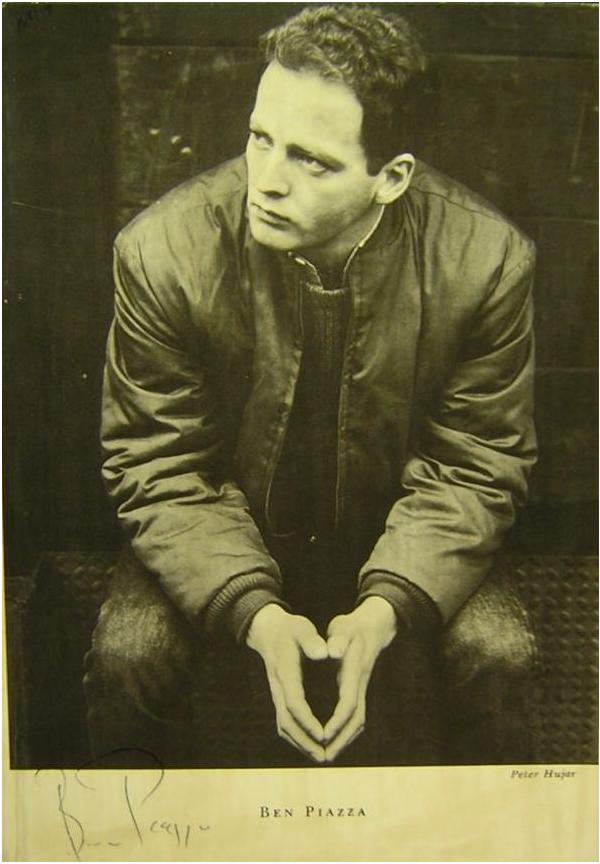
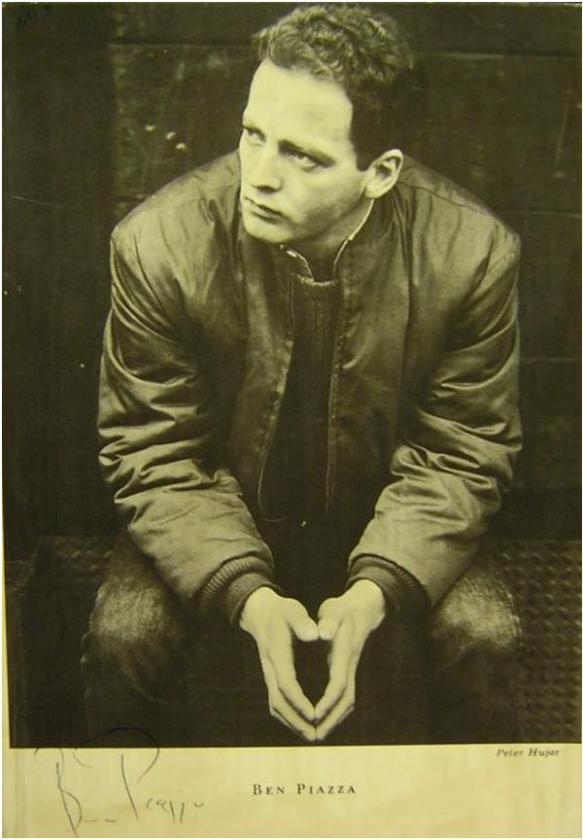
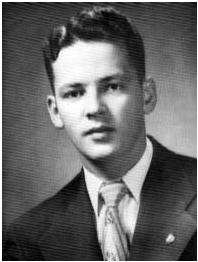
Actor-director-playwright Ben Piazza was born on July 30, 1933, in Little Rock.  Piazza graduated from Little Rock High School in 1951 as valedictorian. He also had starred in the senior play that year (The Man Who Came to Dinner) and edited the literary magazine.

Keeping the Tiger as his mascot, Piazza attended college at Princeton University.  While there he continued acting, including an appearance in a Theatre Intime production of Othello.  Following his 1955 graduation, he moved to New York City and studied at the Actor’s Studio.

BDP PU

Piazza at Princeton

Piazza was an understudy in the 1956 play, Too Late the Phalarope at the Belasco Theatre.  In February 1958, he starred in Winesburg, Ohio sharing the National (now Nederlander) Theatre stage with James Whitmore, Dorothy McGuire, and Leon Ames. Other cast members included Claudia McNeil (who originated the part of Lena in A Raisin in the Sun) and Sandra Church (who originated the part of Gypsy Rose Lee in Gypsy).

In April 1959, Piazza starred in Kataki at the Ambassador Theatre. This two actor play also featured Sessue Hayakawa, who played a Japanese soldier who spoke only his native language.  Therefore, Piazza’s part was largely a very lengthy monologue.  For his performance, Piazza received one of the 1959 Theatre World Awards.

As the 1960s dawned, Piazza joined a small cadre of actors who had achieved status on Broadway who then also returned to acting Off Broadway.  Colleen Dewhurst, George C. Scott, and James Earl Jones were others in this select group who helped establish Off Broadway as an entity in itself, instead of being just a farm team for Broadway.

Piazza started the 1960s on Broadway starring at the Eugene O’Neill Theatre in A Second Stringwith Shirley Booth, Jean-Pierre Aumont, Nina Foch, Cathleen Nesbitt, and Carrie Nye.   Following that, he started his association with Edward Albee by appearing as the title character inThe American Dream.  That play opened at the York Playhouse in January 1961.  Later that year, he appeared in Albee’s The Zoo Story opposite original cast member William Daniels at the East End Theatre.

piazza

Also in 1961 Piazza starred in several plays during a South American tour sponsored by the American Repertory Company.  He played Christopher Isherwood in I Am a Cameraand Chance Wayne in Sweet Bird of Youth.  In 1962, he starred in a series of plays at the Cherry Lane Theatre.  Piazza returned to Broadway to star along with Jane Fonda and Dyan Cannon in The Fun Couple at the Lyceum Theatre. This play had a troubled rehearsal period, which was documented in a short film about Jane Fonda.

Ben Piazza stayed on Broadway and returned to Albee in February 1963.  He took over the role of Nick in the original run of Who’s Afraid of Virginia Woolf? when original actor George Grizzard left to play Hamlet at the Guthrie Theatre.  (He had participated in earlier readings of the play prior to it being mounted on Broadway.)

This play was at the Billy Rose Theatre, which marked a return for Piazza. He had acted at this theatre when it was the National while doing Winseburg.  Piazza played Nick for the remainder of the run and acted with Uta Hagen, Arthur Hill, fellow Arkansan Melinda Dillon, Eileen Fulton, Nancy Kelly, Mercedes McCambridge, Rochelle Oliver and Sheppard Strudwick.

Exact and Very Strange cover

During the run of this show, Piazza’s novel The Exact and Very Strange Truth was published.  It is a fictionalized account of his growing up in Little Rock during the 1930s and 1940s.  The book is filled with references to Centennial Elementary, Westside Junior High, Central High School, Immanuel Baptist Church and various stores and shops in Little Rock during that era.  The Piazza Shoe Store, located on Main Street, was called Gallanti’s.

Following Virginia Woolf, he starred in The Zoo Story at the Cherry Lane Theatre in 1965.  In August of 1967, his play The Sunday Agreement premiered at LaMaMa.  This was Piazza’s first playwright output to be professionally staged.

As Sunday Agreement was opening, Piazza was in rehearsal for his next Broadway opening. He appeared with Alfred Drake in The Song of the Grasshopper in September 1967.  In 1968, he returned to Albee and starred in The Death of Bessie Smith and The Zoo Story in repertory on Broadway at the Billy Rose Theatre.

Later that season, in March 1969, a double bill of his one-acts: Lime Green/Khaki Blue opened at the Provincetown Playhouse.  It was directed by future Tony nominee Peter Masterson and starred Louise Lasser, Robert Walden (starred in the 2013 production of Death of a Salesman at Arkansas Repertory Theatre), Clinton Allmon and Dolores Dorn-Heft, to whom Piazza was married at the time.

Throughout the 1960s and early 1970s, Piazza toured in many plays nationally and internationally. He also appeared in major regional theatres as an actor and a director.  During this time period he was in productions of Bus Stop, Who’s Afraid of Virginia Woolf?, You Know I Can’t Hear You when the Water’s Running  and Savages.  In 1970, he starred as Stanley Kowalski in a production of A Streetcar Named Desire in New Orleans.  As the 1970s progressed, he turned his focus to television and movies.
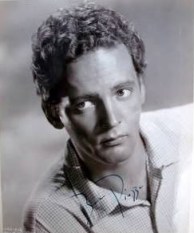
BDP early

Piazza headshot for HANGING TREE

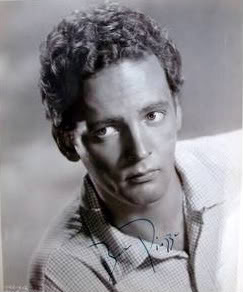
Piazza’s film debut was in a 1959 Canadian film called The Dangerous Age. That same year, his Hollywood film debut came opposite Gary Cooper, Karl Malden, Maria Schell and George C. Scott in The Hanging Tree.  Though he received positive reviews for his performances, Piazza chose to return to New York and perform in stage and TV productions.

Throughout the 1950s and 1960s, he appeared in a number of TV shows including Studio One, Kraft Theatre, Zane Grey Theatre, The Naked City and Dick Powell Theatre.  He had a recurring role during one season of Ben Casey and appeared on the soap opera Love of Life.

In the 1970s, he starred in the films Tell Me That You Love Me, Junie Moon; The Candy Snatchers and I Never Promised You a Rose Garden.  He also starred as the City Councilman who recruits Walter Matthau to coach a baseball team in The Bad News Bears.

Among his numerous TV appearances in the 1970s were The Waltons, Mannix, Switch, Barnaby Jones, Gunsmoke, Mod Squad and Lou Grant (where he was reunited with Walden).

BDP final

Piazza in the late 1980s

In the 1980s, he appeared in The Blues Brothers, The Rockford Files, Barney Miller, Hart to Hart, Family Ties, The Winds of War, Dallas, Dynasty, Too Close for Comfort, The A Team, Saint Elsewhere, Santa Barbara, The Facts of Life, Mr. Belvedere, Moonlighting and Matlock.

Piazza’s final big screen appearance was in the 1991 film Guilty by Suspicion.  He played studio head Darryl Zanuck in this Robert DeNiro-Annette Bening tale of Hollywood during the Red scare.

Ben Piazza died on September 7, 1991.

Pulitzer Day at Mount Holly

The Pulitzer Prizes are to be announced today.  Though Mt. Holly Cemetery touts that it is the site of a whole host of elected officials, it is also the only place in Arkansas where two Pulitzer Prize recipients are buried.

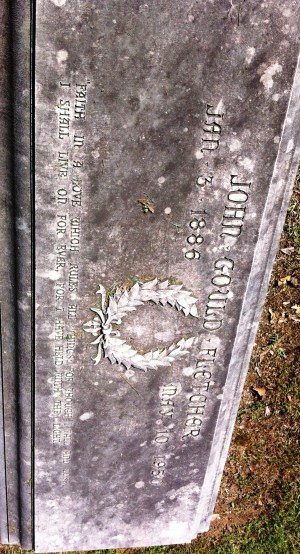
In 1939, John Gould Fletcher became the first Southern poet to win the Pulitzer Prize for Poetry.  He was born into a prominent Little Rock family in 1886.  Fletcher was awarded the prize for his collection Selected Poems which was published by Farrar in 1938.  Two years earlier, he had been commissioned by the Arkansas Gazette to compose an epic poem about the history of Arkansas in conjunction with the state’s centennial.

Fletcher is buried next to his wife, author Charlie May Simon and his parents.  Other relatives are buried nearby in the cemetery.

The other Pulitzer Prize winner buried in Mt. Holly is J. N. Heiskell, the longtime editor of theArkansas Gazette.  It was Heiskell, in fact, who asked Fletcher to compose the poem about Arkansas.  Heiskell served as editor of the Gazette from 1902 through 1972.  He died at the age of 100 in 1972.
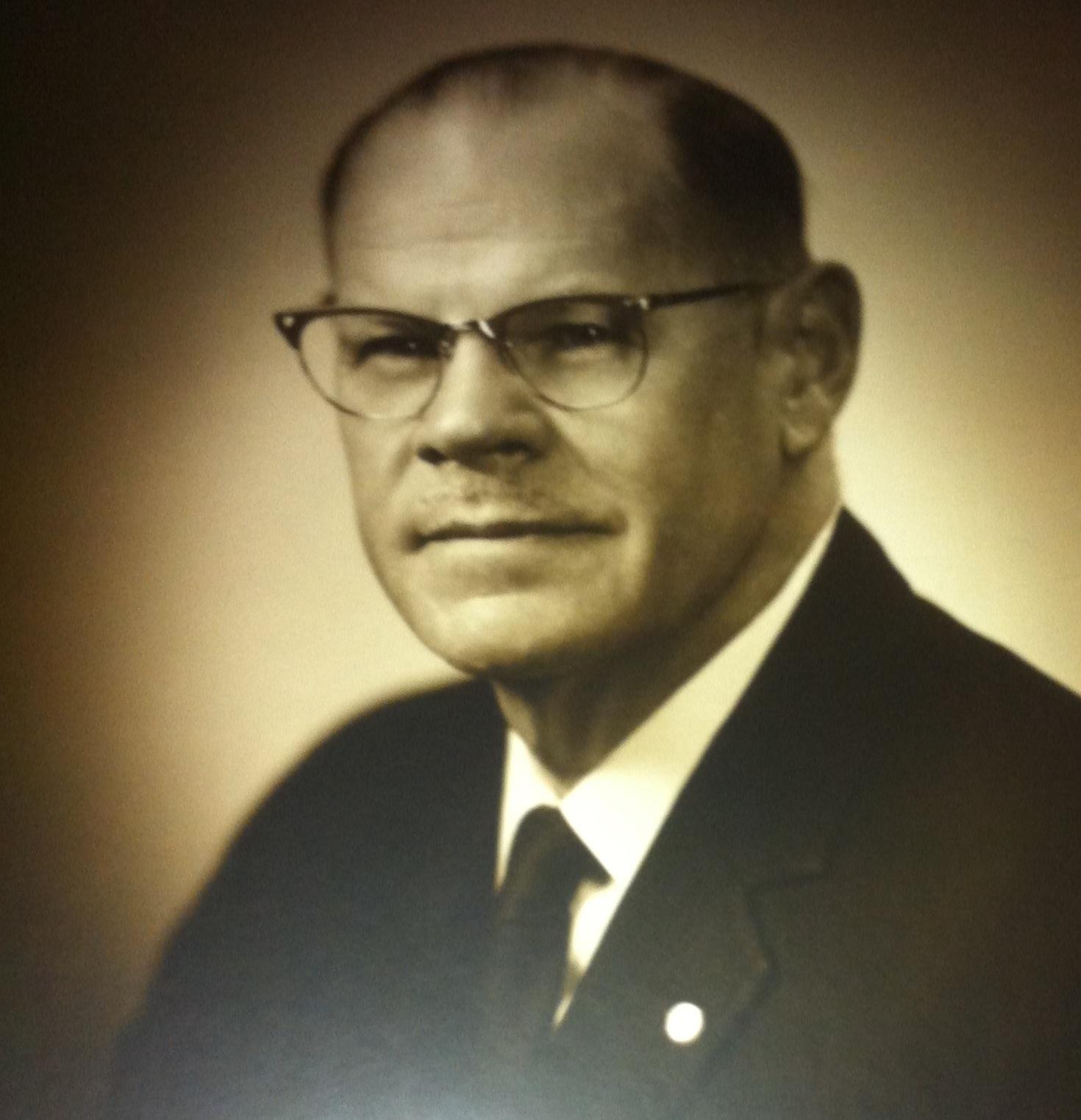
Under his leadership, the Gazette earned two Pulitzer Prizes for its coverage of the 1957 desegregation of Little Rock Central High.  One was for Harry Ashmore’s editorial writing and the other was for Public Service.

Heiskell remained in charge of the Gazette until his death in 1972.  He is buried alongside his wife.


Little Rock Look Back: Werner C. Knoop

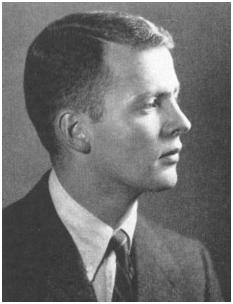
Mayor KnoopTo Little Rock citizens under a certain age, the name Knoop means Knoop Park — a picturesque park tucked away in a pocket of Hillcrest.  There are, however, still many who remember Werner C. Knoop as a business and political leader who helped shape Little Rock as a modern city.

Knoop was born on this date in 1902.

In 1946, Knoop joined with Olen A. Cates and P. W. Baldwin to form Baldwin Construction Company in Little Rock.  Knoop had previously founded Capital Steel Company and established his business reputation there.  From 1945 through 1951, he served on the Little Rock School Board.

Following a series of political scandals, efforts were undertaken for Little Rock to shift from Mayor-Council to City Manager form of government.  Even before the desegregation of Little Rock Central put the city in the eyes of the world, an election for new leaders had been set for November 1957.  Knoop was on a “Good Government” slate and was one of the members elected.

At the first meeting of the new City Board, Werner C. Knoop was chosen by his fellow directors to serve as Little Rock Mayor.  Knoop served as Mayor until December 1962.  For the first several months in office, Little Rock had no City Manager so Knoop oversaw the transition of City staff as the forms of government changed.

Though City Hall generally stayed out of school district matters, that did not mean that the public viewed the two entities separately.  In September 1959, the Baldwin Construction offices were bombed as part of a series of terrorist activities protesting the desegregated reopening of all Little Rock high schools.

After two terms on the City Board, Knoop decided against seeking a third term.  He concluded his elected public service on December 31, 1962.  Following his time on the City Board, Knoop did not retire from Civic Affairs.  In 1970, he served as Chairman of the Little Rock Chamber of Commerce.   The previous year he served as President of the Arkansas Chapter of Associated General Contractors.

Mayor Knoop died in July 1983.  He is buried at Roselawn Memorial Park next to his wife Faith Yingling Knoop.

In the 1930s, Knoop moved into an Art Moderne house on Ozark Point in Hillcrest.  It was adjacent to Little Rock Waterworks property which was developed around the same time.  Eventually much of the land was deeded to the City for creation of a park.  In 1989, it was named in tribute to long-time neighbor Knoop in honor of his lifetime of service to Little Rock.

UALR Helping Students Brush Up Their Shakespeare

william-shakespeareUALR’s Department of English and Department of Theatre Arts and Dance is presenting the 2013 Shakespeare Scene Festival today from 9:30 a.m. to noon, in the University Theatre of the Center for Performing Arts.  The event started yesterday.

The Shakespeare Scene Festival, first held in 1998, brings together students from a variety of Central Arkansas schools to perform scenes from Shakespeare’s plays. A performance of a Shakespearean scene integrates several elements of literacy and literacy education including: intensive study of the English language, cooperative learning, process-based theatre as well as the discipline, creativity, and organization required to rehearse and perform a scene.

“The Shakespeare Scene Festival provides an exciting opportunity for middle and high school students in central Arkansas to come together with the UALR community in celebration of the works of Shakespeare,” says Dr. Kris McAbee, the festival’s director. “The student performers are rewarded for their hard work of grappling with these difficult and profound texts by getting to perform them in University Theatre in front of a large audience of their peers and community members. The festival also reminds us of the universality and timelessness of Shakespeare’s works. They are able to speak to the feelings, experiences, and concerns of Arkansas teenagers some 400 years after they were written.”

Classes from five different area schools are participating in the festival. Over 500 students are expected to attend and participate in 11 different performances. The works presented will include scenes from Macbeth, A Midsummer Night’s Dream, Taming of the Shrew, and Richard III, as well as creative adaptations like The Suessification of Romeo and Juliet.  Among the schools participating are Little Rock Central, Little Rock J. A. Fair, Little Rock Dunbar Middle School, Joseph T. Robinson Middle School and North Little Rock High School West.

Admission is free and open to the public. Each performance will last approximately 25 minutes.

For more information, visit ualr.edu/shakespeare or contact Dr. Kris McAbee, assistant professor of English, at kxmcabee@ualr.edu.