April 17 Architeaser

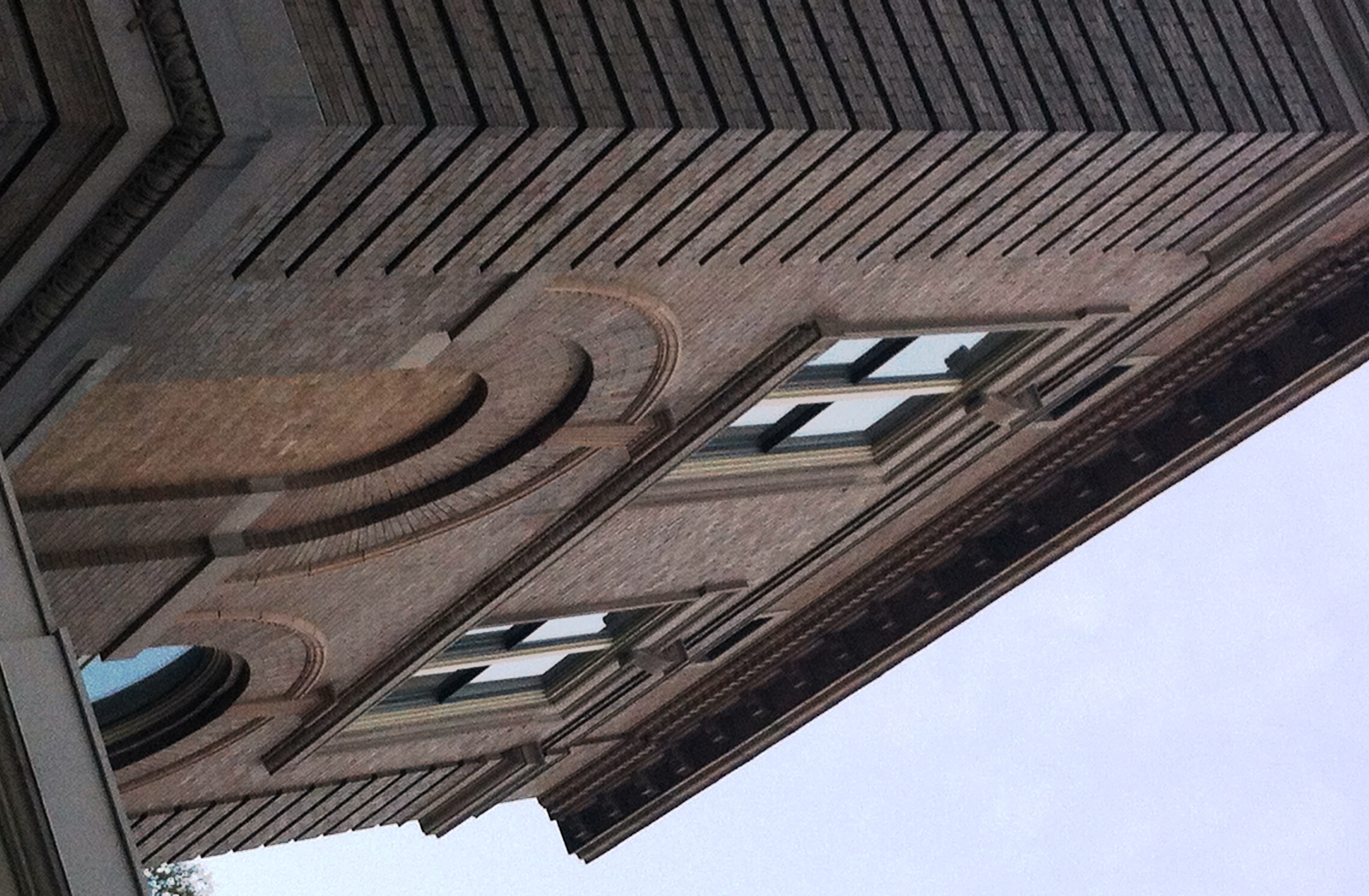
IMG_4825In the early 1960s, the windows at City Hall were bricked in.  The rational at the time dealt with energy efficiency and the installation of air conditioning in the building.  At the same time, there were other renovations undertaken.  Some of these were undertaken because of growth at City Hall, others were due to the 1957 change to the City Manager form of government (which created some new positions and eliminated others).  The City Clerk’s office was moved and the vault was relocated.

In conjunction with the mid-1980s restoration of the building, all but a few of the windows were finally unbricked.  Most of the remaining bricked-in windows were left intact because of mechanical equipment now located behind them.  Three other windows remained enclosed.  Two were in the City Board Chambers (which had to remain enclosed to enable for clearer broadcasting of meetings) and the third was in the City Clerk’s office (because of the “new” 1960s location of the Clerk’s vault).

Today’s Architeaser shows the  bricked-in window on the second floor western elevation in the City Clerk’s office.  Next to it is the top half of the exposed window.

April 16 Architeaser

IMG_4837


When Little Rock City Hall opened in April 1908, the eastern facade had a porch with two sets of double staircases going from the building to the street level.

Capping each staircase was a portico with a balcony atop.  Though these balconies were structurally sound for standing atop, they were not accessed through doorways. The only way to access them is to climb through a window.

By the 1930s, with development behind the building.  A driveway had been constructed around City Hall and going up alongside the building.  As part of this, the northern staircases were removed and the doorway changed into a window.  The southern stairways remain on the Broadway side of the building to this day.

April 15 Architeaser

IMG_4853This week’s Architeasers will examine elements of Little Rock City Hall, which officially opened to the public on April 15, 1908.  Today’s features the front doors and wrought iron mini-balcony off the second floor.  These are covered by the portico which extends from the third floor facade.

It is doubtful the wrought iron balcony ever functioned as a place for people to stand. It is not a heavy structure and is secured very simply.  In addition, to reach it, one would have to climb over the 2nd story windows and crawl out onto it.  It appears to have always been for decorative purposes.

The glass doors are not original to City Hall.  They were installed as late as the 1980s renovation.  There also was once a porchlight which hung in the area.  The ceramic tile is original as is the masonry.

The architect for City Hall was Charles L. Thompson.  The building was championed by Mayor W. E. Lenon.  He served as Mayor from 1903 to 1908.  At the first meeting in the new building, he resigned because his work was needing his full attention.  At the time the position of Mayor was part-time.

April 12 Architeaser

IMG_4796This brick work and star is found on the 1882 Porbeck and Bowman building.  Designed by Joseph Willis and built by Max Hilb and William Probst, the building was modified by architect Charles Thompson in 1909.  It was revamped by the firm of Polk Stanley Wilcox for the Central Arkansas Library System as part of the Arkansas Studies Institute project.  It now houses gallery space and meeting space for CALS and classrooms for the Clinton School of Public Service.

Tonight is 2nd Friday Art Night. Visitors to the space tonight can view art on display.

QQA Preservation Conversations Tonight: Architectural Interiors

QQAThe Quapaw Quarter Association’s monthly award-winning Preservation Conversation series continues tonight.

This month  Brent Hull, Owner and President of Hull Historical. Known for award-winning design of exceptional architectural interiors, Hull Historical provides expertise in residential and historic preservation. Trained in the art of museum quality preservation at the prestigious North Bennet Street School in Boston, Brent is the exclusive licensee for the architectural interiors of the Winterthur Museum and Country Estate in Wilmington, Delaware, the original home of H.F. du Pont. Hull is a board member of the Texas Chapter of the ICAA, and recipient of the 2012 NBSS Distinguished Alumni Award.

The program takes place this evening at Curran Hall, 615 East Capitol Avenue. From 5 to 5:30 a reception will take place. The program will run from 5:30 to 6:30.

The Quapaw Quarter Association’s mission is to promote the preservation of Little Rock’s architectural heritage through advocacy, marketing and education. Incorporated in 1968, the QQA grew out of an effort to identify and protect significant historic structures in Little Rock during the urban renewal projects of the early 1960s. Throughout its existence, the QQA has been a driving force behind historic preservation in Greater Little Rock.

 j

April 9 Architeaser

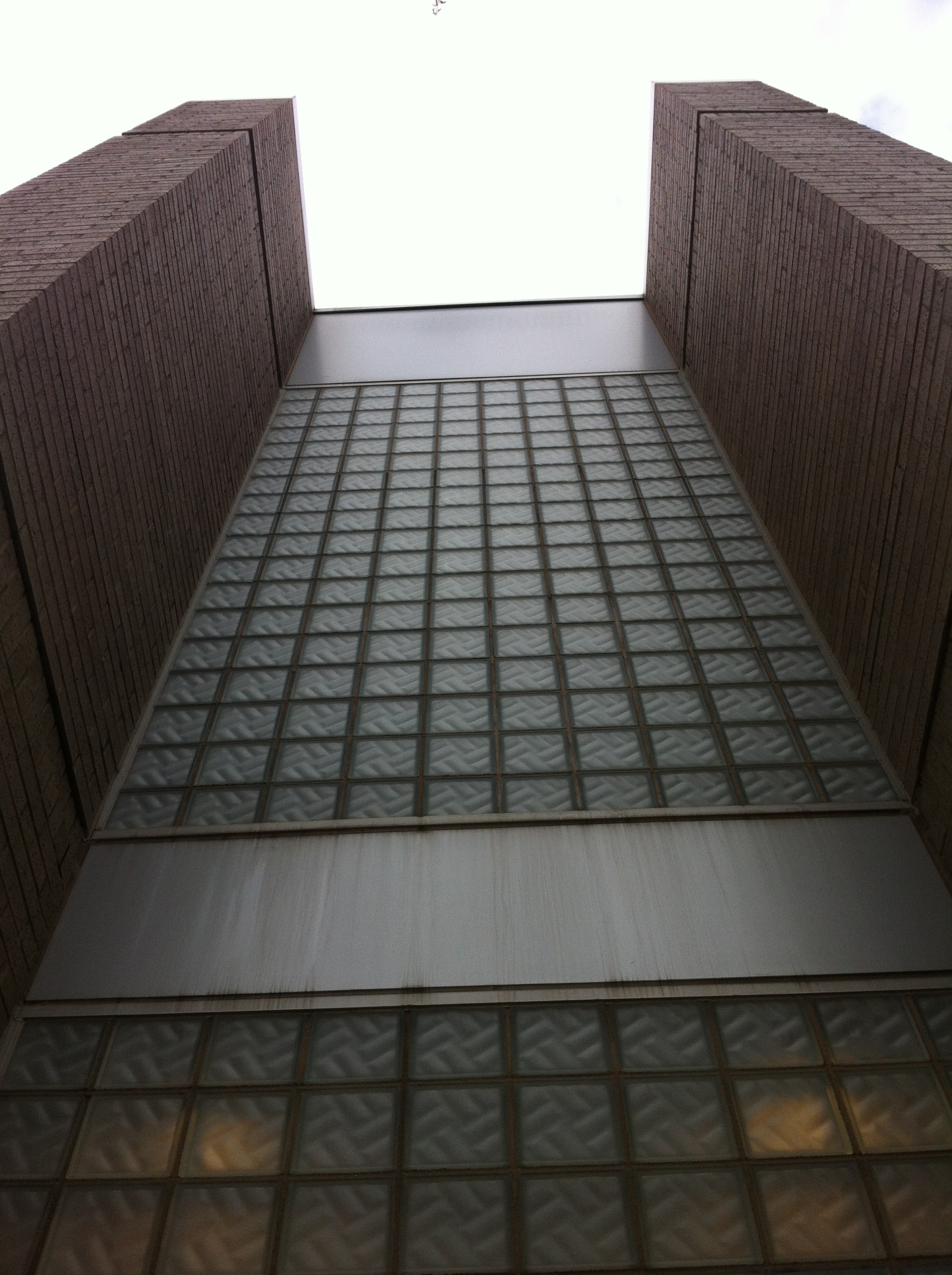
IMG_4812On the anniversary of La Harpe seeing the “Little Rock” for the first time, today’s Architeaser celebrates a building which is located near the Little Rock and looks to the past and the future.

The Little Rock Regional Chamber of Commerce headquarters, located on Markham between Scott Street and the 4 Corners intersection (Markham, LaHarpe, Cumberland, President Clinton).  Designed by the firm Polk Stanley and Yeary (now Polk Stanley Wilcox), the building won awards in 2001 and 2002 from chapters of the American Institute of Architects.

The design evokes both mid-century designs with the buff brick and glass blocks, but also incorporates many contemporary facets of architectural design both inside and outside.

Little Rock Look Back: La Harpe Sees a Rock

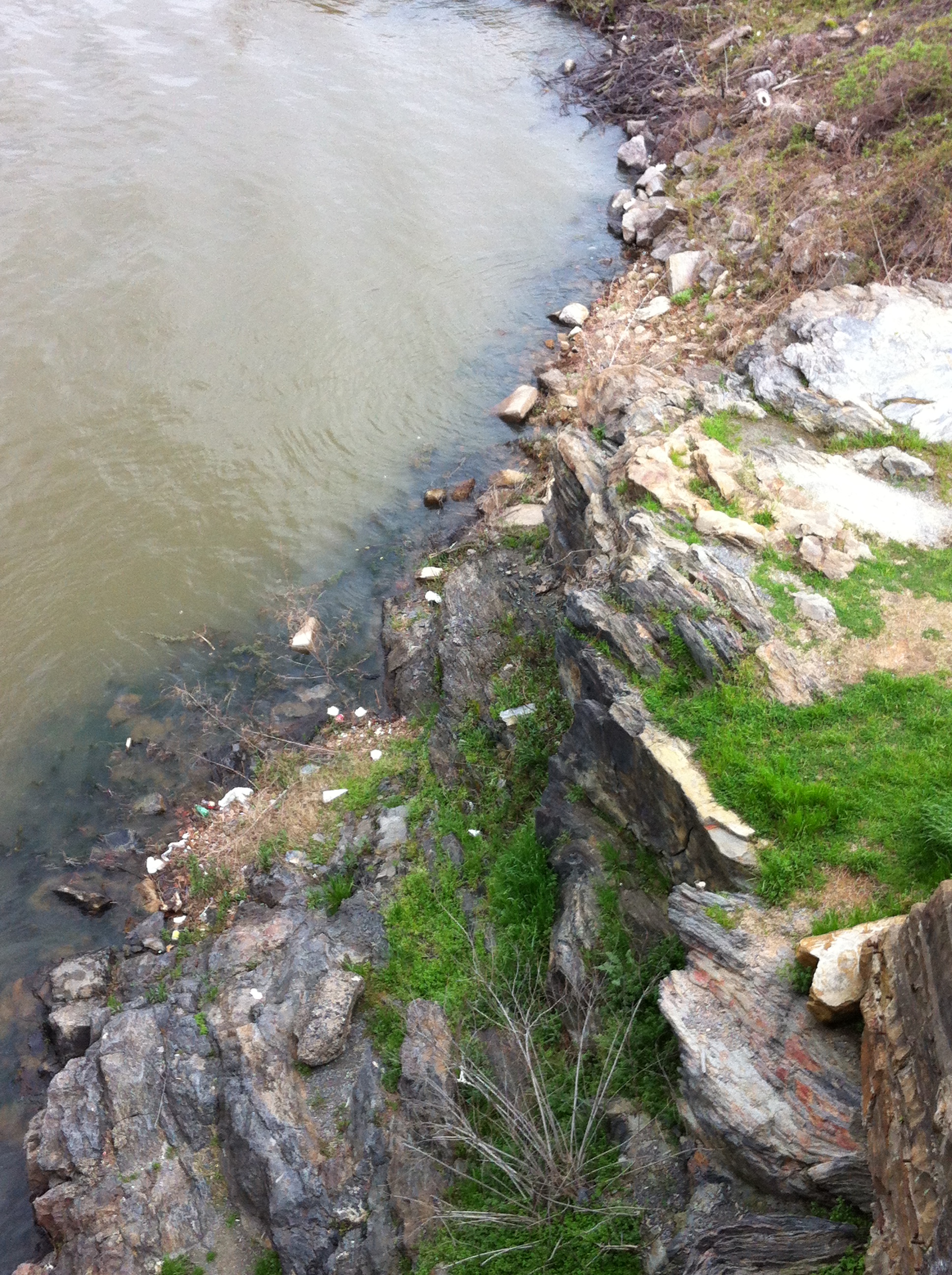
IMG_4805On April 9, 1722, French explorer Jean-Baptiste Bénard de La Harpe rounded the bend of the Arkansas River and saw La Petite Roche and Le Rocher Français.  He had entered the mouth of the Arkansas River on February 27 after traveling up the Mississippi River from New Orleans.

Though La Harpe and his expedition are the first Europeans documented to have seen La Petite Roche, the outcropping of rocks was well-known to the Quapaw Indians in the area.  The outcropping jutted out in the Arkansas River and created a natural harbor which provided a perfect place for boats to land.

The rock outcropping is the first one visible along the banks of the Arkansas River.  It marks the place where the Mississippi Delta meets the Ouachita Mountains.  Geologists now believe that the Little Rock is not the same type of rock as the Ouachita Mountains and more closely matches the composition and age of mountains in the western US.

In 1813, William Lewis became the first European settler to live near La Petite Roche but only stayed a few months.  Speculators and trappers continued to visit the area throughout the 1810s. During that time, the outcropping became known informally as the Little Rock.

La Petite Roche had become a well-known crossing when the Arkansas Territory was established in 1819. The permanent settlement of ‘The Rock’ began in the spring of 1820, and the first building has been described as a cabin, or shanty, and was built on the bank of the river near the ‘Rock.’ In March 1820, a Post Office was established at the ‘Rock’ with the name “Little Rock.”

Over the years, La Petite Roche was altered.  In 1872, Congress authorized the building of a railroad bridge. A pier for the bridge was built at the location of the La Petite Roche which caused the removal of several tons of rock.  The bridge was never built.  When the Junction Bridge was built in 1899, even more rock was removed in the process of erecting part of the bridge on top of the rock.  It was not viewed as being disrespectful of the City’s namesake at the time.  Indeed, it was viewed as a testament to the sturdiness of the rock.

In 2010, La Petite Roche plaza opened in Riverfront Park.  It celebrates the history of La Petite Roche and explores its importance to various aspects of Little Rock’s history and geography.