
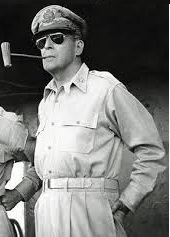
Little Rock Look Back: General Douglas MacArthur

MacArthurOn January 26, 1880, Douglas MacArthur was born in the Arsenal Building while his father was stationed at the Little Rock Barracks.  Though he left Arkansas a few weeks later when his father was transferred, he returned to his birthplace on March 23, 1952. On that day he was greeted by crowds welcoming one of the USA’s most famous military figures.

Though Gen. MacArthur spent only a few weeks in Little Rock, he was baptized at Christ Episcopal Church.  The location of the baptism remains a mystery today because the church was meeting in temporary locations due to the first structure having been lost to a fire.

When the General returned to Little Rock in 1952, he did pay a brief visit to Christ Church.  He also spoke at the Foster Bandshell in the park which bore his name.  He was one of three presidential candidates to speak at the Foster Bandshell in 1952, the others were the eventual Democratic and Republican nominees Adlai Stevenson and Dwight Eisenhower.

When General MacArthur died, he was granted a state funeral.  He was one of the few non-Presidents to have been given this honor.

Today, the MacArthur Museum of Arkansas Military History is located in the Arsenal building.  It was created to interpret our state’s military heritage from its territorial period to the present.  Located in the historic Tower Building of the Little Rock Arsenal–the birthplace of General Douglas MacArthur–the museum preserves the contributions of Arkansas men and women who served in the armed forces.  Exhibits feature artifacts, photographs, weapons, documents, uniforms and other military items that vividly portray Arkansas’s military history at home and abroad.

Sandwich in History today at noon at old Fire Station No. 2 in MacArthur Park

Little Rock Fire Station No 2_tour_tnThe monthly architectural history program “Sandwiching in History” visits the old Little Rock Fire Station No. 2 located at 1201 S. Commerce Street (on the southwestern corner of MacArthur Park).

Located in the MacArthur Park Historic District, Little Rock Fire Station No. 2 was built in 1917 and served as a fire station until the late 1950s. The Craftsman-style building was constructed with a mixture of materials. It features exposed rafter tails, false half-timbering, and triangular knee braces under the eaves.

From the early 1960s through the 1980s, it had a variety of uses by the City’s Parks Department and other entities. In the 1980s through the mid-1990s, it served as storage and preservation space for the nearby Museum of Science and History (then-located in the Arsenal Tower building on the northern edge of the park.)

It sat largely vacant for a couple of years and sustained damage during January 1999 tornado which ripped through downtown.  For the past several years, a group has been working to convert it into a 30-bed hostel and museum.

Sandwiching in History is a program of the Arkansas Historic Preservation Program, an agency of the Department of Arkansas Heritage.

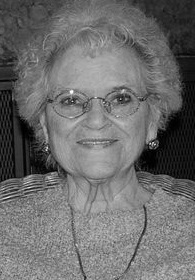
LR Cultural Touchstone: Joa Stafford-Humphrey

JoaJoa Stafford-Humphrey loved music and poetry.  But her most lasting cultural contribution is the creation of the MacArthur Museum of Arkansas Military History.

She had admired General MacArthur for many years.  In the 1980s, while serving on the Board of the Museum of Science and History, her interest heightened.  The museum (now known as the Museum of Discovery) was at the time located in the Arsenal Building in MacArthur Park. It was in this building that the General had been born.

Later, when the museum was planning to relocate to the River Market district, Joa asked City leaders about the future plans for the building. When there were not any definite plans, she informed them that the building should house a museum about MacArthur and also the state’s military history.  She succeeded in lobbying the Future-Little Rock planning process to include this as plans for the soon-to-be vacant building.

In 1994, the MacArthur Military History Museum commission was established, and Joa was appointed as a founding member.  She led the commission for several years.  Over the years, she lobbied for funds and artifacts as well as recruited other volunteers.  Eventually, the City hired a full-time museum director Stephan McAteer.  The project received a setback in January 1999 when a tornado damaged the building.  However, on May 19, 2001, Joa’s dream became a reality as the new museum opened its doors.

While the museum was important to her, it was not her only interest.  She was active in the Geyer Springs neighborhood and Southwest Little Rock activities. Joa was also known for her New Year’s Day open houses which would attract political leaders as well as her neighbors.

Joa died in July 2013.


MAC O LANTERNS in MacArthur Park

There is a new tradition in MacArthur Park: Mac-O-Lanterns.  It is a pumpkin carving contest and night-time Jack O’Lantern celebration at downtown Little Rock’s MacArthur Park North Lawn.

October 25, 2014
MacArthur Park
601 E. Ninth Street, Downtown Little Rock

3-6 p.m. Pre-registered Carve & Walk-up $5 Paint a pumpkin .
6-6:24 p.m. Lighting
6:30-7:30 p.m. Judging

Visitors in the pumpkin patch 3-8 p.m.
Night celebration 5-8 p.m. with food trucks, music & libations
$5 entrance fee, children 12 & under free

7:30p.m. prizes announced and awarded:
$500 in the 100 lb. pumpkin category, winner determined by judges
$250 in the 25 lb. category, winner determined by people’s choice

To participate:
Link here for registration form. Complete the registration form and return as indicated; make payment by returning check with form, calling 501-375-0121 with your credit card or pay on Paypal here
Carver check-in is 3 p.m., Saturday, October 25.
Carving MUST be completed by 6 p.m. to be eligible for judging.

Two carving opportunities–
1. 75-100 lb. pumpkin: A team of four carvers max/ pumpkin. Registration donation of $40/ pumpkin, not per carver. Carvers ages 12 – 16 years old MUST be accompanied by an adult.
2. 25 lb. pumpkin: One carver per pumpkin. Registration donation $25. Carvers ages 12-16 years old MUST be accompanied by an adult.
No coolers allowed. Beer and food will be available for purchase after 5 p.m.
All entrants are to bring their own carving tools. Battery-powered hand tools are allowed. Pre-designed/ manufactured templates not allowed.

Little Rock Look Back: TR in LR

TheodoreRooseveltOn October 25, 1905, President Teddy Roosevelt, recently elected to a four year term in his own right, made an appearance in Little Rock.

He was greeted at the train station by Governor Jeff Davis and was the guest of honor in a parade up Main Street to City Park (now MacArthur Park) in where a public meeting was held featuring remarks by the President.  During this remarks, speaking to a largely Democratic crowd, the Republican Roosevelt noted: “The candidate is the candidate of a party; but if the president is worth his salt he is the president of the whole people.”

According to media reports at the time, Main Street from Markham to Tenth was a solid mass of cheering spectators for the parade.  This was the first time a sitting President had spent time in Little Rock away from a train station. The only other incumbent President to visit had been Benjamin Harrison.

He would make three more visits to Arkansas.  In 1910, he spoke at the Arkansas State Fair in Hot Springs.  In April and September 1912, he made several campaign stops in the state as he was running to reclaim the presidency, this time heading the Progressive (or Bull Moose) ticket.  Though Roosevelt’s successor, William Howard Taft, would visit briefly once in office and once after leaving office, it would not be until Roosevelt’s cousin Franklin Delano Roosevelt visited in 1936 that another sitting President spent much time in the state after TR’s 1905 visit.

LR Cultural Touchstone: Mrs. H. H. Foster

Foster BandshellElizabeth Wallin Foster, known better as Mrs. H. H. Foster, became very active in Little Rock’s music scene when she and her husband arrived from Wisconsin in 1901.  She was a driving force of the Little Rock Music Festival which took place annually during the 1910s.

Though at the time she had been unable to exercise her vote, since this was prior to the passage of the 19th Amendment, Mrs. Foster was not afraid to exercise her voice and address the City Council to work for the City to support cultural life.  Mrs. Foster was very involved with the National Federation of Music Clubs serving in leadership positions and establishing an Arkansas affiliate.  She also organized the Little Rock Festival Chorus (during World War I) and the Little Rock Song Leaders (after the war).

Mrs. Foster appeared before the City Council in June 1926 to speak about the need for entertainment in City Park.  The matter was referred to the Council’s Parks Committee.  The following year the City Council appropriated money for construction of a Bandshell in City Park.  The City Park Bandshell was located in the southwestern corner of the park nearly in line with 13th Street.  The structure was positioned at a diagonal so that the music would be projected out toward the park and away from neighboring houses.  The City agreed to pay $1,500 toward the erection of the structure.  The stipulation was that the members of the Federation of Music Clubs would raise the remaining money.

Mrs. Foster purportedly donated one third of the cost of the bandshell. From 1928 through 1958 the bandshell would be the site of a variety of outdoor events including concerts and speeches.  Three 1952 presidential candidates spoke at the bandshell: Little Rock native General Douglas MacArthur (City Park had been renamed in his honor ten years earlier), General Dwight D. Eisenhower and Adlai Stevenson.  Following Mrs. Foster’s death in 1929, the bandshell was renamed in her memory by the City Council.

The bandshell was torn down in the early 1960s.  Today, the Foster Pavilion in MacArthur Park is named in her memory.

LR Cultural Touchstone: Bernie Babcock

BabcockBernie_fLittle Rock’s rich cultural history has been influenced by many outstanding men and women.  This October, during Arts & Humanities Month 2014, the Culture Vulture is looking at 31 outstanding women who have shaped cultural life in Little Rock…and beyond.

Julia Burnelle “Bernie” Smade Babcock was an author and museum founder.  Born in April 1868 in Ohio, she moved with her family to Arkansas as a child.  Marrying and starting a family, she also continued to write, which had been a passion since she was younger.  When her husband died, leaving her with five children, she starting writing for money. She published several temperance novels and later wrote for the Arkansas Democrat.  She also published a magazine and a poetry anthology.  She later became recognized as an expert on Abraham Lincoln and wrote several books about him, as well as other historical figures.

In 1927, after professional curmudgeon H. L. Mencken wrote derisively of Arkansas, she decided to start a museum. The Museum of Natural History and Antiquities was first located in a Main Street storefront.  In 1929, she “gave the City of Little Rock a Christmas present” by giving the museum to the city.  It was relocated to the unfinished third floor of City Hall, with her as its employee.  In 1933, as New Deal programs were ramping up, the space was needed for WPA offices, and the museum was shuttered. Many of the museum’s artifacts were lost during this time.    She became folklore editor for the Federal Writers’ Project in 1935.

In 1941, she and businessman Fred Allsopp convinced the City of Little Rock to reopen the museum (then known as the Museum of Natural History) by locating it in the old Arsenal Building in City Park.  She lived in the basement of the building.  She was involved in the efforts to rename City Park in honor of Douglas MacArthur (who had been born there) and welcomed him when he came to Little Rock in 1952.  Retiring from the museum in 1953, she donated some items and billed the City $800 for others. That money was her retirement pension at age 85.

Moving to Petit Jean Mountain, she wrote, painted and published poetry.  She died in June 1962 at age 94.  She is buried in Little Rock’s Oakland Cemetery.

After more name changes and a relocation, her museum is now known as the Museum of Discovery and is an anchor in the River Market district.