On Memorial Day pay tribute to Veterans who paid the ultimate price at Mount Holly or other cemeteries

MountHolly Memorial DayToday is Memorial Day – a time to pay tribute to the men and women in uniform who died in service to their country.

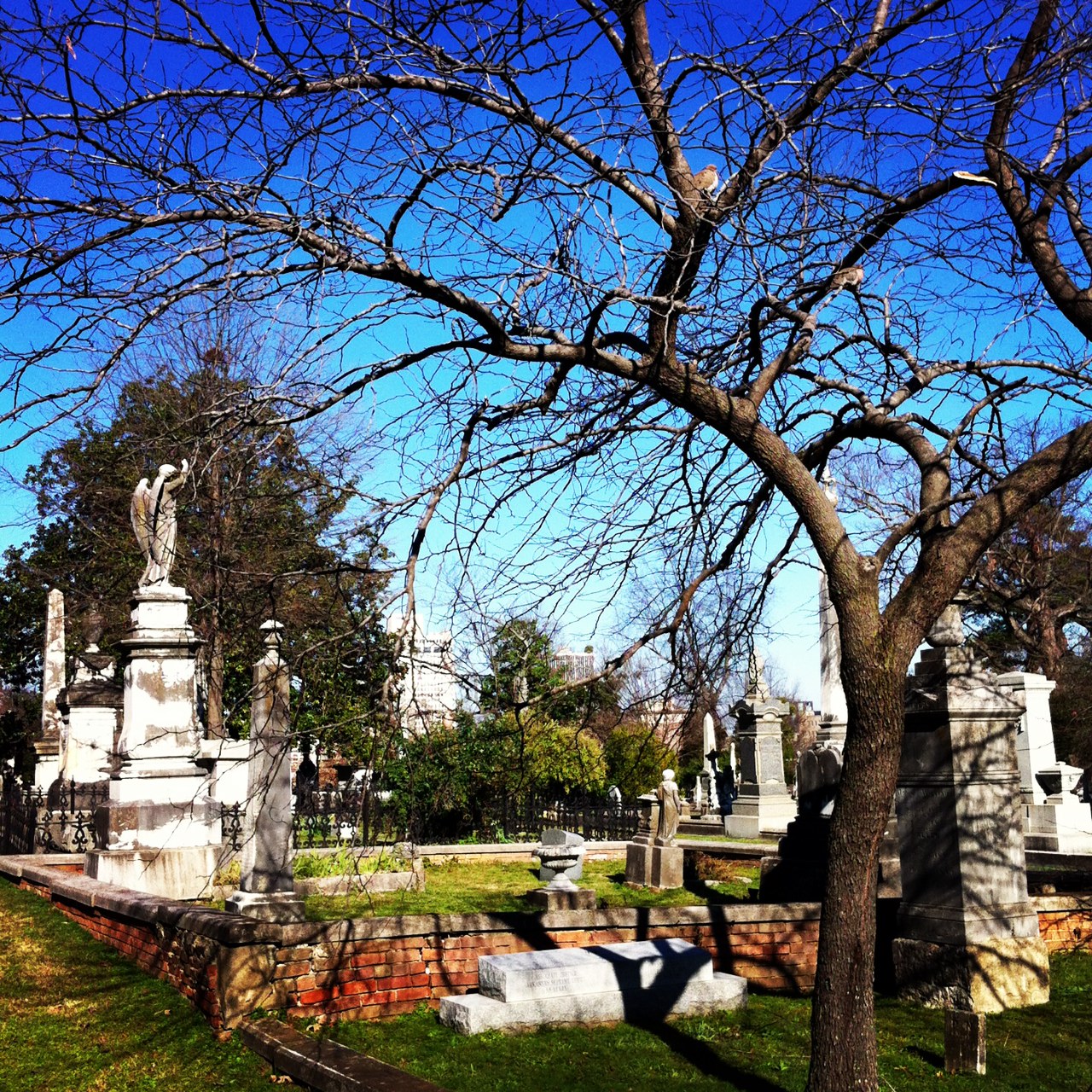
As a way to give this recognition, today would be a good day to visit a cemetery. One of Little Rock’s most storied cemeteries is Mount Holly Cemetery. There are veterans from all wars: Revolutionary, War of 1812, Mexican, Civil War, Spanish-American, World War I and II, Korean, Vietnam and Desert Storm.

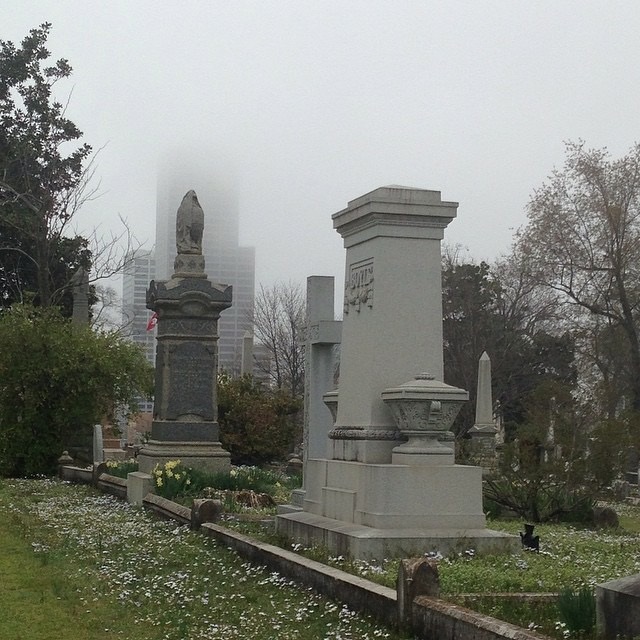
Founded in 1843, Mount Holly has been called “The Westminster Abbey of Arkansas.” Thousands of visitors come each year. Those interested in history come to see the resting places of the territorial citizens of the state, including governors, senators, generals, black artisans, and even a Cherokee princess. For others the cemetery is an open air museum of artistic eras: Classical, Victorian, Art Deco, Modern––expressed in gravestone styles from simple to elaborate. Some come to read the epitaphs that range from heartbreaking to humorous to mysterious.

Though a City of Little Rock facility, the cemetery is maintained by the Mount Holly Cemetery Association, a non-profit organization with a volunteer Board of Directors. The cemetery is located at 1200 South Broadway in Little Rock. Gates are open from 8 a.m. until 5 p.m. in the summer and from 8 a.m. until 4 p.m. in the winter.

Interred within the rock walls of Mount Holly are 11 state governors, 15 state Supreme Court justices, four Confederate generals, seven United States senators and 22 Little Rock mayors, two Pulitzer Prize recipients, as well as doctors, attorneys, prominent families and military heroes.  Proving that death is the great equalizer (and the J. N. Heiskell lived a very long time) longtime Gazette owner and publisher J. N. Heiskell is buried near two different nemeses: Senator, Governor and demagogue Jeff Davis; and segregationist Congressman Dr. Dale Alford.

Annual Mount Holly RIP (Rest in Perpetuity) Picnic Tonight

MtHollyMount Holly Cemetery is like an aging, but gracious Southern lady. She is in need of ongoing maintenance! Funds raised at the picnic will help maintain this historic landmark. Visitors will walk in Little Rock’s historical footsteps at the 10th Annual Mount Holly Cemetery Picnic this evening from 5pm to 7pm.

The Mount Holly Cemetery Association calls this event Rest in Perpetuity. The Culture Vulture lovingly refers to it as Dining with the Dead.

Festivities will include:

  • Appetizers
  • Dinner
  • Wine
  • Turn of the century picnic “delicacies”
  • Live music
  • Silent auction of tours, elegant dinner parties and opportunities for exclusive events at Mount Holly Cemetery and many other items.

Guests will have the opportunity to join in a historic tour of the cemetery, featuring famous and infamous residents of Mount Holly Cemetery or guests can enjoy a naturalist tour!

This is the annual fundraiser to raise funds to maintain this historic landmark.
Tickets are $100 for adults, $25 for children under 12.

In case of rain, the event will be moved to Trinity Cathedral.

Dating to 1843, but with grave sites that date much earlier, Mount Holly is a “living and breathing” historical treasure in the heart of Little Rock’s Historic District. Interred within the rock walls of Mount Holly are 11 state governors, 15 state Supreme Court justices, four Confederate generals, seven United States senators and 22 Little Rock mayors, two Pulitzer Prize recipients, as well as doctors, attorneys, prominent families and military heroes. Also included are Eliza Cunningham, the first female resident of Little Rock (who later became the first First Lady of Little Rock) and her son Charles, who was the first baby born in Little Rock. There are veterans from all wars: Revolutionary, War of 1812, Mexican, Civil War, Spanish-American, World War I and II, Korean, Vietnam and Desert Storm.

On Pulitzer Day – Prizing Mount Holly

The Pulitzer Prizes are to be announced today.  Mount Holly Cemetery not only touts that it is the site of a whole host of elected officials, it is also the only place in Arkansas where two Pulitzer Prize recipients are buried. The cemetery is open every day, but a special visit to these two prize winner gravesites can be made next Sunday during the Mount Holly Cemetery Association’s annual “Rest in Perpetuity” fundraiser picnic.

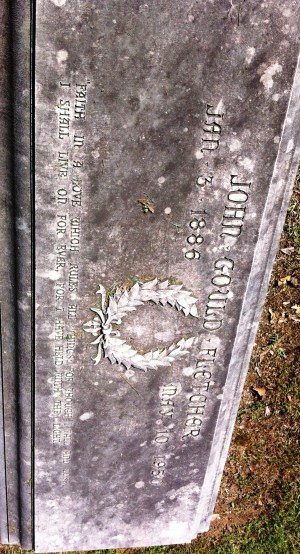
In 1939, John Gould Fletcher became the first Southern poet to win the Pulitzer Prize for Poetry.  He was born into a prominent Little Rock family in 1886.  Fletcher was awarded the prize for his collection Selected Poems which was published by Farrar in 1938.  Two years earlier, he had been commissioned by the Arkansas Gazette to compose an epic poem about the history of Arkansas in conjunction with the state’s centennial.

Fletcher is buried next to his wife, author Charlie May Simon and his parents (his father was former Little Rock Mayor John Gould Fletcher).  Other relatives are buried nearby in the cemetery.

The other Pulitzer Prize winner buried in Mount Holly is J. N. Heiskell, the longtime editor of the Arkansas Gazette.  It was Heiskell, in fact, who asked Fletcher to compose the poem about Arkansas.  Heiskell served as editor of the Gazette from 1902 through 1972.  He died at the age of 100 in 1972.

Under his leadership, the Gazette earned two Pulitzer Prizes for its coverage of the 1957 desegregation of Little Rock Central High.  One was for Harry Ashmore’s editorial writing and the other was for Public Service.

Heiskell remained in charge of the Gazette until his death in 1972.  He is buried alongside his wife with other relatives nearby.  Also not too far from Mr. Heiskell are two of his nemeses, proving that death and cemeteries can be the great equalizer. In the early days of his Gazette stewardship, he often locked horns with Senator (and former Governor) Jeff Davis. Later in Mr. Heiskell’s career, he vehemently disagreed with Dr. Dale Alford, who had been elected to Congress on a segregationist platform.

Poetry Month: John Gould Fletcher & “In Mount Holly”

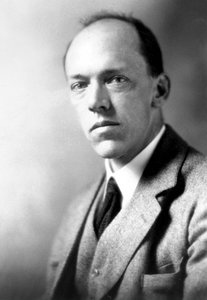
John_Gould_Fletcher poetThe Pulitzer Prizes will be announced tomorrow.  Arkansas poet John Gould Fletcher became the first Arkansan to win a Pulitzer and the first Southern poet to win the Pulitzer for Poetry.

The scion of a leading family of Little Rock, Fletcher was most known for his association with the Imagism movement in poetry.

Below is his 1929 poem “In Mount Holly.”  This cemetery is the final resting place of many members of his family. Fletcher and his wife Charlie May Simon (an award winning children’s author) are buried next to his parents in Mount Holly.

Supporters of Mount Holly will gather next Sunday (April 26) for the Rest in Perpetuity picnic in the cemetery.  It is a fundraiser sponsored by the Mount Holly Cemetery Association.


Mount Holly grey“In Mount Holly”

Here beyond hope is all that death shall hold of me,
This brown Arkansas hillside, dreaming through depth of mid-winter, alone in the southland;
Under the dove-grey low-swung cloud come up from the Gulf to scatter
Its benediction of deep rain, endlessly flashing and pouring;
Here, in the drift of the years,
From the seas I have crossed, and the lands I have known, and the struggles
I have faced with the steady river of time marching on through my vitals,
I have come back to this point of repose, to these stones side by side in the grass,
Turning as the earth turns against far Orion’s fierce whirlwind of stars.

They greet me unseeing, these graves,
Mute symbols of life accomplished, made noiselessly perfect,
Quieted by the cold hands of death that suddenly seize on the body
In an hour unexpected, as a thief in the night, running free with the tale of man’s days;
Yet not to be loosed from the soil till the sphere splits its core and is shattered
Like a ripe seed pod crammed full with thick seed of expectancies, memories, and failures;
Their dumb thought trails on in the soil while I in the high world above them
Lift up thin eager hands to the sky and cry to the sun’s dying splendor.

Here beyond hope is all that death shall take of me,
The blood that is mine, and yet theirs, the tower, the base and the framework;
The building not reared by man’s hands, but shaped in the night and the silence,
The framework of the body fashioned as theirs, for the blood through the generations
Repeats the same tale of Eden lost and Paradise darkly forgotten:
When the stars hang low in the sky and two souls become as one body
Straining past hope and despair to a timeless consummation,
Which is as the wedding-song of God mating the stars without number.
Here does the last life wait,
Crouched in its stronghold of bone behind the slow-vanishing sinew,
A spark without issue, a last ache of lust, a slow tide merging and dying
Into the running of quick hidden sap and the thin dumb flame of the grass.

Out of what chasms of fire,
Out of what lavalike torrents life sprung at the outset neither I nor these graves can remember;
They have become turf-covered dumb mouths opening below to the waters under the earth,
Which burst forth but once in the flood, and since then have ever been silent.
Into what dark seas we flow
I know not at all—I remember
Only the sunlight that lays a soft pencil of shadow to sleep on the grass;
The tramp of the black-clad pallbearers, the words spoken or sung, the lowering of the coffin to earth.

Here beyond hope, beyond dreams,
Under this soft and lazy sky dreaming in depth of midwinter,
Where the sweetgum casts to the earth its brown prickly balls, where the holly
Flashes its scarlet clusters, where the feathery pine sways its thin needles,
Where the red haw blazes with berries threaded bright on long outspraying stems,
Where the conelike fount of the magnolia spreads downwards a billion of star-rayed leaves,
Where the acorn lies split on the stone, its yellow sustenance wasted:
Here was I fashioned and made
By those who now sleep in the earth at my feet, as they by others forgotten.
Their speech was my speech, their dream was my dream, it was given
Beyond the cloud’s arbitrament of rain to create, or the slow earth’s power to destroy.
And I pause ere I go,
And stretch out my hands to these worn stones, smoothing them over and over,
Repeating their names which no one but I now remembers,
Praying that they may somehow bless me;
These who have given me life and so many dreams
On this brown Arkansas hillside, quiet in depth of midwinter:
Out of this army of graves facing eastward I single out but these two stones,
I wailingly beseech them
With the tears of the spirit torn against life and its days,
In this place where so many tears have been shed and mortal lives brought to the awe
Of the open portals of death, beyond hope, beyond dreams;
I kneel and weep as a man weeps,
I cry out loud as a man cries,
Let that which is mine and yet yours, this memory transient, this passion,
Marked by the cross of Christ on those stones, marked in my heart by time’s ebbing,
Be with me now forever wherever I go.

Women’s History Month Throw Back Thursday: Mount Holly Cemetery Association

Mt Holly ProfileThe Mount Holly Cemetery is a treasure trove of history, architecture and horticulture on the edge of downtown Little Rock.

It was established in 1843 when Chester Ashley and Roswell Beebe donated the land to the city of Little Rock. Feeling the town fathers were not giving the cemetery the attention it deserved, a group of Little Rock businessmen formed a cemetery commission on March 20, 1877. Charter members of the commission were J. H. Haney, Fay Hempstead, James Austin Henry, Philo O. Hooper, and Frederick Kramer. However the private group of men did no better in maintaining the cemetery.

In 1914, a contingent of the town’s women became critical of the cemetery’s unkempt appearance and took over the reins from the men. Following adoption of City Ordinance No. 2199 in June 1915, the ladies’ Mount Holly Cemetery Association was incorporated on July 20, 1915. (It should be noted this action by the women came at a time when women did not have the right to vote.)

The Mount Holly Cemetery Association grew out of a meeting which took place on June 9, 1914 at the home of Mrs. A. H. Scott. Thirty-six women gathered for the purpose of improving the cemetery.

An executive committee was formed, and the women started working on improvements to the cemetery. Though first viewed by some men as an auxiliary to the Cemetery Commission, it quickly became apparent that the women were in no mood to take a back seat in matters pertaining to Mount Holly.

The first executive board (from June 1914 to July 1915) included Mrs. A. H. Scott, Mrs. B. S. Johnson, Mrs. George Thornburgh, Mrs. Moorhead Wright, Mrs. H. M. Bennett, Mrs. George Worthen, Mrs. W. E. Green, Mrs. George Stratman, Miss Louise Gibson and Miss Clara Hotze.

The July 1915 incorporators were Mrs. Scott as well as Julia E. Bennett, Eva C. Shields, Rosa M. Miller, Ruby P. Ratcliffe and Marguerite R. English. Mrs. Bennett, known affectionately as “Scrap” would serve as the first president, and Miss Miller was the first secretary.

Over the years the Association has undertaken countless projects large (construction of a mausoleum) and small (signs on the lanes) to improve Mount Holly Cemetery for its residents and for visitors.

In 1993, the Association published a history of the first 150 years of the cemetery.  More recently, they launched the annual RIP (Rest in Perpetuity) picnic held the last Sunday in April on the grounds.  They have also published a cookbook–Recipes in Perpetuity.

Today, the Mount Holly Cemetery Association is still going strong!

Visit Veterans at Mount Holly Cemetery this Veterans’ Day

MountHolly Memorial Day

Today is Veterans’ Day – a time to pay tribute to the men and women in uniform who have served their country in the military.

As a way to give this recognition, today would be a good day to visit a cemetery. One of Little Rock’s most storied cemeteries is Mount Holly Cemetery. There are veterans from all wars: Revolutionary, War of 1812, Mexican, Civil War, Spanish-American, World War I and II, Korean, Vietnam and Desert Storm.

Founded in 1843, Mount Holly has been called “The Westminster Abbey of Arkansas.” Thousands of visitors come each year. Those interested in history come to see the resting places of the territorial citizens of the state, including governors, senators, generals, black artisans, and even a Cherokee princess. For others the cemetery is an open air museum of artistic eras: Classical, Victorian, Art Deco, Modern––expressed in gravestone styles from simple to elaborate. Some come to read the epitaphs that range from heartbreaking to humorous to mysterious.

Though a City of Little Rock facility, the cemetery is maintained by the Mount Holly Cemetery Association, a non-profit organization with a volunteer Board of Directors. The cemetery is located at 1200 South Broadway in Little Rock. Gates are open from 8 a.m. until 5 p.m. in the summer and from 8 a.m. until 4 p.m. in the winter.

Interred within the rock walls of Mount Holly are 11 state governors, 15 state Supreme Court justices, four Confederate generals, seven United States senators and 22 Little Rock mayors, two Pulitzer Prize recipients, as well as doctors, attorneys, prominent families and military heroes.  Proving that death is the great equalizer (and the J. N. Heiskell lived a very long time) longtime Gazette owner and publisher J. N. Heiskell is buried near two different nemeses: Senator, Governor and demagogue Jeff Davis; and segregationist Congressman Dr. Dale Alford.

LR Cultural Touchstone: Mary Fletcher Worthen

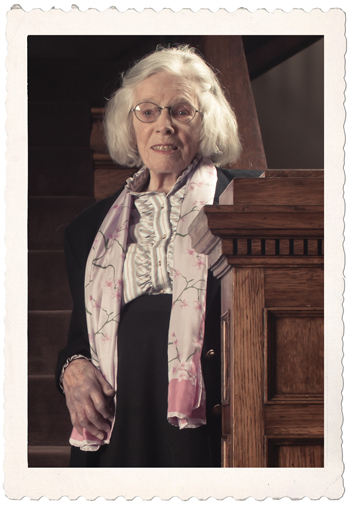
JJLR-MaryWorthen-MayMary Fletcher Worthen has cultivated history and music with the same grace and skill as she has cultivated gardens.

Born outside of Scott, she attended Vassar and Little Rock Junior College. After marrying banker Booker Worthen, she has devoted her life to improving Little Rock. Together with Stella Boyle and George Smith, she and Booker helped found the precursor to the Arkansas Symphony Orchestra.  Through its many iterations, she has been a steadfast supporter and is now a life member of the ASO Board.  She has also been a supporter of many other music organizations in Little Rock including the Chamber Music Society of Little Rock, of which she was a founder.

Another hallmark of her involvement is Mount Holly Cemetery Association.  For over 50 years she has served on the board of this body.  Without notes, she can recite the history of practically every resident buried there.  The tours she would lead with the late Peg Newton Smith were hot commodities when auctioned at fundraisers.  These two loving and lifelong friends would sometimes remember things differently. They playfully prodded and needled each other as they wended and winded their way through the headstones and history regaling rapt audiences with yarns of yore, quips and quotes, plus an anecdote or two.  In the decade since Peg passed, Mary has continued to entertain and engage visitors to the cemetery, especially at the annual Mount Holly Rest in Perpetuity (RIP) picnic.

She has also served on the Old State House Museum Board and the Pulaski County Historical Society Board.  As a historian, she literally wrote the book on Trinity Episcopal Cathedral.  She combined her interest in herb gardening and history with the creation of the Medicinal Garden at Historic Arkansas Museum, which is now named in her honor.

Born in 1917, Mary Worthen continues to learn new facts, share her love of history and music, and works to cultivate the next generations of cultural enthusiasts.