Arkansas Political History at Old State House

OSH logoThe Arkansas General Assembly convenes today, while tomorrow is the inauguration day for the Governor and other Constitutional officers.

To learn more about Arkansas’ political past, visit the Old State House Museum.  Two of their permanent exhibits are especially of note this week.

First Families of Arkansas

The “First Families” of Arkansas varied in their background and experience. James Miller, the First Territorial Governor, spent little time in Arkansas, and his wife Ruth remained in Massachusetts. James Conway, the first governor of the state of Arkansas, came to Arkansas as a surveyor in 1820 and served in the Territorial Legislature. Conway was a founding member of an Arkansas dynasty known as “the Family,” a political alliance that dominated Arkansas until the Civil War. Conway’s wife, the former Mary Jane Bradley, came from a prominent Arkansas frontier family and was actively involved in furthering her husband’s political career.

Beginning in the 20th century, Anna Roark Brough served as her husband’s campaign manager. First Lady Brough, an active suffragette, posed on the steps of the capitol during a 1919 rally advocating voting rights for women.


On The Stump: Arkansas Politics, 1819 – 1919

In 1819 when the Arkansas Territory was created, the elimination of property requirements for voting combined with the raucous spirit of the frontier produced a new style of mass participation in American politics. The results were crude and often vulgar, but thoroughly democratic. This manifested itself in Arkansas politics less centered on political parties of Arkansas and the ideology of citizens than on the personalities of those involved. So personal were the politics of the times that political campaigns often culminated in duels. Carl Moneyhon, Professor of History at the University of Arkansas at Little Rock, served as author and guest curator for On the Stump. Additional materials were provided by the museum’s staff.


In addition, the Old State House Museum website has features on the men who have served as Governor of Arkansas.

Tonight END OF THE LINE at Old State House “2nd Friday Cinema”

End of the lineJanuary’s installment of Second Friday Cinema features End of the Line, a 1987 movie directed by Arkansan Jay Russell and featuring Arkansans Mary Steenburgen and Levon Helm. The film is about two rail workers from Little Rock who hop aboard a train to Chicago in a last ditch effort to save their jobs and way of life.

Joining in the cast are Wilford Brimley, Barbara Barrie, Bob Balaban, Henderson Forsythe, Holly Hunter and Bruce McGill.  Perhaps, most importantly, Kevin Bacon is one of the stars making this a key component of “Six Degrees of Kevin Bacon” games everywhere.

The movie was filmed in Central Arkansas.  The Culture Vulture very clearly remembers working overnight to construct balloon arches for a scene to be filmed at the Missouri Pacific rail yards the next day. The Culture Vulture later donned his 1970s era band uniform (with fake satin tunic, dark pants, dark shoes and fuzzy black cowboy hat) and stood in the August heat for several hours while a “simple” scene was shot and re-shot countless times.

Ben Fry, general manager of KLRE/KUAR and coordinator of the film minor at UALR, will introduce the film and lead a discussion after the screening.

The screening starts tonight at 5pm at the Old State House Museum, an agency of the Department of Arkansas Heritage.


Bicentennial of Battle of New Orleans

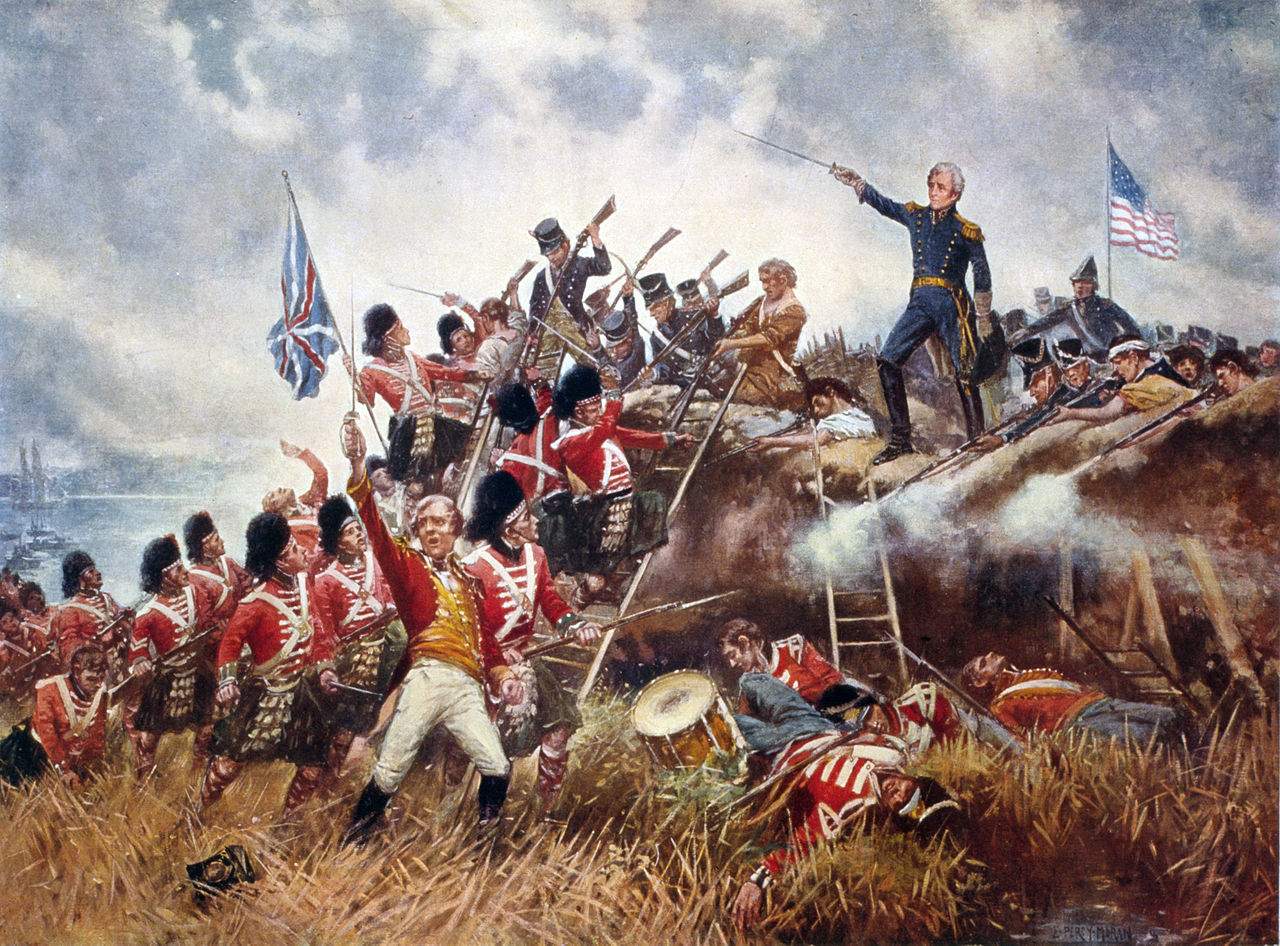
1280px-Battle_of_New_OrleansToday marks the 200th anniversary of the conclusion of the Battle of New Orleans.  It relates to Little Rock in a couple of ways.

First, it made General Andrew Jackson a national hero which helped propel him to the presidency.  It was while he was president that Arkansas was admitted to the Union.

Secondly, one of his soldiers in the battle was a young Roswell Beebe.  Jackson and Beebe became friends and maintained that friendship throughout their lives. Beebe later moved from Louisiana to Arkansas and became a leading citizen of Little Rock.  Using his friendships with Jackson and his successor Martin Van Buren, Beebe was able to navigate the already burgeoning bureaucracy of Washington DC.  Working with the federal government, he was able to straighten out the murky questions of who owned what land in Little Rock.

Beebe received the patent to most of Little Rock’s land. He then laid out streets, set aside land for a state capitol (now the Old State House Museum), set aside land for Mount Holly Cemetery (where he now resides), and sold land at reasonable prices to others.  These actions helped Little Rock continue its momentum as a growing trade town.  Without them, it could have devolved into a frontier town of lawlessness.

Bikes and Movies at Old State House

OSH logoJanuary is a good time to go to the movies and to ride your bike (as well as other fitness regimens).  The Old State House Museum currently has two exhibits which highlight these two activities.

Different Spokes

Different Spokes looks at the history of bicycling and places cycling in Arkansas within a worldwide historical context. Visitors will be able to view galleries of artifacts, historical pictures and video to learn the history of bicycles.

“As cities and towns begin dedicated services and trails for cyclists, it’s important to note that the enthusiasm for bikes in Arkansas has roots that go back over 100 years,” said Old State House Museum Director Bill Gatewood. “The interest at the turn of the 20th century in bicycles was very similar to the one that we are seeing at the turn of the 21st century.”

While the exhibit mainly explores the technological advances of cycling in the past 130 years, Different Spokes also tells the story of competition, economics, and social life. The history of trail systems, cycling communities and history in Arkansas is explored in videos produced by the Old State House Museum. From an 1880 wooden bicycle built from white oak and agricultural implements to the world’s first carbon-fiber bicycles made by Brent Trimble of Berryville, Different Spokes contains artifacts that show this history from past to present. Gatewood says the Museum relied on contributions from the cycling community to present this story. The exhibit will remain on view to February 2016.

“I have not participated in any other exhibit that has had this kind of immediate response from the community,” Gatewood said. “The passion these people have for their pursuit is overwhelming, and I believe it will be reflected well in this exhibit.”

Lights! Camera! Arkansas!

Arkansas’s rich and varied history in film is the subject of Lights! Camera! Arkansas!, the newest exhibit at the Old State House Museum. The exhibit features the state’s ties to Hollywood, through both movies and television. Lights! Camera! Arkansas! highlights several well-known films with Arkansas connections and includes over 800 artifacts from the Old State House Museum’s permanent collection and objects loaned by other museums, film companies, actors, and writers. The comprehensive exhibit shows artifacts related to films shot on location in the state, actors born in Arkansas, and literary figures whose works were the basis for films shot in Arkansas.

 Lights! Camera! Arkansas! features a stellar list of Arkansas-born actors, authors, directors, and scripts. The exhibit  includes the work of Jeff Nichols, Mary Steenburgen, Harry Thomason, Julie Adams, Lisa Blount, Johnny Cash, Gail Davis, Levon Helm, Ben Piazza, James Bridges, and Joey Lauren Adams among many others.

Visitors will see five galleries of costumes, scripts, film footage, awards, photographs, theater posters, props, and more. Documentary videos add to their understanding and appreciation of Arkansas’s role in American film. Visitors will be able to watch the videos in a newly-constructed theater room.

The Old State House Museum commissioned original paintings of the state’s Hollywood-famous by House-of-Blues artists Patterson and Barnes. These fourteen portraits will portray Broncho Billy Anderson, Dick Powell, Alan Ladd, Gail Davis, Julie Adams, William Warfield, Louis Jordan, Johnny Cash, Glen Campbell, Levon Helm, Mary Steenburgen, Billy Bob Thornton, Lisa Blount, and Jeff Nichols.

Hurst to lead Department of Arkansas Heritage

stacy-hurstYesterday Governor-Elect Asa Hutchinson announced that Stacy J. Hurst of Little Rock will be the next director of the Department of Arkansas Heritage.

“Stacy is extremely bright and hardworking, and she understands the importance of protecting and preserving our state’s incredibly rich history and culture. I have no doubt she will do a remarkable job in her new position as the director of the Department of Arkansas Heritage,” Hutchinson said.

As director of the agency, she will serve as the state’s chief preservation officer. She will oversee the Arkansas Arts Council, Arkansas Historic Preservation Program, Arkansas Natural Heritage Commission, Delta Cultural Center, Historic Arkansas Museum, Mosaic Templar’s Cultural Center, and Old State House Museum.

From January 2003 until December 2014, Hurst represented Ward 3 on the Little Rock City Board.  A native of Pine Bluff, she moved to Little Rock in 1985 after graduating from the University of Arkansas in Fayetteville with a degree in Communications.  Since 1996, she has worked at Tipton & Hurst, Inc.  Prior to that, she worked for Arkansas Children’s Hospital Foundation for twelve years, retiring from the organization as Vice President.

From January 2007 to December 2008, she served as Vice Mayor of the City of Little Rock.  Prior to her election to the City Board, she served as co-chair of the Vision Little Rock, Recreation and Tourism workgroup.  She also served as a member of the Little Rock Zoo Board of Governors from 2000 to 2002.

Hurst chaired the three (3)-year community-wide planning process that led to a vision and Master Plan for the renovation of War Memorial Park.  Since the plan was adopted by the Board, over $2 million has been devoted to improvements within this signature park.  She was instrumental in the revitalization of the Midtown Redevelopment Corridor.  These efforts started with the Statement of Expectations planning document and a Design Overlay District adopted by the Planning Commission and board of Directors.  As a result of this work, tens of millions of dollars of private investment in the Midtown Corridor that continues today.

She was founding chair and board member of the City Parks Conservancy, which raises money for the City’s parks.  She has served as chair of the Nature Conservancy Board of Trustees in Arkansas.  She is currently a sustaining member of the Junior League of Little Rock, after having led the League’s efforts to purchase and restore the historic Women’s City Club in downtown.  Her numerous other community memberships include the Nature Conservancy,Arkansas Arts Center, Youth Home Board of Trustees, Arkansas Women’s Forum, CARTI Foundation Board of Trustees, Little Rock Garden Club, First Tee of Arkansas Board of Trustees, Arkansas Children’s Hospital Auxiliary, Alzheimer’s Arkansas Advisory Board.

Little Rock Look Back: Roswell Beebe, LR’s 16th Mayor

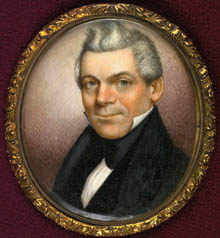
Mayor BeebeOn December 22, 1795, future Little Rock Mayor Roswell Beebe was born in Hinsdale, New York.  His family were wealthy English immigrants.  At seventeen, Beebe went to New Orleans and fought with Andrew Jackson in the 1815 Battle of New Orleans.  He stayed in the Crescent City for the next two decades building successful lumber and brick businesses.

Due to health concerns, he moved north to a drier climate in 1834.  After first stopping in Fulton, Arkansas, he settled in Little Rock in 1835 at the age of forty.  He stayed at the home of Chester Ashley and married Ashley’s sister-in-law, Clarissa Elliott.  He and Clarissa had two children, Roswell and Cora.

For nearly 30 years, Little Rock had a complicated history of deeds, titles and land ownership.  In 1839, Beebe went to Washington DC and received the original patent from President Martin Van Buren.  He then set about clearing up the land and title issues, as well as drawing up a plan for the city and laying off blocks and streets.  Beebe deeded the streets and alleys to the City for a dollar.  He also donated the land on Markham Street for a new State Capitol building (now home of the Old State House Museum).  Along with his brother-in-law Chester Ashley, he donated the land for the establishment of Mount Holly Cemetery.

In 1848, Beebe was elected to the Little Rock City Council.  The following year, he was elected Mayor.  He served as Mayor of Little Rock from April 1849 to February 1850.

While his primary business focus in the 1840s had been real estate, in the 1850s he focused on railroads.  Beebe was named president of the Cairo and Fulton Railroad Company in 1853.

While on a visit to New York, Beebe died on September 27, 1856.  His body was returned to Little Rock, and Roswell Beebe was buried at Mount Holly Cemetery.  The town of Beebe, Arkansas, is named in his honor.

Arkansas Chamber Singers Holiday Concert this weekend at Old State House Museum

IMG_9317[1]The Old State House Museum with support from the Arkansas Arts Council welcomes the Arkansas Chamber Singers performing their annual holiday concert.

The annual “Christmas at the Old State House,” will feature traditional music of the season, music of new composers and music popular during the American Civil War (marking the 150th anniversary of the final Christmastime during the Civil War).

The combination of the acoustical magic of the hall and the glorious voices of the Arkansas Chamber Singers promises to pack the house for all three thrilling performances!

Performances are at 7pm on Friday, December 12 and Saturday, December 13.  On Sunday, December 14, the concert will be at 3pm.

Admission is free, but seating may be limited, so reserve your seats now by going to the Arkansas Chamber Singers website.