Little Rock Look Back: L. Brooks Hays

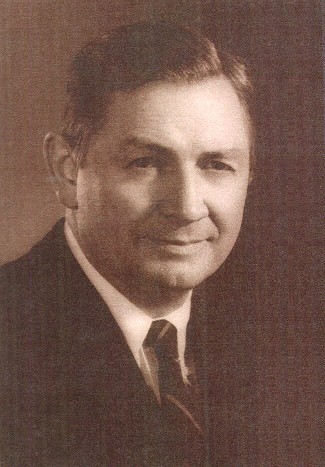
BrooksHaysFor many years on a Sunday morning, the Brooks Hays Sunday School Class met at Second Baptist Church in downtown Little Rock.  Named for its longtime leader, the class continued for decades after he had retired to the Washington D.C. area.  Since today is a Sunday, and his birthday, this entry looks back at the life, career and legacy of Brooks Hays.

Lawrence Brooks Hays was born on August 9, 1898, in the Pope County town of London.  He grew up in Russellville and attended the University of Arkansas.  After military service in World War I and law school at George Washington University, he returned to Arkansas and practiced law with his father.  In 1925, he was named an Assistant Attorney General and moved to Little Rock.  A lifelong Southern Baptist, he joined Second Baptist Church.

His first entries into political races were not met with success.  He failed to attain the Democratic nomination for governor in 1928 and 1930. In 1933, he narrowly lost a race for Congress to David D. Terry.  Following that loss, he was appointed General Counsel to the U.S. Department of Agriculture by President Roosevelt.

In 1942, he was elected to Congress to succeed Terry.  Throughout the 1940s and 1950s, he was focused on foreign affairs. He was a leading proponent of religion as a way to fight Communism. His emphasis on faith was also evident when he became elected the President of the Southern Baptist Convention in 1957. He was only the second lay person, and last one to date, to have been selected to this post.

In Congress, Hays had been a proponent of seeking a middle road on issues of segregation. He was not an integrationist, but he did believe that some rights should be afforded to African Americans.  These efforts were met with disdain by both sides.  Hays denounced the Brown v. Board decision in 1954, but three years later was caught up in it.

With Governor Orval Faubus openly defying federal law, there was pressure on President Dwight Eisenhower to uphold the law.  Hays brokered a meeting with Faubus and Eisenhower, which did nothing to break the stalemate.  However, because he had worked to uphold the law, he was a target when he was on the ballot in 1958.  After defeating a segregationist candidate in the Democratic primary, Hays was surprised by a write-in candidate a week before the general election.  Dr. Dale Alford, a member of the Little Rock School Board, pulled an upset and defeated Hays.

Presidents John F. Kennedy and Lyndon B. Johnson appointed Hays to a series of positions following that election.  In 1966, he ran unsuccessfully for the Democratic gubernatorial nomination.  He moved to North Carolina in 1968 to take a position with Wake Forest University. While in that state, he ran unsuccessfully for Congress in 1972.  Shortly thereafter he moved to Chevy Chase, Maryland, which would be his base until his death in 1981.  He is buried in Oakland Cemetery in Russellville.

Among the books he authored were Politics is My Parish, A Hotbed of Tranquility: My Life in Five Worlds, and A Southern Moderate Speaks.

His son, Steele Hays (named for the Congressman’s father) served on the Arkansas Supreme Court from 1981 to 1994. He had previously served on the Court of Appeals and as a Pulaski County Circuit Judge.


Little Rock Look Back: Dan T. Sprick

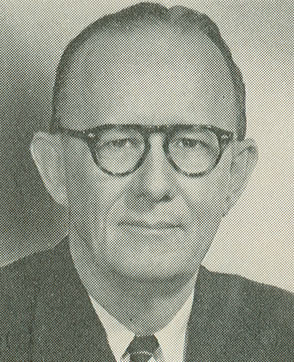
SprickFuture Little Rock Mayor Dan T. Sprick was born on May 19, 1902.  He served three terms on the Little Rock City Council (from 1935 to 1941).  In 1945, he was elected Mayor of Little Rock and served one term. During his tenure on the City Council, he was the sole vote against locating Robinson Auditorium at Markham and Broadway.  He had favored another location.

He was not alone, however, in being held in contempt of court and spending part of the day in jail.  On Monday, December 4, a dozen of Little Rock’s aldermen (which included Sprick) reported to the county jail to serve sentences for contempt of court. The previous Monday, the twelve council members had voted against an ordinance which had been ordered by the judge in an improvement district matter. The other aldermen had either voted in the affirmative or had been absent. Because the twelve had refused to change their votes since that meeting, the judge ordered them jailed.

Mrs. C. C. Conner, the only female, was not jailed but was fined $50. The eleven men were held at the jail, though not in cells. In order to get out of jail, the judge gave the aldermen the chance to change their votes. The mayor asked the judge to let them leave the jail to attend the meeting at City Hall, which was nearby. He requested that the city be allowed to maintain “what little dignity remained” by not having the meeting at the jail. The judge relented, and the aldermen were escorted by deputies to the council chambers. After the aldermen changed their votes, the judge suspended the remainder of their sentences.

His tenure as Mayor was relatively quiet. He took office the same month that World War II ended. While in office, the Sprick administration was marked by growth in the city budget and in city positions. As a part of that growth, there were many more new purchases taking place which had prompted extra scrutiny of the City’s purchasing procedures. A thorough investigation toward the end of his tenure found no malfeasance or misfeasance, it did note that the city needed to do a better job of anticipating cash flow. Much of the City’s focus during the Sprick tenure was on growth and keeping up infrastructure needs.

Sprick later served for ten years in the Arkansas State Senate (from 1961 to 1970).  During his tenure in the Senate, Sprick was closely aligned with Gov. Orval Faubus.  When the Little Rock high schools had been closed a year to ensure segregation, Sprick had served on the board of a private school set up by some of the leaders of the segregation movement.

His time in the Senate was also marked by controversy.  He was one of three Senators to opposed Muhammad Ali’s speaking at the University of Arkansas at Fayetteville.  After an Arkansas Gazette editorial lambasted him, Sprick sued the paper for libel. The Gazette settled with him out of court because his health was poor.

Sprick died in January 1972.

Black History Month Spotlight – Annie Abrams

bhm annieThis year during Black History Month, the Culture Vulture will look at 28 cultural leaders who have Little Rock connections and have been inducted into the Arkansas Black Hall of Fame.  Though presented in alphabetical order, up first is a personal friend of the Culture Vulture – Annie Abrams, or as she is affectionately known, Miss Annie.

Annie Mable McDaniel Abrams is a retired educator by trade and civic activist by avocation.  She is included in this list because she is also a historian.  As a writer and preservationist, she has worked to document history and ensure historical properties and neighborhoods will long remain in Little Rock.

Born in Arkadelphia, she moved to Little Rock at age 13 to attend Dunbar Junior High School and High School.  She studied education at Dunbar Junior College and later taught in Marianna. In 1956, she returned to Little Rock to work for the Arkansas Teachers Association.  After her return to the capital city, she married Orville Abrams.  In addition to raising her four children, Miss Annie has helped raise countless others through her advice, support, love, and sometimes strong admonitions.  She also found time to return to school and receive a degree from Philander Smith College.

Among her many accomplishments are leading efforts to rename High Street for Martin Luther King, 14th Street for Daisy L. Gatson Bates and 20th Street for Charles Bussey.  Through her community activities, she had worked closely with both Bates and Bussey.  She was a friend to the Little Rock Nine (who were only a few years younger than she) and to their families. Perhaps, because she has been a personal friend of many Arkansas and national politicians over the past 60 years, it should come as no surprise that she and her husband were also acquainted with Governor Faubus.

Whether a leading political figure or a small child, Miss Annie isn’t afraid to give advice or to share her love.  Once an educator, always an educator, she loves to learn and teach. It is rare for her to miss a speech at the Clinton School or a Political Animals Club meeting.

In recognition of all her efforts she has been recognized with an honorary doctorate from Philander Smith College, the Brooks Hays Award, and an award award from the national Martin Luther King Jr. Commission.  In 2010, she was inducted into the Arkansas Black Hall of Fame.

For more on Annie Abrams and other inductees into the Arkansas Black Hall of Fame, visit the permanent exhibit at the Mosaic Templars Cultural Center. That museum is an agency of the Department of Arkansas Heritage.

Little Rock Look Back: Orval Eugene Faubus

FaubusOrval_fOn January 7, 1910, one of the most controversial figures in Arkansas history was born: future Governor Orval Eugene Faubus.

Faubus is today remembered for his role fighting for the continued segregation of the Little Rock public schools.  Raised in a socialist family, his staunch embrace of segregation was a surprise to many who viewed him as more of a moderate on the issue.  At the time, and later, it was viewed as more of an opportunistic move to head off a political challenge from segregationists such as Jim Johnson.  However, throughout the rest of his lifetime, as others such as George Wallace would recant and repent, Faubus continued to maintain he was “merely” upholding the law of the land (the Supreme Court striking down the law a few years earlier, notwithstanding).

Interestingly, Faubus was also known for hiring African Americans in state government for more than menial tasks. He worked to increase funding to historically black colleges and universities in Arkansas. He fought to abolish the predatory poll tax.

His segregation efforts curtailed Arkansas’ business recruitment for a few years in the late 50s and early 60s.  But a few years earlier, in 1955 Faubus had created the Arkansas Industrial Development Commission and appointed Winthrop Rockefeller to lead it.  He also increased teacher pay, overhauled the State Hospital, created the Arkansas Children’s Colony, expanded state parks, and stopped the Army Corps of Engineers from damming the Buffalo River.

In late 1965, by executive order, he created the Arkansas Arts and Humanities Council and funded it with his discretionary funds until the legislature would appropriate money in 1967. He also oversaw the creation of the state’s historic preservation program.

Certainly his efforts to flout federal law have tarnished his image. Looking at his accomplishments in the areas of industry, education reform and culture – one wonders what he could have accomplished if he had exerted even more efforts in those areas instead of fighting Eisenhower.  It is all moot, because he did not.  And the reality is that, yes had he supported Eisenhower, he might well have lost in 1958 to someone like Jim Johnson who would have continued fighting for segregation even more vehemently and would have been unlikely to champion these other issues.

Justice Jim and the Red Scare focus of Old State House Brown Bag talk today

Justice JimNovember’s Brown Bag Lunch Lecture is presented by Marie Williams.

Arkansas Senator and state Supreme Court Justice, James D. “Jim” Johnson has been portrayed as one of the most outspoken racist politicians of Arkansas’s history. His legacy includes an Amendment to the Arkansas Constitution that gave Arkansas the right to nullify federal law. He is also remembered for being a constant thorn in the side of Governor Orval Faubus.

A look at the evidence surrounding Johnson’s political career suggests that Johnson was not purely motivated by race. Johnson started the White Citizens’ Council of Arkansas in 1955 in response to the integration of the Hoxie School District. Hoxie became Johnson’s soapbox and the Citizens’ Council became his campaign vehicle. The tactics he used to fight integration in Hoxie were unlike those of other Arkansas segregationists. Instead of citing race as the reason for his campaign in Hoxie, Johnson brought the Second Red Scare to Arkansas. He appealed to a wider audience by accusing integrationists of being communists.

Using primary source information, this presentation outlines the methods used by Johnson in 1955 as he started his campaign for governor. Marie Williams is currently finishing her Master’s Degree in History from Arkansas Tech University. She is an Arkansas native who lives in Dover with her husband and their two children.

Little Rock Look Back: Pratt C. Remmel, LR’s 52nd Mayor

PrattRemmel-2bOn October 26, 1915, future Little Rock Mayor Pratt Cates Remmel was born.  He was one of five children of Augustus Caleb and Ellen Lucy Remmel.  His father died when he was five, leaving his mother to raise five children by herself.  After graduating from high school in 1933, he received a bachelor’s degree in economics from the University of Virginia in 1937.  During World War II, he held the rank of Lieutenant in the US Navy.

The Remmel family had long been involved in politics.  A great-uncle had been the GOP nominee for governor and senator as well as serving on the GOP national committee.  Remmel’s father had been the state GOP chair and his mother was the Arkansas Republican national committeewoman for nearly three decades.  In 1938, shortly after returning from college, Remmel ran for the Little Rock City Council but did not win.  In 1940, he became chairman of the Pulaski County Republican Executive Committee. For the next several decades, he held various leadership posts in the GOP at the county, state and national level.

Remmel made his second bid for public office in 1951 when he challenged incumbent LR Mayor Sam Wassell, who was seeking a third term.  Wassell shared the often held belief at the time that the GOP could not win any races in Arkansas because of the aftereffects of Reconstruction.  Remmel ran a vigorous campaign and won by a 2-to-1 margin becoming Little Rock’s first Republican mayor since Reconstruction.  In 1953, he sought a second two year term and was re-elected.  Though he had worked to build the GOP in Arkansas, he did not emphasize party affiliation in this campaign. He stressed he had been “fair to all and partial to none.”  This campaign included a rally which was aired live on six LR radio stations at the same time, a first for Arkansas. He won by over 3,000 votes this time over alderman Aubrey Kerr.

Remmel had been mentioned as a potential candidate for US Senate or Congress in 1954.  Instead, he ran for governor and was defeated by Orval Faubus in his first race for the office.  Remmel did receive more votes for governor than any GOP candidate had since reconstruction.  He is credited with laying the groundwork for the future successful campaigns of Winthrop Rockefeller.

A month before the election in 1955, Remmel announced he would seek a 3rd term as Mayor.  While later admitting he should have stuck with the customary two terms, he also said he ran to give voters an alternative to the Democratic nominee Woodrow Mann.  Mann, like Remmel, was in the insurance business; Remmel considered Mann to have a questionable reputation.  Several statewide Democratic leaders campaigned for Mann, who beat Remmel by 1,128 votes, one of Little Rock’s closest mayoral elections.

As Mayor, Remmel served in leadership positions with the US Conference of Mayors and the Arkansas Municipal League.  It was during his tenure as mayor that the land which is now Rebsamen Golf Course was given to the City.

After he left office, Remmel returned to business interests and staying active in civic affairs.   He was an active leader of First United Methodist Church and Gideons International.  He was a Mason, a Shriner, a member of the American Legion, and the American Red Cross.   Remmel served on the Arkansas River Basin Commission and chairman of the Arkansas Waterways Commission.  In 1996, he was posthumously inducted into the Arkansas River Hall of Fame.

Married for many years to Catherine Couch, the couple had three children, Pratt Jr., Cathie and Rebecca.  Lake Catherine in Arkansas is named for his wife. Remmel Park and Pratt Remmel Road in Little Rock are named for Mayor Remmel.

Mayor Remmel died on May 14, 1991.  He and Catherine (who died in 2006) are buried in Oakland Cemetery.

Little Rock Look Back: 57 Years since 1957

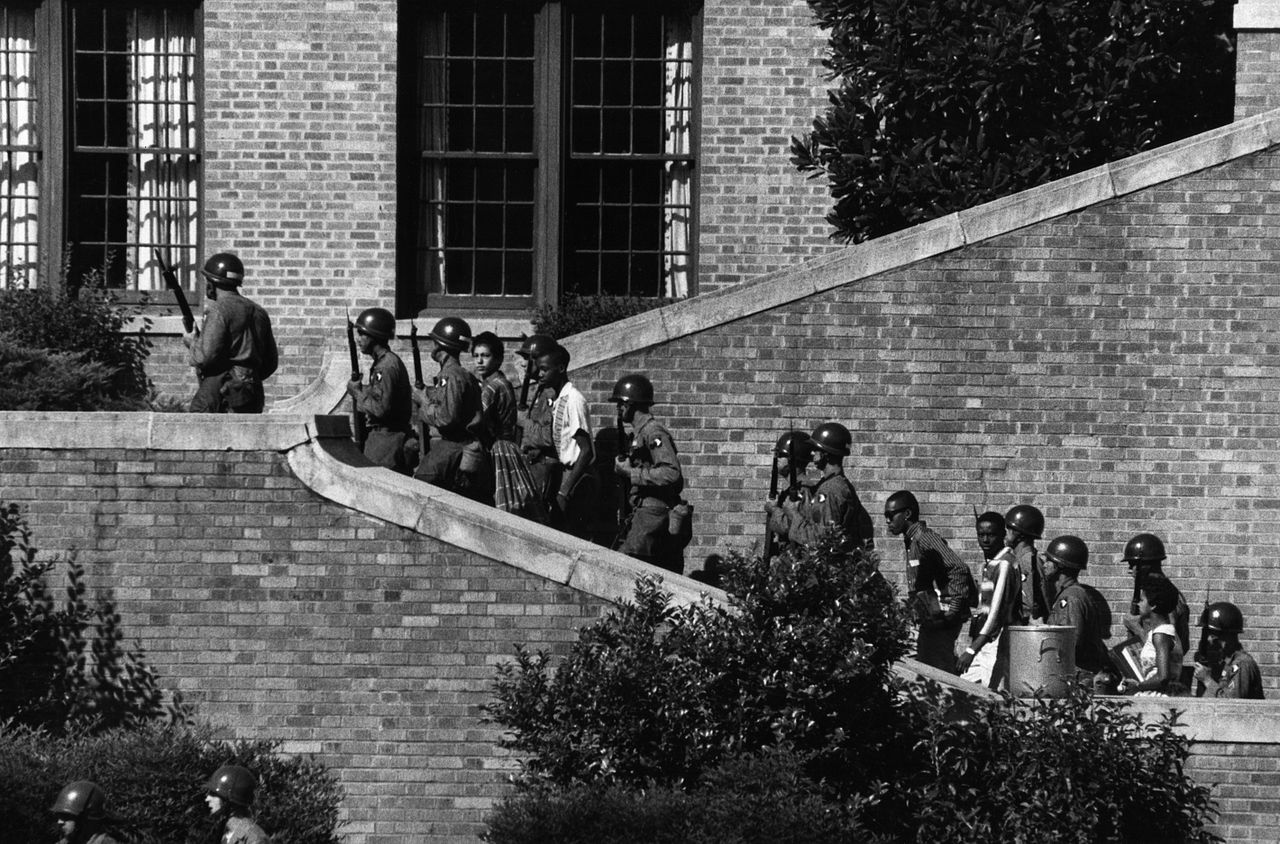
101st_Airborne_at_Little_Rock_Central_HighIt was 57 years ago today that the Little Rock Nine entered Central High School and stayed. On one hand, this brought to the end a nearly month long standoff between segregationists and those who wanted to obey the U.S. Supreme Court’s Brown v. Board decision.

In the bigger picture, the struggle did not end that day.  Throughout the remainder of the school year, the Little Rock Nine were subjected to threats, isolation and hostility.  Outside of the school, while the crowds may had dispersed after September 25, the raw feelings did not subside.

This was evidenced by the fact that the following year the high schools were closed to avoid having them integrated.

But September 25, 1957, was an historic day in the United States. Under guard of members of the 101st Airborne Division of the Army, the Little Rock Nine were escorted into Central High School. This action by President Dwight Eisenhower was the result of the intrusive efforts of Governor Orval Faubus who had used the Arkansas National Guard to keep the nine students out.

The City of Little Rock was largely a bystander in this issue. The form of government was changing from Mayor-Council to City Manager in November 1957. Therefore Mayor Woodrow Mann and the entire City Council were lame ducks. Mann, whose son was a senior at Central, tried to focus on keeping the peace in Little Rock. Most (if not all) of his Council members sided with the Governor.

Congressman Brooks Hays, a Little Rock resident, had tried to broker an agreement between the President and the Governor but was unsuccessful.  Following that, Mayor Mann was in discussions with the White House about the ability of the Little Rock Police Department to maintain order.  Finally, in the interest of public safety, the President federalized the National Guard and removed them. This paved the way for the Army to come in.

Though the school year was not easy, the nine youths who became known worldwide as the Little Rock Nine were finally in school.  They were Minnijean Brown, Elizabeth Eckford, Ernest Green, Thelma Mothershed, Melba Patillo, Gloria Ray, Terrence Roberts, Jefferson Thomas and Carlotta Walls.

In 1997, President Bill Clinton, Governor Mike Huckabee and Mayor Jim Dailey, famously held open the doors of Central High for the Little Rock Nine on the 40th anniversary.  Ten years later, Clinton, Huckabee and Dailey returned joined by current Governor Mike Beebe and Mayor Mark Stodola to host the 50th anniversary events.

Today the school is a National Historic Site, while still functioning as a high school.