Little Rock Look Back: Mayoral Race of 1928

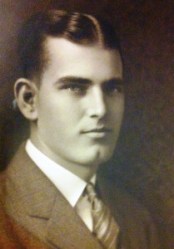
Robinson

After serving two, 2-year terms, Mayor Charles Moyer sought a third term in the Democratic primary of 1928. There were three people standing in his way of a new term:  City Attorney Pat Robinson, School Board member H. T. “Will” Terry, and Alderman Joe H. Bilheimer, Jr.

Robinson had been elected City Attorney at the age of 27.  He was viewed as a rising star in not only the Democratic Party of Little Rock, but for the state as well.  He was no relation to US Senator Joe T. Robinson, who hailed from Lonoke County. Pat Robinson had roots in Clark County.  Alderman Billheimer had served on the Little Rock City Council since 1917, while Mr. Terry had been on the School Board for several years and been president of that body.

As the incumbent, Mayor Moyer spent most of the campaign on the defensive. His policies and programs were attacked. What was not attacked (or even mentioned) was his disappearance from Little Rock during the 1927 lynching of James Carter.  Mayor Moyer promoted his efforts for the successful amendment to the Arkansas Constitution which expanded the bonding capacity of cities. He also was proud of having established the Planning Commission for Little Rock.

Moyer largely ignored Bilheimer in his remarks. But he charged Robinson with dereliction in duty as City Attorney. He also questioned Terry’s business acumen.  Terry for his part stressed his work as a man who had started driving a milk wagon and then rose to become the head of a large dairy.  He took a swipe at single Robinson by stressing that he was a person with family ties.

Bilheimer questioned Moyer’s expenditures including $4,000 a year to keep City Hall clean. He claimed that was a payoff for a political contribution. He also noted that during Terry’s tenure on the school board, the Little Rock schools were only able to purchase milk from his dairy.  He also charged Terry with campaign violations. At the time, state law set that campaign expenditures could not exceed the salary of the position being sought. At the time, Little Rock paid $5,000 per year to the mayor.  Bilheimer charged that Terry was exceeding that.

Other than defend his record as City Attorney, Robinson fairly successfully stayed above the fray. He admitted that he was not aggressive prosecuting bootleggers or others connected to Prohibition offenses.

Rallies and radio were the order of the day as the campaign wound down.  On November 26, 1928, the primary took place.  Robinson won every precinct.  He captured 4,077 votes to 1,682 for Moyer, 1,518 for Terry, and 298 for Bilheimer.

The polls closed at 6pm.  By 8:30pm, the results were known and a Robinson victory parade filled the streets.  It marched down Main Street and then down Markham to City Hall.  On the steps, Mr. Robinson remarked, “I shall try always to be the same old Pat.”


Little Rock Look Back: A few municipal primary races of yore

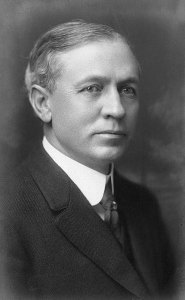
Taylor

Today is primary day in Arkansas.  Though City of Little Rock municipal races are non-partisan and won’t be on the ballot until November, that has not always been the case.

Between 1874 and 1957, usually winning the Democratic Primary was tantamount to election. So the municipal general elections were usually boring. (The only exception would be the three elections in which Pratt Remmel was the GOP nominee for mayor facing off against the Democratic nominee.)

The real drama was in the primary races.

The 1911 primary pitted crusading businessman Charles Taylor against a firebrand attorney and Alderman John Tuohey, a grocer. Each of the three tried to position himself as an outsider, though Tuohey was least successful in accomplishing this considering he was an alderman and the candidate of choice of the retiring mayor.

Riffle logged insults at both Taylor and Tuohey. Taylor sought to position himself as not just the candidate of the businessmen. As a progressive, he borrowed Teddy Roosevelt’s Square Deal motto and offered “A Square Deal for Everyone.” A Baptist Sunday School superintendent, he also campaigned against vice. Tuohey offered his own solutions to city issues but was hampered in the campaign by illness.

After the January 12, 1911, primary election day, Tuohey had 1530 votes, Taylor had 1493 and Riffle had 506. Taylor alleged 323 illegal votes were cast and sought the poll tax records to try to prove it. After he saw the poll tax lists, he reduced his charges to 250 illegal votes.

On January 26, Tuohey and Taylor agreed to a new, two-man primary (essentially a run-off) in an attempt to resolve the matter. After that race, Taylor had 1874 votes and Tuohey had 1645. Taylor went on to be elected mayor in April 1911 and would subsequently serve four two-year terms.


Robinson

When he took office in April 1929 having just turned 29 a few weeks earlier, Mayor Pat L. Robinson seemed to be a rising star in the Democratic Party. Within a few months, however, he found himself at odds with the Little Rock City Council on a variety of issues.

Some of these appear to have been of his own doing, partially due to youthful arrogance, and part of these were probably rooted in entrenched resistance to change. With the onset of the Great Depression six months into his term, the City’s already tight financial shape became even tighter. The aldermen and city clerk gave him no quarter (though some may have wanted to draw and quarter him).

Knowlton

In November 1930, City Clerk Horace Knowlton squared off against Mayor Robinson (no relation to Joe T.) in the Democratic primary. It was a particularly raucous primary with charges and counter-charges of corruption, malfeasance and misfeasance. In describing Mayor Robinson’s handling of the City finances, Mr. Knowlton declared the mayor had undertaken an “orgy of spending.”

The results after the election were  Knowlton, 4,537; Robinson, 4,554; and 61 votes for a third candidate. Robinson was declared the nominee. But Knowlton protested and filed suit. There charges of illegal voting and persons whose ballots were not counted. After an exhaustive investigation (over 1,800 pages of testimony were taken), the court found that neither side had willingly engaged in voter fraud or vote tampering. The painstaking analysis further found that Knowlton had received ten more votes than Robinson.

In April 1931, Knowlton won the general election and was sworn in as Little Rock mayor. Robinson continued to pursue the case and appealed to the Arkansas Supreme Court. In June 1931 (in the third month of Knowlton’s mayoral term), the Arkansas Supreme Court upheld the circuit court ruling that Knowlton had indeed won the primary.


Sprick

A little more than a decade later, the state’s high court would again be called on to weigh in on Little Rock’s Democratic primary for mayor. In December 1944, Alderman Sam Wassell and former Alderman Dan Sprick faced off in a particularly nasty race.  As World War II was drawing to a close, there were charges leveled which questioned patriotism. With both men having service on the Little Rock City Council, there were also plenty of past votes on both sides which could become fodder for campaigns.

Wassell

The election was on December 5, 1944. Sprick received 3,923 votes and Wassell 3,805. A few days later, Wassell filed suit claiming that there were people who voted who were not on the poll tax rolls and another group of voters who did not live in the ward in which they voted. Sprick countersued making the same charges against Wassell.

The case eventually ended up at the Arkansas Supreme Court, which remanded it back to the lower court. On March 26, 1945, Wassell dropped his case. This was only eight (8) days before the municipal general election.

Two years later, Wassell would challenge Sprick in the primary and be triumphant. Wassell would serve from 1947 until 1951.  Sprick would later return to politics and serve a decade in the Arkansas State Senate.


There are many more interesting primary and election stories to tell. Stay tuned…

Little Rock Look Back: St. Pat’s Day with Mayor Pat Robinson

On this date in 1900, future Little Rock Mayor Pat L. Robinson was born.  While it cannot be verified that he was indeed named after St. Patrick, it would be fairly reasonable to assume there might be a connection.  He was born in a community outside of Arkadelphia, but moved to Little Rock with his parents.

By the 1920s, Robinson was a rising star of Little Rock Democratic politics.  In April 1929, just weeks after his 29th birthday, he was elected Mayor.  He had twice been elected as City Attorney (1926 and 1928) and was one of the youngest to serve in that position.

During Mayor Robinson’s tenure, he announced plans to construct a new airport.  That project led to the creation of what is now the Bill and Hillary Clinton National Airport.  Mayor Robinson was also involved in helping Philander Smith College secure the property where it is now located.  In addition, during his tenure, what is now the Museum of Discovery was folded into the City of Little Rock.  Shortly after taking office, he championed several projects for approval by Little Rock voters. The projects he supported were approved; the ones he did not support did not pass.

Single at the time he was in office and generally considered good looking, Mayor Robinson was sometimes referred to as the “Jimmy Walker of the Southwest.” Walker was the handsome and charming Mayor of New York City at the time.

Mayor Robinson ran afoul of some of the Democratic party leaders. While the extent of the discord is not exactly known, it IS known that shortly after taking office he confronted the City Council over a special election.  Mayor Robinson sat silently while the City Council voted to approve a special election with a variety of options for voters. Only after the Council approved it did he disclose he only supported three of the initiatives.  In a bit of political brinkmanship, the Council subsequently voted to cancel the election. The Mayor vetoed their vote.  The aldermen chose not to attempt an override (though they had the votes based on disclosures made to the public and the press).  It appears that the relationship between the Mayor and the City Council never recovered.

IMG_4532During this era in Little Rock, it was customary for an incumbent mayor to be given a second term. But City Clerk Horace Knowlton challenged Robinson in the primary.  It was a bitter campaign with Robinson linking Knowlton to disreputable denizens and Knowlton charging Robinson with “an orgy of spending.”  Robinson initially came out 17 votes ahead. But after a review and a lawsuit, it was found that Knowlton ended up with 10 more votes and became the nominee.  At the time, being the Democratic nominee was tantamount to election.

After he left office, Robinson practiced law for a few years in Little Rock and then left the city.  He married a woman from England, Arkansas in the 1930s, but by the 1940 census, he was listed as divorced and living as a lodger.  He later served in the Army during World War II.  Robinson died in June 1958, and is buried in Clark County.

Little Rock Look Back: St. Pat’s Day with Mayor Pat L. Robinson

On this date in 1900, future Little Rock Mayor Pat L. Robinson was born.  While it cannot be verified that he was indeed named after St. Patrick, it would be fairly reasonable to assume there might be a connection.

Robinson was a rising star of Little Rock Democratic politics.  In April 1929, just weeks after his 29th birthday, he was elected Mayor.  He had twice been elected as City Attorney (1926 and 1928) and was one of the youngest to serve in that position.

During Mayor Robinson’s tenure, he announced plans to construct a new airport.  That project led to the creation of what is now the Bill and Hillary Clinton National Airport.  Mayor Robinson was also involved in helping Philander Smith College secure the property where it is now located.  In addition, during his tenure, what is now the Museum of Discovery was folded into the City of Little Rock.  Shortly after taking office, he championed several projects for approval by Little Rock voters. The projects he supported were approved; the ones he did not support did not pass.

Single at the time he was in office and generally considered good looking, Mayor Robinson was sometimes referred to as the “Jimmy Walker of the Southwest.” Walker was the handsome and charming Mayor of New York City at the time.

Mayor Robinson ran afoul of some of the Democratic party leaders. While the extent of the discord is not exactly known, it IS known that shortly after taking office he confronted the City Council over a special election.  Mayor Robinson sat silently while the City Council voted to approve a special election with a variety of options for voters. Only after the Council approved it did he disclose he only supported three of the initiatives.  In a bit of political brinkmanship, the Council subsequently voted to cancel the election. The Mayor vetoed their vote.  The aldermen chose not to attempt an override (though they had the votes based on disclosures made to the public and the press).  It appears that the relationship between the Mayor and the City Council never recovered.

IMG_4532During this era in Little Rock, it was customary for an incumbent mayor to be given a second term. But City Clerk Horace Knowlton challenged Robinson in the primary.  It was a bitter campaign with Robinson linking Knowlton to disreputable denizens and Knowlton charging Robinson with “an orgy of spending.”  Robinson initially came out 17 votes ahead. But after a review and a lawsuit, it was found that Knowlton ended up with 10 more votes and became the nominee.  At the time, being the Democratic nominee was tantamount to election.

After he left office, Robinson practiced law for a few years in Little Rock and then left the city.  Records do not indicate where he went but he no longer appeared in the City of Little Rock directory by the early 1940s.  In the 1940 census he is listed as divorced and a lodger living with a couple.

Arkansas Heritage Month – LR Mayor Pat L. Robinson and a municipal auditorium

PLR AuditIn April 1929, at the age of 29, Pat L. Robinson (no relation to Senator Joe T. Robinson) was inaugurated as Little Rock’s mayor.  Shortly after he took office, a variety of City Council committees and city interest groups started making proposals for projects to be funded by City bonds.  The decision was made to put a municipal bond issue before voters in August 1929.

The Young Business Men’s Association proposed a municipal auditorium be included.  In his 1929 inaugural address, Mayor Robinson had commented that an auditorium would be a worthwhile project for the city, should funding be available.  Another proposal, which seemed to have mayoral support, was the Civic Center plan (including land for an auditorium) which J. N. Heiskell had started shopping in the waning days of the Moyer administration.

The City Council approved the calling of the election and the submission of eleven different items.  Mayor Robinson then invoked the ire of the aldermen by noting he would only support four of the eleven proposals. Over the ensuing weeks, he and the aldermen traded charges and parliamentary ploys.  In July, the Council voted to cancel the election, which the mayor vetoed.  Though the Council had the votes to override the veto (and therefore not have the election), they let the veto stand.  The election proceeded as planned in August.

Hobbled by a lack of a cohesive campaign to begin with which was exacerbated by the City Hall infighting, it was probably no surprise that the few of the election proposals were approved by voters.  The marvel is probably that any were actually approved.  This appears to have been the first municipal bond election put forth after the 1926 approval of the new amendment to the Arkansas constitution.

Neither the Auditorium nor the Civic Center proposals were approved.  Throughout his term, the Hotel Marion continued to be the main site in Little Rock for conventions, while Little Rock High School’s auditorium was the showcase for performances.

No further proposals for an auditorium were put forth during the remainder of the Pat L. Robinson administration.  After continuing to alienate the Democratic power structure, he was challenged in the November 1930 primary, and failed to receive the nomination to be the Democratic nominee for mayor in 1931.

Little Rock Look Back: St. Patrick’s Day with Mayor Pat L. Robinson

IMG_4517On this date in 1900, future Little Rock Mayor Pat L. Robinson was born.  While I cannot verify that he was indeed named after St. Patrick, it would be fairly reasonable to assume there might be a connection.

Robinson was a rising star of Little Rock Democratic politics.  In April 1929, just weeks after his 29th birthday, he was elected Mayor.  He had twice been elected as City Attorney (1926 and 1928) and was one of the youngest to serve in that position.

During Mayor Robinson’s tenure, he announced plans to construct a new airport.  That project led to the creation of what is now the Bill and Hillary Clinton National Airport.  Mayor Robinson was also involved in helping Philander Smith College secure the property where it is now located.  In addition, during his tenure, what is now the Museum of Discovery was folded into the City of Little Rock.  Shortly after taking office, he championed several projects for approval by Little Rock voters. The projects he supported were approved; the ones he did not support did not pass.

Single at the time he was in office and generally considered good looking, Mayor Robinson was sometimes referred to as the “Jimmy Walker of the Southwest.” Walker was the handsome and charming Mayor of New York City at the time.

Mayor Robinson ran afoul of some of the Democratic party leaders. Records don’t seem to indicate exactly what actions he took or did not take.  One thing that is brought up is that the City went into financial distress during his tenure.  Considering the Wall Street crash happened shortly after he took office, that financial state was not unique to Little Rock.

IMG_4532During this era in Little Rock, it was customary for an incumbent mayor to be given a second term. But City Clerk Horace Knowlton challenged Robinson in the primary.  It was a bitter campaign with Robinson linking Knowlton to disreputable denizens and Knowlton charging Robinson with “an orgy of spending.”  Robinson initially came out 17 votes ahead. But after a review and a lawsuit, it was found that Knowlton ended up with 10 more votes and became the nominee.  At the time, being the Democratic nominee was tantamount to election.

After he left office, Robinson practiced law for a few years in Little Rock and then left the city.  Records do not indicate where he went but he no longer appeared in the City of Little Rock directory by the early 1940s.  In the 1940 census he is listed as divorced and a lodger living with a couple.

Little Rock Look Back – Mayor Horace Knowlton

IMG_3227On November 25, 1872, future Little Rock Mayor Horace A. Knowlton Jr. was born.

In April 1920, he was elected City Clerk of Little Rock.  He served in that position until April 1931.  That year, he was chosen as the Democratic nominee for Mayor, denying incumbent Mayor Pat L. Robinson a second term.  The primary race against Mayor Robinson was close.  When the results were first announced, it looked as if Mayor Robinson had prevailed.  But after challenging ballots, Mr. Knowlton was declared the winner.  Since Little Rock was primarily a Democratic Party city, unsurprisingly Mr. Knowlton was elected Mayor in April 1931 and served two terms as Mayor.

He oversaw the start of some of President Roosevelt’s New Deal programs in Arkansas during his tenure.  In 1934, he negotiated the purchase of Gillam Park for the City which established the first public park in Little Rock for African Americans.  While a segregated park would one day be viewed as wrong, he was viewed as very progressive at the time for providing a public park for African Americans.  One of his final acts as Mayor was to participate in the groundbreaking for the Museum of Fine Arts building in City Park (now a portion of the Arkansas Arts Center building in MacArthur Park).

Following his departure from public office, Mayor Knowlton and his wife (who had been an elementary school teacher) eventually moved to Florida and resided in the Tampa Bay area.  His son and grandson (Horace III and Horace IV) have both been lawyers in the Tampa Bay area.  Mayor Knowlton died on February 14, 1965.  He is buried in the Oak Grove cemetery in Conway.