QQA celebrates Annual Meeting & Greater LR Preservation Awards tonight!

QQAThe Quapaw Quarter Association will present the Greater Little Rock Preservation Awards at its 2015 Annual Membership Meeting on Tuesday, October 27 at the Ron Robinson Theater.

This year’s Award of Merit recipients include

  • Matt Foster for the rehabilitation of the Leo Treadway House
  • CJRW, Jameson Architects, Kinco Constructors, and Terraforma LLC for the rehabilitation of the Fulk Building
  • Darrell Brown and the Sherwood History and Heritage Committee for the rehabilitation of the Roundtop Filling Station
  • Tom and Ellen Fennell for their Forgotten Little Rock Facebook page

Laura Sergeant will receive the Peg Smith Award to recognize her exemplary volunteer work.  The Group will be presented with the Jimmy Strawn Award, the QQA’s most prestigious award, for their long time efforts to revitalize South Gaines Street and stabilize the Governor’s Mansion Historic District, as well as their contributions to downtown Little Rock.

The meeting will begin at 5:00 p.m. with a 30 minute reception, followed by the annual meeting and award presentation at the Ron Robinson Theater at 100 River Market Avenue in Little Rock.  The QQA’s annual membership meeting is free and open to the public.  Nonmembers are encouraged to support Little Rock preservation efforts at the door.

The QQA is pleased to welcome Donovan Rypkema as this year’s guest speaker.  Mr. Rypkema is principal of Place Economics, a Washington, DC-based real estate and economic development consulting firm.  The firm is currently working on a ReLocal study for the City of Little Rock.  This project has surveyed 8,000 parcels in the study area, and will look at over seventy five metrics to make specific recommendations to the City of Little Rock for how to stabilize and revitalize its historic neighborhoods.

The QQA’s mission is to promote the preservation of Little Rock’s architectural heritage through advocacy, marketing and education.  Visit Quapaw.com for more information and to become a member.
Little Rock Look Back: The Quapaw Line

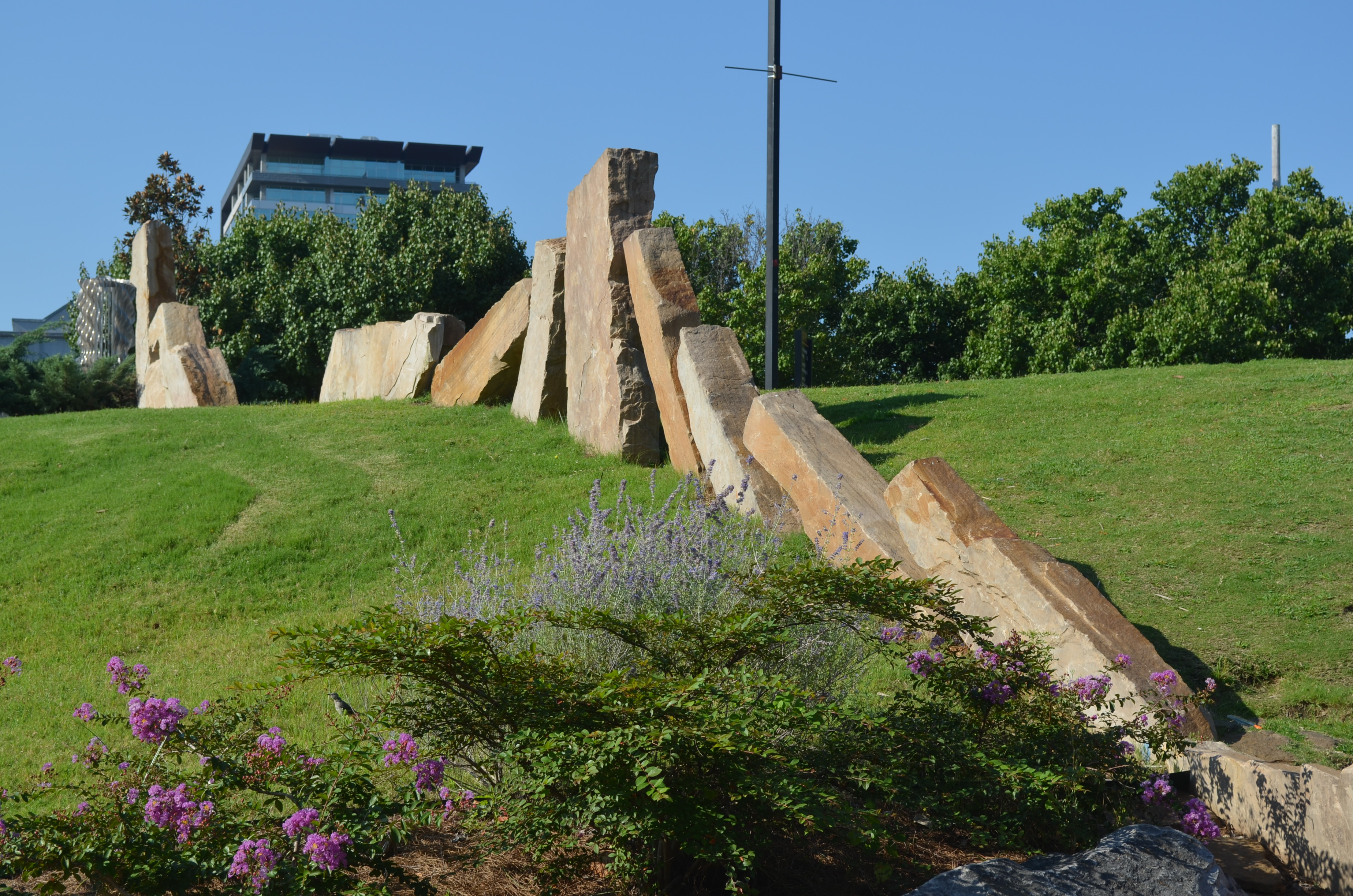
Stones placed in Riverfront Park denote where there Quapaw Line started from La Petite Roche

Stones placed in Riverfront Park denote where there Quapaw Line started from La Petite Roche

On August 24, 1818, the Quapaw Line was drawn.  Starting at La Petite Roche and heading due south, this line formed the boundary between the Quapaw tribe lands and public lands available for settlement.  Though by 1824, the Quapaw were forced to give up all of their lands, the line continued serve as an important marker.  In the ensuing six years, the first permanent settlement of Little Rock took place and streets were planned.

It is interesting to note that the 1818 treaty referred to La Petite Roche as the Little Rock.  Some have speculated that this is the first official use of “Little Rock” to designate the outcropping.  When the Post Office was established in March 1820, it was given the name Little Rock.

There is a marker commemorating the beginning of the Quapaw Line located at La Petite Roche in Riverfront Park.  The first segment of the line is also noted in the park.  There are also sunken markers place along the line at various points.  In MacArthur Park, at the corner of 9th and Commerce Streets, there is a marker noting that the line passed through at that location.

A good account of walking the Quapaw Line through downtown Little Rock can be found on this website.

Most of what is now called the Quapaw Quarter was located to the west of the Quapaw Line.  However, it did take its name from the fact that the tribe had once lived in that area and was later sequestered to lands near it.  The name for the area was chosen by a committee composed of David D. Terry, Peg Newton Smith, Mrs. Walter Riddick Sr., Dr. John L. Ferguson, and James Hatcher. They had been appointed to a Significant Structures Technical Advisory Committee to advocate for preservation of important structures as a component of the City of Little Rock’s urban renewal efforts.

Women’s History Month Throw Back Thursday: Mount Holly Cemetery Association

Mt Holly ProfileThe Mount Holly Cemetery is a treasure trove of history, architecture and horticulture on the edge of downtown Little Rock.

It was established in 1843 when Chester Ashley and Roswell Beebe donated the land to the city of Little Rock. Feeling the town fathers were not giving the cemetery the attention it deserved, a group of Little Rock businessmen formed a cemetery commission on March 20, 1877. Charter members of the commission were J. H. Haney, Fay Hempstead, James Austin Henry, Philo O. Hooper, and Frederick Kramer. However the private group of men did no better in maintaining the cemetery.

In 1914, a contingent of the town’s women became critical of the cemetery’s unkempt appearance and took over the reins from the men. Following adoption of City Ordinance No. 2199 in June 1915, the ladies’ Mount Holly Cemetery Association was incorporated on July 20, 1915. (It should be noted this action by the women came at a time when women did not have the right to vote.)

The Mount Holly Cemetery Association grew out of a meeting which took place on June 9, 1914 at the home of Mrs. A. H. Scott. Thirty-six women gathered for the purpose of improving the cemetery.

An executive committee was formed, and the women started working on improvements to the cemetery. Though first viewed by some men as an auxiliary to the Cemetery Commission, it quickly became apparent that the women were in no mood to take a back seat in matters pertaining to Mount Holly.

The first executive board (from June 1914 to July 1915) included Mrs. A. H. Scott, Mrs. B. S. Johnson, Mrs. George Thornburgh, Mrs. Moorhead Wright, Mrs. H. M. Bennett, Mrs. George Worthen, Mrs. W. E. Green, Mrs. George Stratman, Miss Louise Gibson and Miss Clara Hotze.

The July 1915 incorporators were Mrs. Scott as well as Julia E. Bennett, Eva C. Shields, Rosa M. Miller, Ruby P. Ratcliffe and Marguerite R. English. Mrs. Bennett, known affectionately as “Scrap” would serve as the first president, and Miss Miller was the first secretary.

Over the years the Association has undertaken countless projects large (construction of a mausoleum) and small (signs on the lanes) to improve Mount Holly Cemetery for its residents and for visitors.

In 1993, the Association published a history of the first 150 years of the cemetery.  More recently, they launched the annual RIP (Rest in Perpetuity) picnic held the last Sunday in April on the grounds.  They have also published a cookbook–Recipes in Perpetuity.

Today, the Mount Holly Cemetery Association is still going strong!

LR Cultural Touchstone: Mary Fletcher Worthen

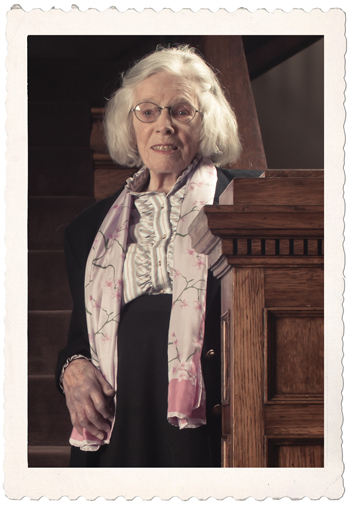
JJLR-MaryWorthen-MayMary Fletcher Worthen has cultivated history and music with the same grace and skill as she has cultivated gardens.

Born outside of Scott, she attended Vassar and Little Rock Junior College. After marrying banker Booker Worthen, she has devoted her life to improving Little Rock. Together with Stella Boyle and George Smith, she and Booker helped found the precursor to the Arkansas Symphony Orchestra.  Through its many iterations, she has been a steadfast supporter and is now a life member of the ASO Board.  She has also been a supporter of many other music organizations in Little Rock including the Chamber Music Society of Little Rock, of which she was a founder.

Another hallmark of her involvement is Mount Holly Cemetery Association.  For over 50 years she has served on the board of this body.  Without notes, she can recite the history of practically every resident buried there.  The tours she would lead with the late Peg Newton Smith were hot commodities when auctioned at fundraisers.  These two loving and lifelong friends would sometimes remember things differently. They playfully prodded and needled each other as they wended and winded their way through the headstones and history regaling rapt audiences with yarns of yore, quips and quotes, plus an anecdote or two.  In the decade since Peg passed, Mary has continued to entertain and engage visitors to the cemetery, especially at the annual Mount Holly Rest in Perpetuity (RIP) picnic.

She has also served on the Old State House Museum Board and the Pulaski County Historical Society Board.  As a historian, she literally wrote the book on Trinity Episcopal Cathedral.  She combined her interest in herb gardening and history with the creation of the Medicinal Garden at Historic Arkansas Museum, which is now named in her honor.

Born in 1917, Mary Worthen continues to learn new facts, share her love of history and music, and works to cultivate the next generations of cultural enthusiasts.


LR Cultural Touchstone: Peg Newton Smith

peg_3While the Culture Vulture remains a huge fan of Peg Newton Smith, it is better for this entry to be taken from a tribute written by her longtime friend Bill Worthen.

Peg Newton Smith was a pioneer in the field of history and historic preservation.  A founder of both the Arkansas Museums Association and the Quapaw Quarter Association, Little Rock’s historic preservation organization, she served as a significant resource for many local history researchers and historians.

Born February 10, 1915, Peg Smith came from a family deeply engaged in Arkansas history. Two Arkansas counties – Newton and Hempstead – are named after ancestors.  She married George Rose Smith, himself from a prominent Arkansas family, in 1938. Peg Smith became his most vigorous supporter as George Rose Smith was elected and  reelected to the State Supreme Court, ultimately offering 38 years of service as Associate Justice.

She  enjoyed a sixty-two year career as a volunteer at the Historic Arkansas Museum, where she served as Commission Chair from 1978 to 1983. On the museum’s first day, she was dressed in period garb as a volunteer.  She was named Chair Emerita of the Commission in 2002. Her commitment to history has also included decades of service on the Mount Holly Cemetery Association Board of Directors, where she was famous with Mary Worthen for tours of the cemetery, often hot items at charity auctions.

Because of her instrumental work for the Arkansas Museums Association and the Quapaw Quarter Association, both organizations named significant annual awards after her. She was appointed to the inaugural Review Committee of the State Historic Preservation Program and with architect Edwin Cromwell was the first Arkansan named to the Board of Advisors of the National Trust for Historic Preservation. She was appointed to the Arkansas Bicentennial Commission, was elected president of the Junior League of Little Rock, was a founding member of the Board of the Historic Preservation
Alliance of Arkansas, and was active in the Pulaski County Historical Society.  She also was an early supporter of the MacArthur Museum of Arkansas Military History.

She was honored by many groups, being named 1967 Greater Little Rock Woman of the Year by the Arkansas Democrat, Shield of the Trojan Award winner from the UALR Alumni Association in 1979, Fellow of the Museum of Science and History in 1981, and Candlelight Gala Honoree of the Historic Arkansas Museum in 1994. She became the first recipient of the Lifetime Achievement Award from the Arkansas Museums Association in 2003.

Peg Newton Smith died on July 20, 2003.

Because of her love of Arkansas history and Arkansas art, the Historic Arkansas Museum commissioned the pARTy for Peg sculpture which dances near the north entrance to the museum.  pARTy for Peg is not a portrait of our dear friend—it is a sculpture inspired by her spirit. It had been her brainchild for the museum to have a separate gallery devoted to contemporary Arkansas artists. She also founded the Museum Store, filled with Arkansas crafts.


Greater Little Rock Preservation Awards presented tonight at Quapaw Quarter annual meeting

QQAThe Quapaw Quarter Association will present the Greater Little Rock Preservation Awards at its 2014 Annual Membership Meeting on Tuesday, October 7 at the Ron Robinson Theater.  This year’s award recipients include the Argenta Branch of the William F. Laman Public Library System, Stone’s Throw Brewing Company, the Clinton Foundation, Donna Thomas and Wright Avenue Neighborhood Association, and J. Chandler and Co.  Rachelle Walsh will receive the Peg Smith Award to recognize her exemplary volunteer work. Carolyn Newbern will be presented with the Jimmy Strawn Award, the QQA’s most prestigious award, presented to someone whose efforts on behalf of the preservation of Greater Little Rock’s architectural heritage are an inspiration to the entire community.  Matt DeCample will serve as emcee of the awards ceremony.

The QQA is also kicking off efforts to raise awareness about mid-century modern architecture in Little Rock, beginning with a special lecture from Dr. Ethel Goodstein-Murphree of the Fay Jones School of Architecture.  Goodstein-Murphree’s lecture, “Rock ‘n’ Roll, Poodle Skirts, and a White I-Beam: The Preservationist’s Guide to Loving the 1950s and its Architecture” will be presented at the meeting.

The meeting will begin at 6:00 p.m. following a 5:30 reception at the Ron Robinson Theater at 100 River Market Avenue in Little Rock.  The QQA’s annual membership meeting is free and open to the public.  Nonmembers may join at the door.

Little Rock Look Back: Drawing the Quapaw Line

quapawlineOn August 24, 1818, the Quapaw Line was drawn.  Starting at La Petite Roche and heading due south, this line formed the boundary between the Quapaw tribe lands and public lands available for settlement.  Though by 1824, the Quapaw were forced to give up all of their lands, the line continued serve as an important marker.  In the ensuing six years, the first permanent settlement of Little Rock took place and streets were planned.

It is interesting to note that the 1818 treaty referred to La Petite Roche as the Little Rock.  Some have speculated that this is the first official use of “Little Rock” to designate the outcropping.  When the Post Office was established in March 1820, it was given the name Little Rock.

There is a marker commemorating the beginning of the Quapaw Line located at La Petite Roche in Riverfront Park.  The first segment of the line is also noted in the park.  There are also sunken markers (such as the one to the left) place along the line at various points.  In MacArthur Park, at the corner of 9th and Commerce Streets, there is a marker noting that the line passed through at that location.

A good account of walking the Quapaw Line through downtown Little Rock can be found on this website.

Most of what is now called the Quapaw Quarter was located to the west of the Quapaw Line.  However, it did take its name from the fact that the tribe had once lived in that area and was later sequestered to lands near it.  The name for the area was chosen by a committee composed of David D. Terry, Peg Newton Smith, Mrs. Walter Riddick Sr., Dr. John L. Ferguson, and James Hatcher. They had been appointed to a Significant Structures Technical Advisory Committee to advocate for preservation of important structures as a component of the City of Little Rock’s urban renewal efforts.