
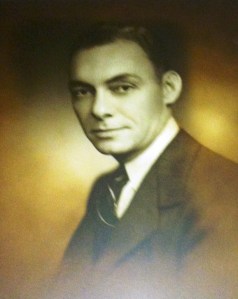
 On May 14, 1902, future Little Rock Mayor John Vines Satterfield, Jr. was born in Marion. He grew up in Little Rock and Earle. J.V. was a star quarterback for the Earle football team and is featured in a painting of that team by respected painter Carroll Cloar.
Following high school, J.V. taught (including, much to his family’s amusement, a course in penmanship) and coached and sold Fords. He then moved to Little Rock and sold insurance and later securities. In 1931 he opened his own business; that same year he built a house at 40 Beverly Place in Little Rock, which would serve as his home until his death.
J. V. Satterfield was elected to serve as Mayor of Little Rock in 1939 and served one term, until 1941. He was credited with saving the City from bankruptcy because of his fiscal policies. Among his efficiencies were the creation of a central purchasing office and using grass moved from the airport to feed the Zoo animals. Though as a private citizen he had voted against the creation of a municipal auditorium in 1937, Mayor Satterfield fought valiantly to ensure that Robinson Auditorium opened to the public once he took office. Shortly after he became Mayor, it was discovered that there were not sufficient funds to finish the construction. After the federal government refused to put in more money, he was able to negotiate with some of the contractors to arrange for the building to be completed. He also oversaw a successful special election to raise the money to finish the project.
Satterfield was a staunch supporter of the airport and worked to expand it. He would serve as the chair of the first Municipal Airport Commission. He also established the Little Rock Housing Authority (on which he would later serve on the board). Mayor Satterfield also served as President of the Arkansas Municipal League in 1941.
Following the outbreak of World War II, Satterfield enlisted in the Army and was given the rank of a Major. He later was promoted to a Colonel and worked in the Pentagon during its early days.
In the late 1940s Satterfield became president of a small Little Rock bank called People’s Bank. The bank changed its named to First National Bank when it moved into new offices at 3rd and Louisiana in 1953. By focusing on smaller customers and courting corporate customers, Satterfield grew the bank into one of the state’s largest banks. He maintained his desk in the lobby of the bank so he could interact with the customers and ensure they were having a positive experience.
Due to chronic health issues, Satterfield retired from the bank in 1964. He died in March 1966.
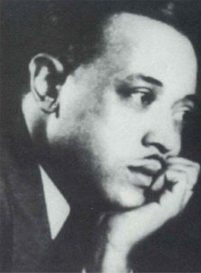 Long known as the Dean of African American composers, Dr. William Grant Still was a legend in his own lifetime.
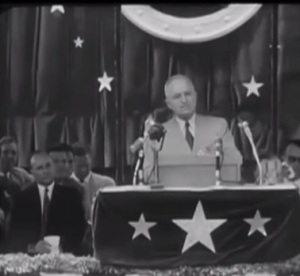 On May 8, 1884, future US President Harry S. Truman was born in Lamar, Missouri.
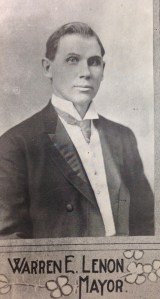 On April 12, 1904, Mayor W. E. Lenon made what was the first official proposal for a municipal auditorium in Little Rock. Little did he know at the time that it would take from April 1904 until February 1940 to make this dream a reality.
 April 6 is Tartan Day – a chance to pay tribute to the achievements of Scots in the U.S. It is also a good chance to wear plaid.
 On April 1, 1940, stage and screen star Edward Everett Horton appeared in the comedy Springtime for Henry in the music hall of Robinson Auditorium. This was the first play to be featured on the stage of the Music Hall which had opened six weeks earlier.
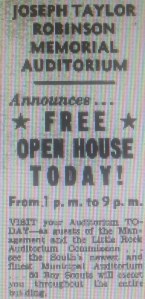 On March 31, 1940, the City of Little Rock and the Auditorium Commission threw open the doors of Joseph Taylor Robinson Memorial Auditorium to the public for an open house.
 Little Rock Culture Vulture