Little Rock Look Back: HST in LR

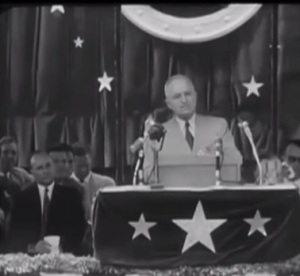
HST in LR2On June 10 and 11, 1949, President Harry S. Truman visited Little Rock.  He was here to participate in activities connected to the reunion of the 35th Division Association.  He had served in that division during World War I.

While he was in Little Rock, President Truman spoke several times.  He generally was accompanied by Governor Sid McMath and Mayor Sam Wassell.

On June 10, he spoke at Robinson Auditorium as part of a welcome ceremony, at a reception at the Hotel Marion and at a ball held at Robinson Auditorium.  His first address was at 3:48 pm and his final one was at 10:15 pm.  The next day he spoke at a breakfast and at a luncheon at the Hotel Marion.  He took pains at these times to stress he was here as a member of the 35th Division.  He also participated in a parade.

In his Presidential role, he spoke at the dedication of War Memorial Park on June 11.  His address took place inside War Memorial Stadium, which had been opened a few months earlier.  It was not a brief dedicatory speech, but instead was a lengthy treatise on foreign affairs.  The address was carried on nationwide radio.  The text of his address can be found here.

President Truman would return to Little Rock in July 1952.  He was in the state to speak at the dedication of Bull Shoals Dam. He did not make any formal remarks in Little Rock while in the city for that visit.

RobinsoNovember: President Harry S. Truman

HST in LR2

President Truman in War Memorial Park. A photo of him at Robinson does not seem to exist.

Today is Veterans’ Day, a chance to pause and remember those — both living and deceased — who have served in the Armed Forces of the US.  November 11 was chosen since it was on November 11 in 1918, at 11:11 (Paris time), the Armistice was signed to end the Great War, as World War I was then known.  In 1954, the holiday was renamed Veterans Day since the US had been in two military conflicts since the Great War.

A World War I infantry reunion brought President Harry S. Truman to Little Rock in June 1949, a few months after he won his own term in the Presidency. During his time here, he spoke twice at Robinson Auditorium.

Upon arriving, he made some informal remarks:

I am most happy to be here. I am only here in my capacity as a member of the 35th Division. Tomorrow I will address you as President of the United States, and I am afraid you will have to listen, whether you like it or not.

I hope to have a pleasant time in Little Rock, as I always have when I come here. I have been here a dozen times–one of the most hospitable cities in the United States. They know how to treat you, they know how to make you like it, and want you to come back.

I will see more of you later on in the day.

I appreciate the welcome that everybody has given us here this afternoon.

Thank you very much.


Later that night, he spoke at a Ball at Robinson.  It followed a banquet that had taken place at the Hotel Marion.

Governor McMath, the Mayor of Little Rock, and distinguished guests:

I can’t tell you how very much I appreciate the cordial reception which I have received in Little Rock. It has been like coming back home to come down here. It’s a habit of mine and has been for 25 years. I have been here in town many a time, and attracted no attention at all. But my friends were just as cordial to me then as they are now.

And I want to thank Eberts Post No. r for its cooperation with the 35th Division in putting on this ball and entertainment.

My education, so far as taking part on the floor is concerned, was sadly neglected as I grew up. I am a Baptist–not a light-foot one–so I didn’t learn how to dance. But I did learn a lot of other things in life, maybe, that I shouldn’t have learned.

I hope that the 35th Reunion this year will be the usual success that 35th Reunions are. I have missed only one, I think, in 25 years or more. I didn’t want to miss this one. The fact that you had it on a weekend gave me and the congressional delegation of the great State of Arkansas an opportunity to be present and attend the meeting. Otherwise, we would have had to stay in Washington and work.

It doesn’t make any difference, though, where the President goes, his work follows him up. I told the congregation this afternoon–you see, I am talking as a Baptist talks–that it didn’t make any difference where I went, I have to sign my name some 600 times a day to keep the country running. And it has, up to date, and I think it will continue, at least for 3 1/2 years more.

I am looking forward to a most pleasant time. I am talking to you now as a member of the 35th Division only, but if you want to hear the President of the United States you had better come out to the stadium tomorrow, and I will tell you something that will be good for your souls.

Thank you very much.

The following day he gave a national address on foreign affairs at the dedication of War Memorial Park.  It was carried on coast-to-coast radio.  There was no radio coverage of his remarks at Robinson, but a large press corps of national correspondents captured his words.

The Little Rock Mayor to whom he referred was Sam Wassell.  Mayor Wassell’s wife had christened the USS Little Rock during World War II.  A first cousin, Dr. Corydon Wassell, was a war hero who had been played by Gary Cooper in a movie.

Little Rock Look Back: Razorback Football Launches War Memorial Stadium

wms1948-first-gameIn honor of the Arkansas Razorbacks taking on Alcorn State today in Little Rock, a look back at the first football game (or event of any kind) at War Memorial Stadium.

On September 18, 1948, the Hogs took on Abilene Christian and won the game by a score of 40 to 6.  It was the first game of the season, and the Razorbacks went into the game ranked #13. They maintained that ranking for four weeks before falling out of national standings.  The team ended up with a season record of five wins and five losses. Playing four of their games at War Memorial that season, they were two and two in Little Rock. They were one and two in Fayetteville and amassed a 2-1 record on the road.

Dedication ceremony in 1948. Photo courtesy of the War Memorial Stadium Commission.

Dedication ceremony in 1948. Photo courtesy of the War Memorial Stadium Commission.

Prior to the game, the stadium was dedicated to the veterans of World War I and World War II in a ceremony led by former Razorback standout and Medal of Honor recipient Maurice “Footsie” Britt.  Though he would later be known for entering politics and becoming Arkansas’ first Republican Lieutenant Governor, in his college days he was known statewide as an outstanding Razorback football and baseball athlete.  During World War II, his bravery and courage allowed him to become first person in American history to earn all the army’s top awards, including the Medal of Honor, while fighting in a single war.

Also participating in the opening ceremony were a mass of high school marching bands from across the state. Reports indicate up to forty bands were on the field to play the National Anthem as part of the event.

The construction of the stadium had been a dream of Governor Ben T. Laney. He had encouraged the Arkansas General Assembly to create the stadium during the 1947 session.  In August of 1947, Little Rock was chosen as the location over Hot Springs and North Little Rock. West Memphis had abandoned its bid when it was unable to secure the necessary financial pledges.  Construction started in 1947 and continued up until opening day.  On the day of the game, newspaper photos showed heavy equipment grading the parking lot prior to paving.  Though it had been Laney’s dream, with the passing of the guard, a newspaper photo on the day after the dedication focused on the incoming governor, Sid McMath.  Because Arkansas was such a Democratic heavy state, the paper referred to him as Governor-designate even though it was six weeks prior to the 1948 General Election when he would face off against C. R. Black.  McMath won the race with 89.4% of the vote.

Little Rock Look Back: President Truman returns to LR

trumansmallOn July 1, 1952, President Harry S. Truman returned to Little Rock for the last time in his presidency.  He landed at Adams Field. After a short ride to the Missouri Pacific train station, he boarded a train for Newport where he made remarks.  Later that evening, the presidential train arrived at Norfork where Mr. Truman spent the night on the train.

The next morning, he went by car to the Norfork Dam before heading to Bull Shoals Dam where he gave an address.  An outdoor luncheon followed the Bull Shoals address.  After lunch, he got back on the train.  Truman made a whistle stop visit in Batesville before arriving back in Newport.  He boarded a plane in Newport and returned to Washington DC.

Congressmen James W. Trimble and Wilbur D. Mills accompanied the President on the entire trip from and to Washington.  Governor McMath joined the party once they were in Little Rock.  The press corps on the trip included the New York Times, Washington Star, Baltimore Sun, New York Herald-Tribune, Chicago Tribune, Associated Press, CBS Radio, NBC Radio, ABC Radio and NBC Television.  The local press included reporters and photographers from both the Arkansas Gazette and the Arkansas Democrat as well as KLRA Radio and the Memphis Commercial-Appeal.

Little Rock Look Back: Truman visits LR

HST in LR2On June 10 and 11, 1949, President Harry S. Truman visited Little Rock.  He was here to participate in activities connected to the reunion of the 35th Division Association.  He had served in that division during World War I.

While he was in Little Rock, President Truman spoke several times.  He generally was accompanied by Governor Sid McMath and Mayor Sam Wassell.

On June 10, he spoke at Robinson Auditorium as part of a welcome ceremony, at a reception at the Hotel Marion and at a ball held at Robinson Auditorium.  His first address was at 3:48 pm and his final one was at 10:15 pm.  The next day he spoke at a breakfast and at a luncheon at the Hotel Marion.  He took pains at these times to stress he was here as a member of the 35th Division.  He also participated in a parade.

In his Presidential role, he spoke at the dedication of War Memorial Park on June 11.  His address took place inside War Memorial Stadium, which had been opened a few months earlier.  It was not a brief dedicatory speech, but instead was a lengthy treatise on foreign affairs.  The address was carried on nationwide radio.  The text of his address can be found here.

President Truman would return to Little Rock in July 1952.  He was in the state to speak at the dedication of Bull Shoals Dam. He did not make any formal remarks in Little Rock while in the city for that visit.


McMath Library Closed for Renovation/Expansion as CALS seeks to better meet patrons needs

calsThe Central Arkansas Library System’s (CALS) Sidney S. McMath Library, 2100 John Barrow Road, is having a makeover and will be closed from Monday, March 17, through early June 2014. A new children’s programming room will be added and the existing children’s area will be expanded. Additional computers and parking space, new carpet, furniture, and paint will complete the remodel.

In early 2013, CALS completed a satisfaction survey to determine the way library services were accessed and used by library patrons, and why non-users did not take advantage of library services. Modern libraries are community centers to provide a broad range of services beyond lending books. The remodel of the McMath Library will better reflect the way libraries are being used by becoming more patron-centered, more prominently featuring items that are used most heavily, and allowing better access to the services used by most patrons.

Any patron with a library card may request a specific book be sent to a branch for them to check out. Patrons may use any of CALS’s other thirteen other branches while the McMath Library is closed. The closest branches are the Fletcher Library, 823 N. Buchanan, and the Terry Library, 2015 Napa Valley Drive.

In March 2012, Little Rock voters voted to refinance capital improvement bonds. Funds from the refinance will be used to cover the $325,000 cost of the remodel and update.

The McMath Library was opened in 2004 to serve the central Little Rock community. The library sits on a ten-acre lot and includes a pond and a walking trail.  The library was named for Sidney Sanders McMath, the thirty-fourth governor of Arkansas.

CALS libraries in Little Rock include: Main Library, 100 Rock Street; Hillary Rodham Clinton Children’s Library and Learning Center, 4800 W. 10th Street, Dee Brown Library, 6325 Baseline Road; Fletcher Library, 823 North Buchanan Street; McMath Library, 2100 John Barrow Road,Oley E. Rooker Library, 11 Otter Creek Court; Terry Library, 2015 Napa Valley Drive; Thompson Library, 38 Rahling Circle; and Williams Library, 1800 Chester Street. CALS libraries in surrounding communities include: Max Milam Library, 609 Aplin Avenue, Perryville; Maumelle Library, 10 Lake Pointe Drive, Maumelle; Esther D. Nixon Library, 703 W. Main Street, Jacksonville; Amy Sanders Library, 31 Shelby Drive, Sherwood; and Millie M. Brooks Library, 13024 Hwy. 365 S., Wrightsville. 


Butler Center Honors Mark Christ, Pat Carr at A PRIZED EVENING

Tonight at 6:30, the Central Arkansas Library System Butler Center for Arkansas Studies will host the annual “A Prized Evening.”  The 2013 Booker Worthen Prize will be presented to Mark Christ and the 2013 Porter Fund prize will be given to Pat Carr.

christ_markAs one of the most fertile regions in the South, the Arkansas River Valley was highly contested territory during the Civil War. While the Siege on Vicksburg raged, equally important battles were fought here in Arkansas. This struggle is the topic of Mark Christ’s nonfiction work, Civil War Arkansas 1863, which has been selected to receive the 2013 Booker Worthen Literary Prize, awarded by the Central Arkansas Library System (CALS).

Christ, community outreach director for the Arkansas Historic Preservation Program, has edited a number of books and articles about Civil War events in Arkansas. He is a member of the Arkansas Civil War Sesquicentennial Commission, serves as chairman of the board of directors of the Arkansas Humanities Council, and is a member of the board of trustees of the Arkansas Historical Association. Christ recently received the 2013 State Preservation Leadership Award from the Civil War Trust, the largest nonprofit battlefield preservation organization in the United States.

The Worthen Prize is awarded each year to an author living in the CALS’s service area whose work is highly regarded. It is named for Booker Worthen, who served twenty-two years on CALS’s board of trustees.


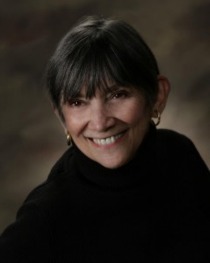
Pat CarrThe 2013 Porter Fund Literary Prize will be given to Pat Carr. The Porter Fund presents the award annually to an Arkansas writer who has accomplished a substantial and impressive body of work that merits enhanced recognition


She has a B.A.(Phi Beta Kappa) and an M.A. from Rice, a Ph.D. from Tulane, and she’s taught literature and writing in colleges all across the South. She’s published sixteen books, including the Iowa Fiction Prize winner, The Women in the Mirror, and the PEN Book Award finalist, If We Must Die, and she’s had over a hundred short stories appear in such places as The Southern Review, Yale Review, and Best American Short Stories.


Her latest short story collection, The Death of a Confederate Colonel, a nominee for the Faulkner Award, won the PEN Southwest Fiction Award, the John Estes Cooke Fiction Award, and was voted one of the top ten books from university presses for 2007 by Foreword Magazine.


Carr has won numerous other awards, including a Library of Congress Marc IV, an NEH, the Texas Institute of Letters Short Story Award, an Al Smith Literary Fellowship, and a Fondation Ledig-Rowohlt Writing Fellowship in Lausanne, Switzerland.


A writing text, Writing Fiction with Pat Carr appeared from High Hill Press in June, 2010, and her autobiography, One Page at a Time: On a Writing Life was published by Texas Tech University Press in December, 2010. Pat Carr’s new novella, The Radiance of Fossils, came out in July 2012 with Main Street Rag Press. Her latest published work, Lincoln, Booth, and Me: A Graphic Novel of the Assassination by Horatio, the Cat as told by Par Carr was published in May 2013 by El Amarna Publishing.

Past honorees of the Booker Worthen prize are: 2012-The Thousand-Year Flood: The Ohio-Mississippi Disaster of 1937, David Welky; 2011-The Broken Vase, Phillip H. McMath and Emily Matson Lewis; 2010-Ruled by Race: Black/White Relations in Arkansas from Slavery to the Present, Grif Stockley; 2009-The Mysterious Benedict Society and the Perilous Journey, Trenton Lee Stewart; 2008-Turn away Thy Son: Little Rock, the Crisis that Shocked the Nation, Elizabeth Jacoway; 2007-A Brief History of the Dead, Kevin Brockmeier; 2006-Promises Kept, Sidney S. McMath (posthumous); 2005-Communities of Kinship: Antebellum Families and the Settlement of the Cotton Frontier, Carolyn Earle Billingsley; 2004-The Truth about Celia, Kevin Brockmeier; 2003-Devil’s Knot: The True Story of the West Memphis Three, Mara Leveritt; 2002-Blood in Their Eyes: The Elaine Race Massacres of 1919, Grif Stockley; 2000-The Boys on the Tracks, Mara Leveritt; 2001-The Rumble of a Distant Drum: The Quapaws and Old World Newcomers, 1673–1804., Morris S. Arnold; 1999-Arkansas, 1800–1860: Remote and Restless, S. Charles Bolton.

Previous recipients of the Porter Fund prize are: 2012-Margaret Jones Bolsterli (Non-Fiction); 2011-Bill Harrison  (Fiction); 2010-Bob Ford  (Playwriting); 2009-Roy Reed  (Non-Fiction); 2008-Trenton Lee Stewart  (Fiction); 2007-Greg Brownderville  (Poetry); 2006-Donald “Skip” Hays  (Fiction); 2005-Shirley Abbott (Non-Fiction); 2005-Constance Merritt  (Poetry); 2004-Michael Burns  (Poetry); 2003-Kevin Brockmeier  (Fiction); 2002-Ralph Burns  (Poetry); 2001-Morris Arnold  (Non-Fiction); 2001-Fleda Brown  (Poetry); 2000-Jo McDougall  (Poetry); 1999-Grif Stockley  (Fiction); 1998-Michael Heffernan  (Poetry); 1997-Dennis Vannatta  (Fiction); 1996-David Jauss  (Fiction); 1995-Norman Lavers  (Fiction); 1994-Werner Trieschmann  (Playwriting); 1993-No Prize was awarded; 1992-Andrea Hollander Budy  (Poetry); 1991-Crescent Dragonwagon  (Fiction); 1990-James Twiggs  (Fiction); 1989-Hope Norman Coulter  (Fiction); 1988-Paul Lake  (Poetry); 1987-Donald Harington  (Fiction); 1986-Buddy Nordan  (Fiction); 1985-Leon Stokesbury  (Poetry).