
The 2019 Intimate Neighborhood Concerts announced by Arkansas Symphony

Songs from the HeartThe Arkansas Symphony Orchestra, Philip Mann, Music Director and Conductor, presents the 2018-2019 Intimate Neighborhood Concerts (INC) Series. The series opens with Songs from the Heart, featuring ASO principal musicians Michael Underwood (trombone), Susan Bell León (bassoon), and Blake Taylor (percussion) as soloists at Trinity Episcopal Cathedral on Mar. 28, 2019, and closes with Beethoven’s Triple Concerto on May 23, 2019 at Calvary Baptist Church in Little Rock.

Subscriptions and single tickets to the two-concert series are on-sale now; general admission single tickets are $29 per concert, and new subscribers get both concerts at half-price if they subscribe by January 25th. Patrons interested in the subscription discount should visit www.ArkansasSymphony.org/inc2019. Active duty military and student tickets are $10.

Tickets can be purchased online at www.ArkansasSymphony.org; at the concert venues beginning 60 minutes prior to a concert; or by phone at 501-666-1761, ext. 1.

The ASO Intimate Neighborhood Concerts series is an opportunity for audiences to enjoy fantastic music in acoustically unique venues around Little Rock.  The concerts offer intimate performances where patrons can get up-close and personal with musicians in chamber orchestra ensembles. In addition to hearing these beautiful works, concertgoers are invited to mingle with the musicians after the concerts.

Series Performances:

Songs from the Heart | March 28, 2019 at 7 pm
Trinity Episcopal Cathedral (310 W 17th St, Little Rock, AR 72206)
Philip Mann, conductor
Michael Underwood, trombone
Susan Bell León, bassoon
Blake Taylor, vibraphone

ALBRECHTSBERGER–Trombone Concerto in B-flat Major
LARSEN–Elegy for Bassoon and Strings
SÉJOURNÉ–Concerto for Vibraphone and Strings


Beethoven’s Triple Concerto | May 23, 2019 at 7 pm
Calvary Baptist Church (5700 Cantrell Rd, Little Rock, AR 72207)
Philip Mann, conductor
soloists TBA

KARLOWICZ— Serenade for Strings, Op. 2
MOSZKOWSKI–Prelude and Fugue, Op. 85
BEETHOVEN–Concerto for Violin, Cello, and Piano in C Major, Op. 56


The Arkansas Symphony Orchestra celebrates its 53rd full season in 2018-2019, under the leadership of Music Director Philip Mann. ASO performs more than sixty concerts each year for more than 165,000 people through its Stella Boyle Smith Masterworks Series, ACXIOM Pops LIVE! Series, River Rhapsodies Chamber Music Series, Intimate Neighborhood Concerts and numerous concerts performed around the state of Arkansas, in addition to serving central Arkansas through numerous community outreach programs and bringing live symphonic music education to over 26,000 school children and over 200 schools. ASO is a member of the League of American Orchestras.

For more information about the Arkansas Symphony Orchestra call 501-666-1761 or visit www.ArkansasSymphony.org
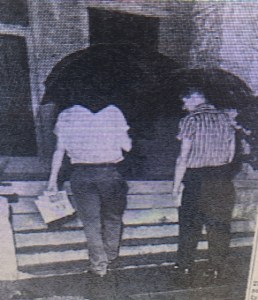
Little Rock Look Back: Sermons, TV Shows Dominate Final Day of 1959 Recall Campaign

A rainy Sunday afternoon did not stop STOP canvassers on May 24, 1959.

Sunday, May 24, 1959, was election eve for the Recall Campaign.  As such, the election figured into some Sunday morning sermons.  Reverend M. L. Moser Jr. spoke from the pulpit of his church and described the issue of segregation as Biblical. As many had before him, and would after him, he used the story of Noah’s three sons as a way to justify segregation of the races.

(Supposedly one of the sons was the father of the white race, one the father of the African American race, and one the father of the Asian race.  In this narrative, no explanation is given for other variations such as Native Americans and other indigenous people or persons from the sub-continent of India.  Also excluded is the likely race of everyone in the story – those who live in the Middle East.)

At Trinity Episcopal Cathedral, Dean Charles A. Higgins prayed for the schools but did not tell his parishioners how to vote.  Rev. Aubrey G. Walton at First Methodist Church spoke about the schools needing to be free from politics and pressure groups.  (Though Rev. Walton did later appear that evening on a STOP sponsored TV show.)

Embattled School Board president Ed McKinley refused requests from the media and others to divulge his plans for the future of the Little Rock School District.  Earlier he had stated he had an idea on how the schools could be reopened and segregated, but still remain in compliance with the courts.  Across the river, segregationists were planning a rally in North Little Rock to head off any plans for future integration on the north side.  Congressman Alford had already agreed to speak at this rally.

In paid time on TV, Governor Faubus spoke at length in a criticism of the Arkansas Gazette. He called the fired teachers pawns in a larger game.  He noted in his remarks that he did not expect to sway any votes by this point.

Not to be outdone, STOP was on all three TV stations. Sometimes the program was aired on more than one station simultaneously.  In an appearance sponsored by STOP, William S. Mitchell noted that May 24 was coincidentally Children’s Day.  He noted that never before in Little Rock history had so many people volunteered for a cause as those who had worked on STOP and with STOP.  The Women’s Emergency Committee, PTA Council, labor unions, and numerous other organizations had come together to raise money, knock on doors, and otherwise get the word out.

Finally, it was all over but the voting.  Nineteen days of outrage, exasperation, and hyperbole was coming to an end.  When dawn broke, it would be election day.

Little Rock Look Back: The Assassination of Dr. King

On April 4, 1968,  when Dr. King was assassinated, Little Rock did not see the unrest that many cities did.  Part of that was probably due to quick action by Governor Winthrop Rockefeller.

The Governor released a statement fairly quickly expressing his sorrow at the tragedy and calling for a day of mourning. He also made the State Capitol available for the NAACP to have a public memorial, as well as worked with a group of ministers to host an interdenominational service.

Little Rock Mayor Martin Borchert issued a statement as well:

We in Little Rock are disturbed about the incident in Memphis. We are disturbed regardless of where it had happened.  Killing is not the Christian solution to any of our problems today.

In Little Rock, we feel we have come a long way in 10 years toward solving some of our problems of living and working together regardless of race, creed or color.

The city Board of Directors in Little Rock has pledged itself toward continuing efforts to make Little Rock a better place in which to live and work for all our citizens.

We feel the efforts of all thus far have proved we can live in harmony in Little Rock and are confident such an incident as has happened will not occur in Little Rock.  We will continue our most earnest efforts toward the full needs of our citizens.

The day after Dr. King was assassinated, a group of Philander Smith College students undertook a spontaneous walk to the nearby State Capitol, sang “We Shall Overcome” and then walked back to the campus.  President Ernest T. Dixon, Jr., of the college then hosted a 90 minute prayer service in the Wesley Chapel on the campus.

On the Sunday following Dr. King’s assassination, some churches featured messages about Dr. King.  As it was part of Holy Week, the Catholic Bishop for the Diocese of Little Rock had instructed all priests to include messages about Dr. King in their homilies. Some protestant ministers did as well. The Arkansas Gazette noted that Dr. Dale Cowling of Second Baptist Church downtown (who had received many threats because of his pro-integration stance in 1957) had preached about Dr. King and his legacy that morning.

Later that day, Governor Rockefeller participated in a public memorial service on the front steps of the State Capitol. The crowd, which started at 1,000 and grew to 3,000 before it was over, was racially mixed. At the conclusion of the ceremony, Governor and Mrs. Rockefeller joined hands with African American ministers and sang “We Shall Overcome.”

That evening, Trinity Episcopal Cathedral was the site of an interdenominational service which featured Methodist Bishop Rev. Paul V. Galloway, Catholic Bishop Most Rev. Albert L. Fletcher, Episcopal Bishop Rt. Rev. Robert R. Brown, Rabbi E. E. Palnick of Temple B’Nai Israel, Gov. Rockefeller, Philander Smith President Dixon, and Rufus King Young of Bethel AME Church.

Earlier in the day, Mayor Borchert stated:

We are gathered this afternoon to memorialize and pay tribute to a great American….To achieve equality of opportunity for all will require men of compassion and understanding on the one hand and men of reason and desire on the other.

LR Women Making History – Mimi Dortch

Madalyn “Mimi” Breitzke Dortch, was known for getting worthwhile projects off the ground.

She was a founder along with dear friend Cliff Baker, of the Arkansas Repertory Theater; hosted the first Arkansas Opera Theatre outdoor perforomance at her home Marlsgate, was a founder along with Helen Walton of Arkansas Committee of National Museum of Women in the Arts, and was the Director of AIC Choir Camp at Subiaco for 22 years.

When Baker had the idea for the Rep, she made use of her personal connections and helped form the first Board of Directors.  She served as an ambassador for the Rep and theatre in general.   Throughout the rest of her life, she would be a stalwart supporter of the Rep.  Her interest in theatre had been nurtured while she was in college.  Her interest in founding community endeavors had been inherited from her father who founded the North Little Rock Boys Club.

The AIC Choir Camp was originally founded by Trinity Episcopal Cathedral.  She oversaw the transition to it being under the auspices of the Arkansas Interfaith Conference of Churches and Synagogues, which she led.

There were few art forms or art organizations in Little Rock and Arkansas that Mimi Dortch did not attend or support.

LR Women Making History: Rev. Dr. Peggy S. Bosmyer

In 1977, Peggy S. Bosmyer was ordained an Episcopal priest at Little Rock’s Trinity Cathedral.  Not only was she the first woman in Arkansas to be ordained to a full priesthood in the Episcopal Church, she was the first woman south of the Mason-Dixon line.

Born in Helena, she was a graduate of the University of Arkansas and Virginia Theological Seminary.  She served as a deacon at Grace Episcopal in Pine Bluff before serving as a curate at Little Rock’s St. Mark’s Episcopal.  In 1976, the Episcopal Church approved the ordination of women to the priesthood. It was after that she was able to be ordained in 1977.  Her ordination was front page news in the Arkansas Gazette.

Following ordination, she was appointed Vicar of Little Rock’s St. Michael’s Episcopal Church, then a part-time position. She also served as a program director for the Diocese of Arkansas, which included oversight of Camp Mitchell.  In 1985, Rev. Bosmyer was appointed full-time Vicar of St. Michael’s.  Nine years later, she left Little Rock to be a professor on the faculty of the School of Theology at the University of the South.  While there she served as Co-Vicar of St. James at Sewanee. She also received her Doctor of Divinity from the University of the South in 1999.

Rev. Dr. Bosmyer returned to Little Rock in 2001 to be Vicar of St. Margaret’s Episcopal Church.  She held that position until her death in December 2008 from pancreatic cancer.  She is interred at the columbarium of St. Margaret’s.  She was survived by her husband of 24 years, Reverend Dr. Dennis Campbell, and four children.

She was not only one of the first female Episcopal priests in the U.S, she was on the forefront of women serving as ordained priests and preachers in mainline denominations.  Certainly her ordination was not without controversy. There are still those who disagree with women serving as priests (though likely few remain within the Episcopal church).  The legacy of Rev. Dr. Bosmyer continues today with the women serving as rectors, vicars, priests in charge, and associate rectors throughout the state of Arkansas.  While Arkansas has not had a woman serve as Bishop, Rev. Dr. Katherine Jefferts Schori served as Presiding Bishop of the Episcopal Church from 2006 to 2015.

LR Women Making History – Mary Fletcher Worthen

Mary Fletcher Worthen cultivated history and music with the same grace and skill as she cultivated gardens.

Born outside of Scott, she attended Vassar and Little Rock Junior College. After marrying banker Booker Worthen, she has devoted her life to improving Little Rock. Together with Stella Boyle and George Smith, she and Booker helped found the precursor to the Arkansas Symphony Orchestra.  Through its many iterations, she has been a steadfast supporter and is now a life member of the ASO Board.  She has also been a supporter of many other music organizations in Little Rock including the Chamber Music Society of Little Rock, of which she was a founder.

Another hallmark of her involvement is Mount Holly Cemetery Association.  For over 50 years she has served on the board of this body.  Without notes, she can recite the history of practically every resident buried there.  The tours she would lead with Peg Newton Smith were hot commodities when auctioned at fundraisers.  These two loving and lifelong friends would sometimes remember things differently. They playfully prodded and needled each other as they wended and winded their way through the headstones and history regaling rapt audiences with yarns of yore, quips and quotes, plus an anecdote or two.

She has also served on the Old State House Museum Board and the Pulaski County Historical Society Board.  As a historian, she literally wrote the book on Trinity Episcopal Cathedral.  She combined her interest in herb gardening and history with the creation of the Medicinal Garden at Historic Arkansas Museum, which is now named in her honor.

Born in 1917, up until her final days in 2015 Mary Worthen continued to learn new facts, share her love of history and music, and work to cultivate the next generations of cultural enthusiasts.

2015 In Memoriam – Mary Fletcher Worthen

In these final days of 2015, we pause to look back at 15 who influenced Little Rock’s cultural scene who left us in 2015.

1515 WorthenMary Fletcher Worthen cultivated history and music with the same grace and skill as she cultivated gardens.

Born outside of Scott, she attended Vassar and Little Rock Junior College. After marrying banker Booker Worthen, she devoted her life to improving Little Rock. Together with Stella Boyle and George Smith, she and Booker helped found the precursor to the Arkansas Symphony Orchestra.  Through its many iterations, she was a steadfast supporter and later was named a life member of the ASO Board.  She was also a supporter of many other music organizations in Little Rock including the Chamber Music Society of Little Rock, of which she was a founder.

Another hallmark of her involvement was Mount Holly Cemetery Association.  For over 50 years she served on the board of this body.  Without notes, she could recite the history of practically every resident buried there.  The tours she led with the late Peg Newton Smith were hot commodities when auctioned at fundraisers.  These two loving and lifelong friends would sometimes remember things differently. They playfully prodded and needled each other as they wended and winded their way through the headstones and history regaling rapt audiences with yarns of yore, quips and quotes, plus an anecdote or two.

She also served on the Old State House Museum Board and the Pulaski County Historical Society Board.  As a historian, she literally wrote the book on Trinity Episcopal Cathedral.  She combined her interest in herb gardening and history with the creation of the Medicinal Garden at Historic Arkansas Museum, which is now named in her honor.

Born in 1917, up until her final days Mary Worthen continued to learn new facts, share her love of history and music, and work to cultivate the next generations of cultural enthusiasts.