Little Rock Look Back: Rev. Dr. Martin Luther King, Jr.

Ernest Green, Dr. King and Daisy Bates share a relaxed moment -- which was probably rare for the three in 1958

Ernest Green, Dr. King and Daisy Bates share a relaxed moment — which was probably rare for the three in 1958

Today is the Martin Luther King Jr. Holiday.  It is an apt time to think about Dr. King and Little Rock.  A friend of L. C. and Daisy Bates, he attended the 1958 Central High School graduation to witness Ernest Green receiving a diploma. Each senior only received eight tickets to the ceremony at Quigley Stadium. Dr. King was in the state to address the Arkansas AM&N (now UAPB) graduation.

His attendance was briefly mentioned in the local press, but there was no media photo of him at the ceremony.  The Little Rock School District limited the press to one Democrat and one Gazette photographer. Other press were limited to the press box.

Ernest Green has a photo of him with Daisy Bates and Dr. King (pictured on this entry).

In 1968, when Dr. King was assassinated, Little Rock did not see the unrest that many cities did.  Part of that was probably due to quick action by Governor Winthrop Rockefeller. The Governor released a statement fairly quickly expressing his sorrow at the tragedy and calling for a day of mourning. He also made the State Capitol available for the NAACP to have a public memorial, as well as worked with a group of ministers to host an interdenominational service.

Little Rock Mayor Martin Borchert issued a statement as well:

We in Little Rock are disturbed about the incident in Memphis. We are disturbed regardless of where it had happened.  Killing is not the Christian solution to any of our problems today.

In Little Rock, we feel we have come a long way in 10 years toward solving some of our problems of living and working together regardless of race, creed or color.

The city Board of Directors in Little Rock has pledged itself toward continuing efforts to make Little Rock a better place in which to live and work for all our citizens.

We feel the efforts of all thus far have proved we can live in harmony in Little Rock and are confident such an incident as has happened will not occur in Little Rock.  We will continue our most earnest efforts toward the full needs of our citizens.

The day after Dr. King was assassinated, a group of Philander Smith College students undertook a spontaneous walk to the nearby State Capitol, sang “We Shall Overcome” and then walked back to the campus.  President Ernest T. Dixon, Jr., of the college then hosted a 90 minute prayer service in the Wesley Chapel on the campus.

On the Sunday following Dr. King’s assassination, some churches featured messages about Dr. King.  As it was part of Holy Week, the Catholic Bishop for the Diocese of Little Rock had instructed all priests to include messages about Dr. King in their homilies. Some protestant ministers did as well. The Arkansas Gazette noted that Dr. Dale Cowling of Second Baptist Church downtown (who had received many threats because of his pro-integration stance in 1957) had preached about Dr. King and his legacy that morning.

Later that day, Governor Rockefeller participated in a public memorial service on the front steps of the State Capitol. The crowd, which started at 1,000 and grew to 3,000 before it was over, was racially mixed. At the conclusion of the ceremony, Governor and Mrs. Rockefeller joined hands with African American ministers and sang “We Shall Overcome.”

That evening, Trinity Episcopal Cathedral was the site of an interdenominational service which featured Methodist Bishop Rev. Paul V. Galloway, Catholic Bishop Most Rev. Albert L. Fletcher, Episcopal Bishop Rt. Rev. Robert R. Brown, Rabbi E. E. Palnick of Temple B’Nai Israel, Gov. Rockefeller, Philander Smith President Dixon, and Rufus King Young of Bethel AME Church.

Earlier in the day, Mayor Borchert stated:

We are gathered this afternoon to memorialize and pay tribute to a great American….To achieve equality of opportunity for all will require men of compassion and understanding on the one hand and men of reason and desire on the other.

Mayor Borchert pledged City resources to strive for equality.

Another Little Rock Mayor, Sharon Priest, participated in a ceremony 24 years after Dr. King’s assassination to rename High Street for Dr. King in January 1992.  The name change had been approved in March 1991 to take effect in January 1992 in conjunction with activities celebrating Dr. King’s life.  At the ceremony, Daisy Bates and Annie Abrams joined with other civil rights leaders and city officials to commemorate the name change.

Arkansas Jazz Festival at Clinton Presidential Center Friday & Saturday

jazzheroThe Clinton Presidential Center celebrates Jazz Appreciation Month with the Arkansas Jazz Festival, featuring “Blue” Lou Marini. Held in partnership with the Arkansas Jazz Educators and the University of Arkansas at Monticello, this FREE, two-day festival will be held at the Clinton Center Park and will showcase the talent of jazz bands from around the state.

Featured artist, Lou Marini, has been a member of Blood, Sweat and Tears, The Saturday Night Live Band, and the Blues Brothers Band. He is an original member of the Blues Brothers Band, since the first appearances on Saturday Night Live, and appeared in both movies, as well as all recordings and tours.

Arkansas Jazz Festival
April 24 – 25, 2015
Clinton Presidential Center Park

Schedule of Performances:

Friday, April 24
3:30 p.m. Central High School Jazz II
4:30 p.m. West Memphis High School
5:30 p.m. Benton Junior High School
6:30 p.m. Harding University
7:30 p.m. Bryant High School

Saturday, April 25
9:00 a.m.  Central High School Jazz II
10:00 a.m. University of Arkansas at Little Rock
11:00 a.m. El Dorado High School
12:00 p.m. Arkansas Tech University
1:00 p.m.  Jonesboro High School
2:00 p.m.  Texarkana, Texas 8th Grade
3:00 p.m.  University of Arkansas at Pine Bluff
4:00 p.m.  Pea Ridge High School
5:00 p.m.  Texas High School
6:00 p.m.  University of Arkansas at Monticello, Featuring Lou Marini

Black History Month Spotlight: John Stubblefield

IMG_5435Tenor saxophonist John Stubblefield ranks among the most powerful and innovative soloists of the last decades of the 20th century.

Born February 4, 1945, in Little Rock, Stubblefield first studied the piano, but moved to saxophone as a teen.
At the age of 17, Stubblefield joined local R&B combo York Wilburn & the Thrillers, with whom he made his recording debut. He then spent a year on the road with legendary soul artist, Solomon Burke before studying music at AM&N College (now UAPB) while leading his own modern jazz quintet.

After graduation, Stubblefield settled in Chicago in 1967, soon signing on with the pioneering avant-garde jazz collective the Association for the Advancement of Creative Musicians (AACM); he studied under Muhal Richard Abrams and appeared on Joseph Jarmans’s landmark 1968 set As If It Were the Seasons.

Stubblefield remained with the AACM until 1970, when he relocated to New York City and joined its East Coast counterpart, the Collective Black Artists. He played with Mary Lou Williams, Tito Puente, and the Thad Jones/Mel Lewis Orchestra. Upon joining Mingus in 1972, Stubblefield added alto saxophone, oboe, flute, and bass clarinet to his arsenal.

During the mid-1970s, Stubblefield also served as an instructor with the famed Jazzmobile program. He cut his first disc as a leader, Midnight Sun, in 1976. Subsequent efforts for the Enja and Soul Note labels include 1984’s Confessin’, 1987’s Countin’ on the Blues, and 1990’s Sophisticatedfunk.

In the 1990s Stubblefield served as the Mingus Big Band’s lead tenor and occasional conductor. Diagnosed with cancer in the spring of 2004, Stubblefield remained the Mingus Big Band’s guiding force, conducting much of its I Am Three album from his wheelchair. He died July 4, 2005.

In 2007, he was posthumously inducted into the Arkansas Black Hall of Fame. To learn more about John Stubblefield and other inductees, visit the permanent exhibit at the Mosaic Templars Cultural Center. That museum is an agency of the Department of Arkansas Heritage.

Black History Month Spotlight: Henry Shead

bhm shedHenry Wallace Shead, Sr., better known as “Shed” was born in Fordyce, Arkansas, on March 31, 1941.  He was raised in Little Rock, the son of a reverend, Henry Arthur Shead.  At the tender age of six, Henry was introduced to the keyboards by his mother, Willie LeBethel, who immediately recognized his natural talent. Henry’s mother saw to it that her son had piano lessons, while his father’s church provided the place for his early public performances.

At the start of his career, he performed regularly on a local American Bandstand-type TV show called Center Stage. He also became a fixture at the Little Rock Country Club. He made his mark playing in intimate settings as a solo artist, dazzling listeners with his absolute mastery of the piano, singing in that slightly raspy, yet smooth sounding baritone voice. Shead was awarded a scholarship to the University of Arkansas at Pine Bluff, and majored in music while entertaining around the area. Henry met his wife, Jeanette Mazique, while attending college in Pine Bluff. They married in January of 1964 and had four children.

He became a high school choral director and music teacher, all the while continuing to work in local nightspots like the Drummer‘s Club in Little Rock. In 1971, he moved to Los Angeles where he made his acting debut appearing with Henry Fonda, Richard Dreyfuss and Jane Alexander in William Saroyan’s The Time of Your Life. He wrote and arranged music for stage plays and television, sang the title song for a United Artist film, did studio work on a Johnny Mathis album, and recorded for the Liberty/United Artists and Cream labels.

Shed created national radio jingles and appeared on network television with Dinah Shore, Johnny Carson and Jerry Lewis. He has also performed at parties for the Rockefellers, Pearl Bailey, The Carpenters, President Lyndon Johnson, President Bill Clinton, Henry Mancini, Sergio Mendes, hotelier Peter Morton, Ed McMahon and Barbra Streisand.

In Las Vegas, the city where he lived since 1974, Shed entertained at most of the major hotels, with long engagements at the Aladdin, Stardust, Hacienda, MGM Grand, Caesar’s Palace and Sahara. In 1977, the Henry Shead Band with Denise Clemente was voted Las Vegas’ Best Lounge Act of the Year. His last long-term run was at AJ’s Steakhouse at the Hard Rock Hotel & Casino, retiring in 2007. In October 2006, he was inducted into the Arkansas Black Hall of Fame.

He died on October 5, 2012 in Las Vegas and is buried in Forest Lawn Cemetery in Hollywood CA.

For more on Henry Shead and other inductees into the Arkansas Black Hall of Fame, visit the permanent exhibit at the Mosaic Templars Cultural Center. That museum is an agency of the Department of Arkansas Heritage.


Black History Month Spotlight – Art Porter Sr.

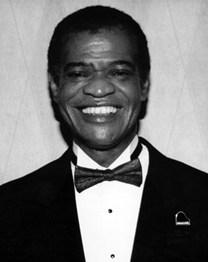
bhm art srArthur Lee (Art) Porter Sr. was a pianist, composer, conductor, and music teacher. His musical interest spanned from jazz to classical and spirituals.

Born on February 8, 1934 in Little Rock, he began his music education at home. He played in church at age eight; played his first recital at twelve; and, by fourteen, hosted a half-hour classical music radio program on KLRA-AM. He earned a bachelor’s degree in music from Arkansas AM&N College (now UAPB) in May 1954. The next year, he married Thelma Pauline Minton. Following his marriage, he pursued graduate study a the University of Illinois, University of Texas and Henderson State University.

He began his teaching career at Mississippi Valley State University in 1954.  When he was drafted into the Army, his musical talents were responsible for him being assigned as a chaplain’s assistant in New York.  In the late 1950s he returned to Little Rock and taught at Horace Mann High School, Parkview High School and Philander Smith College.

He also started playing piano jazz in the evenings. This led to the creation of the Art Porter Trio, which became THE music group for events.  Many musicians who came to Arkansas to perform in Little Rock or Hot Springs would often stop by and join in with Porter as he played.  From 1971 to 1981 he hosted The Minor Key musical showcase on AETN.  His Porterhouse Cuts program was shown in 13 states.

Often encouraged to tour, he instead chose to stay based in Arkansas.  He did, from time time, perform at jazz or music festivals.   He also performed classical piano with the Arkansas Symphony Orchestra, founded the Art Porter Singers, and created a music group featuring his four oldest children.  Though Porter received many honors and awards, he found particular satisfaction in the “Art Porter Bill” enacted by the state legislature, which allowed minors to perform in clubs while under adult supervision. Porter’s children thus were able to perform with him throughout the state. Governor Bill Clinton, at the time a huge fan and friend of Porter, often joined Porter’s group on his saxophone.

In January 1993, Porter and his son Art Porter, Jr., performed at festivities in Washington DC for the Presidential Inauguration of his friend Bill Clinton.  In July 1993, he died of lung cancer.  He was eulogized at Bethal AME Church, where he had been organist for 35 years.  He is buried at Little Rock National Cemetery.  Today his legacy lives on in the Art Porter Music Education Fund as well as in the lives of the many musicians and fans he touched.

He was posthumously inducted into the Arkansas Black Hall of Fame in 1994.  For more on Art Porter Sr. and other inductees into the Arkansas Black Hall of Fame, visit the permanent exhibit at the Mosaic Templars Cultural Center. That museum is an agency of the Department of Arkansas Heritage.

Black History Month Spotlight: Smokie Norful

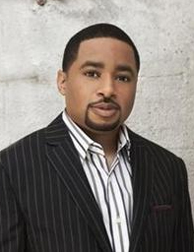
bhm smokieEarlier this month, W. R. Smokie Norful picked up his latest Grammy Award.  Born in Little Rock, the son of an AME minister, he now pastors his own congregation in addition to his recording career.

He grew up in Pine Bluff, and was deeply involved in his fathers church. He was interested in music from a very young age, reportedly picking out one-finger piano melodies at age two. His parents supported him with music lessons, and unusual for his background, allowed him to experiment with and listen to the current R&B and soul music of the day as well as gospel music. Norful attended Pine Bluff High School, where he occasionally performed in school assemblies and programs. He graduated from the University of Arkansas at Pine Bluff as a History major.

After graduation, taught history for several years at Jack Robey Junior High School, Pine Bluff High School and Evanston Township High School.  For two years he also was the educational director for the Pine Bluff Housing Authority’s after-school program. He has also been a historian for the National Park Service and a congressional aid for the fourth congressional district.

He was ordained an elder in the African Methodist Episcopal church and has been a licensed preacher since 1997. Rev. Norful served as youth pastor, minister of music, and associate minister of St. John AME church in Pine Bluff, under the leadership of Rev. W.R. Norful Sr., and Teresa Norful until relocating to Chicago. He has also leads workshops for the National Baptist Convention USA, Inc.

Currently he serves as pastor of the Victory Cathedral Worship Center in Bolingbrook, which he founded in 2005.  He has since established a second campus also in the Chicago area.  In 2009, he was inducted into the Arkansas Black Hall of Fame.

For more on Smokie Norful and other inductees into the Arkansas Black Hall of Fame, visit the permanent exhibit at the Mosaic Templars Cultural Center. That museum is an agency of the Department of Arkansas Heritage.

Black History Month Spotlight – Jimmy McKissic

bhm mckissicJames Henry “Jimmy” McKissic was born March 16, 1940 in Little Rock and was raised in Pine Bluff by his parents, Rev. James E. McKissic and Rosa Daniels McKissic.  He spent a lot of time in church and by age 3 was playing church hymns by ear. His mother was his piano teacher until age 13. At that point, she decided he needed professional instructors. He soon developed the dream of someday playing at Carnegie Hall.

Growing up in Pine Bluff in the late 1950s and early 1960s, he was well known for musical talent in both the white and African American communities.  He served as a musical coach for a Miss Pine Bluff contestant, Frances Jane Anderson, who later went on to become Miss Arkansas and first runner up to Miss America.  Today, she is better known as Frances Cranford.


As a young man Jimmy played for St. Paul Missionary Baptist Church and the Mt. Calvary Baptist, where his father pastored. He also played for other churches in Pine Bluff and the surrounding area.  He earned a B.S. in Music Education from A.M.&N. College (now UAPB) which was followed by additional study with Marjorie Petray of Berkeley, before receiving a Hertz Scholarship to further his piano and musical training in Geneva, Switzerland. He worked at the American Church in Paris, where he was in charge of young adults for two years.

Establishing residency in Cannes, France, Jimmy’s personality led him to become one of Europe’s most popular entertainers. He performed concerts all over the globe including Switzerland (Geneva, Lucerne, Davos), Franc (Paris, Biarritz, Nice, Cannes), Morocco, England, Kenya (Nairobi, Mombasa), Syria, Holland, Bangkok, Singapore and Brazil, among others. He performed in numerous cities and states in the USA including Arkansas, California, Mississippi, Texas and New York. During his lifetime, while spending 49 years of his life abroad Jimmy played for three U.S. presidents. He also performed 28 at Carnegie Hall in New York City.

After that debut, Jimmy considered it a privilege to invite people to attend his concerts “without charge”. He would say, “To whom much is given, much is required.” He often closed his classical concerts with hymns and/or popular songs as a reminder of his roots and his celebration of the universal nature of music. People from all over the world would come to hear him play from as far away as Australia or as close as Washington, D.C.  He later served on the musical faculty of the University of California, Berkeley.

A PBS documentary, “How Do You Get to Carnegie Hall,” chronicles his odyssey from Pine Bluff to New York, with scores of stops and detours in between.  In 1994, he was inducted into the Arkansas Black Hall of Fame.  Regardless of where he lived or worked, he continued to visit Arkansas and support endeavors in the state.  In 2006, he lent his talents to a fundraiser for the Mosaic Templars Cultural Center.  Four years later, he made the rafters shake in capacity concerts at that now-opened museum as well as the Clinton Presidential Center.  In addition to his musical talent and winning personality, he was known for his unique fashion sense (deliberately not matching his shoes was one trademark).

Two years ago today (February 13, 2013), McKissic died. His funeral services were held on the campus of UAPB, where he had spent so much time growing up.

For more on Jimmy McKissic and other inductees into the Arkansas Black Hall of Fame, visit the permanent exhibit at the Mosaic Templars Cultural Center. That museum is an agency of the Department of Arkansas Heritage.