Little Rock Look Back: Arkansas’ first Miss America comes to Little Rock

Tonight a new Miss America will be crowned.  The competition has had a tumultuous year with many changes behind the scenes as well as alterations to the event format.

It seems a good time to hearken back to a earlier, simpler time when Donna Axum first brought the Miss America title to Arkansas.

A native of El Dorado and a student at the University of Arkansas, during her reign as Miss America Miss Axum (or simply Donna as the newspaper headlines referred to her) made four public visits to Little Rock.  As the first Miss Arkansas to become Miss America, the state’s Capitol City was very interested in giving her a warm welcome.

After being crowned on September 7, 1963, Axum’s first official visit to Arkansas was November 1 through 3.  In addition to stops in Hot Springs and El Dorado, she appeared in Little Rock to attend events including an Arkansas Razorback football game at War Memorial Stadium.  Her entourage included the top four runners up from the Miss America pageant.

In February 1964, she made a brief appearance in Little Rock which included a press conference.

Donna Axum spent nearly two weeks in Arkansas in May 1964 attending several pageants as well as spending time with family.  During that visit she appeared in Little Rock twice.  The second time she headlined a concert with the Arkansas Symphony (not related to the current Arkansas Symphony Orchestra) and the Arkansas Choral Society. It took place at Robinson Auditorium.

Little Rock chosen as site for War Memorial Stadium on August 9, 1947

As has been noted in a previous post, War Memorial Stadium was approved by the Arkansas General Assembly in March 1947.  The work then began on the finalization of the location.

Four cities were in the running:  Little Rock, North Little Rock, Hot Springs, and West Memphis.  Each of the cities was required to donate the land for the stadium, provide parking for it, and sell local subscriptions equivalent to $250,000 to raise money for it as well.

On May 19, 1947, the City Council approved Resolution 1,747 to donate the land for the stadium in Fair Park if Little Rock was selected.  This was not the first mention of a stadium in City records.  In March of 1947, the City Council had set aside land in Fair Park to use for a playground — with the stipulation that if it was eventually needed for a stadium, it would be relinquished for that purpose.

On August 9, 1947, the War Memorial Stadium Commission met in the House Chambers of the Arkansas State Capitol to select the location for the stadium.  West Memphis dropped out prior to the meeting; they had not been able to raise the sufficient local funds.  That left the three remaining cities.  (Cities had until June 24 to file paperwork expressing their interest in applying and were to submit their proposals by August 1.)

Instead of meeting in a usual committee room, the meeting was held in the House Chambers of the State Capitol.  The location for the meeting had been set because a large crowd was expected.  And the attendance did not disappoint.  City government and business leaders from all three cities turned out in full force.

The members of the Commission were Ed Keith, Chairman, Magnolia; Gordon Campbell, Secretary, Little Rock; Ed Gordon, Morrilton; Senator Lee Reaves, Hermitage; Senator Guy “Mutt” Jones, Conway; Dallas Dalton, Arkadelphia; Judge Maupin Cummings, Fayetteville; Dave Laney, Osceola; and Leslie Speck, Frenchman’s Bayou.

For several hours the nine heard proposals from the three cities.  Little Rock’s location was in Fair Park, North Little Rock’s was near its high school, and Hot Springs was on land next to Highway 70 approximately 2.5 miles from downtown.  Finally it was time to vote.  After two rounds of voting, Little Rock was declared the winner on a weighted ballot.

The north shore’s leadership was magnanimous in their defeat.  Hot Springs, however, was far from it.  In the coming days they filed suit against the Stadium Commission alleging flaws in Little Rock’s proposal as well as improprieties by members of the commission.  A preliminary decision sided with the state.  Ultimately, Hot Springs’ relatively new mayor Earl T. Ricks opted to drop the suit.  The Spa City’s business community was concerned that fighting the location might delay construction – and could negatively impact legislative and tourists’ feelings toward Hot Springs.  (And it was entirely possible that the State Police could have been used to “discover” that there was gambling going on in Hot Springs.)

Though ground was broken later in the year, by December 1947, the stadium was still $250,000 shy of funding for the construction.  This was after the state and Little Rock had previously both upped their commitments to $500,000 each.

The building did eventually open on schedule in conjunction with the 1948 Arkansas Razorback football games.

As for Mayor Ricks of Hot Springs, he moved to Little Rock to serve as Adjutant General of the Arkansas National Guard during the governorship of Sid McMath.  He later held leadership positions in the National Guard Bureau in Washington DC.  He died in 1954 at the age of 45.  Among the ways he was memorialized was a National Guard armory in Little Rock, which stood in the shadow of War Memorial Stadium.

Little Rock Look Back: President Truman dedicates War Memorial PARK in a national address

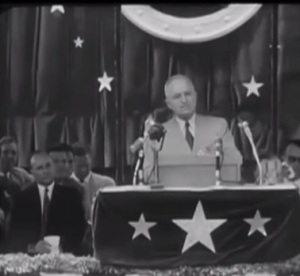
Though President Truman was in Little Rock for a military reunion, he did conduct some official business while here.  In his Presidential role, he spoke at the dedication of War Memorial Park on June 11, 1949.
(It is sometimes erroneously reported that he dedicated the stadium.  That took place in September 1948, at a Razorback game with former Razorback player and future Lt. Governor Maurice “Footsie” Britt delivering the keynote.)

President Truman’s address took place inside War Memorial Stadium at 2:30 p.m..   It was not a brief dedicatory speech, but instead was a lengthy treatise on foreign affairs.  The address was carried live on nationwide radio (though some radio networks opted to broadcast it later).  The text of his address can be found here.

The stadium was by no means full.  A major reason for that was that many thousand individuals had turned out to witness a parade downtown in which President Truman marched along side Governor Sid McMath.  The parade was in conjunction with the military reunion.  Given the June heat in Arkansas (in which parade spectators had been standing for several hours) and the difficulty of getting from the parade route to the stadium, most (if not all) parade spectators opted for skipping the presidential address.

Before the parade, President Truman (who was still riding high from his upset victory in the 1948 election) was asked by a local reporter if he would run in 1952. He refused to answer stating that the national media would think he had planted the question with a local member of the press.

Prior to the name War Memorial Park, the land had been known as Fair Park.  It was a former location of the State Fair.  In the 1930s, it had briefly been known as Overman Park in honor of then-Mayor R. E. Overman.  The City Council had named it for him as a tribute to his work on a variety of projects. When he displeased them, they reversed their decision and renamed it to Fair Park.

Little Rock Look Back: War Memorial Stadium approved

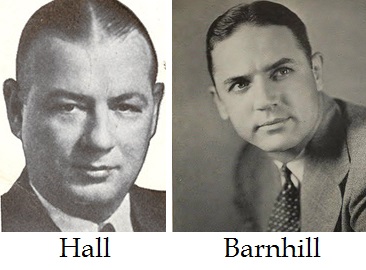
WMS Hall BarnhillOn March 18, 1947, Governor Ben T. Laney signed the bill into law which authorized the construction of War Memorial Stadium.
The plans for the stadium were the brainchild of Arkansas Secretary of State C.G. “Crip” Hall and University of Arkansas Athletic Director John Barnhill.

Apparently the Southwest Conference was threatening to kick Arkansas out because of an inadequate football facility. Since the University did not have the funds to build a new one on its campus, Barnhill and Hall decided that the state should build one. Many other states were building War Memorial facilities of a variety of natures. The duo decided that the new football facility could be a War Memorial Stadium to pay tribute to the men who died in the recently concluded World War II.  While the stadium was touted as being of use to all colleges in the state and a variety of other types of activities, it was very much designed to be a home for the Arkansas Razorbacks.

Getting the stadium through the Arkansas General Assembly was not easy.  The bill to create the stadium commission sailed through both houses. But even some who voted for it said they would oppose any funding bills.  When time came to vote for the funding, the bill fell far short of the three-quarters vote that was needed in the House for an appropriation bill.

WWII veterans were on both sides of the issue.  Some felt it was an appropriate way to honor those who died.  Others felt it was a gimmick to get the stadium approved.  Some of the opponents felt that a new state hospital for UAMS would be the more appropriate way to honor those who died during the war.  The debates were often heated and personal.

Overnight a new bill was created. It would pay for the stadium through the issuing of bonds. In addition to the state issuing bonds, any city which wished to bid for it would have to put up money for it as well as provide land.  This new bill would require only 51 votes to pass the House.  It was able to pass that threshold.  The Senate made a few amendments (mostly dealing with the composition of the stadium commission and the amount of dollars that the host city had to pledge).  Finally the House agreed to the Senate amendments and it went to Governor Laney.

The next hurdle for the stadium was choosing a location. That process would occupy stadium proponents throughout the spring and summer of 1947.

Rock the Oscars: Johnny Cash

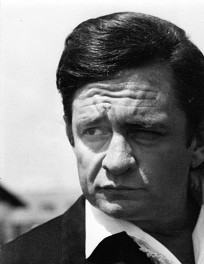
Cleveland County, Arkansas, native Johnny Cash was the subject of the Oscar winning film Walk the Line.  Although he never lived in Little Rock, he was a frequent visitor throughout his career.
Born on February 26, 1932, in Kingsland, Arkansas, as a young boy he moved with his family to Dyess.  After service in the military (in which he also had his first band), Cash moved to Memphis. It was there he broke into the music scene.

Among the venues Cash played in Little Rock were Barton Coliseum and Wildwood Park for the Arts.  In one performance, he shared the stage with his friend and fellow Arkansan Glen Campbell.   The largest crowd for which Cash performed in Little Rock was in 1989, when he appeared at a Billy Graham crusade at War Memorial Stadium.


Little Rock Look Back: Billy Graham

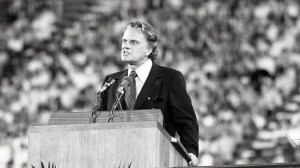
bgpreaching-960x605With his death today at the age of 99, a look at two visits Billy Graham made to Little Rock.
In 1959, as Little Rock was still grappling with the issue of desegregation, Graham brought his crusade to Little Rock.  Held at War Memorial Stadium, Graham insisted that the seating be desegregated. That was always a requirement of his.  He refused to give in to the segregationist protests.  That was probably the first time War Memorial Stadium had been desegregated.

Thirty years later, he returned to Little Rock and War Memorial Stadium.  Among the performers he had at this time was Arkansan Johnny Cash.  Also in attendance was Governor Bill Clinton.  He remarked that he had been a fan of Rev. Graham’s since the 1959 crusade and his stance on requiring desegregation.

Little Rock Look Back: Aluminum Bowl

Aluminum_Prog_f

Courtesy of Paul Edwards to the Encyclopedia of Arkansas History and Culture

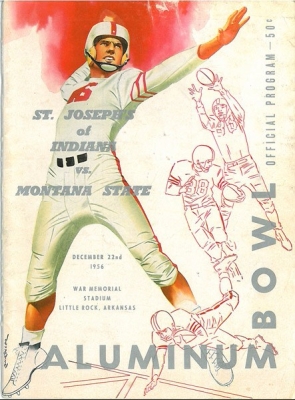
On December 22, 1956, Little Rock played host to the first (and only) Aluminum Bowl.  It was the NAIA national championship game between Montana State University and St. Joseph’s College (of Indiana).  This was the first time the NAIA had a football championship.

Originally the game was set to be played in Shreveport, Louisiana.  But because some NAIA schools were integrated, it was forbidden by a state law passed by the Louisiana legislature.  The Little Rock Chamber of Commerce and others worked to bring the game to War Memorial Stadium.  Because of the importance of the aluminum industry in Central Arkansas, the name Aluminum Bowl was chosen.  Both ALCOA and Reynolds were major sponsors of the event.

The game, which was aired on CBS TV and radio, was played on a rain-soaked muddy field and turned into a defensive slugfest. Both teams only got close to scoring once.  The score ended up a 0 to 0 tie.  Both teams were declared co-champions.  The rain kept the crowds away as only 5,000 people showed up leaving 33,000 empty seats in the stadium.  Miss Arkansas Barbara Banks, who had been wearing a dress made entirely out of aluminum, spent the game covered up to keep the dress dry.

The next year, the game went to Saint Petersburg, Florida, where it was rechristened the Holiday Bowl.  The Little Rock outing would mark the only appearance by either team in the NAIA championship game.  Both teams subsequently switched to NCAA competition.  As of the spring of 2017, St. Joseph’s has suspended operations because of financial shortcomings.

It has been said that Little Rock leaders had wanted to get the Aluminum Bowl game to showcase that Little Rock was a progressive Southern city when it came to race relations. By 1956 the buses and the public library were integrated.  However, both teams were faced with their African American players having to stay at separate hotels while in Central Arkansas (one in Little Rock, the other team in Hot Springs).

For more on the Aluminum Bowl, visit the Encyclopedia of Arkansas History and Culture.