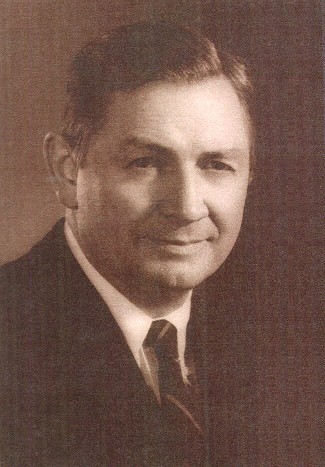
2015 In Memoriam – Ozell Sutton

1515 Sutton

In these final days of 2015, we pause to look back at 15 who influenced Little Rock’s cultural scene who left us in 2015.

Ozell Sutton was a writer and eyewitness to history, while making some of his own too.

Born in Gould, he moved with his family to Little Rock and graduate from Dunbar High School and Philander Smith College. In 1950, he became the Arkansas Democrat‘s first African American reporter.

He was at Central High when the Little a Rock Nine integrated, marched with Dr Martin Luther King Jr. in Washington in 1963 and was with Dr King when he was assassinated in 1968.

He served as an aide to Gov. Winthrop Rockefeller from 1968 to 1970. From 1972 to 2003 he work for the U.S. Department of Justice Community Relations Service in Atlanta. In that capacity he was often on the forefront in efforts to diffuse racially tense situations.

In 1962, he received an honorary doctorate from Philander Smith in recognition of his political activism in the civil rights movement. He was awarded the Distinguished Service Award by the Department of Justice in 1994.  He also was awarded the Medallion of Freedom by the National Association for the Advancement of Colored People (NAACP).

In 2012, he was presented with the Congressional Gold Medal in recognition for his being one of the first African Americans to serve in the Marine Corps. His book “From Yonder to Here:” A Memoir of Dr. Ozell Sutton was published in 2009.  In 2013, he was honored by inclusion on the Arkansas Civil Rights Heritage This designation came for his work in 1963 to desegregate downtown Little Rock’s businesses.

Ozell Sutton was inducted into the Arkansas Black Hall of Fame in 2001.

Celebrate Diego Rivera Birthday by viewing Portrait of Two Women at Arkansas Arts Center

File:Diego Rivera, 1914, Two Women (Dos Mujeres, portrait of Angelina Beloff and Maria Dolores Bastian ), oil on canvas, 197.5 x 161.3 cm, The Arkansas Arts Center, Little Rock, Arkansas.jpgOn December 8, 1886, Diego Rivera was born as Diego María de la Concepción Juan Nepomuceno Estanislao de la Rivera y Barrientos Acosta y Rodríguez.

One of his masterpieces is 1914’s Portrait of Two Women which is part of the permanent collection of the Arkansas Arts Center. The official name is Dos Mujeres.  It is a portrait of Angelina Beloff and Maria Dolores Bastian.

This oil on canvas stands six and a half feet tall and five and a half feet wide.

Influenced by cubists such as Picasso, Rivera adopted fracturing of form, use of multiple perspective points, and flattening of the picture plane.  Yet his take on this style of painting is distinctive.  He uses brighter colors and a larger scale than many early cubist pictures. Rivera also features highly textured surfaces executed in a variety of techniques.

The painting was a gift to the Arkansas Arts Center by Abby Rockefeller Mauzé, sister of Arkansas Governor Winthrop Rockefeller.


Little Rock Look Back: Pratt Remmel born 100 years ago today

PrattRemmel-2bOne hundred years ago today, on October 26, 1915, future Little Rock Mayor Pratt Cates Remmel was born.  He was one of five children of Augustus Caleb and Ellen Lucy Remmel.  His father died when he was five, leaving his mother to raise five children by herself.  After graduating from high school in 1933, he received a bachelor’s degree in economics from the University of Virginia in 1937.  During World War II, he held the rank of Lieutenant in the US Navy.

The Remmel family had long been involved in politics.  A great-uncle had been the GOP nominee for governor and senator as well as serving on the GOP national committee.  Remmel’s father had been the state GOP chair and his mother was the Arkansas Republican national committeewoman for nearly three decades.  In 1938, shortly after returning from college, Remmel ran for the Little Rock City Council but did not win.  In 1940, he became chairman of the Pulaski County Republican Executive Committee. For the next several decades, he held various leadership posts in the GOP at the county, state and national level.

Remmel made his second bid for public office in 1951 when he challenged incumbent LR Mayor Sam Wassell, who was seeking a third term.  Wassell shared the often held belief at the time that the GOP could not win any races in Arkansas because of the aftereffects of Reconstruction.  Remmel ran a vigorous campaign and won by a 2-to-1 margin becoming Little Rock’s first Republican mayor since Reconstruction.  In 1953, he sought a second two year term and was re-elected.  Though he had worked to build the GOP in Arkansas, he did not emphasize party affiliation in this campaign. He stressed he had been “fair to all and partial to none.”  This campaign included a rally which was aired live on six LR radio stations at the same time, a first for Arkansas. He won by over 3,000 votes this time over alderman Aubrey Kerr.

Remmel had been mentioned as a potential candidate for US Senate or Congress in 1954.  Instead, he ran for governor and was defeated by Orval Faubus in his first race for the office.  Remmel did receive more votes for governor than any GOP candidate had since reconstruction.  He is credited with laying the groundwork for the future successful campaigns of Winthrop Rockefeller.

A month before the election in 1955, Remmel announced he would seek a 3rd term as Mayor.  While later admitting he should have stuck with the customary two terms, he also said he ran to give voters an alternative to the Democratic nominee Woodrow Mann.  Mann, like Remmel, was in the insurance business; Remmel considered Mann to have a questionable reputation.  Several statewide Democratic leaders campaigned for Mann, who beat Remmel by 1,128 votes, one of Little Rock’s closest mayoral elections.

As Mayor, Remmel served in leadership positions with the US Conference of Mayors and the Arkansas Municipal League.  It was during his tenure as mayor that the land which is now Rebsamen Golf Course was given to the City.

After he left office, Remmel returned to business interests and staying active in civic affairs.   He was an active leader of First United Methodist Church and Gideons International.  He was a Mason, a Shriner, a member of the American Legion, and the American Red Cross.   Remmel served on the Arkansas River Basin Commission and chairman of the Arkansas Waterways Commission.  In 1996, he was posthumously inducted into the Arkansas River Hall of Fame.

Married for many years to Catherine Couch, the couple had three children, Pratt Jr., Cathie and Rebecca.  Lake Catherine in Arkansas is named for his wife. Remmel Park and Pratt Remmel Road in Little Rock are named for Mayor Remmel.

Mayor Remmel died on May 14, 1991.  He and Catherine (who died in 2006) are buried in Oakland Cemetery.

Black History Month Spotlight: Ozell Sutton

Ozell Sutton has been a writer and eyewitness to history, while making some of his own too.

Born in Gould, he moved with his family to Little Rock and graduate from Dunbar High School and Philander Smith College. In 1950, he became the Arkansas Democrat‘s first African American reporter.

He was at Central High when the Little a Rock Nine integrated, marched with Dr Martin Luther King Jr. in Washington in 1963 and was with Dr King when he was assassinated in 1968.

He served as an aide to Gov. Winthrop Rockefeller from 1968 to 1970. From 1972 to 2003 he work for the U.S. Department of Justice Community Relations Service in Atlanta. In that capacity he was often on the forefront in efforts to diffuse racially tense situations.

In 1962, he received an honorary doctorate from Philander Smith in recognition of his political activism in the civil rights movement. He was awarded the Distinguished Service Award by the Department of Justice in 1994.
He also was awarded the Medallion of Freedom by the National Association for the Advancement of Colored People (NAACP).

In 2012, he was presented with the Congressional Gold Medal in recignition for his being one of the first African Americans to serve in the Marine Corps. His book “From Yonder to Here:” A Memoir of Dr. Ozell Sutton was publiahed in 2009.

Ozell Sutton was inducted into the Arkansas Black Hall of Fame in 2001. For more on Ozell Sutton and the other inductees, visit the exhibit at Mosaic Templars Cultural Center, an agency of the Department of Arkansas Heritage.

Little Rock Look Back: Orval Eugene Faubus

FaubusOrval_fOn January 7, 1910, one of the most controversial figures in Arkansas history was born: future Governor Orval Eugene Faubus.

Faubus is today remembered for his role fighting for the continued segregation of the Little Rock public schools.  Raised in a socialist family, his staunch embrace of segregation was a surprise to many who viewed him as more of a moderate on the issue.  At the time, and later, it was viewed as more of an opportunistic move to head off a political challenge from segregationists such as Jim Johnson.  However, throughout the rest of his lifetime, as others such as George Wallace would recant and repent, Faubus continued to maintain he was “merely” upholding the law of the land (the Supreme Court striking down the law a few years earlier, notwithstanding).

Interestingly, Faubus was also known for hiring African Americans in state government for more than menial tasks. He worked to increase funding to historically black colleges and universities in Arkansas. He fought to abolish the predatory poll tax.

His segregation efforts curtailed Arkansas’ business recruitment for a few years in the late 50s and early 60s.  But a few years earlier, in 1955 Faubus had created the Arkansas Industrial Development Commission and appointed Winthrop Rockefeller to lead it.  He also increased teacher pay, overhauled the State Hospital, created the Arkansas Children’s Colony, expanded state parks, and stopped the Army Corps of Engineers from damming the Buffalo River.

In late 1965, by executive order, he created the Arkansas Arts and Humanities Council and funded it with his discretionary funds until the legislature would appropriate money in 1967. He also oversaw the creation of the state’s historic preservation program.

Certainly his efforts to flout federal law have tarnished his image. Looking at his accomplishments in the areas of industry, education reform and culture – one wonders what he could have accomplished if he had exerted even more efforts in those areas instead of fighting Eisenhower.  It is all moot, because he did not.  And the reality is that, yes had he supported Eisenhower, he might well have lost in 1958 to someone like Jim Johnson who would have continued fighting for segregation even more vehemently and would have been unlikely to champion these other issues.

Little Rock Look Back: Pratt C. Remmel, LR’s 52nd Mayor

PrattRemmel-2bOn October 26, 1915, future Little Rock Mayor Pratt Cates Remmel was born.  He was one of five children of Augustus Caleb and Ellen Lucy Remmel.  His father died when he was five, leaving his mother to raise five children by herself.  After graduating from high school in 1933, he received a bachelor’s degree in economics from the University of Virginia in 1937.  During World War II, he held the rank of Lieutenant in the US Navy.

The Remmel family had long been involved in politics.  A great-uncle had been the GOP nominee for governor and senator as well as serving on the GOP national committee.  Remmel’s father had been the state GOP chair and his mother was the Arkansas Republican national committeewoman for nearly three decades.  In 1938, shortly after returning from college, Remmel ran for the Little Rock City Council but did not win.  In 1940, he became chairman of the Pulaski County Republican Executive Committee. For the next several decades, he held various leadership posts in the GOP at the county, state and national level.

Remmel made his second bid for public office in 1951 when he challenged incumbent LR Mayor Sam Wassell, who was seeking a third term.  Wassell shared the often held belief at the time that the GOP could not win any races in Arkansas because of the aftereffects of Reconstruction.  Remmel ran a vigorous campaign and won by a 2-to-1 margin becoming Little Rock’s first Republican mayor since Reconstruction.  In 1953, he sought a second two year term and was re-elected.  Though he had worked to build the GOP in Arkansas, he did not emphasize party affiliation in this campaign. He stressed he had been “fair to all and partial to none.”  This campaign included a rally which was aired live on six LR radio stations at the same time, a first for Arkansas. He won by over 3,000 votes this time over alderman Aubrey Kerr.

Remmel had been mentioned as a potential candidate for US Senate or Congress in 1954.  Instead, he ran for governor and was defeated by Orval Faubus in his first race for the office.  Remmel did receive more votes for governor than any GOP candidate had since reconstruction.  He is credited with laying the groundwork for the future successful campaigns of Winthrop Rockefeller.

A month before the election in 1955, Remmel announced he would seek a 3rd term as Mayor.  While later admitting he should have stuck with the customary two terms, he also said he ran to give voters an alternative to the Democratic nominee Woodrow Mann.  Mann, like Remmel, was in the insurance business; Remmel considered Mann to have a questionable reputation.  Several statewide Democratic leaders campaigned for Mann, who beat Remmel by 1,128 votes, one of Little Rock’s closest mayoral elections.

As Mayor, Remmel served in leadership positions with the US Conference of Mayors and the Arkansas Municipal League.  It was during his tenure as mayor that the land which is now Rebsamen Golf Course was given to the City.

After he left office, Remmel returned to business interests and staying active in civic affairs.   He was an active leader of First United Methodist Church and Gideons International.  He was a Mason, a Shriner, a member of the American Legion, and the American Red Cross.   Remmel served on the Arkansas River Basin Commission and chairman of the Arkansas Waterways Commission.  In 1996, he was posthumously inducted into the Arkansas River Hall of Fame.

Married for many years to Catherine Couch, the couple had three children, Pratt Jr., Cathie and Rebecca.  Lake Catherine in Arkansas is named for his wife. Remmel Park and Pratt Remmel Road in Little Rock are named for Mayor Remmel.

Mayor Remmel died on May 14, 1991.  He and Catherine (who died in 2006) are buried in Oakland Cemetery.

LR Cultural Touchstone: Jeannette Edris Rockefeller

J RockefellerJeannette Edris Rockefeller only lived in Arkansas for about fifteen years. But her impact on the cultural life of Little Rock and all of Arkansas continues to be felt today.

Born and raised in Seattle, as a young mother she met Winthrop Rockefeller while both were in New York.  He moved to Arkansas in 1953; after their 1956 marriage, she joined him. They split their time between Little Rock and Petit Jean.

In 1959, she was asked to become involved in plans for a new art museum in Little Rock.  She became a tireless advocate and fundraiser for the new Arkansas Arts Center.   In 1960, she assumed the role of president of the Arkansas Arts Center Board of Trustees, a position she held until 1968.  During that time period she oversaw the planning, construction and opening of the building.  She also invited Townsend Wolfe, who she had met when he taught some classes at the Arts Center, to apply to become the museum’s first executive director.

From 1967 to 1971, she was First Lady of Arkansas.  In that capacity, she supervised renovation of the Governor’s Mansion and started the tradition of displaying art on the walls.

Shortly after her 1971 divorce from Rockefeller, she relocated to California.  She continued to be a supporter of the Arts Center.  One of the galleries in the Arts Center is named in her honor.  In addition, one of the sculptures on the lawn of the Arts Center, Standing Red, was dedicated in 1970 in recognition of her service on the Arts Center Board.