
 In 1977, Peggy S. Bosmyer was ordained an Episcopal priest at Little Rock’s Trinity Cathedral. Not only was she the first woman in Arkansas to be ordained to a full priesthood in the Episcopal Church, she was the first woman south of the Mason-Dixon line.
Born in Helena, she was a graduate of the University of Arkansas and Virginia Theological Seminary. She served as a deacon at Grace Episcopal in Pine Bluff before serving as a curate at Little Rock’s St. Mark’s Episcopal. In 1976, the Episcopal Church approved the ordination of women to the priesthood. It was after that she was able to be ordained in 1977. Her ordination was front page news in the Arkansas Gazette.
Following ordination, she was appointed Vicar of Little Rock’s St. Michael’s Episcopal Church, then a part-time position. She also served as a program director for the Diocese of Arkansas, which included oversight of Camp Mitchell. In 1985, Rev. Bosmyer was appointed full-time Vicar of St. Michael’s. Nine years later, she left Little Rock to be a professor on the faculty of the School of Theology at the University of the South. While there she served as Co-Vicar of St. James at Sewanee. She also received her Doctor of Divinity from the University of the South in 1999.
Rev. Dr. Bosmyer returned to Little Rock in 2001 to be Vicar of St. Margaret’s Episcopal Church. She held that position until her death in December 2008 from pancreatic cancer. She is interred at the columbarium of St. Margaret’s. She was survived by her husband of 24 years, Reverend Dr. Dennis Campbell, and four children.
She was not only one of the first female Episcopal priests in the U.S, she was on the forefront of women serving as ordained priests and preachers in mainline denominations. Certainly her ordination was not without controversy. There are still those who disagree with women serving as priests (though likely few remain within the Episcopal church).
The legacy of Rev. Dr. Bosmyer continues today with the women serving as rectors, vicars, priests in charge, and associate rectors throughout the state of Arkansas. While Arkansas has not had a woman serve as Bishop, Rev. Dr. Katherine Jefferts Schori served as Presiding Bishop of the Episcopal Church from 2006 to 2015.
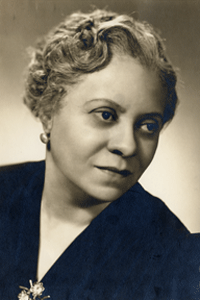 Florence Price was the first African-American female composer to have a symphonic composition performed by a major American symphony orchestra.
 Jeannette Edris Rockefeller only lived in Arkansas for about fifteen years. But her impact on the cultural life of Little Rock and all of Arkansas continues to be felt today.
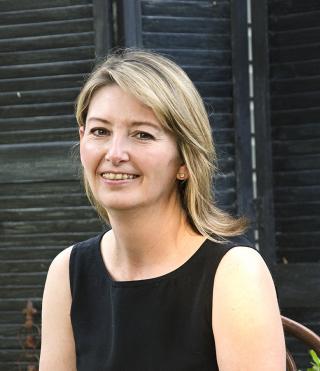 Today (March 29), Page Harrington will present the 2019 Betsey Wright Distinguished Lecture on the topic “Women’s Suffrage and Race Relations: A Divided Legacy.” The event is co-sponsored by the CALS Butler Center for Arkansas Studies and the Arkansas Women’s History Institute.
 In February 2017, Raye J. Montague, RPE was recognized on “Good Morning America” for her work as a pioneering scientist. She was not only the first woman to design a U.S. Naval ship using a computer, or the first African American to do so, she was the first PERSON to do so.
 At the 2019 Governor’s Conference on Tourism, Gretchen Hall was named Tourism Person of the Year. This is just the latest honor for her. In 2017, she was the first woman to solely receive the Downtown Little Rock Partnership’s Top of the Rock Award.
 Charlotte Andrews Stephens was the first African American teacher in the Little Rock School District. Between 1910 and 1912, when an elementary school for African Americans was named after her, she became the first woman to have a public building in Little Rock named after her. For nearly fifty years, Stephens Elementary (which is now in its third building) would be the only LRSD building named after a woman.
 Little Rock Culture Vulture