Remember end of WWII with a visit to MacArthur Museum of Arkansas Military History

With this month marking the 70th anniversary of the end of World War II, it is a good time to remember the museum in Little Rock dedicated to preserving Arkansas’ rich military history.

Located in the historic Arsenal Tower in MacArthur Park, the MacArthur Museum of Arkansas Military History honors the Arkansans who have served in the armed forces.  Exhibits feature artifacts, photographs, weapons, documents, uniforms and other military items that vividly portray Arkansas’s military history at home and abroad.

Undaunted Courage, Proven Loyalty:
Japanese American Soldiers in World War II
This exhibit focuses on the military experience of Japanese Americans during World War II including stories from veterans of the 100th Infantry Battalion and the 442nd Regimental Combat Team, and the Military Intelligence Service. To prove their loyalty to the United States government, many Japanese American men joined the army as part of the 442nd Regimental Combat Team or as part of the Military Intelligence Service.

Other exhibits include:

  • From Turbulence to Tranquility: The Little Rock Arsenal
  • Capital In Crisis and Celebration: Little Rock and the Civil War
  • Alger Cadet Gun
  • Camden Expedition
  • David Owen Dodd
  • Through the Camera’s Eye: The Allison Collection of World War II Photographs
  • By the President in the Name of Congress: Arkansas’ Medal of Honor Recipients
  • Conflict and Crisis: The MacArthur- Truman Controversy
  • Duty, Honor and Country: General Douglas MacArthur
  • The Sun Never Sets on the Mighty Jeep: The Jeep During World War II
  • War and Remembrance: The 1911 United Confederate Veterans Reunion
  • First Call – American Posters of World War I

The MacArthur Museum of Arkansas Military History is a museum of the City of Little Rock.  It is led by executive director Stephan McAteer who works with the MacArthur Military History Museum Commission.

Hours of Operation
Monday – Saturday; 9:00 a.m. – 4:00 p.m.
Sunday; 1:00 p.m. – 4:00 p.m.

Little Rock Look Back: 1944 Launch of USS Little Rock

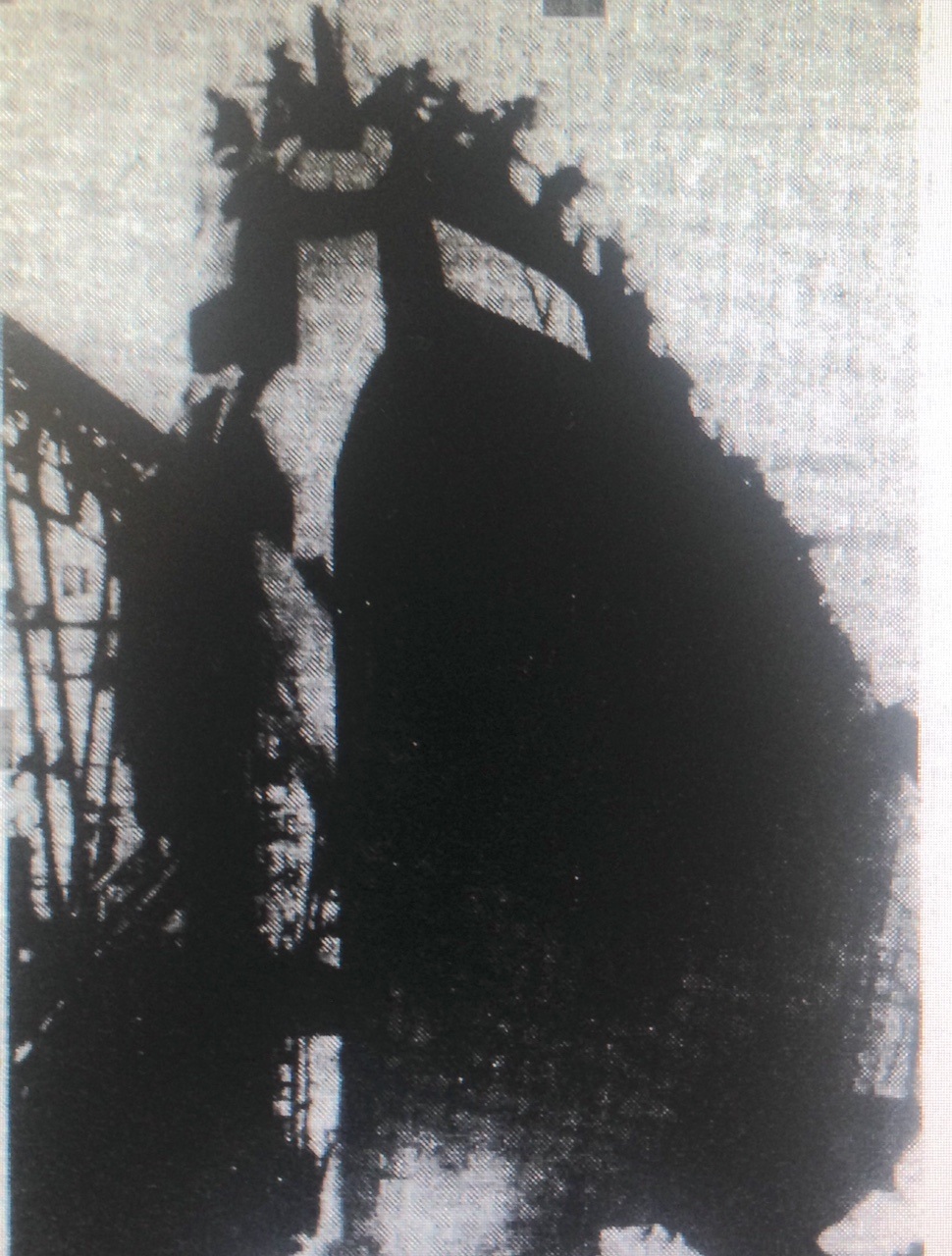
USS LR 1944On August 27, 1944, the first USS Little Rock was launched in Philadelphia at the Cramp Shipbuilding Company shipyards.  A 10,000 ton light cruiser, it first touched water in the Delaware River.

The sponsor of the ship (who broke the champagne bottle on the hull) was Mrs. Ruth May Wassell, the wife of Little Rock alderman Sam Wassell.  The main address was delivered by Congressman Brooks Hays, whose district included Little Rock.  A crowd of 5,000 was gathered to witness the launch.

According to the Associated Press Congressman Hays called light cruisers, “the hottest item of naval combat.”

The congressman further elaborated:

The people of Little Rock are proud to have such a ship as this bear their city’s name.” said Mr. Hays. “Even those of us who know little about the classification of naval vessels know that the cruisers have distinguished themselves in the Pacific war and that this is the outstanding type of combat vessel for that area. The navy men tell us that the cruiser is the ‘work horse of the navy.’ big enough to go into any battle, fast enough to lead any task force.

Carrying, as it has, the heaviest load in the Pacific where the greatest battles have taken place, the cruisers have added luster to naval history. We hope that, in the time remaining before our enemies are put down, the Little Rock will take her place along side the Boise, the San Francisco, the Helena, and the Chicago, preserving the prestige of the cruisers.

We are glad to honor the workmen and the company for which they work.  I am sure we are all impressed with the spirit of teamwork which produced the results we observe today.  In March 1943, the keel was laid and for 18 months materials for the ship have come from everywhere. The taxes to pay for it will be assessed against men and women of great and little resources. Teamwork from beginning to end did the job.

So with the war.  A glorious victory lies ahead, but there is much remaining to be done. Only teamwork can supply the dynamic power yet needed to complete that victory. Every ship launching is a reminder of the power that comes to a people who work together to achieve.”

Other guests at the ceremony included United States Senator John L. McClellan and Congressman and senator-elect J. William Fulbright. Alderman Sam Wassell was also present.  He and his wife hosted a dinner for the Arkansas delegation and other dignitaries the night before the christening while they were in Philadelphia.

At the request of the Secretary of the Navy, Little Rock Mayor Charles Moyer designated Mrs. Wassell for the honor of sponsoring the USS Little Rock. There are not details as to why Mayor Moyer made the designation.  A first cousin of Alderman Wassell, Dr. Corydon Wassell had been an early World War II hero and was a favorite of President Franklin Roosevelt.  That may have been a reason for the designation.

The Little Rock City Council sent a bouquet of roses to the ceremony, fitting since the city’s nickname at the time was “City of Roses.” After the launch, Mrs. Wassell sent a telegram to Mayor Moyer and the Council

Thanks a million for the beautiful bouquet of red roses. They made the christening of the cruiser Little Rock perfect. I wish it could have been possible for you to have been present.  The cruiser is 600 feet long and will have a crew of 1,200 men.  I was so proud of our city.  Little Rock has something to be proud of.

Little Rock Look Back: Mayor Haco Boyd

BoydOn July 6, 1902, future Little Rock Mayor Haco O. Boyd was born in Leslie, Arkansas.  At the age of four, his family moved to Little Rock; he graduated from the Little Rock public schools.  He attended and graduated from Hendrix College.

In World War II, he was in the Army Air Corps.  He was a very decorated soldier earning two Purple Hearts, a Legion of Merit, and a Bronze star among other designations from the United States.  He also received high military honors from numerous European governments.  Boyd would remain in the Air National Guard and retired with the rank of Colonel in 1964.

As a businessman, he was a founder of Rebsamen Ford and then state manager of Benjamin Moore for Arkansas.  In 1952, he joined Union Life Insurance.  Throughout his career, he received most any recognition and honor and designation that the field of life insurance offered.

In November 1968, he won a three-candidate race for the Little Rock City Board of Directors. One of the candidates he defeated was former (and future) Director and Mayor Byron Morse.  In January 1969, he was selected to serve as Mayor of Little Rock.

One week later, Mayor Boyd and 70 others were on an Eastern Airlines plane headed for a life insurance convention in  Nassau, departing from Miami.  A passenger hijacked it and the plane was diverted to Cuba.   The next morning the passengers were returned to Miami and then sent to Nassau without incident. Once the media found out that one of the passengers was the Mayor of Little Rock, he was interviewed by numerous newspapers.

In other civic involvement, Boyd served on the Little Rock Airport Commission, including a term as chair.  He was also honored for his involvement with the Boy Scouts of America and Easter Seals.

In September 1923, Boyd married Mary Josephine “Polly” Goodrum.  They were married until her death in February 1977.  Haco Boyd died on March 27, 1988.  The couple are buried at Roselawn Cemetery.  They had two children and four grandchildren.

Little Rock Look Back: Dan T. Sprick

SprickFuture Little Rock Mayor Dan T. Sprick was born on May 19, 1902.  He served three terms on the Little Rock City Council (from 1935 to 1941).  In 1945, he was elected Mayor of Little Rock and served one term. During his tenure on the City Council, he was the sole vote against locating Robinson Auditorium at Markham and Broadway.  He had favored another location.

He was not alone, however, in being held in contempt of court and spending part of the day in jail.  On Monday, December 4, a dozen of Little Rock’s aldermen (which included Sprick) reported to the county jail to serve sentences for contempt of court. The previous Monday, the twelve council members had voted against an ordinance which had been ordered by the judge in an improvement district matter. The other aldermen had either voted in the affirmative or had been absent. Because the twelve had refused to change their votes since that meeting, the judge ordered them jailed.

Mrs. C. C. Conner, the only female, was not jailed but was fined $50. The eleven men were held at the jail, though not in cells. In order to get out of jail, the judge gave the aldermen the chance to change their votes. The mayor asked the judge to let them leave the jail to attend the meeting at City Hall, which was nearby. He requested that the city be allowed to maintain “what little dignity remained” by not having the meeting at the jail. The judge relented, and the aldermen were escorted by deputies to the council chambers. After the aldermen changed their votes, the judge suspended the remainder of their sentences.

His tenure as Mayor was relatively quiet. He took office the same month that World War II ended. While in office, the Sprick administration was marked by growth in the city budget and in city positions. As a part of that growth, there were many more new purchases taking place which had prompted extra scrutiny of the City’s purchasing procedures. A thorough investigation toward the end of his tenure found no malfeasance or misfeasance, it did note that the city needed to do a better job of anticipating cash flow. Much of the City’s focus during the Sprick tenure was on growth and keeping up infrastructure needs.

Sprick later served for ten years in the Arkansas State Senate (from 1961 to 1970).  During his tenure in the Senate, Sprick was closely aligned with Gov. Orval Faubus.  When the Little Rock high schools had been closed a year to ensure segregation, Sprick had served on the board of a private school set up by some of the leaders of the segregation movement.

His time in the Senate was also marked by controversy.  He was one of three Senators to opposed Muhammad Ali’s speaking at the University of Arkansas at Fayetteville.  After an Arkansas Gazette editorial lambasted him, Sprick sued the paper for libel. The Gazette settled with him out of court because his health was poor.

Sprick died in January 1972.

“Target Tokyo: Jimmy Doolittle and the Raid that Avenged Pearl Harbor” tonight at the Clinton School

UACS TokyoThe Doolittle Raid is a feat of legend: a daring, some thought suicidal, bombing mission designed to avenge the attack on Pearl Harbor by taking the fight to the heart of the Japanese Empire—Tokyo. The raid’s success became a rallying point for the United States, destroyed Japan’s sense of its own invulnerability, and helped force a confrontation at Midway, a critical turning point in the Pacific War.

Shrouded in secrecy at the time, the raid quickly entered the realm of myth, almost literally: the White House and the American press began using “Shangri-La,” the name of a fictional mountaintop utopia, as a stand-in for the undisclosed launching point of the operation. In “Target Tokyo,” award-winning historian James Scott strips away the layers of the legend and provides the first truly comprehensive account of the raid, one that’s based on new interviews and scores of never-before published records drawn from archives across four continents.

The presentation will begin at 6pm this evening at the Clinton School.

World premiere of Phillip McMath’s play KARSKI’S MESSAGE next at Weekend Theater

Karaskis-Message-Poster_LgThe latest offering of the Weekend Theater is a world premiere of Phillip McMath’s new play, Karski’s Message.

A local playwright, lawyer and historian, McMath based the play on the true story of Jan Karski, a Polish World War II resistance fighter and later professor at Georgetown University. In 1942 and 1943, Karski escaped capture and near death to report to the Western Allies — Britain and the United States — on the situation in German-occupied Poland, especially the destruction of the Warsaw Ghetto and the secretive German-Nazi extermination camps. Karski personally met with world leaders, telling them about the situation in Poland, becoming the first eyewitness to try to convince the world that the Jewish Holocaust was a reality.

The cast includes Ryan Whitfield, Jeff Lewellen, Terry White, Brice Ward, Madison Wolfe, Barry Clifton, Tommie Tinker, Ann Norris, Deb Lewis, Bill Jones, Alexander White, Elijah White, Lauren Lasseigne and Justin Wolfe.  It is directed by Matthew Mentgen.

The play opened last night and continues its run tonight, April 17 & 18 and April 24 & 25. Curtain times are 7:30.


Marines of Montford Park focus of film at MacArthur Museum tonight 

The winter weather delayed this event twice, but tonight the MacArthur Museum of Arkansas Military History will show the film The Marines of Montford Point: Fighting for Freedom.  the movie will start at 6:30 at the museum in MacArthur Park.

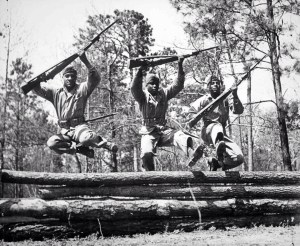
Hosted and narrated by Oscar winner Louis Gossett Jr., this movie profiles the first African Americans recruits in the United States Marine Corps. It begins with their experiences at Montford Point Base, a segregated boot camp in the heart of the Jim Crow South.

All-black battalions from Montford Point loyally served their country (some as officers) in three major conflicts: World War II, Korea and Vietnam.  All the while they were fighting for their country, they were also fighting for their own civil rights back home.

During the film, Montford Point veterans recount the racism they encountered both within and outside the military. They also reminisce about the rigors of basic training, the harsh conditions of the barracks, and the perils of combat.

There is no admission cost.  Light refreshments will be available.

The MacArthur Museum of Arkansas Military History is a program of the City of Little Rock Parks & Recreation Department.