THE WAR ROOM documentary screens tonight

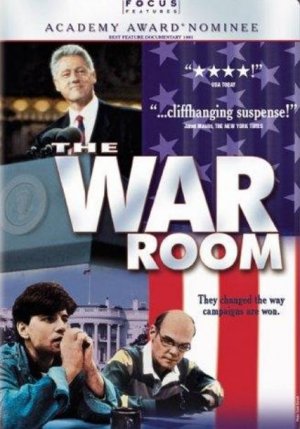
The_War_Room_FilmPosterTonight at 7pm, the Oscar nominated documentary THE WAR ROOM will be shown at the Ron Robinson Theater. The screening is free.

This 1993 American documentary film follows Bill Clinton’s campaign for President of the United States, during the 1992 presidential election.  At the start of the 1992 Democratic primaries, filmmakers D.A. Pennebaker and Chris Hegedus requested permission from the Campaign to film its progression. The Clinton Campaign agreed, and Pennebaker and Hegedus were allowed to film Communications Director George Stephanopoulos as well as Lead Strategist James Carville; they were given limited access to Bill Clinton.

At the start of filming, the film team was embedded with the Clinton Campaign in New Hampshire for that state’s Democratic primary. During the onset of the campaign, the film crew traveled around the state with the Bill Clinton Campaign.

After the surprise Clinton second place finish in the New Hampshire primary, the crew filmed mostly in Little Rock, Arkansas, home to the Clinton campaign’s national headquarters. As the film focused in on Carville and Stephanopoulos, the film crew saw no need to travel outside of Little Rock as both were present in the city for much if not all of the primary and general election campaigns.

Over a time span of four months filming, Pennebaker and Hegedus only shot about 35 hours of film. Essentially, over four months they were only allowed to film less than 2 days of activity in the Clinton War Room.

Though Stephanopoulos and Carville were the film’s main figures, many other prominent figures in the campaign were featured, including Paul Begala, Dee Dee Myers, Mandy Grunwald, Bob Boorstin, Stan Greenberg, Mickey Kantor, Harold Ickes, and Bush deputy campaign manager Mary Matalin, who later married Carville. Clinton campaign manager David Wilhelm was extended an invitation to participate, but declined. Also featured are Election rivals George H. W. Bush, Ross Perot and DNC rival Jerry Brown.

“396 Days: From Arkansas to America” to be screened at noon today

396daysAs part of the 10th anniversary of the opening of the Clinton Presidential Center, the Central Arkansas Library System is showing a series of documentaries pertaining to the Clinton presidency.

Today at noon at the Ron Robinson Theater it kicks off with “396 Days: From Arkansas to America.”  This documentary short was directed and produced by videographer and local TV news director Randy Dixon for the opening of the Clinton Presidential Library. It chronicles the 1992 Clinton Presidential campaign from an Arkansas perspective. The project has received more than a dozen national and international awards.

Free admission.

Starting the Clinton School – A Look Back at Its First Decade

Clinton-School-of-Public-Service-LogoTo commemorate the tenth anniversary of the Clinton School’s inception, the Clinton School for Public Service will host a panel discussion on the founding of the school.

The first school in the nation to offer a Master of Public Service (MPS) degree, the University of Arkansas Clinton School of Public Service gives students the knowledge and experience to further their careers in the areas of nonprofit, governmental, volunteer or private sector service.  This panel discussion will take a look at the impact of Clinton School students public service projects, ranging from local work in Arkansas communities, to international projects on all of the world’s six inhabited continents.

The panel members include the founding Dean and former U.S. Senator David Pryor, Clinton School staff member Dianne Kelly, founding Associate Dean Dr. Tom Bruce, and Pat Torvestad, who led much of the school’s early planning effort for the University of Arkansas System.

The panel will take a look at the early planning efforts of the school, which opened in 2004.

The program will take place at noon today at Sturgis Hall, which Dean Pryor would lovingly call the “little red school house.”

LR Hall graduate David Auburn’s new play opens tonight in NYC

mtc lost lakeDavid Auburn, an alum of the Arkansas Arts Center Children’s Theatre and a 1987 graduate of Hall High School, won the Pulitzer Prize and Tony for Best Play for his play Proof. Tonight, his latest play opens in New York City at the Manhattan Theatre Club.

The team behind the Pulitzer Prize-winning Proof and The Columnist returns to MTC with LOST LAKE, a riveting and spirited world premiere play by Tony®-winner David Auburn and directed by Tony-winner Daniel Sullivan. The play stars John Hawkes and Tracie Thoms.

The lakeside rental Veronica has managed to afford is a far cry from the idyllic getaway she and her children so desperately need. And the disheveled property owner, Hogan, has problems of his own – problems that Veronica is inevitably – and irrevocably – pulled into.

An engrossing and revealing portrait of two strangers bound together by circumstance, LOST LAKE is a vivid new work about the struggle for connection in an imperfect world.

LOST LAKE is a recipient of an Edgerton Foundation New American Plays Award.

Visit Veterans at Mount Holly Cemetery this Veterans’ Day

MountHolly Memorial Day

Today is Veterans’ Day – a time to pay tribute to the men and women in uniform who have served their country in the military.

As a way to give this recognition, today would be a good day to visit a cemetery. One of Little Rock’s most storied cemeteries is Mount Holly Cemetery. There are veterans from all wars: Revolutionary, War of 1812, Mexican, Civil War, Spanish-American, World War I and II, Korean, Vietnam and Desert Storm.

Founded in 1843, Mount Holly has been called “The Westminster Abbey of Arkansas.” Thousands of visitors come each year. Those interested in history come to see the resting places of the territorial citizens of the state, including governors, senators, generals, black artisans, and even a Cherokee princess. For others the cemetery is an open air museum of artistic eras: Classical, Victorian, Art Deco, Modern––expressed in gravestone styles from simple to elaborate. Some come to read the epitaphs that range from heartbreaking to humorous to mysterious.

Though a City of Little Rock facility, the cemetery is maintained by the Mount Holly Cemetery Association, a non-profit organization with a volunteer Board of Directors. The cemetery is located at 1200 South Broadway in Little Rock. Gates are open from 8 a.m. until 5 p.m. in the summer and from 8 a.m. until 4 p.m. in the winter.

Interred within the rock walls of Mount Holly are 11 state governors, 15 state Supreme Court justices, four Confederate generals, seven United States senators and 22 Little Rock mayors, two Pulitzer Prize recipients, as well as doctors, attorneys, prominent families and military heroes.  Proving that death is the great equalizer (and the J. N. Heiskell lived a very long time) longtime Gazette owner and publisher J. N. Heiskell is buried near two different nemeses: Senator, Governor and demagogue Jeff Davis; and segregationist Congressman Dr. Dale Alford.

“Racial Redistricting in Little Rock, Arkansas” is the focus of tonight’s UALR Evenings with History

Slum-AreaswebTonight Dr. John Kirk and Dr. Jess Porter discuss racial separation in Little Rock’s history as part of the 2014-2015 UALR Evening’s with History series.

This year marks the 24th year for the History Institutes’ Evenings with History.  This nationally recognized series has featured a variety of subjects.  The sessions take place at the Ottenheimer Auditorium of Historic Arkansas Museum. Refreshments are served at 7 with the program beginning at 7:30 pm. The cost is $50 for admission to all six programs.

The contemporary urban landscape of Little Rock evokes questions of racial separation because of the persistently high rates of ethnic separation in housing and a public-private race cleavage in the local schools. How can these patterns be explained? Has it always been this way? Is the 1957 desegregation crisis at Central High School a reason for the persistent patterns of geographic separation between African Americans and whites within the city?

In fact, the story of ethnic separation in Little Rock begins prior to the Central High Crisis. This talk begins with an examination of spatial patterns of racial segregation in the first half of the 20th century. It then discusses these patterns as they evolved in Little Rock and shows, in particular, the role of urban renewal in the mid-century decades in producing the separation of races that came into existence.

John A. Kirk joined the department as Chair and Donaghey Professor of History in 2010. He was born in Rochdale, Lancashire, in the United Kingdom, and holds an undergraduate degree in American Studies from the University of Nottingham and a PhD in American History from the University of Newcastle upon Tyne. Dr. Kirk taught at the University of Wales, Lampeter (1994-99) and Royal Holloway, University of London (1999-2010) before coming to UALR.

Dr. Kirk’s research focuses on the history of the civil rights movement in the United States, the South, and Arkansas, and the history of post-New Deal southern politics, society and culture. He has published five books and written in a wide variety of journals, edited book collections, and popular history magazines including BBC History, History Today and Historically Speaking. He has won a number of awards for his research including the F. Hampton Roy Award (1993) from the Pulaski County Historical Association, and the Walter L. Brown Award (1994), the J. G. Ragsdale Book Award (2003), and the Lucille Westbrook Award (2005) from the Arkansas Historical Association.

Jess Porter came to UALR in 2009 and holds a PhD from Oklahoma State University where he was awarded with the Susan Shaull Medal for Excellence in Teaching Geography. Prior to UALR, Dr. Porter taught at Oklahoma State University, developed and implemented geospatial curriculum for rural schools, worked as an environmental analyst and mapping specialist in the oil and gas industry, and was employed by an adventure tourism company in Colorado.

Dr. Porter’s research interests include the American Dust Bowl, geospatial technology education, and urban geography. His research on the Dust Bowl was featured in an episode of The Weather Channel’s When Weather Changed History. He has published four, interactive textbooks in the Encounter Geography series.

Friday, Eldredge, & Clark and the Union Pacific Railroad help make these lectures possible. Other sponsors are the Ottenheimer Library, University of Arkansas at Little Rock; Historic Arkansas Museum, a museum of the Department of Arkansas Heritage; UALR Public Radio—KUAR-KLRE; UALR public television; and Grapevine Spirits.

Ernest Green leads event tonight at Clinton School commemorating 100 years since Daisy Bates was born

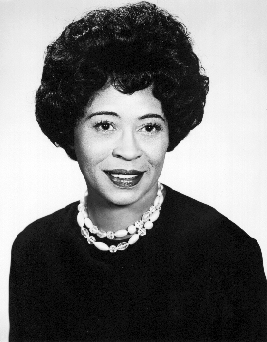
bates daisyDaisy Bates was an American civil rights activist, publisher, journalist, and lecturer who played a leading role in the Little Rock Integration Crisis of 1957. Daisy Bates would be 100 years old on November 11th. To mark the milestone the Clinton School of Public Service is hosting a celebration of Mrs. Bates featuring Ernest Green.

Daisy Lee Gatson Bates and her husband were important figures in the African American community in the capital city of Little Rock.  Realizing her intense involvement and dedication to education and school integration, Daisy was the chosen agent after nine black students were selected to attend and integrate a Little Rock High School.  Bates guided and advised the nine students, known as the Little Rock Nine, when they enrolled in 1957 at Little Rock Central High School. President Clinton presented the Little Rock Nine with the Congressional Gold Medal and spoke at the 40th anniversary of the desegregation while he was in office.  He returned as a speaker for the 50th anniversary and opening of the new museum and historical site in 2007.

Ernest ‘Ernie’ Green was one of the nine African-American students who integrated Central High School in Little Rock and the first of the nine to graduate.  Green is the managing director of public finance for Lehman Brothers in Washington, D.C., has served as the Assistant Secretary of Labor for Employment and Training during President Carter’s administration, Chairman of the African Development Foundation under President Clinton, and Secretary of Education, Richard W. Riley, appointed him Chairman of the Historically Black Colleges and Universities Capital Financing Advisory Board.

The event will take place at 6pm tonight at the Clinton School.

*Reserve your seats by emailing publicprograms@clintonschool.uasys.edu or calling 501-683-5239.