Chairman of the National Endowment for the Arts to visit Little Rock

NEA LRDr. Jane Chu, a former resident of Arkadelphia, is the new chairman of the National Endowment for the Arts.  On Tuesday, October 7, she will be in Little Rock.

At 1:30, she will be part of a presentation at the Arkansas Repertory Theatre.  Steve Luoni of the University of Arkansas Community Design Center, will lead a discussion of the Creative Corridor.  Dr. Chu will also make remarks.  Mayor Mark Stodola will be the host of the event.  The public is invited to attend.

During her visit in Little Rock, Dr. Chu will also take part in a variety of meetings and tours.

While downtown for Race & Foodtrucks – Stop by Rep for Costume sale

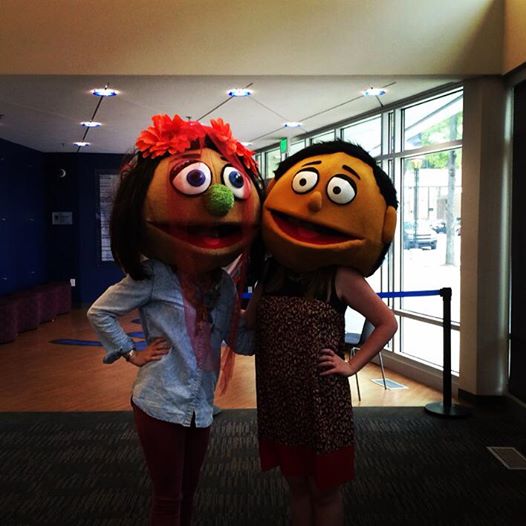
Rep Costume saleA lot is happening downtown this Saturday. Race for the Cure, Food Truck Festival, and also the Arkansas Rep’s annual costume sale.

This is a chance to pick up a well-made, hand-crafted costume or prop or decoration for prices as low as $2.  You’ve seen it on stage at the Rep, and now you can wear it.

Halloween is around the corner.  Mardi Gras will be here in a few months.  Or maybe you just like escaping the woes of everyday life by throwing on a costume.  The Rep doesn’t question or judge.  Just be sure to stop by.  Among the shows whose clothes will be up for sale are Avenue Q, The Wiz, Joseph and the Amazing Technicolor Dreamcoat, A Chorus Line and White Christmas.  (And since Christmas will be here soon, this is a good chance to pick up things for holiday entertaining!)

All proceeds benefit the Rep’s production office.

So stop by the Rep from 10am to 1pm.  You’ll be in the neighborhood anyway enjoying post-race foodtruck food!

LR Cultural Touchstone: Virginia Bailey

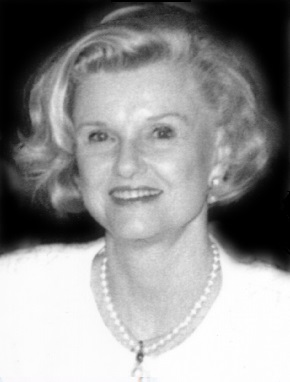
Bailey, Virginia MitchellVirginia Mitchell Bailey was an avid supporter and promoter of visual and performing arts.  A real estate developer, she was a wife, mother, grandmother, and tireless community volunteer as well.  She was a trailblazer in the area of balancing a business career with continued volunteerism.  While today that is common, in the 1960s and 1970s, it was very rare for women to do both.

Virginia served on the Advisory Board of the National Museum of Women in the Arts in Washington, D.C. She was a member of the Fine Arts Club since 1960. She served for 17 years on the Arkansas Arts Center Board of Trustees and for 12 years on the Arts Center Foundation Board. She was Secretary of the Arts Center Board in 1974, President of the Board from 1976 to 1977, and Chairman of the Board from 1977 to 1978. In 1989, she received the Winthrop Rockefeller Annual Award for outstanding service to the Arts Center. In 2001, the Arts Center Board named the Virginia and Ted Bailey Gallery in her honor.

From 1992 to 1995, Virginia served on the Advisory Board of the University of Arkansas School of Architecture. She served as the first President of the Friends of the Arts at the University of Arkansas at Little Rock.  She was also a board member of Wildwood Park for the Performing Arts.

In recognition of their philanthropic support for so many charitable groups in the community and elsewhere, and by nomination from UALR, Virginia and her husband Dr. Ted Bailey received the Philanthropist of the Year Award from the Arkansas Chapter of the National Association of Fundraisers in 1994. In 1990, Virginia received one of the annual Outstanding Women of the Year Awards sponsored by Boatmen’s Bank. She was honored with the Little Rock Arts and Humanities Award (AHA!) in 1995.

Arkansas Arts Council to honor 9 Individual Artist Fellowship recipients tonight

Arkansas_Arts_Council_logo_2Tonight, the Arkansas Arts Council honors the nine recipients of its 2014 Individual Artist Fellowship awards. The artists will be recognized at a reception, co-sponsored by Historic Arkansas Museum, from 5:00-8 p.m. at the museum on 200 E. Third St. in Little Rock. The reception is free and open to the public. Seating is limited; reservations are required. For reservations, call (501) 324-9766.

Fellowships are awarded annually in the amount of $4,000 each to Arkansas artists in recognition of their individual artistic abilities. These fellowships enable artists to set aside time for creating their art and improving their skills. Three artistic disciplines are selected each year as categories for the awards.

The three categories for this year are Literary Arts: Short Story Writing; Performing Arts: Directing of Theater Productions; and Visual Arts: Works on Paper.

The following recipients were selected by a jury of professional artists, writers, performers and art administrators:

Literary Arts: Short Story Writing

  • Marla Cantrell, Alma
  • Alice Otto, Fayetteville
  • Hung Pham, Fayetteville

Performing Arts: Directing of Theater Productions

  • Amy Herzberg, Fayetteville
  • Kassie Misiewicz, Bentonville
  • Rebekah Scallet, Little Rock

Visual Arts: Works on Paper

  • Sheila Cantrell, Batesville
  • Delita S. Martin, Little Rock
  • Kathryn (Kat) Wilson, Fayetteville


The Arkansas Arts Council advances the arts in Arkansas by providing services and grants-in-aid supporting arts endeavors that encourage and assist literary, performing and visual artists in achieving standards of professional excellence. In addition, the Arkansas Arts Council provides technical and financial assistance to Arkansas arts organizations and other providers of cultural and educational programs.

The Arkansas Arts Council was established in 1966 to enable the state of Arkansas to receive funds from the National Endowment for the Arts. In 1971, Act 359 (A.C.A. § 13-8-101 et seq.) gave independent agency status to the Arts Council, with an executive director and a 17-member council appointed by the governor. In 1975, the Arts Council became an agency of the Department of Arkansas Heritage.

The Arkansas Arts Council is an agency of the Department of Arkansas Heritage and shares the goals of all seven Department of Arkansas Heritage agencies, that of preserving and enhancing the heritage of the state of Arkansas. The agencies are: Arkansas Historic Preservation Program, Arkansas Natural Heritage Commission, Delta Cultural Center in Helena, Historic Arkansas Museum, Mosaic Templars Cultural Center and the Old State House Museum. Funding for the Arkansas Arts Council and its programs is provided by the State of Arkansas and the National Endowment for the Arts.

LR Cultural Touchstone: Bernie Babcock

BabcockBernie_fLittle Rock’s rich cultural history has been influenced by many outstanding men and women.  This October, during Arts & Humanities Month 2014, the Culture Vulture is looking at 31 outstanding women who have shaped cultural life in Little Rock…and beyond.

Julia Burnelle “Bernie” Smade Babcock was an author and museum founder.  Born in April 1868 in Ohio, she moved with her family to Arkansas as a child.  Marrying and starting a family, she also continued to write, which had been a passion since she was younger.  When her husband died, leaving her with five children, she starting writing for money. She published several temperance novels and later wrote for the Arkansas Democrat.  She also published a magazine and a poetry anthology.  She later became recognized as an expert on Abraham Lincoln and wrote several books about him, as well as other historical figures.

In 1927, after professional curmudgeon H. L. Mencken wrote derisively of Arkansas, she decided to start a museum. The Museum of Natural History and Antiquities was first located in a Main Street storefront.  In 1929, she “gave the City of Little Rock a Christmas present” by giving the museum to the city.  It was relocated to the unfinished third floor of City Hall, with her as its employee.  In 1933, as New Deal programs were ramping up, the space was needed for WPA offices, and the museum was shuttered. Many of the museum’s artifacts were lost during this time.    She became folklore editor for the Federal Writers’ Project in 1935.

In 1941, she and businessman Fred Allsopp convinced the City of Little Rock to reopen the museum (then known as the Museum of Natural History) by locating it in the old Arsenal Building in City Park.  She lived in the basement of the building.  She was involved in the efforts to rename City Park in honor of Douglas MacArthur (who had been born there) and welcomed him when he came to Little Rock in 1952.  Retiring from the museum in 1953, she donated some items and billed the City $800 for others. That money was her retirement pension at age 85.

Moving to Petit Jean Mountain, she wrote, painted and published poetry.  She died in June 1962 at age 94.  She is buried in Little Rock’s Oakland Cemetery.

After more name changes and a relocation, her museum is now known as the Museum of Discovery and is an anchor in the River Market district.

Go In the Dark at the Museum of Discovery

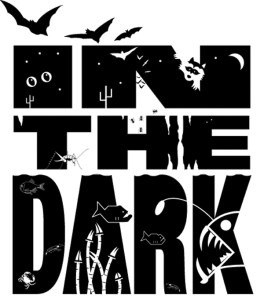
mod darkThe Museum of Discovery will reveal what thrives in caves, beneath the soil, under the sea, in the shadows of night and within other dark environments in the special exhibition In the Dark, on view September 27 through January 4, 2015.

In the Dark features five immersive zones, enabling visitors to see and experience some of these dark and largely unseen worlds, including the ways people have reacted to darkness throughout history. Each diorama uses mechanical displays, life-size animal models and informational panels to surround visitors with the sights, sounds, smells and sensations of several dark ecosystems. In the Dark‘s walk-through areas are:


The Darkness of Night

Visitors encounter animals that dwell in two different environments as darkness falls in The Darkness of Night component of the exhibition: a forest in the Great Smoky Mountains, and a habitat in the Sonoran Desert. Visitors walk through the mountainous forest and witness how bobcats, barred owls, spotted skunks, flying squirrels and salamanders forage for meals. They also see how bats feed on night-blooming cacti in the Sonoran Desert.


Darkness within the Soil

Next the exhibition reveals what lurks below the soil as visitors learn about the animals that thrive just beneath the Earth’s surface. Here, the relationships among the world’s complex underground ecosystems as well as the plants, animals and humans living above ground are emphasized. Visitors will get a look at what dwells below the soil in a typical backyard with a life-size diorama featuring a cross-section of earth that reveals moles, cicadas, bumblebees, worms, millipedes, slugs and other animals that call the soil “home.”

 Darkness Deep within Caves

 As visitors examine open and closed cave systems, they learn the natural processes that form each type of cave and the unique organisms found inside. The dioramas include a walk-through recreation of a limestone solution cave and a closed ecosystem found in Romania’s Movile cave. Interactive elements explore animal adaptations and cavern environments, such as the cave cricket’s fine hair-like structures, called mechanoreceptors, which collect information about its dark environment. “Be a Bat” is a computer “cave maze” where visitors rely on sounds to find their way out of a simulated cave like their small, winged mammal counterparts.


Darkness and Humans

The Darkness and Humans area of In the Dark tells past and present human interactions with dark environments and the resulting effect of these ecosystems. Humans have found ways to adapt to the total lack of light, including incredible adaptations for the blind, and also how to bring light into the dark world. Stories and folklore reveal cultural interpretations of night and darkness, while modern technology such as sonar, radar and image enhancers reveal how humans mimic the adaptations of animals like dolphins, bats and owls.


Darkness and the Deep Sea

The sea component highlights two deep sea environments – a deep sea vent field and a section of the open deep sea. The exhibit compares the two diverse ecosystems, the organisms that live in each and deep sea creature survival methods.   This area features a 60-square-foot life-size diorama of the deep sea vents similar to those at the Galapagos Rift Vent Field, located two and a half kilometers beneath the ocean’s surface, as well as a smaller diorama of a column of water in the Pacific Ocean.

To learn more about In the Dark, visit www.museumofdiscovery.org or call 501-396-7050.

Inaugural Jazz on Main concert tonight – The Bad Plus at South on Main

the_bad_plus_cropped.jpg.1000x250_q80_crop_upscaleJoin the Oxford American magazine for the inaugural concert in their 2014-2015 jazz series at South on Main featuring The Bad Plus! The OA jazz series is sponsored by the University of Central Arkansas College of Fine Arts and Communication. Doors open at 6:00 PM with dinner and drinks available at that time. The concert begins at 8:00 PM.

Ticket packages for the jazz series went on sale June 20 at www.metrotix.com, ranging from$120 to $80 and include a discount on service charges. Single tickets go on sale September 1at $30 for reserved seats at tables and $20 for general admission. Purchasing a reserved seat assigns you to a specific guaranteed seat at a table. However, seating at tables is family-style, and unless you purchase the entire table, you will be seated with other patrons. General admission tickets are good for barstools and standing room, available on a first-come first-served basis. For ticketing questions, please contact Metrotix at (800) 293-5949.

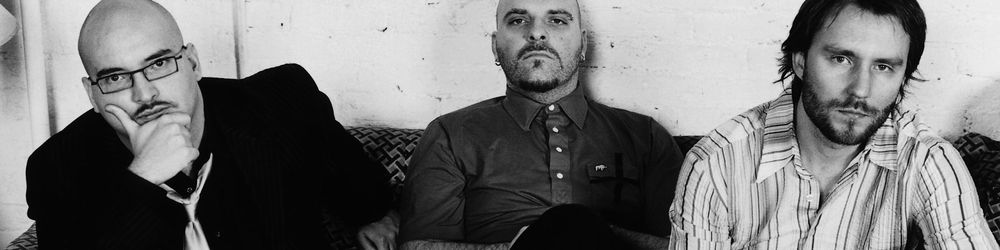
The Bad Plus has spent almost fifteen years redefining what a piano-bass-drums trio can and should be. They’ve reached audiences of all demographic stripes with an uncompromising body of original music (plus some ingenious, genre-jumping covers) and dedicated touring around the globe. On their eighth studio album, Made Possible, bassist Reid Anderson, pianist Ethan Iverson, and drummer David King take their distinctive musical M.O. to captivating new heights, proving once again that the rules of musical convention are made to be broken.

“This band contains some of the most punk energy I’ve ever seen or felt as a musician — it just doesn’t need to do it so obviously,” King says. “That’s our statement. It’s a complex emotion.”

 Made Possible marks a palpable departure for The Bad Plus on a few fronts. Layers of synth and electronic drum sounds can be heard prowling amid the trio’s signature acoustic palette. Also, whereas the group’s new material typically gets a thorough road test before being recorded, these songs were brought in with looser expectations and even more potent possibilities. And for the first time since 2005’s Suspicious Activity?, the band chose to record far away from its Minnesota motherland, holing up instead at a remote studio in upstate New York.

“The Bad Plus are the Coen brothers of jazz: Midwesterners, both ironic and dead earnest, technically brilliant, beyond versatile, a little chilly sometimes, but funny, surprising, and pretty hard to pin down.”—The New Yorker