Sandwich in History today at noon at old Fire Station No. 2 in MacArthur Park

Little Rock Fire Station No 2_tour_tnThe monthly architectural history program “Sandwiching in History” visits the old Little Rock Fire Station No. 2 located at 1201 S. Commerce Street (on the southwestern corner of MacArthur Park).

Located in the MacArthur Park Historic District, Little Rock Fire Station No. 2 was built in 1917 and served as a fire station until the late 1950s. The Craftsman-style building was constructed with a mixture of materials. It features exposed rafter tails, false half-timbering, and triangular knee braces under the eaves.

From the early 1960s through the 1980s, it had a variety of uses by the City’s Parks Department and other entities. In the 1980s through the mid-1990s, it served as storage and preservation space for the nearby Museum of Science and History (then-located in the Arsenal Tower building on the northern edge of the park.)

It sat largely vacant for a couple of years and sustained damage during January 1999 tornado which ripped through downtown.  For the past several years, a group has been working to convert it into a 30-bed hostel and museum.

Sandwiching in History is a program of the Arkansas Historic Preservation Program, an agency of the Department of Arkansas Heritage.

Bicentennial of Battle of New Orleans

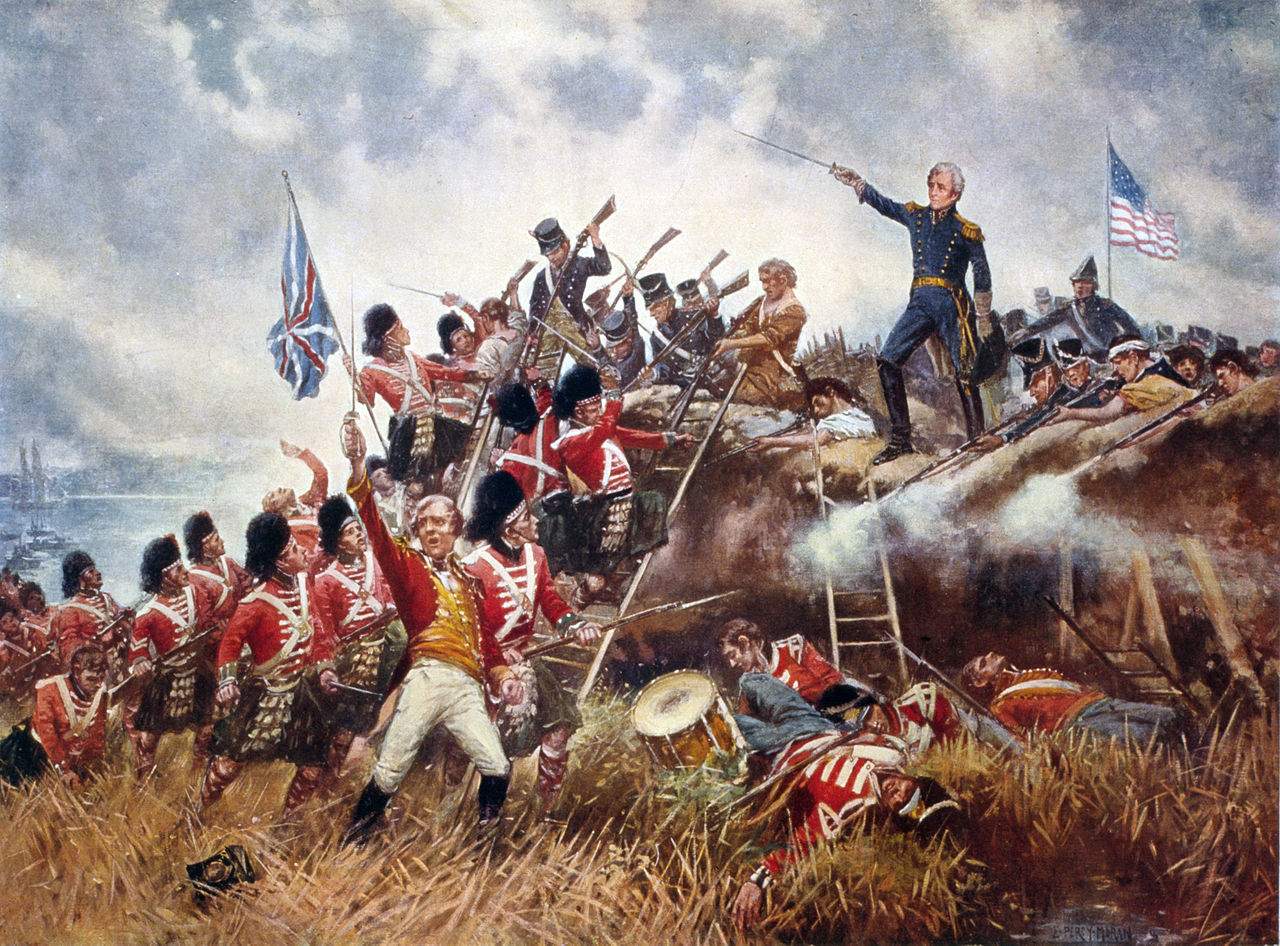
1280px-Battle_of_New_OrleansToday marks the 200th anniversary of the conclusion of the Battle of New Orleans.  It relates to Little Rock in a couple of ways.

First, it made General Andrew Jackson a national hero which helped propel him to the presidency.  It was while he was president that Arkansas was admitted to the Union.

Secondly, one of his soldiers in the battle was a young Roswell Beebe.  Jackson and Beebe became friends and maintained that friendship throughout their lives. Beebe later moved from Louisiana to Arkansas and became a leading citizen of Little Rock.  Using his friendships with Jackson and his successor Martin Van Buren, Beebe was able to navigate the already burgeoning bureaucracy of Washington DC.  Working with the federal government, he was able to straighten out the murky questions of who owned what land in Little Rock.

Beebe received the patent to most of Little Rock’s land. He then laid out streets, set aside land for a state capitol (now the Old State House Museum), set aside land for Mount Holly Cemetery (where he now resides), and sold land at reasonable prices to others.  These actions helped Little Rock continue its momentum as a growing trade town.  Without them, it could have devolved into a frontier town of lawlessness.

Little Rock Look Back: First Council Meeting after Civil War

First 1866 minutesOn January 8, 1866, the Little Rock City Council resumed meeting. This was the first meeting since the body had disbanded in September 1863.

Mayor J. J. McAlmont, a physician, presided. The Council members present were I.A. Henry, Henry Ashley, M.H. Eastman, Richard Bragg, P.O. Hooper, G. S. Morrison, John Collins and Alexander George.  Alderman Henry had actually served on the 1863 City Council which had voted to cease operation.

Thomas C. Scott was named constable and collector, and Augustus F. Woodard was appointed City Attorney.

Mayor McAlmont announced the creation of eight committees: Finance, Streets, Ordinances, Mount Holly, Fire Department, Police, Schools and Gas. Though a police committee was established, at a future meeting the Mayor appointed a committee to visit with the commanding Union officer over Little Rock to discuss the establishment of a police force.

One ordinance was introduced. It would establish a rate for licenses. It was read one time, and would be amended at future Council meetings.

At the conclusion of the meeting, the City Constable was charged with finding a room “for temporary use of the City Council.”

The Council would meet again the next night to continue discussions as they revived a dormant government.

Free ASO quartet concert at Capital Hotel this evening

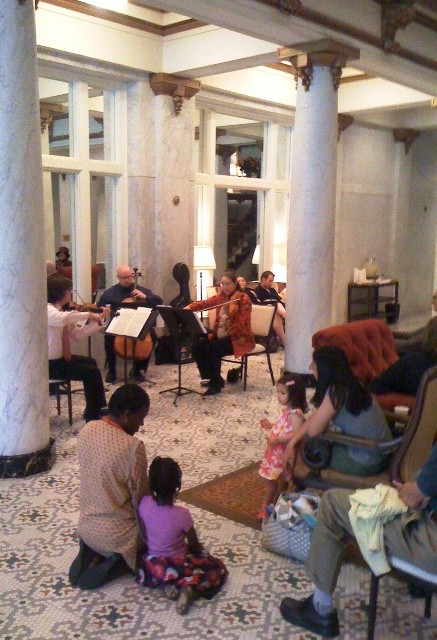
ASO at CHMusicians from the Arkansas Symphony Orchestra will be performing this evening in the lobby of the historic Capital Hotel. The music will start at 5:15 pm.

In 2011, the ASO started these free concerts in the lobby of the Capital Hotel.  The marble and tile of this historic lobby provide a wonderful acoustic backdrop for the musicians.

The concert will feature the Quapaw Quartet.  Members of the quartet will introduce the pieces to be performed.

Unlike concerts in music halls, guests here are encouraged to bring drinks to their seats or to stand and move around while the musicians are playing.  It is a relaxed, informal atmosphere where the audience and musicians alike are able to interact with each other.


80 Years of Elvis Presley

Photo by Wayne Cranford

Photo by Wayne Cranford

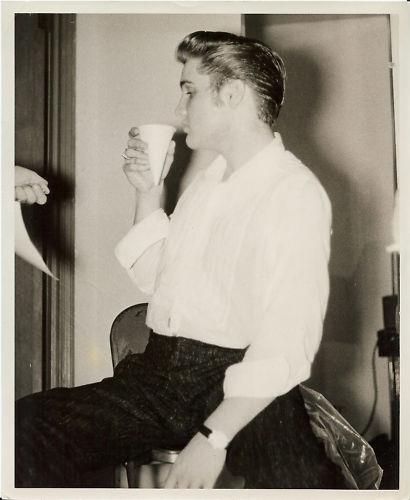
Eighty years ago today, Elvis Presley was born in Tupelo, Mississippi.  He would, of course, grow up to become a cultural phenomenon.

Elvis performed in Little Rock throughout his career.  In April 1972, he played at Barton Coliseum (with tickets on the arena floor going for a whopping $10!).  In the 1950s, he played three at Robinson Auditorium. His first appearance was as his career was just starting to take off. The final, a mere 15 months later, was when he had become a national icon.

His first appearance at Robinson was on February 20, 1955.  Billed as the “WSM Grand Ole Opry” show, Elvis Presley was third on the bill behind the Duke of Paducah and Mother Maybelle and the Carter Sisters as he began week long tour of Arkansas and Louisiana.  On this date there were a pair of shows, at 3:00 and 8:15 p.m., at Robinson Auditorium. Tickets were 75-cents in advance, $1.00 at the box office and 50-cents for kids. It is believed that Gladys and Vernon Presley attended this performance, invited by Elvis who wanted to introduce them to the Colonel. Gladys was a big fan of the Duke of Paducah. Elvis Presley, Scotty Moore, and Bill Black receive $350 for these two shows instead of their usual $200 per day.  In August 1955, he returned and played Robinson as part of the All-Star Jamboree.

His third and final appearance at Robinson Auditorium was on May 16, 1956.  This time, the Auditorium was packed. The tickets were $1.50 in advance at Walgreens and $2.00 at the box office.  The ads featured 8 great acts in “his” variety show which consisted of the Jordonaires; Rick and Emil Flaim and their orchestra; vocalists Frankie Conners and Jackie Little and comedian-magician Phil Maraquin. A second show was added to accommodate the ticket demand.  

About 30 minutes late, due to a missed flight, Elvis appeared on stage in a purple blazer and started singing “Heartbreak Hotel.”  The crowd rushed the stage. Little Rock police officers were able to control them eventually and get the teenagers back to their seats.  While the crowd was impressed, the police officers were less so.  One of the patrolmen told the Arkansas Gazette reporter: “I wouldn’t know him if I saw him. And I wouldn’t be here unless I was being paid.”

Little Rock Look Back: Orval Eugene Faubus

FaubusOrval_fOn January 7, 1910, one of the most controversial figures in Arkansas history was born: future Governor Orval Eugene Faubus.

Faubus is today remembered for his role fighting for the continued segregation of the Little Rock public schools.  Raised in a socialist family, his staunch embrace of segregation was a surprise to many who viewed him as more of a moderate on the issue.  At the time, and later, it was viewed as more of an opportunistic move to head off a political challenge from segregationists such as Jim Johnson.  However, throughout the rest of his lifetime, as others such as George Wallace would recant and repent, Faubus continued to maintain he was “merely” upholding the law of the land (the Supreme Court striking down the law a few years earlier, notwithstanding).

Interestingly, Faubus was also known for hiring African Americans in state government for more than menial tasks. He worked to increase funding to historically black colleges and universities in Arkansas. He fought to abolish the predatory poll tax.

His segregation efforts curtailed Arkansas’ business recruitment for a few years in the late 50s and early 60s.  But a few years earlier, in 1955 Faubus had created the Arkansas Industrial Development Commission and appointed Winthrop Rockefeller to lead it.  He also increased teacher pay, overhauled the State Hospital, created the Arkansas Children’s Colony, expanded state parks, and stopped the Army Corps of Engineers from damming the Buffalo River.

In late 1965, by executive order, he created the Arkansas Arts and Humanities Council and funded it with his discretionary funds until the legislature would appropriate money in 1967. He also oversaw the creation of the state’s historic preservation program.

Certainly his efforts to flout federal law have tarnished his image. Looking at his accomplishments in the areas of industry, education reform and culture – one wonders what he could have accomplished if he had exerted even more efforts in those areas instead of fighting Eisenhower.  It is all moot, because he did not.  And the reality is that, yes had he supported Eisenhower, he might well have lost in 1958 to someone like Jim Johnson who would have continued fighting for segregation even more vehemently and would have been unlikely to champion these other issues.

Tonight at South on Main’s Local Live: Charlotte Taylor & Gypsy Rain

local live 01 07 15Join the Oxford American magazine at South on Main at 7:30 p.m. tonight for the free Local Live music series, featuring Charlotte Taylor & Gypsy Rain! Call ahead and make a reservation to ensure your seat.

Little Rock singer-songwriter Charlotte Taylor has been performing since an early age. Born and raised in Heber Springs, AR., Taylor formed her first band, Project Blue in 1994 after getting hooked on the blues, and went on to record on the famed Memphis label, Hi Records. Her CD entitled “Taylor and Martinez” featuring guitarist George Martinez, was released in 2000, and received many great reviews and airplay on blues formatted radio across the U.S. and Europe, and was the first release on Hi in over 20 years. Produced by Roy Orbison band alum (drums on “Pretty Woman”) Oliver Warren, Stevie Ray Vaughan producer Danny Jones, and with performances by the Memphis Horns, the album features 10 original songs written by the duo of Taylor and Martinez, with the cover song “Cry Me A River” produced by Hi Records founder and Al Green producer, Willie Mitchell.

Taylor has been compared to blues legends Etta James and Bonnie Raitt, as well as being influenced by rockers, Janis Joplin, and Nancy Wilson of Heart, and even British Soul singer Annie Lennox. With many musical influences, including her mother whom Taylor says “was a great singer“, she has described her style as eclectic, but always with soul. “I want to make you feel something when I sing” she said. The songs I write are usually about something that happened, and can be very personal, others might be about something I heard someone say, or just a hook that wouldn’t get out of my head. A lot of the blues songs are about relationships, love, and lost loves, all the songs are about life. Local Live logo

Taylor and her band Gypsy Rain have won numerous blues competitions across the mid-south, and have played on Beale St. in Memphis at B.B. King’s, The Rum Boogie, The Hard Rock Café, King’s Palace and Blues Hall and competed in the International Blues Challenge. Charlotte Taylor and Gypsy Rain have performed at many blues festivals including Riverfest in Little Rock, The Riverwalk Blues Festival in Ft Lauderdale, Fl., The Spa City Blues Festival in Hot Springs, AR., Blues Eureka in Eureka Springs, AR., and the King Biscuit Blues Festival in Helena, AR.

Gypsy Rain features multi-instrumentalist Matthew Stone on guitar and pedal steel. Originally from Chicago, Matt plays with great skill and passion and excels in many genres of music. Stuart Baer is a Little Rock born piano player and keyboardist with roots in rock and blues, Stuart has performed with some of the greats in blues including Michael Burks, Guitar Shorty, and many more. Searcy native, Berkley School of music graduate, and one of the original members of Project Blue Dr. Bruce Johnston plays bass. Johnston received his doctorate in musical composition from the University of Miami, and currently teaches jazz guitar and bass at Ouachita Baptist University in Arkadelphia. Dr. Bruce is a master in many styles and genres and instruments, but has focused mostly on blues and jazz on the bass. John Roach has been a member of Gypsy Rain for over 10 years and attended the University of Central Arkansas in Conway where he played in the big band. John has many influences from percussion especially the hard-hitting Led Zeppelin drummer John Bonham, and always plays with great passion and soul.

Dave Williams II plays saxophone and is a University of Central Arkansas grad and a phenomenal jazz, blues, and funk brass player. Dave regularly performs at the rep and with several groups around Little Rock and brings a wealth of musical knowledge and masterful chops to the group.

Taylor and Martinez is available at www.cdbaby.comwww.itunes.com/taylorandmartinez

www.facebook.com/chartay88