Black History Month Spotlight: Art Porter Jr.

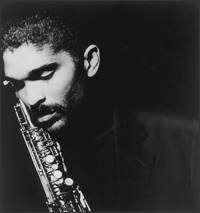
bhm art jr.Just like his father and namesake, Art Porter Jr. was a talented musician on a variety of instruments and in a variety of musical genres.

Arthur Lee (Art) Porter Jr. was born in Little Rock on August 3, 1961. Porter began his music career under the tutelage of his father, legendary jazz musician, Arthur Porter, Sr. who surrounded him with everything musical. He performed proficiently on drums, saxophone and piano. He was classically trained but his performances ranged across jazz, rhythm and blues, funk, and ballads.

During high school, under the supervision of Sterling Ingram, private teacher and band director at Parkview High School, Art Jr. was selected to be a member of the Arkansas All-State Band for three consecutive years.  At age 16, he was awarded the “Most Talented Young Jazz Artist in America” by the National Association for Jazz Education.

During Porter’s youth, his playing while underage in venues where liquor was sold proved controversial. Bill Clinton, then attorney general, established a framework for the legislature that would allow minors to work in such venues with parental supervision. Act 321 known as The “Art Porter Bill” became Arkansas law.

Porter graduated from Northeastern University in Chicago, Illinois, in 1986 with a BA degree in music education and performance. While in college, he won two certificates for excellence in jazz at the Notre Dame University Festival of Music in South Bend, Indiana. He later earned graduate hours at Roosevelt University studying music education and performance, and at Virginia Commonwealth University where he studied under the tutelage of Ellis Marsalis, patriarch of the Marsalis jazz family. Jack McDuff, a renowned jazz organist, heard Porter’s performances and asked him to join his band. His first performance while on tour with McDuff was in a New Orleans jazz club.

Porter started the Art Porter Quartet in Chicago and developed a loyal following in the area. He continued to write his own music and in 1991 was offered a contract to record on the Verve label, a division of Polygram Classics and Jazz.

Art burst on the music scene with his debut album, Pocket City (1992), followed by Straight to the Point (1993). In 1994, his third album, Undercover, placed Porter solidly on the “wave” radio charts with R&B artists as well as “cool jazz” artists. During this same year, he performed at Carnegie Hall for the Polygram Anniversary Celebration. His final album, Lay Your Hands on Me (1996), contained the radio favorite “Lake Shore Drive.”

Many of his compositions were expressions of his spirituality, such as the song “Lay Your Hands on Me.” Porter performed at the inaugural ceremonies of President Bill Clinton in 1993. During the inaugural prayer service, in collaboration with his father, he received a standing ovation for his solo renditions of “Amazing Grace” and “My Tribute.”

Porter traveled the world with performances but no matter where his music would carry him, he always returned to his beloved hometown of Little Rock. He conducted workshops for music students at his alma maters, Dunbar Magnet Junior High School and Parkview Arts and Science Magnet School. He was a founder of the Art Porter Sr. Music Education, Inc. (now the Art Porter Music Education, Inc. in memory of Art Sr. and Art Jr.), a nonprofit organization that provides scholarships to musically talented Arkansas students who need financial assistance to pursue their dream of obtaining a musical degree.

Porter died on November 23, 1996, in a boating accident in Thailand. He had just completed a performance at the Thailand International Golden Jubilee Jazz Festival commemorating the fiftieth anniversary of King Bhumibol Adulyadej’s reign.  In 2013, he was posthumously inducted into the Arkansas Black Hall of Fame.  For more on Art Porter Jr. and other inductees into the Arkansas Black Hall of Fame, visit the permanent exhibit at the Mosaic Templars Cultural Center. That museum is an agency of the Department of Arkansas Heritage.

Sculptors announced for 2015 Sculpture at the River Market Show and Sale

The  following list of Artists have been juried into the 2015 Sculpture at the River Market Show & Sale. Each of these Artists has also been invited to submit a proposal for the 5th Annual Monument Public Art Commission Competition.  Many favorites from past shows are returning, while the show also welcomes many new sculptors.

Mark your calendar for the Show & Sale – April 24-26, 2015

2015 Artists:


Black History Month Spotlight – Art Porter Sr.

bhm art srArthur Lee (Art) Porter Sr. was a pianist, composer, conductor, and music teacher. His musical interest spanned from jazz to classical and spirituals.

Born on February 8, 1934 in Little Rock, he began his music education at home. He played in church at age eight; played his first recital at twelve; and, by fourteen, hosted a half-hour classical music radio program on KLRA-AM. He earned a bachelor’s degree in music from Arkansas AM&N College (now UAPB) in May 1954. The next year, he married Thelma Pauline Minton. Following his marriage, he pursued graduate study a the University of Illinois, University of Texas and Henderson State University.

He began his teaching career at Mississippi Valley State University in 1954.  When he was drafted into the Army, his musical talents were responsible for him being assigned as a chaplain’s assistant in New York.  In the late 1950s he returned to Little Rock and taught at Horace Mann High School, Parkview High School and Philander Smith College.

He also started playing piano jazz in the evenings. This led to the creation of the Art Porter Trio, which became THE music group for events.  Many musicians who came to Arkansas to perform in Little Rock or Hot Springs would often stop by and join in with Porter as he played.  From 1971 to 1981 he hosted The Minor Key musical showcase on AETN.  His Porterhouse Cuts program was shown in 13 states.

Often encouraged to tour, he instead chose to stay based in Arkansas.  He did, from time time, perform at jazz or music festivals.   He also performed classical piano with the Arkansas Symphony Orchestra, founded the Art Porter Singers, and created a music group featuring his four oldest children.  Though Porter received many honors and awards, he found particular satisfaction in the “Art Porter Bill” enacted by the state legislature, which allowed minors to perform in clubs while under adult supervision. Porter’s children thus were able to perform with him throughout the state. Governor Bill Clinton, at the time a huge fan and friend of Porter, often joined Porter’s group on his saxophone.

In January 1993, Porter and his son Art Porter, Jr., performed at festivities in Washington DC for the Presidential Inauguration of his friend Bill Clinton.  In July 1993, he died of lung cancer.  He was eulogized at Bethal AME Church, where he had been organist for 35 years.  He is buried at Little Rock National Cemetery.  Today his legacy lives on in the Art Porter Music Education Fund as well as in the lives of the many musicians and fans he touched.

He was posthumously inducted into the Arkansas Black Hall of Fame in 1994.  For more on Art Porter Sr. and other inductees into the Arkansas Black Hall of Fame, visit the permanent exhibit at the Mosaic Templars Cultural Center. That museum is an agency of the Department of Arkansas Heritage.

Little Rock Look Back: Robinson Auditorium officially opens

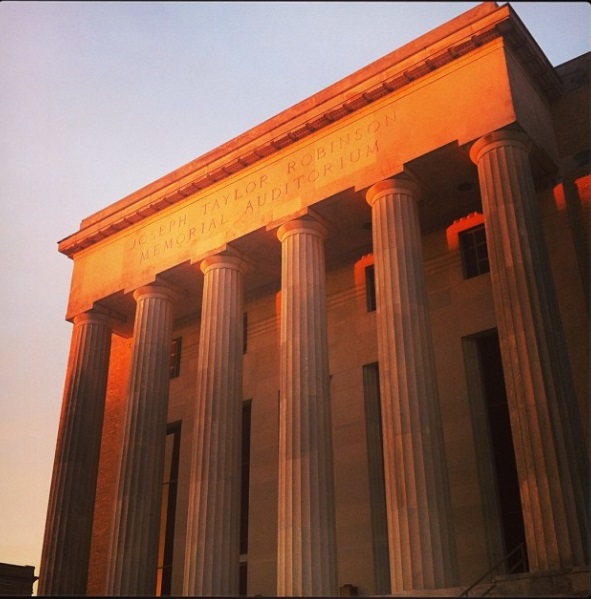
auditoriumduskOn February 16, 1940, after three years of planning and construction, the Joseph Taylor Robinson Memorial Auditorium officially opened. It was a cold, rainy night, but those in attendance did not care.

Searchlights painting arcs in the sky greeted attendees. They were borrowed from the Arkansas National Guard. Newspaper accounts noted that only a few of the men who attended were in tuxedos, most were simply in suits. The work to get the building opened had been so harried, that it was discovered there was not an Arkansas flag to fly in front of the building. Mayor Satterfield found one at the last minute courtesy of the Arkansas Department of the Spanish War Veterans.

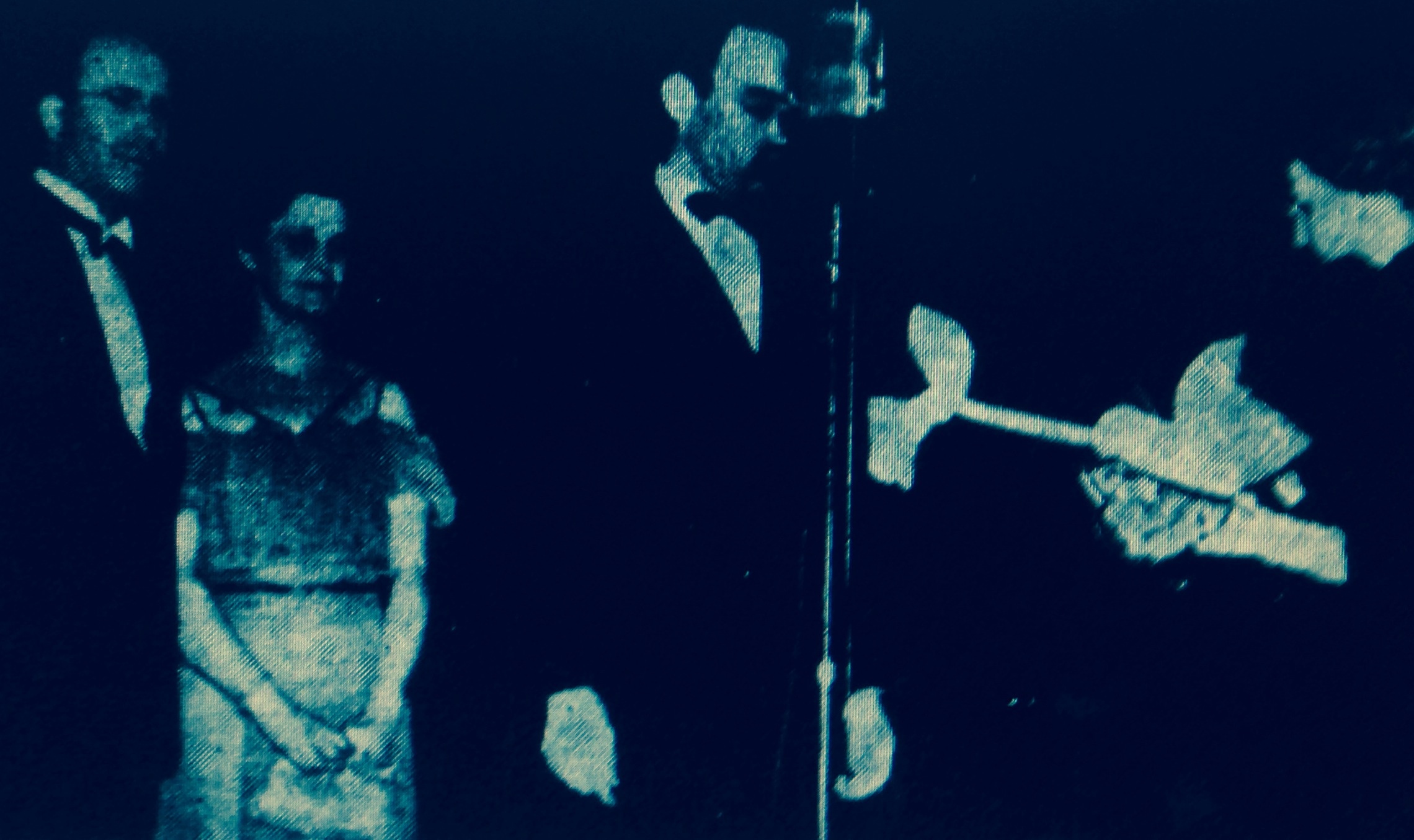
The weather delayed arrivals, so the program started fifteen minutes late. Following a performance of Sibelius’ Finlandia by the fledgling Arkansas State Symphony Orchestra, Mayor J. V. Satterfield, Mrs. Joseph T. Robinson, Mrs. Grady Miller (the Senator’s sister-in-law and a member of the Auditorium Commission) and D. Hodson Lewis of the Chamber of Commerce participated in a brief ribbon cutting ceremony. Mrs Robinson cut the ribbon on her second attempt (once again proving that nothing connected with getting the building open was easy).

The ceremony was originally set to be outside of the building but was moved indoors due to the inclement weather. The ribbon cutting took place on the stage with the ribbon stretched out in front of the curtain. The opening remarks were broadcast on radio station KGHI.

Though he had previously discussed how he had voted against the auditorium in 1937 before entering public life, the mayor’s remarks that evening were appropriately gracious, statesmanlike and a testament to the effort he had invested to get it open upon becoming mayor. “We hope you have a very pleasant evening and hope further that it will be the first in a long series which you will enjoy in this, your auditorium.”

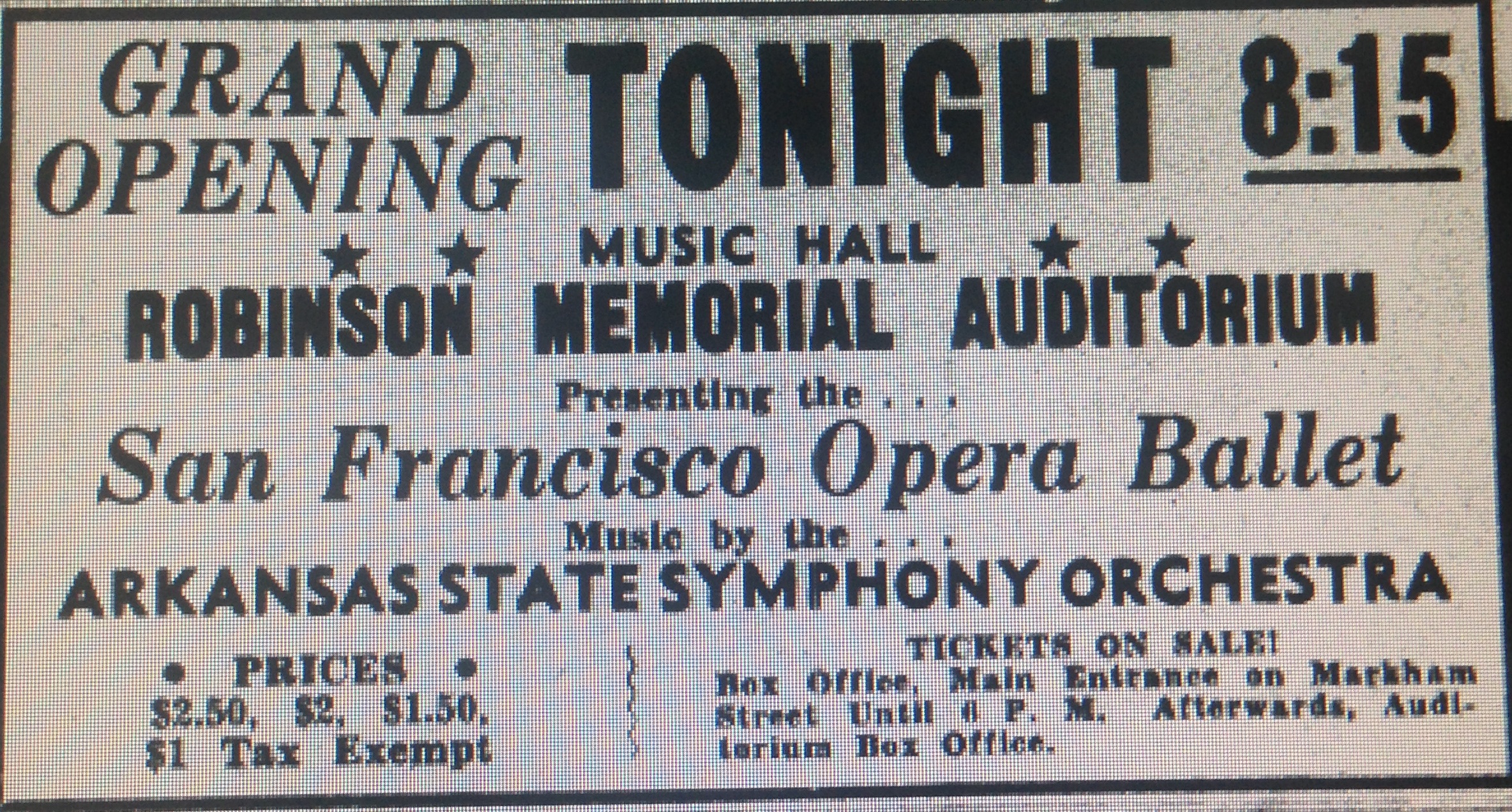
20140215-172047.jpgTickets for the event, advertised as being tax exempt, were at four different pricing levels: $2.50, $2.00, $1.50 and $1.00.

The estimated attendance was 1700. Following the ribbon cutting, the main performance took place. The headliner for the grand opening was the San Francisco Opera Ballet accompanied by the new Arkansas State Symphony Orchestra (not related to the current Arkansas Symphony Orchestra). The featured soloist with the ballet was Zoe Dell Lantis who was billed as “The Most Photographed Miss at the San Francisco World’s Fair.”

At the same time that the gala was going on upstairs in the music hall, a high school basketball double-header was taking place in the downstairs convention hall. North Little Rock lost to Beebe in the first game, while the Little Rock High School Tigers upset Pine Bluff in the marquee game.

Black History Month Spotlight: Smokie Norful

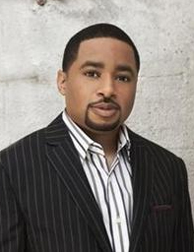
bhm smokieEarlier this month, W. R. Smokie Norful picked up his latest Grammy Award.  Born in Little Rock, the son of an AME minister, he now pastors his own congregation in addition to his recording career.

He grew up in Pine Bluff, and was deeply involved in his fathers church. He was interested in music from a very young age, reportedly picking out one-finger piano melodies at age two. His parents supported him with music lessons, and unusual for his background, allowed him to experiment with and listen to the current R&B and soul music of the day as well as gospel music. Norful attended Pine Bluff High School, where he occasionally performed in school assemblies and programs. He graduated from the University of Arkansas at Pine Bluff as a History major.

After graduation, taught history for several years at Jack Robey Junior High School, Pine Bluff High School and Evanston Township High School.  For two years he also was the educational director for the Pine Bluff Housing Authority’s after-school program. He has also been a historian for the National Park Service and a congressional aid for the fourth congressional district.

He was ordained an elder in the African Methodist Episcopal church and has been a licensed preacher since 1997. Rev. Norful served as youth pastor, minister of music, and associate minister of St. John AME church in Pine Bluff, under the leadership of Rev. W.R. Norful Sr., and Teresa Norful until relocating to Chicago. He has also leads workshops for the National Baptist Convention USA, Inc.

Currently he serves as pastor of the Victory Cathedral Worship Center in Bolingbrook, which he founded in 2005.  He has since established a second campus also in the Chicago area.  In 2009, he was inducted into the Arkansas Black Hall of Fame.

For more on Smokie Norful and other inductees into the Arkansas Black Hall of Fame, visit the permanent exhibit at the Mosaic Templars Cultural Center. That museum is an agency of the Department of Arkansas Heritage.

Robinson Redux – February

grand opening adHere are some of the highlights from the annals of the Robinson Center Music Hall nee Joseph Taylor Robinson Memorial Auditorium.  This entry looks at bookings from Februarys in years ending with an 0 or 5.

The building was officially dedicated on February 16, 1940.  A few days earlier a children’s theatre troupe had entertained school kids with a performance in the music hall.  Also that month high school basketball continued in the exhibition hall.  The month had kicked off with a much more glamorous event as the Movie Ball took place in the exhibition hall.

The year 1945 featured a ecumenical Christian Youth Rally on February 4, a concert featuring Tito Guizar on February 7, the operetta Blossom Time on February 8 and the long-running comedy Life with Father on February 19.   In 1950, Robinson’s offerings ran from the Grand Ole Opry featuring Hank Williams (February 5), to Dick Contino (February 8) to the magician Blackstone (February 10 & 11) as well as the opera Il Trovatore (February 15) and a recital featuring Mrs. Rece Price (February 21).

By the mid 1950s, the touring business was changing.  The only notable booking at Robinson in February 1955 was on February 20 as it featured the Duke of Paducah and a little known singer from Mississippi named Elvis Presley.  Five years later, Jackie Wilson and Jesse Belvin headlined a concert on February 5, 1960. The Venable Quartet and several other gospel groups performed on February 12 and the Beaux Arts Bal de Tete took place on February 19.  In 1965, Donald Voorhees and the Arkansas Symphony Orchestra were in concert on February 21.

February 1970 showed much more activity.  Husband and wife Phil Ford and Mimi Hines starred in the national tour of I Do! I Do! on February 6 & 7. That show had been a hit on Broadway in the 1966-1967 season. Another hit from that season, Cabaret, played on February 19 & 20 with Tandy Cronyn starring.  In between, contralto Bernadette Greevy presented a recital.

Musician Jerry Jeff Walker performed at Robinson on February 23, 1975.  Earlier that month (February 19), the national tour of Pippin stopped by with Barry Williams (aka Greg Brady) in the title role.  Five years later, Ballet Arkansas welcomed Cynthia Gregory and Patrick Bissell in a performance on February 7, 1980. Later that month Mason Williams and his Bluegrass Band performed with the Arkansas Symphony Orchestra on February 23.  The next two nights, a tour of Jesus Christ Superstar took the stage.

David Copperfield kicked off February 1985 with two shows on the 1st.  The next day the musical The Cotton Patch Gospel was performed.  Musican Carman performed on February 25.  In February 1990, Peabo Bryson and jazz extraordinaire Billy Mitchell shared the stage on February 22.

In 1995, the focus was on music.  There was “An Evening with John Bayless” on February 7 as part of the Greater Little Rock Community Concert Association.  On February 11, the Arkansas Symphony Orchestra presented an evening of music of Rodgers & Hammerstein.  A few days later on February 17, various musical groups presented an evening of gospel music. The next night, Gladys Knight shook the house in a concert.  The month ended on February 28 with Nancy Griffith and the Blue Moon Orchestra. A February 8 concert with Della Reese was cancelled due to poor ticket sales.

Five years later, highlights included a tour of Camelot on February 15 – 18, and a staged concert version of the opera La Boheme presented by the Arkansas Symphony Orchestra.  In 2005, Kenny Loggins performed with the Arkansas Symphony on the 11 & 12. The ASO also presented an all Tchaikovsky concert with Jon Kimura Parker on piano.  Earlier in the month, President George W. Bush hosted a town hall forum on Social Security at Robinson Center.

In 2010, the ASO Valentine Pops concert featured Christiane Noll and Doug LaBrecque.  From February 16-18 STOMP rang out throughout Robinson.  The month ended on a more quieter note as the ASO and Philippe Quint presented the Violin Concerto by Jean Sibelius.

Little Rock Look Back: John Wassell the 27th Mayor of Little Rock

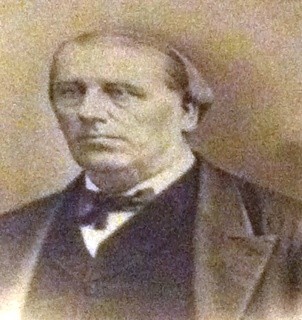
Future Little Rock Mayor John Wassell was born on February 15, 1813 in Kidderminster, England.

In 1829, he came to the United States.  He learned carpentry and construction in Ohio and ended up in Little Rock.  One of his jobs was as the finishing contractor on the State Capitol building, now known as the Old State House.

He later gave up carpentry and became an attorney.  (It is said that he did so after becoming embroiled in a legal dispute arising from one of his construction jobs.) Wassell also served as a judge.

In 1868, he was appointed Mayor of Little Rock by President Andrew Johnson.  He is Little Rock’s only Mayor to have served through a military appointment.  Mayor Wassell died in January 1881 and is buried at Mount Holly Cemetery along with his wife and other family members.  One of his grandsons, Samuel M. Wassell also served as Mayor of Little Rock.