Magic Lantern Show tonight at the Old State House Museum

OSH logoExperience a Victorian Valentine Magic-Lantern Show tonight at the Old State House Museum at 7:00 p.m.
Travel back in time with the boisterous fun of America’s only Victorian magic-lantern show. An authentic 1890s visual extravaganza projected on a full-sized screen—the kind of show that led to the movies! Valentine stories, animated comedy, and songs—all dramatized on screen by a live showman and singer/pianist.

The audience participates in the fun, creating sound effects, and joining in chants and sing-alongs. ~~ For 22 years, The American Magic-Lantern Theater has delighted audiences from Lincoln Center to Singapore. “What a hoot!” says NEED. “You’ll be enthralled!” says The Family Adventure Guide to Connecticut. But National Public Radio says it best: “It’s an incredible experience . . . Don’t miss them. They’re a living national treasure!” For adults and children 6+.

The Old State House Museum is an agency of the Department of Arkansas Heritage.

THE GODFATHER on the big screen at CALS Ron Robinson tonight at 7

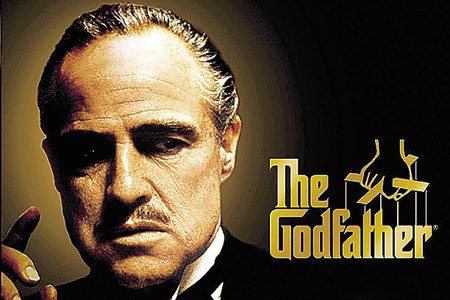
the-godfatherTonight the Central Arkansas Library System is making an offer the public cannot refuse – a chance to see Francis Ford Coppola’s 1972 opus The Godfather on the big screen.  No, if you miss it you won’t wake up with a horse head in your bed tomorrow – but you will have missed a chance to experience this masterpiece as it is meant to be.

Based on Mario Puzo’s novel, Puzo and Coppola crafted a screenplay which tells of the business and family affairs of the Corleone family.  Deftly directed by Coppola, it stars Marlon Brando, Al Pacino, James Caan, Robert Duvall, Diane Keaton, Talia Shire and John Cazale.  Creating other memorable characters are Richard S. Castellano, Al Lettieri, Abe Vigoda, John Martino, Alex Rocco, Gianni Russo, Tony Giorgio and Vito Scotti among others.

The film was nominated for ten Oscars and took home Best Picture, Actor (Brando) and Adapted Screenplay.  Famously, Brando refused the award and sent Sacheen Littlefeather to make a speech.  The other nominees were Caan, Duvall and Pacino all up for Supporting Actor; Coppola for Director; as well as nominations for Costume Design, Sound and Film Editing.

Since this is Grammy week, it is notable that the film’s score by Nino Rota (ruled ineligible for an Oscar) won the Grammy for Music composed for movie or TV.

The screening starts at 7pm at the CALS Ron Robinson Theater.  Tickets are $5 and concessions are available.

Little Rock Look Back: Abraham Lincoln

Abraham_Lincoln_November_1863On February 12, 1809, Abraham Lincoln was born in Kentucky.  One hundred and fifty years ago today, he celebrated his last birthday as he would be assassinated a little over two months later.

Lincoln never visited Arkansas. In the 1860 election, he barely registered on the Arkansas election map. Arkansas counties went strongly for Southern Democratic candidate John Breckinridge.  John Bell, the Constitutional Union/Whig candidate ran strongly in Pulaski County and a scattering of other counties.  Neither Lincoln nor Northern Democratic candidate Stephen Douglas carried a county in Arkansas.  In 1864, though Arkansas was officially under control of the Union forces, the state had not been readmitted. Therefore no Arkansans voted for Lincoln that year.

As President, Lincoln did correspond with several Arkansans.  It is said that the polite written exchanges he had with former Mayors C. P. Bertrand and Gordon Peay were helpful in maintaining a fairly peaceful occupation of Little Rock by federal forces.

In the listing of Presidential Streets of Little Rock, Lincoln is omitted.  On first blush, this might seem to be intentional to skip the name of the President who oversaw the “occupation.”  However, if that were the case, then surely Johnson would have been left out as well since he was President during the final years of the federal military occupation.  In fact, there once was a Lincoln Street. A portion of what is now Cantrell/Highway 10 was named for Lincoln. It predated the other Presidential streets.  At the time the other streets were laid out, Lincoln was skipped because a street already bore the name.

Over time, Highway 10 had been given multiple names for various sections: Lincoln, Q, and Cantrell. In the 1930s, these names were consolidated into Cantrell which was the longest section. The name Lincoln was dropped. There were very few addresses on Lincoln, most of it was railroad property.  The viaduct connecting Highway 10 with LaHarpe still bears the name of Lincoln Avenue.


A Lincoln Viaduct Portrait

Photo courtesy of the Arkansas Historic Preservation Program

Photo courtesy of the Arkansas Historic Preservation Program

Since today is Abraham Lincoln’s birthday, it is a good day to pay tribute to the Lincoln Avenue Viaduct.  This arched bridge is traversed by thousands of cars each day, with most having no idea the name of the structure.  The Lincoln Avenue Viaduct is the arched bridge connecting LaHarpe with Cantrell Road which (literally) bridges downtown with the west along Highway 10.

The Lincoln Avenue Viaduct is a reinforced concrete rainbow arch bridge. It was opened at 2:05 p.m. on Friday, December 28, 1928, and, despite later alterations, it remains particularly well-preserved. The Missouri Pacific Railroad Company, considered the most important railroad company in the state, constructed the bridge amid a series of improvements in Little Rock made necessary by the damage wrought by the infamous spring floods of 1927.

Though the bride was constructed by the railroad, the City had to give authorization to do so, this was accomplished by the passing of Ordinance 4,335, at the May 28, 1928, City Council meeting.

Lincoln Avenue was one of several names for stretches of Highway 10 in Little Rock. By the 1960s, the areas west of the Lincoln Avenue viaduct were all renamed Cantrell in honor of the man who had developed much of the area west of the Heights. The longest stretch of the road already carried that name. There had been an effort to rename Highway 10 (including sections named Lincoln, Q, and Cantrell) in Little Rock for Senator Joseph Taylor Robinson in 1930. He declined the offer because he did not want to diminish the contributions of Mr. Cantrell.  Over time the entire stretch bore the name Cantrell.

The stretches east of the viaduct which involved a couple of names were renamed La Harpe Boulevard in honor of the French explorer who first saw the Little Rock.

Though the street has been renamed, the bridge still carries the name of the 16th President of the United States.

A Look at Slaves in Arkansas’ Wilderness today at the Old State House Brown Bag lunchtime lecture series

oldstatehouseThe next installment in the Old State House’s Brown Bag Lecture series is today at noon.  It features Dr. Kelly Jones discussing “Opportunity on the Edge of the South: Slaves in the Wilds of Arkansas.”

While white settlers were successful in establishing a harsh regime of slavery in Arkansas, the abundance of “wild” spaces lent opportunity outside the master’s gaze. Kelly Jones leads a presentation that draws from WPA ex-slave interviews and plantation records to describe how enslaved people in Arkansas used the land around them to resist the demands of their bondage and keep up social ties.. Jones is currently a visiting lecturer at the University of Central Arkansas and has a Ph.D. in history from the University of Arkansas.

The Old State House Museum is an agency of the Department of Arkansas Heritage.

Black History Month Spotlight: Deborah Mathis

bhm deborahDeborah Mathis has deep Arkansas roots.  She grew up in Little Rock the daughter of Rev. Lloyd Myers, a Baptist minister, and Rachel A. Myers Jones, a teacher.

Her journalistic pursuits began as early as junior high school, when she became the first black editor of West Side Junior High’s school newspaper. In 1970 she became the first black and first female editor of Central High School’s Tiger student newspaper. From the early 70′s through the early 90′s, Mathis was busy establishing herself as a journalist and broadcaster. She served in various positions ” reporter, editor, columnist and anchor ” at statewide media outlets including the Arkansas Democrat, Arkansas Gazette, KARK-Channel 4, KTH V-Channel 11, and KATV-Channel 7 From Arkansas, Mathis career took her to briefly to Jackson, Mississippi before she landed in Washington, D.C., where she was a White House Correspondent for Gannett News Service from 1993-2000.

Since 1992, Mathis has been a syndicated columnist, appearing in more than 100 U.S. publications and periodicals. She is also a contributor to such outlets as USA Today and BlackAmericaWeb.com and a frequent commentator on political and public affairs talk shows such as PBS’s Frontline, CNNs Inside Politics NPR’s All Things Considered America’s Black Forum and Oprah, to name a few. She also field-produced, wrote and narrated two nationally aired documentaries: “Edukashun: The Cost of Failure” (1982) and “Return of the Little Rock Nine” (1987).

Mathis is the author of Yet A Stranger Why Black Americans Still Don’t Feel at Home, Sole Sisters: The Joy and Pains of Single Black Women and What God Can Do: How Faith Changes Lives for the Better.  She has also been an assistant professor at Northwestern University’s Medill School of Journalism (Washington office).  In 2003, she was inducted into the Arkansas Black Hall of Fame.

For more on Deborah Mathis and other inductees into the Arkansas Black Hall of Fame, visit the permanent exhibit at the Mosaic Templars Cultural Center. That museum is an agency of the Department of Arkansas Heritage.

Local Live tonight – The Acousticatz at South on Main

Local Live logoJoin the Oxford American magazine for this week’s free Local Live concert at South on Main! The featured artist is The Acousticatz, bringing American roots music together in a blend of traditional and contemporary approaches.

The concert starts at 7:30 p.m.  Call (501) 244-9660 to ensure your seat at a table for this popular weekly event!

The Acousticatz are steeped in bluegrass but tinged by pop, jazz, and country, and they can best be summed up in just five words: Everything old is new again. This group offers a refreshing, wholesome approach that crosses demographic lines and embraces young and old alike.

The Acousticatz were Arkansas State winners and national semifinalists (one of 10 acts out of more than 100,000) of the Colgate Country Showdown, the biggest country music competition in the world. Performing a blend of original and traditional favorites, the group has enjoyed extensive touring throughout Arkansas and the U.S., as well as maintaining a brisk schedule for the Arkansas Arts Council Arts On Tour program. 
The Acousticatz are also a featured group with the Mid-America Arts Alliance, in partnership with the National Endowment for the Arts. The group has three CDs to their credit and are working on their fourth recording project with some exciting new original material.

Pete Brown heads up the stage performances for The Acousticatz with driving fiddle, mandolin, and baritone vocals. Brown has been performing for three decades for bluegrass and country audiences, and he frequently gets asked to judge state and national fiddle championships.

Buddy Case is a gifted singer/songwriter and is considered a top fingerstyle guitar player. Raised in California, Case’s family moved to Little Rock when he was fourteen, and he then began playing lead guitar in a forty-piece church orchestra. During his career, he has recorded a number of solo and collaborative albums.

Patti LaFleur, a classically trained pianist since the age of four, picked up the banjo at nine and bought a bass at the age of twelve. Her driving style is the glue that holds The Acousticatz together. LaFleur sings tenor and lead.