Little Rock Look Back: Judge Eisele rules HAIR must flow at Robinson Auditorium

Ad for the original production of HAIR in Little Rock. Note the ticket prices. And that they could be purchased at Moses Music Shops.

Ad for the original production of HAIR in Little Rock. 

Forty-four years ago today, on August 11, 1971, Nixon appointee Federal Judge G. Thomas Eisele ruled that the musical Hair must be allowed to play in Little Rock in 1972 at Robinson Auditorium.

In February 1971, a young Little Rock attorney named Phil Kaplan petitioned the Little Rock Board of Censors to see if it would allow a production of Hair to play in the city. He was asking on behalf of a client who was interested in bringing a national tour to Arkansas’ capital city. The show, which had opened on Broadway to great acclaim in April 1968 after an Off Broadway run in 1967, was known for containing a nude scene as well for a script which was fairly liberally sprinkled with four-letter words. The Censors stated they could not offer an opinion without having seen a production.

By July 1971, Kaplan and his client (who by then had been identified as local promoter Jim Porter and his company Southwest Productions) were seeking permission for a January 1972 booking of Hair from the City’s Auditorium Commission which was charged with overseeing operations at Robinson Auditorium. At its July meeting, the Commissioners voted against allowing Hair because of its “brief nude scene” and “bawdy language.”

Kaplan decried the decision. He stated that the body couldn’t “sit in censorship of legitimate theatrical productions.” He noted courts had held that Hair could be produced and that the Auditorium Commission, as an agent for the State, “clearly can’t exercise prior censorship.” He proffered that if the production was obscene it would be a matter for law enforcement not the Auditorium Commission.

The Commission countered that they had an opinion from City Attorney Joseph Kemp stating they had the authority. One of the Commissioners, Mrs. Grady Miller (sister-in-law of the building’s eponym, the late Senator Robinson, she had served on the Commission since 1940), expressed her concern that allowing Hair would open the door to other productions such as Oh! Calcutta!

On July 26, 1971, Southwest Productions filed suit against the Auditorium Commission. Four days later there was a hearing before federal Judge G. Thomas Eisele. At that hearing, Auditorium Commission member Lee Rogers read aloud excerpts from the script he found objectionable. Under questioning from Kaplan, a recent touring production of Neil Simon’s Plaza Suite was discussed. That play has adultery as a central theme of one of its acts. Rogers admitted he found the play funny, and that since the adultery did not take place on stage, he did not object to it. Among those testifying in favor of it was Robert Reddington, who was director of performing arts at the Arkansas Arts Center.

Judge Eisele offered a ruling on August 11 which compelled the Auditorium Commission to allow Hair to be performed. Prior to the ruling, some of the Auditorium Commissioners had publicly stated that if they had to allow Hair, they would close it after the first performance on the grounds of obscenity. To combat this, Judge Eisele stated that the Commission had to allow Hair to perform the entire six day engagement it sought.

Upon hearing of the Judge’s ruling, Commissioner Miller offered a succinct, two word response. “Oh, Dear!”

On January 18, 1972, Hair played the first of its 8 performances over 6 days at Robinson Auditorium.  In his review the next day, the Arkansas Gazette’s Bill Lewis noted that Hair “threw out all it had to offer” and that Little Rock had survived.

Little Rock was by no means unique in trying to stop productions of Hair.  St. Louis, Birmingham, Los Angeles, Tallahassee, Boston, Atlanta, Charlotte NC, West Palm Beach, Oklahoma City, Mobile and Chattanooga all tried unsuccessfully to stop performances in their public auditoriums.  Despite Judge Eisele’s ruling against the City of Little Rock, members of the Fort Smith City Council also tried to stop a production later in 1972 in that city. This was despite warnings from City staff that there was not legal standing.

Youth Artists on display at Butler Center Galleries

cals youth_art_2015School will be starting back soon in Arkansas.  Through the end of this month, there is a chance to see artwork produced by students prior to this school year.

The Butler Center Galleries are showcasing the State Youth Art Show 2015: An Exhibition by the Arkansas Art Educators.  The exhibit is on display through August 29 in the Butler Center Underground Gallery.

This show features dynamic works of art by talented students across Arkansas, from kindergarten through twelfth grade. The works featured are the Best of Show winners from seven regions of the state. The Arkansas Art Educators is a group of art teachers from around the state who work with the Arkansas Department of Education to provide high quality in-service training and to promote student art.

Go to the “Suggin Territory” at Historic Arkansas Museum

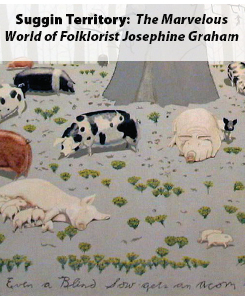
Graham-promoIn this heat, it is nice to be able to travel to a different time and place in the comfort of air conditioning.  Historic Arkansas Museum’s current exhibit “SUGGIN TERRITORY: THE MARVELOUS WORLD OF FOLKLORIST JOSEPHINE GRAHAM” offers a chance to visit a bygone era in Arkansas.

Josephine Graham (1915-1999) a.k.a. “Josus,” was a celebrated artist and folklorist of Arkansas’s White River culture. Her “Suggin” folk paintings depict the Depression-era folk history of the White River region.

Though professionally trained as a painter at Columbia University, Graham’s paintings are intentionally primitive in style, inspired by the stories and lives of “Suggins,” a playful term she used in reference to the people living along the White River.

Through more than twenty exhibitions, over 100 paintings, and a self-published cookbook, she shared the wonder and charm of her native region with the world. Graham was a founding member of the Mid-Southern Watercolorists and founder of the Suggin Folklife Society.

The exhibition continues through November 29, 2015.

Final Day of 2015 Little Rock Picture Show

LRPS-Sponsors-Poster-1024x663No rest for the weary!  The last day of the 2015 Little Rock Picture Show starts at 11am with Backyard Blockbusters at the Studio Theatre.  The Last Survivors starts at 11:15 at Vino’s.

The afternoon features four blocks of shorts:

  • Arkansas Shorts Block 1 – 1:30 – Studio Theatre
  • International Shorts Block 3 – 1:45 – Vino’s
  • International Shorts Block 2 – 3:45 – Vino’s
  • Arkansas Shorts Block 2 – 4pm – Studio Theatre

At 5:45, Aura will be shown at Vino’s.  The final two screenings will take place at the Studio Theatre with filmmaker David Allen in attendance.  At 6:15, Boo will be shown.  Dog Soldiers will close out the 2015 edition of the Little Rock Picture Show at 8:15.

August 9 is National Book Lover’s Day

bldAugust 9 is National Book Lover’s Day (or Book Lovers Day or Book Lovers’ Day — take your pick).

However you punctuate it, today is a day for those who love to read.  It is set aside to encourage you to kick back and relax with a great book. From shaded spots under arching trees to being tucked up warm in bed, there’s no better way to celebrate today than to while the hours away lost in a book.

A few years ago Huffington Post offered these suggestions as activities for this “holiday.” I’ve annotated them with thoughts of my own.

1) Visit your local library (bonus points if you hum “A Trip to the Library” or “Marian, Madame Librarian” when you do)

2) Reread an old favorite (CliffsNotes don’t count-except for Faulkner because Mala Rogers said it was okay.)

3) Drop some literary references (commiserate a sports loss with a “there is no joy in Mudville;” describe something tiny as Lilliputian; express frustration with “Fiddle dee dee”)

4) Get a new bookshelf (or build one.  or get a book about how to build one.)

5) Give the gift of reading (read to someone — just make sure it is age appropriate — the original Grimm Folk Tales are not intended for pre-school audiences)

6) Hit up a literary haunt (Jay Jennings can probably suggest several Arkansas locations, or you can go to the Capital Bar–many journalists have scribbled notes on napkins there which have made there ways into political books)

7) Host your own book club (or crash your neighbor’s)

8) Host a book lovers party (or tell people you went to one dressed as the Invisible Man–either Wells or Ellison version)

9) Contact your favorite living author (just make sure there isn’t a restraining order because you already have tried this.  repeatedly. at inappropriate locations and times)

10) Donate (it does seem a sin to throw away a book. so pass it on)


So visit the Central Arkansas Library System or WordsWorth Books.  Make a pilgrimage to Piggott to see where Hemingway wrote part of A Farewell to Arms (which my classmates and I dubbed A Farewell to Leg because of the line, “I put my hand on my knee, it wasn’t there.”).  Crack open that book at home.  Go down a rabbit hole in search of your Green Light, your Dulcinea, or your Holy Grail.

For younger audiences, chew on a board book, marvel at a pop-up book, experience a scratch ‘n’ sniff book.

Whatever you do today, don’t let it go by without touching a book!  (Episcopalians have it covered with the BCP.)

Little Rock Look Back: L. Brooks Hays

BrooksHaysFor many years on a Sunday morning, the Brooks Hays Sunday School Class met at Second Baptist Church in downtown Little Rock.  Named for its longtime leader, the class continued for decades after he had retired to the Washington D.C. area.  Since today is a Sunday, and his birthday, this entry looks back at the life, career and legacy of Brooks Hays.

Lawrence Brooks Hays was born on August 9, 1898, in the Pope County town of London.  He grew up in Russellville and attended the University of Arkansas.  After military service in World War I and law school at George Washington University, he returned to Arkansas and practiced law with his father.  In 1925, he was named an Assistant Attorney General and moved to Little Rock.  A lifelong Southern Baptist, he joined Second Baptist Church.

His first entries into political races were not met with success.  He failed to attain the Democratic nomination for governor in 1928 and 1930. In 1933, he narrowly lost a race for Congress to David D. Terry.  Following that loss, he was appointed General Counsel to the U.S. Department of Agriculture by President Roosevelt.

In 1942, he was elected to Congress to succeed Terry.  Throughout the 1940s and 1950s, he was focused on foreign affairs. He was a leading proponent of religion as a way to fight Communism. His emphasis on faith was also evident when he became elected the President of the Southern Baptist Convention in 1957. He was only the second lay person, and last one to date, to have been selected to this post.

In Congress, Hays had been a proponent of seeking a middle road on issues of segregation. He was not an integrationist, but he did believe that some rights should be afforded to African Americans.  These efforts were met with disdain by both sides.  Hays denounced the Brown v. Board decision in 1954, but three years later was caught up in it.

With Governor Orval Faubus openly defying federal law, there was pressure on President Dwight Eisenhower to uphold the law.  Hays brokered a meeting with Faubus and Eisenhower, which did nothing to break the stalemate.  However, because he had worked to uphold the law, he was a target when he was on the ballot in 1958.  After defeating a segregationist candidate in the Democratic primary, Hays was surprised by a write-in candidate a week before the general election.  Dr. Dale Alford, a member of the Little Rock School Board, pulled an upset and defeated Hays.

Presidents John F. Kennedy and Lyndon B. Johnson appointed Hays to a series of positions following that election.  In 1966, he ran unsuccessfully for the Democratic gubernatorial nomination.  He moved to North Carolina in 1968 to take a position with Wake Forest University. While in that state, he ran unsuccessfully for Congress in 1972.  Shortly thereafter he moved to Chevy Chase, Maryland, which would be his base until his death in 1981.  He is buried in Oakland Cemetery in Russellville.

Among the books he authored were Politics is My Parish, A Hotbed of Tranquility: My Life in Five Worlds, and A Southern Moderate Speaks.

His son, Steele Hays (named for the Congressman’s father) served on the Arkansas Supreme Court from 1981 to 1994. He had previously served on the Court of Appeals and as a Pulaski County Circuit Judge.


NOSFERATU with a live original score is a highlight of Saturday’s Little Rock Picture Show

LRPS NosferatuAt 9:15pm tonight at the Studio Theatre the silent film classic Nosferatu will be shown.  It will be accompanied by a live original score by Mainline Divide.  While it is a highlight of today’s activities with the Little Rock Picture Show, it is by no means the only film or music event of the day!

Things get going this morning with Apt 3D (11am – Public Theatre), Jackrabbit (11:15 – Studio Theatre with filmmakers Carleton Ranney, Destin Douglas and Rebecca Rose Perkins in attendance), and Time Lapse (11:15 – Vino’s).

This afternoon features The Divine Tragedies (1:30 – Public Theatre), Filmmaker Panel (2pm – Studio Theatre), International Shorts Block 2 (2pm – Vino’s), Dude Bro Party Massacre III (3:30 – Studio Theatre with filmmakers Jon Salmon, Alec Owen and Kelsey Gunn in attendance), International Shorts Block 1 (3:45 – Public Theatre) and Arkansas Shorts Block 2 (4pm – Vino’s).

The documentary Backyard Blockbusters will be shown at Vino’s at 5:45pm, while at 6pm a Music Composing Panel with Rocky Gray will take place at the Public Theatre.  At 7pm, The Last Survivors will be shown at the Studio Theatre. The Music Videos Block will be shown at 7:30 at the Public Theatre.  At 8pm, Apothecary, Ozark Shaman and Amonkst the Trees will be at Vino’s.  Capsule will be at the Public Theatre at 9:30.  Booyah! Dad will take the stage at the Studio Theatre at 11pm.

The night will end as the new begins at midnight with the Deep Red 40th Anniversary Screening at the Public Theatre.