Pianist to celebrate classic and contemporary in UALR recital Feb. 5

University of Arkansas at Little Rock professor Linda Holzer will perform a piano recital, “Ear-Opener! A Celebration of the Known and the New,” at 7:30 p.m Friday, Feb. 5, in Stella Boyle Smith Concert Hall.

Admission is free and open to the public.

Holzer enjoys presenting concerts that combine familiar repertoire with works that “deserve to be heard more often.”

Accompanied by baritone Ferris Allen, Holzer will open the concert with the premiere of a poignant new work, “Prayers and Blessings,” by composer Gwyneth Walker.

It is a setting of three texts: “Ubi Caritas,” “Lord Make Me an Instrument of Your Peace,” and “Gaelic Blessing.”

“We think this piece is a musical antidote for a turbulent world,” said Holzer.

The remainder of the program will feature solos by Holzer including the majestic piano Sonata in E Minor by celebrated composer and Little Rock native, Florence Price.

She will also perform selections by Scarlatti, Mozart, and Bach.

Holzer, a UALR faculty member since 1995, is an active soloist and chamber musician who has played in 30 states, and most recently, abroad in Melbourne, Australia. She was a featured performer at the Australasian Piano Pedagogy Conference held at the Victoria College of the Arts. An advocate for contemporary music, Holzer was featured in performance and as host on a special KLRE broadcast last summer, “A Celebration of American Music.”

For more information, contact the Music Department at 501.569.3294.

Mavis Staples in concert at new Pulaski Tech venue tonight

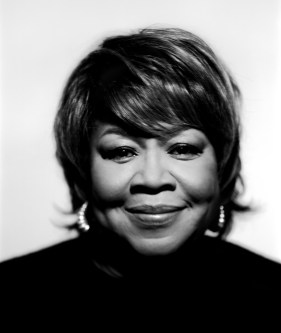
mavisLegendary Rock & Roll Hall of Fame inductee Mavis Staples is bringing her stirring brand of classic soul music to Pulaski Technical College on Feb. 5 at 8 p.m. as part of the college’s week-long grand opening celebration of its new Center for the Humanities and Arts, located on the Main Campus at 3000 West Scenic Drive in North Little Rock.

Staples is known for her soul/gospel classics that she performed with The Staples Singers, such as “I’ll Take You There,” and “Respect Yourself.” Her thirteenth studio album, “You Are Not Alone,” won the Grammy Award for Best Americana Album at the 53rd annual Grammy Awards in 2010.

She is a Rock & Roll Hall of Fame inductee, a Grammy Lifetime Achievement Award recipient and a 2016 Grammy nominee. She has been named one of Rolling Stone’s Top 100 Greatest Singers of all Time. Her latest album, “Livin’ On A High Note,” features Neko Case, Justin Vernon, Nick Cave, Ben Harper and other guest artists. It will be released Feb. 19.

The concert will be in the college’s new theater. Doors open at 6 p.m. and a cash bar will be available. Reserved tickets are $65, $75 and $100 and are on sale now by clicking here: http://www.pulaskitech.edu/mavis/ – See more at: http://www.pulaskitech.edu/current_news/default.asp?ID=1851#sthash.EhoonNag.dpuf

Black History Month Spotlight – Taborian Hall and Dreamland Ballroom

The new Arkansas Civil Rights History Audio Tour was launched in November 2015. Produced by the City of Little Rock and the University of Arkansas at Little Rock allows the many places and stories of the City’s Civil Rights history to come to life an interactive tour.  This month, during Black History Month, the Culture Vulture looks at some of the stops on this tour which focus on African American history.

Completed in 1918, Taborian Hall stands as one of the last reminders of the once-prosperous West Ninth Street African-American business and cultural district. West Ninth Street buildings included offices for black professionals, businesses, hotels, and entertainment venues. In 1916, the Knights and Daughters of Tabor, a fraternal insurance organization, hired local black contractor Simeon Johnson to enlarge an existing building to accommodate their activities, other offices and a ballroom.

During World War I, black soldiers from Camp Pike came to the Negro Soldiers Service Center here. In World War II, Taborian Hall was home to the Ninth Street USO, catering to black soldiers from Camp Robinson. By 1936, Dreamland Ballroom hosted basketball games, boxing matches, concerts and dances.

A regular stop for popular black entertainers on the “Chitlin’ Circuit,” Dreamland hosted Cab Callaway, Count Basie, Duke Ellington, Ella Fitzgerald, Louis Armstrong, B.B. King, Earl “Fatha” Hines and Ray Charles. Arkansas’s own Louis Jordan also performed here. Between the 1960s and 1980s, West Ninth Street declined, and many buildings were demolished. In 1991, Taborian Hall was renovated to house Arkansas Flag and Banner. Once again, Dreamland Ballroom hosts concerts and social events.

The app, funded by a generous grant from the Arkansas Humanities Council, was a collaboration among UALR’s Institute on Race and Ethnicity, the City of Little Rock, the Mayor’s Tourism Commission, and KUAR, UALR’s public radio station, with assistance from the Little Rock Convention and Visitors Bureau.

Little Rock Look Back: Acting Mayor John Herndon Hollis

John Herndon HollisOn February 5, 1870, future Little Rock alderman and acting mayor John Herndon Hollis was born shortly before his family moved to what is now Cleveland County. His parents were originally from Georgia and came from prosperous and longtime families there.

The Hollis family came to Arkansas after the Civil War and settled in Union County. A portion of that county was carved off and became Dorsey County (named after a Republican US Senator from Arkansas) but was renamed Cleveland County after Grover Cleveland was elected President. Cleveland was the first Democrat to be elected President in over 20 years. This name change also reflected the political shift in Arkansas from the Reconstruction-led Republican politics to the Democratic Party politics which would dominate for the next century.

John Herndon Hollis was one of six children, and the only one with a middle name. Herndon had been his mother’s maiden name. As one of his brothers described their childhood in Cleveland County, “they all went to country schools in their home neighborhood, worked hard on the farm in the summertime, and were inside their little Methodist Church every time the doors were open.”

Around 1900, Hollis and his new wife Malinda M. “Linda” Taliaferro Hollis (formerly of Rison) moved to Little Rock.  Together the couple had six children. In Little Rock, Hollis worked in the banking industry. For years he worked for People’s Building and Loan Association.

Hollis was first elected to the Little Rock City Council in April 1904. He would serve as one of the Aldermen from the city’s Fourth Ward until April 1918.  This was on the western border of Little Rock at the time. The family lived at 1510 S. Schiller, which is one block east of Central High, though at the time neither the school nor its predecessor (West End Park) existed.  From 1907 until 1913 he also served on the Little Rock School Board.

In April 1908, at the first City Council meeting in the new City Hall, Mayor W. E. Lenon announced his resignation. Because the resignation was effective immediately, there was a vacancy in the office of mayor.  Hollis was selected by his colleagues to serve as acting mayor until a successor could be elected. So from April 1908 through June 1908, Hollis was the City’s chief political and executive leader.

Though he was never formally mayor (and did not resign his position as alderman), since 1908, Hollis’ name has appeared on the list of mayors of Little Rock. The reason seems to be as a sign of respect since there was a vacancy.

There previously had been acting mayors when the mayor would be absent on business or due to illness. But in those instances, the mayor had not resigned. This is the only instance in Little Rock history when a mayor resigned immediately with no successor in place. So John Herndon Hollis holds a unique role in Little Rock history.

Hollis’ wife died in 1920.  He later married Ann Jewell of Little Rock (who was a distant cousin of his first wife). They were married until his death on October 23, 1941.  Ann Hollis lived in Little Rock until her death in 1980.  The Hollis family is entombed in the mausoleum at Mount Holly Cemetery.

Both of John Herndon Hollis’ wives are distant cousins of the Culture Vulture, so he is particularly fond of John Herndon Hollis.

Sandwich in History today at the First Presbyterian Church

The monthly architectural history program “Sandwiching in History” visits the Albert Pike Memorial Temple, located at 712 Scott Street. The program begins at noon today (February 5).  A historian with the Arkansas Historic Preservation Program delivers a brief lecture about the church before leading guests on a tour.

Organized in July 1828, Little Rock’s First Presbyterian Church occupied three locations before it moved to the southwest corner of 8th and Scott streets. Built in 1920-1921, the current Gothic Revival-style sanctuary was designed by Little Rock architect John Parks Almand to complement an earlier three-story education building on the site. The sanctuary’s main entrance was crowned by a deeply recessed arch and a parapet with battlements. Beautiful stained-glass windows, made by Payne Studios of Patterson, New Jersey, were dedicated in 1928.

Sandwiching in History is a program of the Arkansas Historic Preservation Program, an agency of the Department of Arkansas Heritage.  The AHPP is responsible for identifying, evaluating, registering and preserving the state’s cultural resources. Other DAH agencies are the Arkansas Arts Council, the Delta Cultural Center in Helena, the Old State House Museum, the Mosaic Templars Cultural Center, the Arkansas Natural Heritage Commission and the Historic Arkansas Museum.

DRAIN SMART SEEKS ARTISTS FOR 2nd YEAR OF SUCCESSFUL ART & CONSERVATION PROGRAM

A coalition of state and local agencies and non-profit organizations are excited to announce the second year of Drain Smart, a public art program aimed at raising awareness, education and protection of local water resources.

“Public response to the first year Drain Smart murals that were painted in the River Market, South Main and War Memorial areas has been incredibly positive, and people are responding to the conservation message.  We are very excited to expand the project into new areas of the city this year,” said Dr. Dan Scheiman, bird conservation director for Audubon Arkansas.

Like most cities, Little Rock’s storm drains flow directly into our streams. When it rains, water picks up everything in its path and carries it through storm drains into our streams and creeks. Drain Smart is an engaging public-education/environmental program that uses art to communicate the importance of reducing the litter that flows into our storm drains.

Coordinators with the program are calling for local artists to submit their ideas for murals to be painted on 18 storm drains in Little Rock.  This year’s designated mural locations are grouped into three areas: The Promenade at Chenal, Center Street between 4th and 7th  Streets, and Main Street from 15th to 29th Streets. Selected artists will receive a $150 stipend, and all necessary supplies will be provided.

This exciting project gives artists the opportunity to express themselves via semi-permanent public art in a series of small-scale outdoor storm drain murals. This art will then serve to educate the public on watershed and stream protection.

Artists have until March 15 to submit their applications (available at drain-smart.org) along with a sketch of their idea. Artists will be notified by April 1, and all art will be completed by June 5. Artists will be eligible for an additional final prize to be given to the winners chosen by public voting.

Black History Month Spotlight – First Missionary Baptist Church

The new Arkansas Civil Rights History Audio Tour was launched in November 2015. Produced by the City of Little Rock and the University of Arkansas at Little Rock allows the many places and stories of the City’s Civil Rights history to come to life an interactive tour.  This month, during Black History Month, the Culture Vulture looks at some of the stops on this tour which focus on African American history.

Established in 1845, First Missionary Baptist Church is one of the oldest black congregations in Arkansas. The first church building was completed by 1847, with the current Gothic Revival building constructed in 1882.

In 1891, more than 600 blacks gathered here to protest the state’s recently enacted Separate Coach Law that required racial separation in passenger cars and separate waiting rooms in train stations. They marched from the church to the then state capitol, now the Old State House., to dispute laws that denied black people their constitutional rights. Historians cite that black boycotts in Little Rock, Pine Bluff, and Hot Springs on May 27, 1903, the first day of the streetcar law, caused a 90 percent drop in black patrons on Little Rock streetcars.

In May 1958, Dr. Martin Luther King, Jr., traveled to Little Rock here to attend the graduation ceremony of Ernest Green, the first African American to graduate from Central High School. In 1963, four months before the famous “I Have a Dream” speech, Dr. King visited Little Rock to provide the First Missionary Baptist Church’s 118th anniversary sermon.

The app, funded by a generous grant from the Arkansas Humanities Council, was a collaboration among UALR’s Institute on Race and Ethnicity, the City of Little Rock, the Mayor’s Tourism Commission, and KUAR, UALR’s public radio station, with assistance from the Little Rock Convention and Visitors Bureau.