LR Women’s History Month – Adolphine Fletcher Terry

adolphine

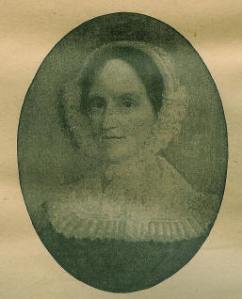
Photos from the collection of the Butler Center for Arkansas Studies

Adolphine Fletcher Terry was born on November 3, 1882 to former Little Rock Mayor John Gould Fletcher and his wife Adolphine Krause Fletcher.

Raised in Little Rock, in 1889 she moved into the Albert Pike House on East 7th Street, when her aunt transferred the title to her father. That house would be her primary residence the rest of her life.  Her sister Mary Fletcher Drennan never lived in Arkansas as an adult after marriage. Her brother John Gould Fletcher spent much of his adulthood in Europe before returning to Little Rock and establishing his own house, Johnswood.

At age 15, Adolphine attended Vassar. She later credited that experience as broadening her views on many issues.  After graduating at age 19, she returned to Little Rock.  Her parents both died prior to her 1910 wedding to David D. Terry, which took place at what was then known as the Pike-Fletcher House (and today is known as the Pike-Fletcher-Terry House).

She is perhaps best known today for establishing the Women’s Emergency Committee in 1958 and for her subsequent deeding of the family house to the City for use by the Arkansas Arts Center.  But her entire life was based on civic engagement.

She was instrumental in establishing the first juvenile court system in Arkansas and helped form the first school improvement association in the state. She was long an advocate for libraries, serving 40 years on the Little Rock public library board.  Through her leadership, the library opened its doors to African Americans in the early 1950s. Today a branch of the Central Arkansas Library System (the successor the Little Rock public library) is named after her.  Another branch is named after her Pulitzer Prize winning brother.

Adolphine formed the Little Rock chapter of the American Association of University Women, the Pulaski County tuberculosis association and the Community Chest.

In 1958, when the Little Rock public high schools were closed instead of allowing them to be desegregated again, she called Harry Ashmore the editor of the Gazette and exclaimed, “the men have failed us…it’s time to call out the women.”  With this, she formed the Women’s Emergency Committee to Open Our Schools. This group played a major role in getting the four high schools open the following year.

From 1933 to 1942, David Terry served in the U.S. Congress. During that time, Adolphine alternated her time between Washington DC and Little Rock. But she spent much time in Little Rock raising her five children.

After her husband’s death in 1963, she continued to remain active in civic affairs. In the 1960’s, she and her sister deeded the Pike-Fletcher-Terry House to the City of Little Rock for use by the Arkansas Arts Center upon both their deaths.  Following Adolphine Fletcher Terry’s death in 1976, Mary turned over the title to the City.

Adolphine Fletcher Terry is buried in Mount Holly Cemetery alongside her husband. Three of her children are also buried in that plot.  Her parents and brother are buried in a nearby plot.

Her son William Terry and his wife Betty continue to be active in Little Rock. Their daughters and their families also carry on Adolphine Fletcher Terry’s commitment to making Little Rock better.
Today at noon – Legacies and Lunch with Bobby Roberts

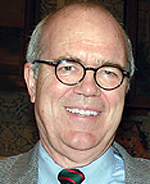
robertsThe Butler Center for Arkansas Studies and Clinton School of Public Service present today’s Legacies and Lunch program which features a conversation with Bobby Roberts.

Roberts has been the director of the Central Arkansas Library System (CALS) since 1989. During his tenure at CALS, it has been recognized as one of the premier library systems in the United States, noted for outstanding public service and innovative programming. Roberts is retiring from CALS on March 4. On March 2, he will talk with Clinton School of Public Service Dean Skip Rutherford at the Butler Center’s monthly Legacies & Lunch presentation series.

A native of Helena, Ark., Roberts became a historian and archivist, a writer of Civil War history, a university faculty member, and a member of Governor Bill Clinton’s staff before taking leadership at CALS. At Legacies & Lunch, Rutherford will interview Roberts about his interest in history and politics, the transformation of CALS, and what he sees for the future of the library system, the city of Little Rock, and the state of Arkansas. This special program is sponsored in part by the Arkansas Humanities Council.

Wednesday, March 2, 2016 at 12:00 Noon
CALS Ron Robinson Theater

Little Rock Look Back: Arkansas Territory created

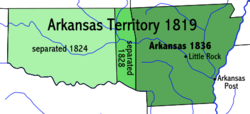
On March 2, 1819, the Arkansas Territory was authorized by an act of Congress, to take effect  on July 4, 1819.

The Arkansas Territory was created from the portion of the Missouri Territory. It originally encompassed all of what is now Arkansas and much of what is now Oklahoma. The westernmost portion of the territory was removed on November 15, 1824, a second westernmost portion was removed on May 6, 1828, reducing the territory to the extent of the present state of Arkansas.

The Territorial capital was Arkansas Post from July 1819 until June 1821. At that point in time it was moved to Little Rock. In 1819, there was no permanent settlement in Little Rock. It would my be until early 1820 that a permanent settlement would be established.  On 1818, the Quapaw Treaty had anticipated a future settlement in Little Rock.

The Oxford American presents the UCA Dixieland Band tonight at South on Main

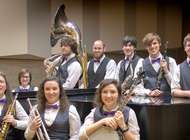
SOM UCA jazzTonight (March 1) at 7:00 PM, the Oxford American magazine presents the UCA Dixieland Band at South on Main.

This event is free and open to the public. Call ahead to South on Main to make your reservations and ensure a table: (501) 244-9660.


The UCA Dixieland Band was founded in 1976 by Professor Patrick Hasty. The group has a long tradition of performing all styles of Traditional Jazz at venues across campus and in the Central Arkansas area. Merging the instrumentation of Early New Orleans Style and Chicago Style jazz, the group utilizes clarinet, tenor saxophone, trumpet, trombone, piano, banjo/guitar, sousaphone/bass, and drum set. The ensemble studies original and contemporary recordings and prepares their own arrangements with an emphasis on collective and individual improvisation, and is currently coached by Dr. Jackie Lamar.

LR Women’s History Month: Eliza Cunningham

Eliza CunninghamEliza Wilson Bertrand Cunningham was the First Lady of Little Rock.  She literally was the first lady and the founding mother.

She became the first permanent female resident when she joined her husband Matthew Cunningham in Little Rock.  She gave birth to Chester Ashley Cunningham, the first baby born in Little Rock, as well as several other children with Cunningham.  When he became the first Mayor of Little Rock, she was the first First Lady of Little Rock. They hosted the first Little Rock Council meeting at their house on what is now the block downtown bounded by Third, Main, Fourth and Louisiana Streets.  Her son Charles P. Bertrand, from her first husband, later served as Mayor of Little Rock, making her the only woman to be married to a Mayor and be mother of a Mayor.

Born in Scotland in December 1788, she emigrated with her parents to the United States as a young girl.  In 1804 or 1805, she married a French businessman, Pierre Bertrand in New York City.  She lived in New York City, while he traveled to his various business ventures.  He never returned from a trip to his coffee plantation in Santo Domingo and was presumed to have died in 1808 or 1809.  She and Bertrand had three children, Charles Pierre, Arabella and Jane. (Jane may have died in childhood, because records and lore only indicated Charles and Arabella coming to Little Rock with their mother.)

Eliza married Dr. Matthew Cunningham in New York City.  He later moved to Saint Louis and settled in Little Rock in early 1820.  Eliza and her two children came to Little Rock in September 1820.  In 1822, she gave birth to Chester Ashley Cunningham, the first documented baby born in Little Rock.  (There are unsubstantiated reports that at least one slave child may have been born prior to Chester.)  She and Matthew also had Robert, Henrietta, Sarah and Matilda.  The latter married Peter Hanger, after whom the Hanger Hill neighborhood is named.

Dr. Cunningham died in June 1851.  Eliza died in September 1856. They and Chester (who died in December 1856) are buried in the Hanger family plot at Mount Holly Cemetery.

Mendelssohn String Symphony No. 10 tonight at Arkansas Symphony River Rhapsodies Series at Clinton Presidential Center

ASO NewThe Arkansas Symphony Orchestra, Philip Mann, Music Director and Conductor, presents the fifth concert of the 2015-2016 River Rhapsodies Chamber Music Series: Mendelssohn’s String Symphony No. 10, at 7 PM Tuesday March 1, 2016 at the Clinton Presidential Center’s Great Hall.

ASO musicians present a chamber music showcase in the beautiful Great Hall of the Clinton Presidential Center, featuring works from Prokofiev, Beethoven, Mendelssohn, and Bach in various ensembles.

A cash bar is open at 6 PM and at intermission, and patrons are invited to carry drinks into the hall. Media sponsor for the River Rhapsodies Chamber Music Series is KUAR/KLRE.

Tickets are $23; active duty military and student tickets are $10 and can be purchased online at www.ArkansasSymphony.org; at the Clinton Presidential Center beginning 60 minutes prior to a concert; or by phone at 501-666-1761, ext. 100.

Artists

Geoffrey Robson, violin/conductor
Rockefeller Quartet:

  • Trisha McGovern Freeney, violin
  • Katherine Williamson, violin
  • Katherine Reynolds, viola
  • Aaron Ludwig, cello

Vernon Di Carlo, tenor
Tatiana Roitman, piano
Andrew Irvin, Kiril Laskarov, Eric Hayward, Meredith Maddox Hicks, Leanne Day-Simpson, Sandra McDonald, Yennifer Correia, violins
Ryan Mooney, Katrina Weeks, violas
David Gerstein, Ethan Young, cellos
Barron Weir, bass
Carl Anthony, harpsichord


Program

PROKOFIEV – Sonata for Two Violins in C Major, Op. 56

BEETHOVEN  – String Quartet in C minor, Op. 18 No. 4

MENDELSSOHN – Selection of Songs for Voice and Piano

BACH – Brandenburg Concerto No. 3 in G Major, BW 1048

MENDELSSOHN – String Symphony No. 10 in B minor

The Museum of Discovery’s Kevin Delaney returns to Tonight Show Starring Jimmy Fallon tonight

kevin30rock-headshotKevin Delaney, director of visitor experience at the Museum of Discovery, will make his fourth appearance on “The Tonight Show Starring Jimmy Fallon” at 10:35 p.m. Tuesday, March 1 on NBC.  Delaney serves as the show’s “science expert” and performs multiple science demonstrations with Fallon serving as his lab assistant.
“I cannot wait to return to ‘The Tonight Show’,” Delaney said.  “We’ve got some great demos planned that will show how amazing science is while highlighting some of the exciting things our visitors experience at the museum.”
Delaney made his successful “Tonight Show” debut on May 5, 2014, and returned again on November 7, 2014, and most recently, May 22, 2015.  To watch his first three appearances, visit http://www.youtube.com/watch?v=OELiqiIHZEI,https://www.youtube.com/watch?v=iQWtZd8jM3g