Black History Month – Danny Glover and Robinson Center

danny-glover-new-headshot-2010On Saturday, February 3, 2001, actor Danny Glover narrated Aaron Copland’s “Lincoln Portrait” with the Arkansas Symphony Orchestra at Robinson Center.

The Culture Vulture had the privilege of spending part of the day with Mr. Glover while he was here in Little Rock. (At Mr. Glover’s request for good Soul Food, they went to Kitchen Express. When the parking lot was still full at 2:45 on a Saturday afternoon, Mr. Glover remarked “That’s a good sign.”  He enjoyed the food so much, he apparently went back the next day before leaving town.) They also discussed college and NBA basketball and went by the UA Little Rock campus where then-Lakers star Derek Fisher had played his college ball.

While Danny Glover may well be best-known for his role in the Lethal Weapon movies, his distinguished acting career has taken him to Broadway and Off-Broadway, motion picture screens and TV.  He is also well-known for his political and social activism. He is not afraid to speak his mind, and to make donations to causes in which he is a believer.

As he concludes his fourth decade of acting, Glover shows no signs of slowing down – nor does he appear to be softening his stance on social issues.

Black History Month – William Grant Still and Robinson Center

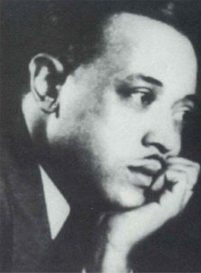
bhm StillDr. William Grant Still was a legend in his own lifetime.  Dr. Still, who wrote more than 150 compositions ranging from operas to arrangements of folk themes, is best known as a pioneer. He was the first African-American in the United States to have a symphonic composition performed by a major orchestra. He was the first to conduct a major symphony orchestra in the US; the first to conduct a major symphony in the south; first to conduct a white radio orchestra in New York City; first to have an opera produced by a major company. Dr. Still was also the first African-American to have an opera televised over a national network

Dr. Still was born May 11, 1895 in Woodville, Mississippi to parents who were teachers and musicians. When Dr. Still was only a few months old, his father died and his mother took him to Little Rock. Inspired by RCA Red Seal operatic recordings, his musical education began with violin lessons.

After his studies at Wilberforce University and the Oberlin Conservatory of Music, he played in orchestras and orchestrated for various employers including the great W. C. Handy. For several years he arranged and conducted the “Deep River Hour” over CBS and WOR.

In the 1920’s, Still made his first appearances as a serious composer in New York. Several fellowships and commissions followed. In 1994, his “Festive Overture” captured the Jubilee prize of the Cincinnati Symphony orchestra. In 1953, he won a Freedoms Foundation Award for “To You, America!” which honored West Point’s Sesquicentennial Celebration. In 1961, he received honors for this orchestral work, “The Peaceful Land”. Dr. Still also received numerous honorary degrees from various colleges and universities, as well as various awards and a citation from Arkansas Governor Dale Bumpers in 1972.

In 1939, Dr. Still married journalist and concert pianist Verna Avery, who became his principal collaborator. They remained together until Dr. Still’s death in 1978.  In a proclamation marking the centennial of Dr. Still’s birth, President Bill Clinton praised the composer for creating “works of such beauty and passion that they pierced the artificial barriers of race, nationality and time.”

In 1995, Dr. Still was posthumously inducted into the Arkansas Black Hall of Fame.  In 2016, the new ballroom at Robinson Center was named in his memory.

Little Rock Look Back: The Public Library Opens

carnegieOn February 2, 1910, the Little Rock Public Library officially opened its doors.  There had been an open house the night before, but this was the first day of acquiring a library card and checking out books.

Various private libraries had existed sporadically in Little Rock throughout the 19th Century.  In November 1900, a Little Rock School District committee made the first inquiry into the the creation of a Carnegie Library in Little Rock.  Over the next several years, numerous entreaties were made, but funding for the City’s portion was an obstacle.  On December 17, 1906, the Little Rock City Council passed an ordinance to move forward with building, furnishing and equipping a library.  Finally, in February 1908, the City approved acceptance of $88,100 from Andrew Carnegie.  The building would be designed by Edward Tilton, who designed Carnegie libraries, working with local architect Charles Thompson.

Mary Maud Pugsley was hired as the first librarian for Little Rock in May 1909. She began her duties on September 15, 1909, in order to get ready for the opening of the library at the southwest corner of 7th and Louisiana Streets.

On February 2, 1910, formal circulation of books began.  J. N. Heiskell was issued library card number 1.  He was secretary of the Library’s Board of Trustees and had long been an advocate for a public library in Little Rock.  He had often used his bully pulpit as editor of the Arkansas Gazette to advocate for a public library since arriving in Little Rock in 1902.  (Years later — he lived until 1972 — he received a replica of the library card made out of gold.)

That first day of operation, 500 people had applied for library cards. The application process required one to be a Little Rock property owner or to have a property owner sign the application.

Within the first year of operation, 2.5% of Little Rock’s population of 45,951 had applied for a library card.

For more on the history of the transformation of the Little Rock Public Library into the Central Arkansas Library System, read Shirley Schuette and Nathania Sawyer’s From Carnegie to Cyberspace — 100 Years at the Central Arkansas Library System, published by Butler Center Books.

Black History Month – Florence Price and Robinson Center

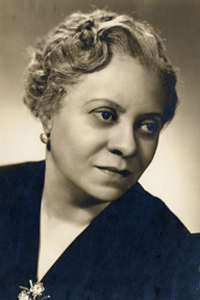
Florence-PriceOutside the William Grant Still Ballroom at Robinson Center is an atrium named for Florence Price.  It is fitting that these two childhood friends should be memorialized in adjoining spaces.

Florence Price was the first African-American female composer to have a symphonic composition performed by a major American symphony orchestra. She was born in Little Rock on April 9, 1887, to James H. Smith and Florence Gulliver Smith. Her father was a dentist in Little Rock, while her mother taught piano and worked as a schoolteacher and a businesswoman.

As a child, Smith received musical instruction from her mother, and she published musical pieces while in high school. She attended Capitol Hill School in Little Rock, graduating as valedictorian in 1903. Smith then studied at the New England Conservatory of Music in Boston, Massachusetts, In 1907, she received degrees as an organist and as a piano teacher.

After graduation, Smith returned to Arkansas to teach music. After stints in Cotton Plant, North Little Rock and Atlanta, GA, Smith returned to Little Rock in 1912 to marry attorney Thomas Jewell Price on September 25, 1912. Her husband worked with Scipio Jones.

While in Little Rock, Price established a music studio, taught piano lessons, and wrote short pieces for piano. Despite her credentials, she was denied membership into the Arkansas State Music Teachers Association because of her race.

The Prices moved to Chicago, Illinois, in 1927. There, Price seemed to have more professional opportunity for growth despite the breakdown and eventual dissolution of her marriage. She pursued further musical studies at the American Conservatory of Music and Chicago Musical College and established herself in the Chicago area as a teacher, pianist, and organist. In 1928, G. Schirmer, a major publishing firm, accepted for publication Price’s “At the Cotton Gin.” In 1932, Price won multiple awards in competitions sponsored by the Rodman Wanamaker Foundation for her Piano Sonata in E Minor, a large-scale work in four movements, and her more important work, Symphony in E Minor.

The latter work premiered with the Chicago Symphony Orchestra on June 15, 1933, and the orchestras of Detroit, Michigan; Pittsburgh, Pennsylvania; and Brooklyn, New York, performed subsequent symphonic works by Price. This was the first time a black woman had presented her work on such a stage. In this regard,

Price’s art songs and spiritual arrangements were frequently performed by well-known artists of the day. For example, contralto Marian Anderson featured Price’s spiritual arrangement “My Soul’s Been Anchored in the Lord” in her famous performance on the steps of the Lincoln Memorial in Washington DC on Easter Sunday, April 9, 1939. European orchestras later played Price’s works.

This national and international recognition made her more popular back home, and in 1935, the Alumni Association of Philander Smith College in Little Rock sponsored Price’s return to Arkansas, billing her as “noted musician of Chicago” and presenting her in a concert of her own compositions at Dunbar High School.

In her lifetime, Price composed more than 300 works, ranging from small teaching pieces for piano to large-scale compositions such as symphonies and concertos, as well as instrumental chamber music, vocal compositions, and music for radio. Price died in Chicago on June 3, 1953, while planning a trip to Europe.

Little Rock Look Back: Movie Star Mania at Robinson Center

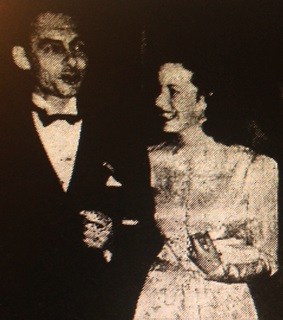
Mayor J V Satterfield escorting actress Maureen O'Hara at the Movie Ball (photo from Arkansas Democrat)

Mayor J V Satterfield escorting actress Maureen O’Hara at the Movie Ball (photo from Arkansas Democrat)

As final preparations were being made for the opening of the Joseph Taylor Robinson Municipal Auditorium in early 1940, a glamorous evening took place in Robinson’s lower level convention hall on February 1.

In conjunction with a meeting of film executives and movie theatre owners sponsored by Robb and Rowley Theaters (which later became the United Artists theatre chain), several Hollywood actors were in Little Rock and headlined a Movie Ball. While in Little Rock, Maureen O’Hara, Phyllis Brooks, Arleen Whelan, Tim Holt and Gene Autry had also made a variety of public appearances.

Mr. Autrey had to miss the ball because he had to return to Hollywood early to attend to business matters. Actress Ilona Massey had also been scheduled to attend the events but was unable due to illness.

The quartet who did appear at the Movie Ball caused quite a scene. Upon their entrance, so many of the attendees crowded around for autographs that the evening’s grand march could not take place (a newspaper headline in the Democrat innocently used the word “orgy” to describe the crowd). After two attempts, Little Rock Mayor J. V. Satterfield (who was escorting Miss O’Hara) and the other members of the Little Rock host delegation led the Hollywood foursome to their reserved table. For quite a while that evening, the table was besieged by autograph seekers.

Though it is unknown as to whether he sought an autograph, photos from the evening showed a very satisfied Mayor Satterfield with Miss O’Hara on his arm. Satterfield family lore joked that Mrs. Satterfield (who had stayed home that night to tend to a sick son) was not a fan of Miss O’Hara’s films after that evening.

The Movie Ball showed Little Rock citizens the value of Robinson Auditorium even before it had been officially dedicated. The film industry meetings had taken place at the Albert Pike Hotel which did not feature a ballroom large enough to host the ball. Without the auditorium’s availability for the gala, organizers might not have chosen Little Rock for the meeting.

With the auditorium’s convention hall not attached to any hotel, it opened up the chance for Little Rock to host more events. This had been one of the key arguments for an auditorium since Mayor W. E. Lenon’s first proposal back in 1904. Having a glamorous event this early in the auditorium’s life validated that contention. After having endured the challenges to open the building, it was a nice lagniappe for the auditorium’s proponents who were present.

The actor Tim Holt would again be connected to Little Rock. In September 1951, he tried to obtain a divorce in Arkansas and stated that he had been a resident of the state for at least six weeks. He also had someone else testify to that fact. In October 1951, the divorce was granted. Later Mr. Holt was charged with perjury and fined $200 for falsely representing his length of residence in Arkansas. Judicial sanctions for his legal team, which included a State Senator, were eventually reviewed by the Arkansas Supreme Court.