Rock the Oscars: Loretta Lynn

Loretta Lynn and Sissy Spacek during 53rd Annual Academy Awards’ Governor’s Ball at Beverly Hilton Hotel in Beverly Hills, California, United States. (Photo by Ron Galella/WireImage)

The spate of 1980s musical biopics can be traced to the success of 1980’s Coal Miner’s Daughter.  Nominated for seven Oscars, it captured a Best Actress statuette for Sissy Spacek, who played the title character.

Loretta Lynn, has never been nominated for an Oscar (yet) but wrote the book and lived the life on which the film was based.  (Arkansan Levon Helm was robbed of a nomination for playing Lynn’s father in the film.)

Over her career, Lynn has made numerous appearances in Little Rock, gradually moving up the billing until she was the star attraction.  Among her most recent appearances were a 2007 concert at Robinson Center (with three generations of Lynns and Webbs–the latter being her maiden name), and a 1997 concert at Wildwood Park.

While musical biopics were quite popular in the 1930s through 1950s, by the 1960s and 1970s, they had fallen out of favor.  But the success of Coal Miner’s Daughter led to numerous (countless?) on the big screen and TV.  Spacek ably captured Lynn’s grit, warmth, and talent in a well-deserved Oscar turn.

Rock the Oscars: Opening of the Clinton Presidential Center

Probably the largest gathering of Oscar winners and Oscar nominees in Little Rock’s history took place in November 2004.

Though some Oscar winners and nominees had been present for the Clinton election night parties in 1992 and 1996, the opening of the Clinton Presidential Center brought luminaries from Hollywood en masse.

Among those present were Oscar winning actors Barbara Streisand, Robin Williams, and (of course) Arkansan Mary Steenburgen.  Future Oscar winner Morgan Freeman was also in attendance. Among the Oscar nominees who were present were Bono and The Edge (who performed at the ceremony) and Alfre Woodard.

Senator John Glenn, who had been featured as a character in the Oscar winning film The Right Stuff was also present for the festivities.  Former Vice President Al Gore did not actually win an Oscar for An Inconvenient Truth (the documentary awards go to the director), but was closely identified with this Oscar winning documentary.

There were plenty of rumors about other Oscar winners and nominees in town, though they were not true.


Little Rock Look Back: Civic Leader John Herndon Hollis

On February 5, 1870, future Little Rock alderman and acting mayor John Herndon Hollis was born shortly before his family moved to what is now Cleveland County. His parents were originally from Georgia and came from prosperous and longtime families there.

The Hollis family came to Arkansas after the Civil War and settled in Union County. A portion of that county was carved off and became Dorsey County (named after a Republican US Senator from Arkansas) but was renamed Cleveland County after Grover Cleveland was elected President. Cleveland was the first Democrat to be elected President in over 20 years. This name change also reflected the political shift in Arkansas from the Reconstruction-led Republican politics to the Democratic Party politics which would dominate for the next century.

John Herndon Hollis was one of six children, and the only one with a middle name. Herndon had been his mother’s maiden name. As one of his brothers described their childhood in Cleveland County, “they all went to country schools in their home neighborhood, worked hard on the farm in the summertime, and were inside their little Methodist Church every time the doors were open.”

Around 1900, Hollis and his new wife Malinda M. “Linda” Taliaferro Hollis (formerly of Rison) moved to Little Rock.  Together the couple had six children. In Little Rock, Hollis worked in the banking industry. For years he worked for People’s Building and Loan Association.

Hollis was first elected to the Little Rock City Council in April 1904. He would serve as one of the Aldermen from the city’s Fourth Ward until April 1918.  This was on the western border of Little Rock at the time. The family lived at 1510 S. Schiller, which is one block east of Central High, though at the time neither the school nor its predecessor (West End Park) existed.  From 1907 until 1913 he also served on the Little Rock School Board.

In April 1908, at the first City Council meeting in the new City Hall, Mayor W. E. Lenon announced his resignation. Because the resignation was effective immediately, there was a vacancy in the office of mayor.  Hollis was selected by his colleagues to serve as acting mayor until a successor could be elected. So from April 1908 through June 1908, Hollis was the City’s chief political and executive leader.

Though he was never formally mayor (and did not resign his position as alderman), since 1908, Hollis’ name has appeared on the list of mayors of Little Rock. The reason seems to be as a sign of respect since there was a vacancy.

There previously had been acting mayors when the mayor would be absent on business or due to illness. But in those instances, the mayor had not resigned. This is the only instance in Little Rock history when a mayor resigned immediately with no successor in place. So John Herndon Hollis holds a unique role in Little Rock history.

After leaving the City Council, Hollis remained active in civic affairs.  He co-chaired a successful campaign in 1929, to raise a tax for a variety of civic issues.

Hollis’ wife died in 1920.  He later married Ann Jewell of Little Rock (who was a cousin of his first wife). They were married until his death on October 23, 1941.  Ann Hollis lived in Little Rock until her death in 1980.  The Hollis family is entombed in the mausoleum at Mount Holly Cemetery.

Both of John Herndon Hollis’ wives are distant cousins of the Culture Vulture, so he is particularly fond of John Herndon Hollis.

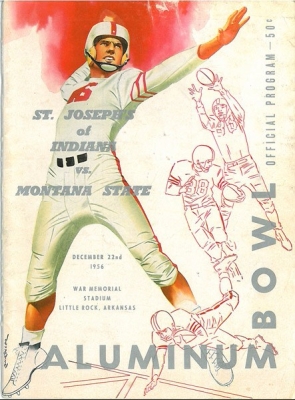
Little Rock Look Back: Aluminum Bowl

Aluminum_Prog_f

Courtesy of Paul Edwards to the Encyclopedia of Arkansas History and Culture

On December 22, 1956, Little Rock played host to the first (and only) Aluminum Bowl.  It was the NAIA national championship game between Montana State University and St. Joseph’s College (of Indiana).  This was the first time the NAIA had a football championship.

Originally the game was set to be played in Shreveport, Louisiana.  But because some NAIA schools were integrated, it was forbidden by a state law passed by the Louisiana legislature.  The Little Rock Chamber of Commerce and others worked to bring the game to War Memorial Stadium.  Because of the importance of the aluminum industry in Central Arkansas, the name Aluminum Bowl was chosen.  Both ALCOA and Reynolds were major sponsors of the event.

The game, which was aired on CBS TV and radio, was played on a rain-soaked muddy field and turned into a defensive slugfest. Both teams only got close to scoring once.  The score ended up a 0 to 0 tie.  Both teams were declared co-champions.  The rain kept the crowds away as only 5,000 people showed up leaving 33,000 empty seats in the stadium.  Miss Arkansas Barbara Banks, who had been wearing a dress made entirely out of aluminum, spent the game covered up to keep the dress dry.

The next year, the game went to Saint Petersburg, Florida, where it was rechristened the Holiday Bowl.  The Little Rock outing would mark the only appearance by either team in the NAIA championship game.  Both teams subsequently switched to NCAA competition.  As of the spring of 2017, St. Joseph’s has suspended operations because of financial shortcomings.

It has been said that Little Rock leaders had wanted to get the Aluminum Bowl game to showcase that Little Rock was a progressive Southern city when it came to race relations. By 1956 the buses and the public library were integrated.  However, both teams were faced with their African American players having to stay at separate hotels while in Central Arkansas (one in Little Rock, the other team in Hot Springs).

For more on the Aluminum Bowl, visit the Encyclopedia of Arkansas History and Culture.

Rock the Oscars: Marvin Hamlisch

marvin-hamlisch376x283.ashxComposer-conductor-arranger-pianist Marvin Hamlisch was a multi-hyphenate.  He also was an early EGOT winner (back when it was more difficult to accomplish this feat because there were fewer categories in all four awards).

Hamlisch visited Little Rock numerous times throughout his careers.  In 1996, he performed at Wildwood Park during the first season of the Lucy Lockett Cabe Festival Theatre.  He soloed with the Arkansas Symphony Orchestra in January 2000 performing many of his works for film and a few for stage.

In 2006, he returned to the ASO to perform with Robert Klein and Lucie Arnaz and the latter duo recreated their roles from the Hamlisch-Neil Simon-Carole Bayer Sager musical They’re Playing Our Song.  His final visit to Little Rock was in 2011. He was performing in Conway but shopped in Little Rock for clothes when his luggage stayed in Chicago.

Over his career, Hamlisch was nominated for twelve Oscars.  He won three at the 1974 ceremony. They were Best Song for “The Way We Were” from the film of the same name (shared with Alan and Marilyn Bergman), Best Score for The Way We Were and Best Adaptation Score for The Sting.  The latter heavily featured music by former Little Rock resident Scott Joplin.


Rock the Oscars: Kathryn Tucker and the Arkansas Cinema Society

Filmmaker Kathryn Tucker returned to her native Little Rock a few years ago after spending time in New York (four years) and Los Angeles (six years). In NYC, she worked for Miramax Films. She left Miramax to help make an independent film (Loggerheads) in North Carolina that was accepted at Sundance. She then moved the LA for 6 years and became of member of the Director’s Guild of America (DGA).
During that time she worked with a wide range of movie stars, including Oscar winners Nicole Kidman, Al Pacino, Morgan Freeman, Sean Penn, Michael Arndt, and Melissa Leo as well Oscar nominees Tom Cruise, Ryan Gosling and Josh Brolin.

She returned to Little Rock (where she was a 1996 graduate of LR Central High) and has produced an award winning short (“One Please”) and a feature (All the Birds Have Flown South) written by the Miller brothers.

In 2017, she and her fellow Central High alum Jeff Nichols announced the creation of the Arkansas Cinema Society.  It launched with a four day Premiere in August which has been followed by screenings and workshops in subsequent months.  In February 2018, it will launch the Homegrown Film Series to give Arkansas filmmakers a venue and a voice in their communities.

Rock the Oscars: William Grant Still

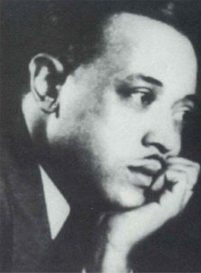
Long known as the Dean of African American composers, Dr. William Grant Still was a legend in his own lifetime.  As a prolific composer and arranger, his work was featured in numerous movies in the 1930s and 1940s including Oscar winning films The Awful Truth and Lost Horizon.

Dr. Still, who wrote more than 150 compositions ranging from operas to arrangements of folk themes, is best known as a pioneer. He was the first African-American in the United States to have a symphonic composition performed by a major orchestra. He was the first to conduct a major symphony orchestra in the US; the first to conduct a major symphony in the south; first to conduct a white radio orchestra in New York City; first to have an opera produced by a major company. Dr. Still was also the first African-American to have an opera televised over a national network

Dr. Still was born May 11, 1895 in Woodville, Mississippi to parents who were teachers and musicians. When Dr. Still was only a few months old, his father died and his mother took him to Little Rock. Inspired by RCA Red Seal operatic recordings, his musical education began with violin lessons.  He graduated from Gibbs High School in Little Rock.

After his studies at Wilberforce University and the Oberlin Conservatory of Music, he played in orchestras and orchestrated for various employers including the great W. C. Handy. For several years he arranged and conducted the “Deep River Hour” over CBS and WOR.  He also played in the orchestra for the 1921 musical Shuffle Along, which was the first Broadway musical to feature an all African-American cast and writing team.

In the 1920’s, Still made his first appearances as a serious composer in New York. Several fellowships and commissions followed. In 1994, his “Festive Overture” captured the Jubilee prize of the Cincinnati Symphony orchestra. In 1953, he won a Freedoms Foundation Award for “To You, America!” which honored West Point’s Sesquicentennial Celebration. In 1961, he received honors for this orchestral work, “The Peaceful Land”. Dr. Still also received numerous honorary degrees from various colleges and universities, as well as various awards and a citation from Arkansas Governor Dale Bumpers in 1972.

In 1939, Dr. Still married journalist and concert pianist Verna Avery, who became his principal collaborator. They remained together until Dr. Still’s death in 1978.  In a proclamation marking the centennial of Dr. Still’s birth, President Bill Clinton praised the composer for creating “works of such beauty and passion that they pierced the artificial barriers of race, nationality and time.”

In 1995, Dr. Still was posthumously inducted into the Arkansas Black Hall of Fame.  In 2016, the ballroom at Robinson Center was named in his honor.