Remembering Sid McMath

Born on June 14, 1912, Sidney Sanders McMath would play a key role in the development of Arkansas throughout the 20th Century.

A veteran of World War II, he was part of a new breed of Arkansas politicians who challenged the “old guard.”  He won election of Prosecuting Attorney in Hot Springs and took on gaming and other corruption.  This propelled him into the Governor’s Office (and to be the first family to reside in the Arkansas Governor’s Mansion.)

After being defeated in his bid for a third two-year term as governor, McMath returned to being a full-time attorney.  He also remained active in the Marine Corps Reserves, achieving the rank of Major General.  In 1967, he founded the Marine Corps JROTC program at Catholic High School.

After a lifetime of public service, Gov. McMath died on October 4, 2003.

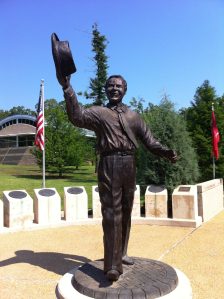
In 2004, the Central Arkansas Library System opened the Sidney Sanders McMath branch library.  A sculpture of him, created by Bryan Massey, Sr. and was commissioned to stand on the campus of the library branch which bears the Governor’s name. It was dedicated in 2006.

This bronze sculpture depicts Gov. McMath in shirt sleeves, slacks and a tie in mid stride. He confidently smiles as he raises his right hand to wave with the hat in the hand. It is based on a photo of the Governor walking in a Little Rock parade along side President Harry S. Truman.

Behind the statue are a series of medallions mounted on individual pedestals which depict scenes from McMath’s life. They are accompanied by a quote from U. S. Senator David H. Pryor “…the best friend Arkansas ever had.”

The plaza is flanked by the United States, Arkansas and Marine Corps flags.

Flag Day 2018

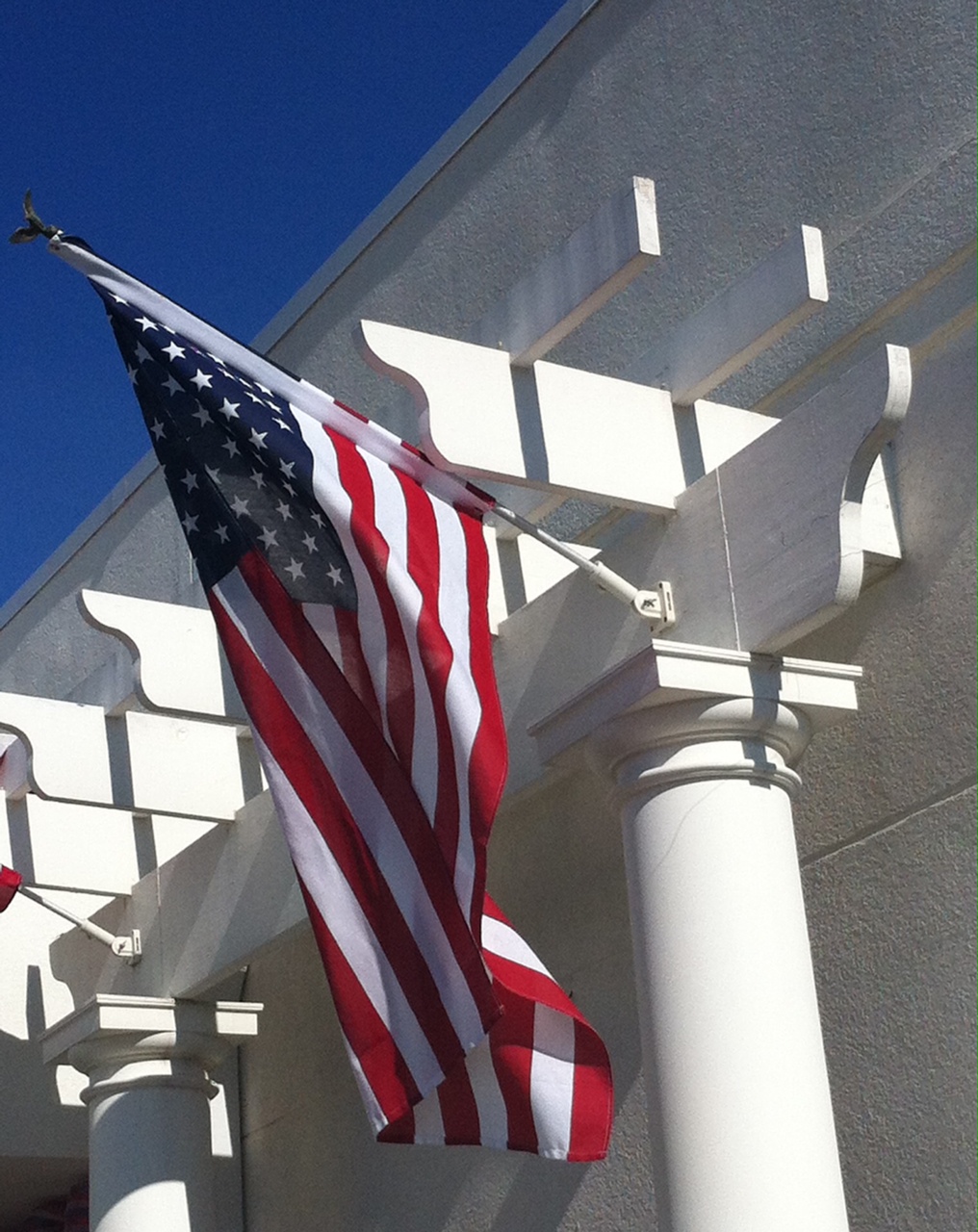
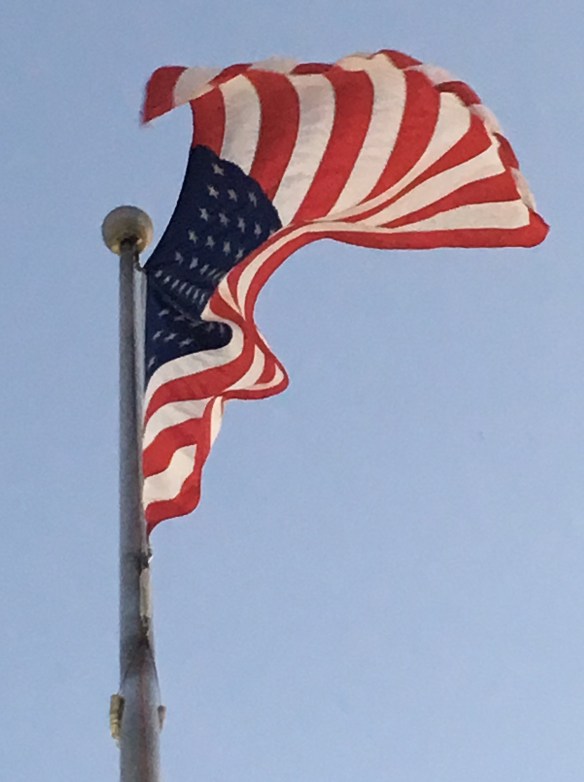
Today is Flag Day.  Here are several photos of the Stars and Stripes taken in Little Rock over the past few years.

Flag at Robinson Center

Flag outside of Tipton & Hurst main store in Heights

Flag outside of Tipton & Hurst main store in Heights

Flag at the Clinton Presidential Center

The red, white and blue stand out against the night sky and limestone of the Arkansas State Capitol.

The red, white and blue stand out against the night sky and limestone of the Arkansas State Capitol.

The stars and stripes unfurled from the balcony of the Capital Hotel.

The stars and stripes unfurled from the balcony of the Capital Hotel.

Flag Day 4

American flags mark the graves of veterans in Mt. Holly Cemetery

Movies in the Park continues tonight with ZOOTOPIA

The 2018 season of Movies in the Park continues with ZOOTOPIA.  The 2016 film, which won the Oscar for Best Animated Feature, starts tonight at sundown at the First Security Amphitheatre in Riverfront Park.

In a city of anthropomorphic animals, a rookie bunny cop and a cynical con artist fox must work together to uncover a conspiracy. The film features the voices of Ginnifer Goodwin, Jason Batema, Idris Elba, Jenny Slate, Nate Torrence, Bonnie Hunt, Don Lake, Tommy Chong, J.K. Simmons, Octavia Spencer, Alan Tudyk, and Shakira

Little Rock’s Movies in the Park is sponsored by the Little Rock Convention and Visitors Bureau and the City of Little Rock.  Movies are shown every Wednesday during the season and begin at sundown.

Families, picnics and pets are invited to the park to enjoy movies under the stars, no glass containers please. A parent or adult guardian must accompany all children and youth under the age of 18 and an ID is required. The amphitheater will open an hour before film showings and movies will start at sundown each week. For more information please visit http://moviesintheparklr.net.

Terror Tuesdays Film Series at CALS: DR. JEKYLL AND MR. HYDE

The Central Arkansas Library System’s (CALS) Ron Robinson Theater continues the $2 horror movies tonight with Adolph Zukor’s 1920 DR. JEKYLL AND MR. HYDE as part of the Terror Tuesday Summer Series. All showings are open to the public and start at 6:00 p.m.

Tickets are available at ronrobinsontheater.org.

Tonight you pay $1 for Dr. Jekyll and $1 for Mr. Hyde.

Dr. Henry Jekyll experiments with scientific means of revealing the hidden, dark side of man and releases a murderer from within himself.  John Barrymore was acclaimed for his dual performance in this film. Among the taglines used to promote the film was: The world’s greatest actor in a tremendous story of man at his best and worst!

Anne Frank trees in Little Rock

On June 12, 1929, Anne Frank was born in Frankfurt, Germany.  Through her diary, she has inspired generations with her courage as her family was in hiding from the Nazis.  During the two years she and her family were in seclusion, she looked out and saw a white horse chestnut tree from her window.
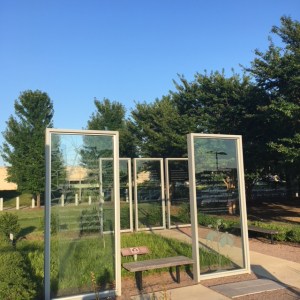
In 2009, the Anne Frank Center USA announced an initiative to place saplings from the tree at various locations throughout the United States.  Little Rock became the only city to receive two saplings.  One to be placed at Central High School, the other to be placed at the Clinton Presidential Center.

The Clinton Foundation and the Sisterhood of Congregation B’nai Israel, in conjunction with the Anne Frank Center USA, joined together to create a powerful exhibit, The Anne Frank Tree, located on the grounds of the Clinton Presidential Park.  The permanent installation, which surrounds the Anne Frank Tree sapling, was dedicated on October 2, 2015.

Anne’s tree would outlive her by more than 50 years before being weakened by disease and succumbing to a windstorm in 2010. But today, thanks to dozens of saplings propagated in the months before its death, Anne’s tree lives on in cities and towns around the world.
The Anne Frank Tree installation at the Clinton Center consists of five framed, etched glass panels – arranged to evoke the feeling of being inside a room – surrounded by complementary natural landscaping. The two front panels feature quotes from Anne Frank and President Clinton. The three additional panels convey the complex history of human rights in Arkansas through descriptions of the Indian Removal Act of 1830, the internment of Japanese Americans during World War II, and the Little Rock Central High School desegregation crisis of 1957. These panels feature quotes from Chief Heckaton, hereditary chief of the Quapaw during Arkansas’s Indian Removal; George Takei, Japanese-American actor who was interned at the Rohwer Relocation Center in Desha County, Arkansas, in 1942; and Melba Pattillo Beals, of the Little Rock Nine.

In collaboration with the Clinton Foundation, Little Rock landscape architect Cinde Bauer and Ralph Appelbaum Associates, exhibit designer for both the Center and The National Holocaust Museum, assisted in the design of the exhibit. The installation has been made possible thanks to the support of the Ben J. Altheimer Charitable Foundation, TRG Foundation, and other generous partners.

Little Rock Look Back: President Truman dedicates War Memorial PARK in a national address

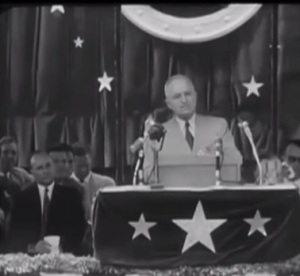
Though President Truman was in Little Rock for a military reunion, he did conduct some official business while here.  In his Presidential role, he spoke at the dedication of War Memorial Park on June 11, 1949.

(It is sometimes erroneously reported that he dedicated the stadium.  That took place in September 1948, at a Razorback game with former Razorback player and future Lt. Governor Maurice “Footsie” Britt delivering the keynote.)

President Truman’s address took place inside War Memorial Stadium at 2:30 p.m..   It was not a brief dedicatory speech, but instead was a lengthy treatise on foreign affairs.  The address was carried live on nationwide radio (though some radio networks opted to broadcast it later).  The text of his address can be found here.

The stadium was by no means full.  A major reason for that was that many thousand individuals had turned out to witness a parade downtown in which President Truman marched along side Governor Sid McMath.  The parade was in conjunction with the military reunion.  Given the June heat in Arkansas (in which parade spectators had been standing for several hours) and the difficulty of getting from the parade route to the stadium, most (if not all) parade spectators opted for skipping the presidential address.

Before the parade, President Truman (who was still riding high from his upset victory in the 1948 election) was asked by a local reporter if he would run in 1952. He refused to answer stating that the national media would think he had planted the question with a local member of the press.

Prior to the name War Memorial Park, the land had been known as Fair Park.  It was a former location of the State Fair.  In the 1930s, it had briefly been known as Overman Park in honor of then-Mayor R. E. Overman.  The City Council had named it for him as a tribute to his work on a variety of projects. When he displeased them, they reversed their decision and renamed it to Fair Park.

Little Rock Look Back: Truman attends WWI Reunion

Outside of his capacity as President of the United States, Harry S. Truman visited Little Rock on June 10, 1949, for the annual reunion of the 35th Division, his World War I unit.  He was joined on this trip by members of Arkansas’ congressional delegation and his sister.

Upon arriving in Little Rock, President Truman gave brief remarks at a welcome reception inside Robinson Auditorium.  He also spoke at a reception at the Hotel Marion and following a ball given at Robinson Auditorium.

In all of his June 10th remarks, President Truman spoke of the hospitality he always enjoyed in Little Rock. He discussed visits he had made over the years, including a stay at the Hotel Marion while in Arkansas campaigning for Senator Hattie Caraway.

At the ball, he commented on how, as a Baptist, he had not learned how to dance.  He then joked that however he had picked up other habits which were perhaps not in keeping with his Baptist faith.

At one event, President Truman asked all in attendance to shake hands with their neighbors as a way to shake his hand by proxy.  He explained that on inauguration day, he had shaken over 25,000 hands. Given the fact that he signed 600 documents a day, regardless whether he was in Washington or not, he felt he could not keep up with shaking hands all day.

As he concluded the day, he previewed that he would be giving a national address the next day while in Little Rock.  In his usual, self-deprecating way, Truman remarked “…if you want to hear the President of the United States you had better come out to the stadium tomorrow, and I will tell you something that will be good for your souls.”

The texts of all of his remarks while in Little Rock can be found here.