Little Rock Look Back: J. J. McAlmont (LR Mayor and UAMS founder)

Future Little Rock Mayor John Josephus McAlmont was born on this date in 1821 in New York state. (Various reports give his birth date as December 22 — but the family reports December 19 as the date.)

After studying medicine in Pennsylvania and Ohio, he arrived in Little Rock in March 1850 with his family.  After practicing medicine in nearby Benton, he returned to Little Rock in 1852.  In addition to being a physician, he was a pharmacist.

During the Civil War, he relocated his family out of Little Rock (to a spot where the present day community of McAlmont bears his name).  Following the war, he moved them back to the City.  In 1866 he was elected Mayor of Little Rock, the first elected Mayor since local government resumed following the Civil War.

In October 1879, he and seven other physicians founded the Arkansas Industrial University Medical Department in Little Rock. This institution has grown into the University of Arkansas for Medical Sciences.  He served on the faculty of the medical school for several years.

Dr. McAlmont died in September 1896.  He is buried at Mount Holly Cemetery.  In addition to the McAlmont community bearing his name, there is a McAlmont street in downtown Little Rock which was named in his memory.

Little Rock Look Back: LRSD Choirs sing Christmas Carols on Robinson Auditorium steps

In front of Robinson Center, one of the sculptures is called “Let the Music Play.” 79 years ago today, the music played on the front steps of the building as construction continued on the inside.

On the afternoon of December 18, 1939, 500 school children from elementary schools were joined by the A Capella Choir of Little Rock High School as they sang Christmas carols on the front steps of the auditorium on a weekday afternoon. The singers were accompanied by the Little Rock High School Brass Sextet. The invocation for the event, which was sponsored by the Little Rock Council of Parents and Teachers, was delivered by the Right Reverend Richard Bland Mitchell, the Episcopal Bishop of Arkansas.

A Christmas tree in front of City Hall was lit up as part of the ceremony as well. Media coverage noted that the audience witnessing the program stood on the front steps of the Pulaski County Courthouse, the side lawn of City Hall and in front of the steps of Robinson Auditorium. It was also noted that most windows in the nearby government buildings were filled with people watching the festivities.

Little Rock Look Back: The THREE Mayoral Elections of 1951

On September 24, 1951, Pratt C. Remmel was nominated for Little Rock Mayor by the Pulaski County Republican Committee.  This was the first time there had been a GOP mayoral nominee in Little Rock since the 1880s.  It also set up a competitive General Election mayoral race for the first time in decades.

Incumbent Sam Wassell, a Democrat, was seeking a third two-year term. First elected in 1947 (after being unsuccessful in his quest for the position in 1945), Wassell had survived a primary and runoff in the summer of 1951. So confident was Mayor Wassell that Little Rock would remain a Democratic city, he barely campaigned for the office in the General Election.

While Mayor Wassell was ignoring the “run unopposed or run scared” maxim, he was not incorrect that Little Rock remained a stronghold for the Democratic Party.  Indeed there were no Republicans seeking office in Little Rock other than for mayor in 1951. Few, if any, Republicans had run for the City Council since Remmel had unsuccessfully made a race in the late 1930s.

In response to inquiries as to his lack of campaigning, Mayor Wassell averred that the voters had shown their support for him on July 31 and August 14. He continued that he did not see a reason to think the result would be different in November.  The 68 year-old Wassell stated that if he could defeat a young opponent who had over a decade of experience as an alderman, he could certainly defeat a young opponent who had no governmental experience.

In the July 1951 Democratic mayoral primary, Wassell had been challenged by Alderman Franklin Loy and grocer J. H. Hickinbotham.  Two years earlier, Wassell, seeking a second term, had dispatched Loy rather handily by a vote of 7,235 to 3,307.  He fully expected that 1951 should produce the same results as 1949.

But Wassell was trying to buck recent history.  Since 1925, no Little Rock mayor had won a nomination for a third term. One (J. V. Satterfield) had chosen not to seek a second term, while two (Pat L. Robinson and Dan T. Sprick) were defeated in their quest for two more years. Of those who served two two-year terms, a brace (Horace Knowlton as well as Charles Moyer in 1945) had not sought a third term.  Moyer HAD sought a third two-year term during his first stint as mayor (1925-1929) but was defeated. Likewise R. E. Overman also lost his bid for a third term.

By trying to win a third term, Wassell was seeking to return to the era of the first quarter of the 20th Century where several of his predecessors had been elected at least three times.  In his 1951 campaign, he was promising to stay the course of the previous four years. He answered his opponents’ ideas with a plan to continue providing services without having to raise taxes.  So confident was he of besting Loy and Hickinbotham that he predicted a 3 to 1 margin of victory.  A large horseshoe-shaped victory cake sat in a room at his campaign headquarters inside the Hotel Marion on election night.

The cake would remain uneaten.

When the results came in, Wassell had managed to get 5,720 votes to Loy’s 4,870. But with Hickinbotham surprising everyone (including probably himself) with 1,235 votes, no one had a majority.  The race was headed for a runoff two weeks later to be held in conjunction with the other city and county Democratic elections on August 14.

The day after the July 31 election, the Arkansas Gazette showed an dazed Wassell with top campaign aids in a posed picture looking at the results.  Further down the page, a jubilant Alderman Loy was surrounded by his wife and supporters.  The differing mood reflected in the photos was echoed in the two men’s statements that evening.  Wassell castigated his supporters for being overly-confident and not getting people to the polls. He further apologized to the Little Rock electorate for having to be “inconvenienced” with another election.  Loy, on the other hand, was excited and gratified. He thanked the citizens for their support.

The day of the runoff, a 250 pound black bear got loose at the Little Rock Zoo after the zoo had closed and took 45 minutes to be captured and returned to its pit.  Perhaps Wassell wondered if that bear was a metaphor for the Little Rock Democratic electorate.  Much like the bear returned to its pit, Little Rock’s Democrats returned to Wassell — or at least enough did.  Wassell captured 7,575 votes, while Loy received 6,544.  The moods that night echoed those two weeks earlier.  Wassell, his wife, and some supporters were combative towards the press (they were especially critical of the “negative” photo for which he had posed) while Loy was relaxed and magnanimous in defeat.

The closeness with which Mayor Wassell had escaped with the Democratic nomination was noticed.  A group of businessmen started seeking someone to run as an independent.  Likewise the Pulaski County GOP was open to fielding a candidate.  At a county meeting held at Pratt Remmel’s office, the offer of the nomination was tendered to their host.

After he was nominated in September, Remmel (who was County Chair and State Treasurer for the GOP) visited with the business leaders who were trying to find someone to run. He had made his acceptance of the nomination contingent on being sure there would be a coalition of independents and possibly even Democrats backing him in addition to the Republicans.

Once he was in the race, Remmel was tireless.  He blanketed newspapers with ads touting his plans and criticizing the lackadaisical attitude of his opponent. He made speeches and knocked on doors. He worked so hard that once during the campaign his doctor ordered him to 48 hour bedrest.

Mayor Wasssell, for his part, was confident voters would stick with party loyalty.  But as the November 6 election day grew nearer some City and County leaders grew increasingly wary.  Still, the Mayor rebuffed their concerns.  Someone had even gone so far as to set up a campaign office for him in the Hotel Marion. But before it could officially open, it was shut down.  (While the Mayor had criticized his supporters for being overly-confident in the July election, he apparently was not concerned about too much confidence this time around.)

Remmel had an aggressive campaign message promising better streets, more parking availability, a new traffic signalization plan, and the desire for expressways. His slogan was “a third bridge, not a third term” in reference to the proposed expressway bridge across the Arkansas River. (This would eventually be built and is now the much-debated I-30 bridge.)

The Saturday before the election, the Hogs beat Texas A&M in Fayetteville at Homecoming while a cold snap held the South in its grip.  In addition to featuring both of those stories heavily, that weekend’s papers also carried the first ads advocating for Wassell. They were Wassell ads, in a manner.  Ads from the County Democratic Committee, County Democratic Women, and Democratic officeholders in the county urged voters to stick to party loyalty.  That would be the closest to a Wassell campaign ad in the autumn of 1951.

The night before the election, Wassell made his only radio appearance of the campaign while Remmel made yet another of his several appearances. Earlier that day in driving rain, there had been a Remmel rally and caravan through downtown, including passing by City Hall.

That evening, as the results came in, the fears of Democratic leaders were well-founded.  Remmel carried 23 precincts. Wassell won two precincts and the absentee ballots. His victories in those three boxes were only by a total of 46 votes.  Remmel won both Wassell’s home precinct (377 to 163) and his own (1,371 to 444).

In the end, the total was 7,794 for Remmel and 3,668 for Wassell.

And Little Rock was poised to have its first Republican mayor since W. G. Whipple had left office in April 1891, sixty years earlier.

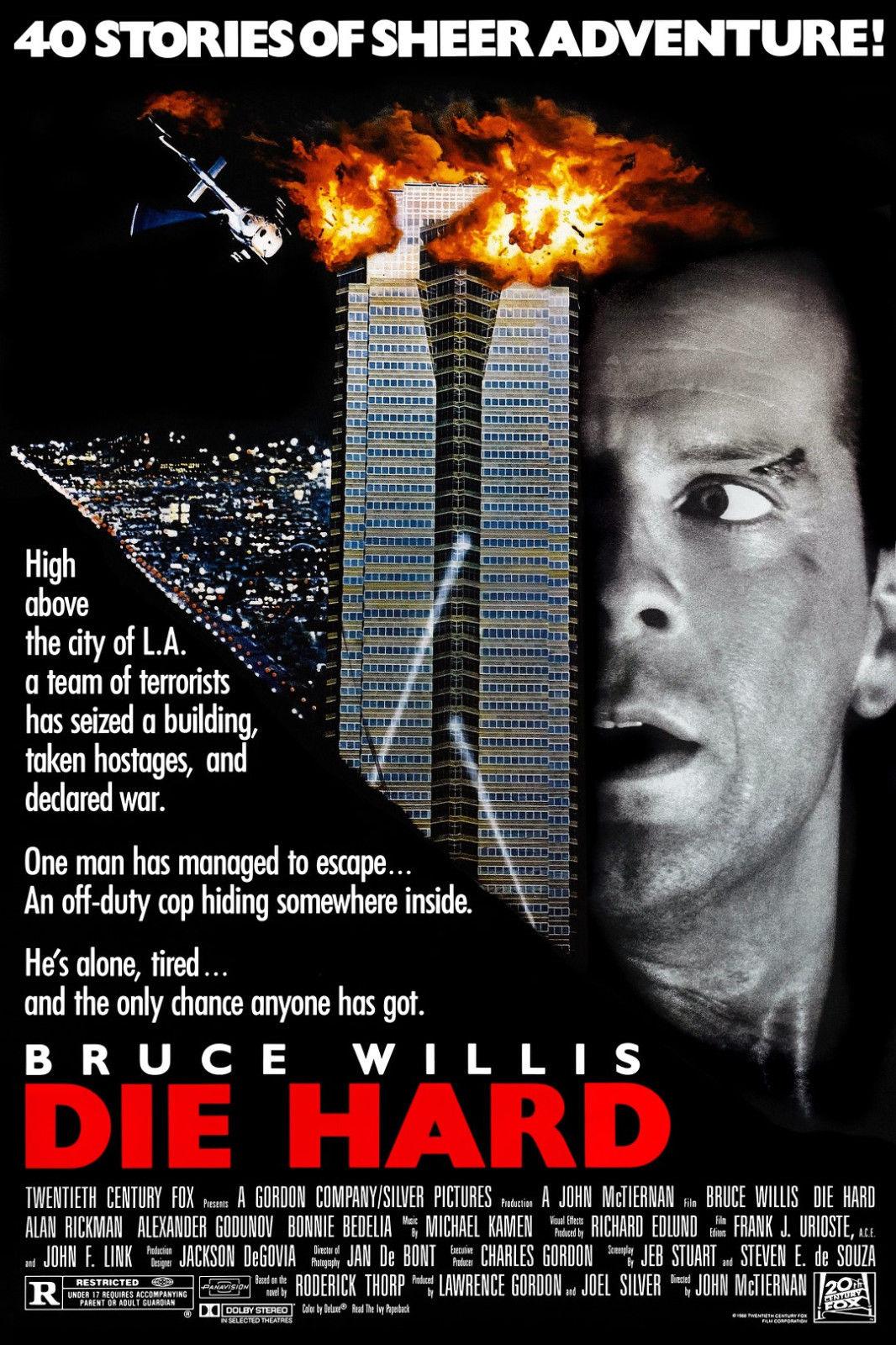
DIE HARD tonight at the CALS “Not-Quite-Holiday Film Fest” at the Ron Robinson Theater

Image result for die hardIt’s a wonderful life, unless you happen to find yourself in Nakatomi Tower on Christmas Eve. Tonight, John McClane utters his famous “Yippee Ki Yay…….” quote as part of the Central Arkansas Library System (CALS) ”Not-Quite-Holiday” Film Fest.

Starring Bruce Willis, this 1988 film also features Bonnie Bedelia, Alexander Godunov, Reginald Vel Johnson (and his Twinkies), Paul Gleason, James Shigeta, William Atherton, Hart Bochner, and De’voreaux White.  It was also the first theatrical film of the ever-cool and charmingly evil Alan Rickman as Hans Gruber.

It starts at 6:30 pm at the Ron Robinson Theater, 100 Rock Street in Library Square.  Admission is $5. Tickets are available at ronrobinsontheater.org.

As part of the holiday film series, concessions at Ron Robinson Theater include an expanded hot drinks menu and gourmet candied popcorn options.

The Not-Quite-Holiday Film Fest is sponsored in part by The Point 94.1 and The Ride 106.7.

Little Rock Look Back: Charles E. Bussey Jr. born 100 years ago

Today marks the centennial of the birth of future Little Rock Mayor Charles Bussey.  Born in Stamps on December 18, 1918, he would spend his adult life in Little Rock (after college and World War II service).

Throughout his life he was a trailblazer. He was the first African American Sheriff’s Deputy in Pulaski County and expanded the Junior Deputy program into the African American community.

In 1968 he became the first African American elected to the Little Rock City Board of Directors. He was not the first African American to run for the City Board, but he was the first to win a race. Mr. Bussey sought support not just from the African American community, but from all sectors of Little Rock.

Apparently, while campaigning in 1968, he deliberately went into the Arkansas headquarters of segregationist presidential candidate George Wallace to see about leaving campaign literature. A hulking man with a broad smile, he shocked the young receptionist. He was undoubtedly the first (and probably last) African American to enter that campaign headquarters.

He served from 1969-1977 and again from 1979 through 1991. In 1981 he was selected by his fellow City Directors to serve as Little Rock’s Mayor, which made him the first African American Mayor of Little Rock. He served as Assistant Mayor of Little Rock for a total of 8.5 years which is the longest of anyone in the City’s history.

Throughout his lifetime Mayor Bussey championed youth outreach efforts. He also was active in the Arkansas Municipal League, National League of Cities, West Little Rock Rotary Club, Elks, Shriners and many other organizations.

In 2006 he was posthumously inducted into the Arkansas Black Hall of Fame. The previous year, 20th Street in Little Rock was renamed in his honor. In 2015 he was included in the Arkansas Civil Rights Heritage Trail.

At the 2005 street naming ceremony, the following remarks about Mayor Bussey were made:

Little Rock Mayor Jim Dailey (who was mayor in 2005 and had served on the City Board of Directors with Bussey)  “Charlie’s heart was in this City, so it is fitting that this street bearing his name goes right through the heart of Little Rock. Especially in those early days on the Board, even before I served with him, African-Americans were really struggling to be involved.  He helped so many people to be involved in Little Rock and the entire state.”

Johnnie Pugh, who was City Director for Ward 1 at the time noted: “He certainly made Little Rock a better place for children and youths.  Those that he touched have grown up and continued to be engaged in making the City a better place for everyone.”

In a letter written by former Mayor Lottie Shackelford, Bussey was described as “a first class dresser who spent much of his working life in and around City Hall.  He was a man always on the move who worked to make Little Rock a first class city.”

The late Myra Jones, a former State Representative and LR City Director, served as Assistant Mayor when Bussey was Mayor.  Remembered Bussey “would tell me who to see, but never tell me what the purpose was.  That was for me to discover; and in so doing, it made me a better Director.”

Larry Staggers, a longtime employee in the City’s Parks & Recreation Department called Bussey, “an extraordinary man in an extraordinary time.”

14th EVER Nog Off results. And the winners are….

Historic Arkansas Museum has announced the winners of last Friday’s 14th ever Nog Off!
Taster’s Choice Award
Eggnog Ice Cream by Loblolly Creamery
“BAE!”
“Love this play on the traditional nog. I think this may be my new favorite ice cream and as it melts it turns into nog and stays cold.”
“Wanted to eat my weight in it!”

People’s Choice Award
Pioneer’s “Nog on a Log” Eggnog by Arkansas Pioneer’s Association
“I love this, and I am now snockered.”
“So well-balanced; yummy!”
“Great mouthful, lovely alcoholy aftertaste.”

Not Your Great, Great, Great Grandfather’s Eggnog
Citrus Capital Eggnog by Matias de Matthaeis at the Capital Hotel
“Lemon meringue pie goodness.”
“Christmassy, very inventive.”
“Amazing presentation. It was like opening a present – first a raft of beautiful citrus custard and candied orange peel, and then the most other worldly beverage underneath.”

Congratulations to our winners! And thank you all so much for being such great partners in this much-beloved, community event! Here are some comments on the other nogs:

Nicholas Peay’s Eggnog (Rachel Worthen and Bill Worthen): “Bourbon cake batter.” “Good Scottish kick in the pants.” “This is like a nog cloud – reminds me of a sabayon – so light and fun to drink.”

Keg Nog (Stone’s Throw Brewing and The Pizzeria): “Yummo.” “Surprising.”” Fun and effervescent.”

Hollisopp & Chapple Nog (Allsopp and Chapple Restaurant and Bar): “Soooo drinkable.” “So friendly and delicious.” “Savory undertones – nice kick.” “This is one I could sip all night long!”

BootlEgg Nog (South on Main): “Whiskey was perfect.” “Love it. Love the people.” “Goldilocks – just right.”

“’Tis the Reason” Eggnog and Bread (Old Mill Bread and E.J.s Eats & Drinks): “Smooth.” “This is what the holidays are all about!”

Big Orange Eggnog (Big Orange: Mid-Town): “Great vanilla notes, cinnamon and smooth.” “Christmas in your mouth.” “Gingerbread cookie.” “This has notes of cotton candy!” “Enjoyed the tantalizing quality of the spiciness.”

Until next time. Happy Nogging!

Little Rock Look Back: A Bowl of Chili’s Role in Civil Rights

Minnijean Brown Trickey and Dent Gitchel at the 2006 chili cook-off (Richelle Antipolo/Flickr)

On December 17, 1957, perhaps the most famous chili bowl was dropped in the Central High cafeteria.

It was, of course, not just any chili bowl.  It was dropped by Minnijean Brown as she was being harassed by white students who were trying to make it difficult for her to navigate the cafeteria.

Balancing food on a cafeteria tray and maneuvering around narrow paths around chairs and tables can be difficult in the best of circumstances. But doing it when you are being harassed for the umpteenth time that day makes it even more of a challenge.

Reports differ as to whether she dropped the tray or let it slip. In the pandemonium of the moment, it may be six of one, half-dozen the other.  But what is not disputable is that the chili fell on a junior who was sitting at a table and not taking part in the harassment. That junior was future attorney and UA Little Rock Bowen School of Law professor Dent Gitchel.

While no one had stepped in to stop the pestering, after Minnijean had dropped the chili on Dent, officials swooped in and sent both students to the principal’s office.  Dent was sent home to change clothes.  Minnijean was suspended for six days.  This incident and suspension would be fodder for her foes who pressed for her eventual expulsion in February 1958.  (The student other student involved in that incident – a white female – was only suspended and later returned for the remainder of the school year.)

Minnijean and Dent went their separate ways.  While many knew about the chili episode, the name of the student who was on the receiving end had become forgotten.  It was not until many years later that his name was once again attached to it.  In 2005, he was named in an article in an historical journal.  By that time, he was a retired law school professor.  Later that year, he gave a brief interview to the Arkansas Democrat-Gazette about it.

In March 2006, the Central High Museum Inc. board organized a chili cook-off as a fundraiser.  Minnijean and Dent reunited for the first time since December 1957 to serve as co-chairs and judges of the cook-off.  The other judge was Central High principal Nancy Rousseau.  There were nine chilies made by Little Rock area celebrities:  Mark Abernathy of Loca Luna and Bene Vita, “Broadway” Joe Booker of Citadel Communications, Dave Williams of Dave’s Place, Max Brantley of Arkansas Times, Michael Selig of Vermillion Water Grille, Pamela Smith of KATV, Channel 7, Sanford Tollette of the Joseph Pfeifer Kiwanis Camp, Scott McGehee of Boulevard Bread Co. and state Sen. Tracy Steele.

Eleven years ago – on the fiftieth anniversary of the incident — NPR did a story and interviewed by Minnijean and Dent.  In various interviews, Minnijean has commented that she told officials that day she knew that Dent was an innocent bystander.  In the few public statements he has made, Dent has commented that while he did not cause problems for the Nine, he also was not one of the very, very few white students who befriended them.  Today, they both focus their comments on the continued need for reconciliation as well as facing up to the issues in order to move forward.

So have a bowl of chili today. And think about how far we have come.  And how very far we still have to go.