 A confident woman strode into Foster’s, the bar tucked inside the second floor of the Arkansas Repertory Theatre on a Wednesday evening. Extending her hand she grinned and offered, “I’m what’s left of Elizabeth Ashley after rehearsals” as she cracked a smile and delivered one of her laughs that starts in the throat and bursts forth like a well-tuned reed instrument.
After getting settled (well, she is never settled, her energy manifests itself in gesticulations and postures and poses which change with the stories she recounts) she is ready to begin the conversation.
“It happens every time. Ev! ery! time! There comes a point in rehearsals when you think, ‘What have I gotten myself into?’ And then, once you have gotten past that point, it is like the brain forgets that feeling. (She pauses.) Until the next time.”

Ashley is in Little Rock preparing to open in Holland Taylor’s Ann at the Arkansas Repertory Theatre. After preview performances on January 29 and 30, it opens officially on January 31 and runs through February 23. When it was in New York a few seasons ago she missed seeing the one actor play, which is about Texas Governor Ann Richards (“I was off appearing in something somewhere else”) but had heard about it. She recalls thinking “What a fabulous idea to do a play about Governor Richards.”
Long a student of politics, which dates back to her childhood in Louisiana, Ashley had known about Ann Richards even before the 1988 Democratic Convention. “You would see photos, and she would stand out. I loved the way she looked. She would play by the rules – but just barely. She reminded me of the church women from my childhood, but more genuine, more honest. She dared to be herself.”
“Ann Richards was smart – but not a smartass. She had wit and was non-apologetic about it. My mother raised me to respect that.”
The play is directed by frequent Ashley collaborator Michael Wilson. The pair have worked together on Broadway, Off Broadway, and in regional theatres. (Some of those productions have also involved Will Trice, now the Rep’s Executive Artistic Director.) She has previously commented that Wilson is good at paring down and focusing her performance during the rehearsal process. “During rehearsals we don’t hold anything back; we have worked together so much and so long. Rehearsal is like psychoanalysis, only more painful. As an actor, you have to remove all the layers to find the truth. Directors have to do the same thing.”
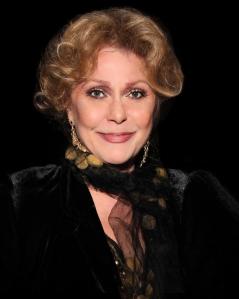 “He [Wilson] has an eye for telling the story. Not just from performers but also the way he guides designers to paint with lights and sound, and the overall physical production.”
Ann Richards is the latest in a string of larger-than-life characters which Ashley has portrayed, (“I’ve never underacted,” she jokes). A conversation with her is sprinkled with casual references to playwrights Tennessee Williams and Edward Albee, both of whom wrote roles in which she has performed and received glowing notices. While she has starred in motion pictures and television (and can currently be seen in the Netflix show “Russian Doll”) much of her career has been on the stage.
After acting in several Off Broadway plays in the late 1950s and early 1960s, Ashley’s big break came in the play Take Her, She’s Mine. It was originally written by Henry and Phoebe Ephron as a screenplay. But Art Carney was looking for a stage project after finishing his run in the TV show “The Honeymooners.” He and director George Abbott, who was the pre-eminent director of Broadway comedies and musicals throughout much of the 20th Century decided to make it into a play. Carney would play the father of a late teen daughter and Phyllis Thaxter played the mother. To portray one of their daughters Abbott auditioned most of the leading Broadway ingénues of the era.
“Mr. Abbott was displeased with what he saw,” remembers Ashley. “He commented that he wanted ‘the most peculiar girl in New York.’ My agent got word of that and called me and told me to get up to Mr. Abbott’s office immediately.” Ashley walked into the audition clad in the jeans and leather jacket she had been wearing when she got the call. She had recently cut her own hair which was further matted down and windblown by the helmet she had worn as she rode forty-plus blocks on the back of a friend’s motorcycle from Greenwich Village to the Times Square office.
Nonetheless, she read for Mr. Abbott, he offered a few suggestions, and she read again. After the audition, before she could get to the elevator, the show’s producer Hal Prince chased her down in the hallway and brought her back into the room where she was offered the role.
“That may be the only time I have been cast in a role I’ve auditioned for. Usually I don’t get those parts.” She smiles and chuckles after that last statement. “Mr. Abbott liked the sound of my voice. By circumstance and situation, I was cast.”
During the out-of-town tryouts and on Broadway, Ashley’s dressing room was near Carney’s. “All his friends–old comedians and new comedians would come visit him. They liked me. I learned how to do physical comedy from them.”

The rehearsal process saw the play get reshaped. “What had started out as a comedy about a family gradually became focused on the relationship between the father and the daughter. That was all due to Mr. Abbott and Art Carney.”
While she may be modest about how her talent impacted the development and success of the play, others took notice. In addition to receiving the Theatre World Award as an outstanding newcomer, Ashley received the American Theatre Wing’s 1962 Tony Award for Supporting or Featured Actress for her role (which was a fictionalized version of a teenage Nora Ephron).
Take Her, She’s Mine would be the only time she was officially directed by Abbott, but she stayed in touch with him. “He lived to be 107 (he died in 1995); I would often call him and invite him to see me in plays during rehearsals or out of town. He would give me notes and advice on what was working and what was not. He would also tell me what I had the power to fix and what was beyond my performance.”
After originating the role of Corie in Neil Simon’s breakout hit Barefoot in the Park, Ashley appeared in a few movies and then retired from acting, for what would be the first of several times that life events have intervened in her career. “I had a husband who was an actor who did not want me to work.” She says wistfully, “So I didn’t. I would do a guest appearance on TV here or there. But that was it.”
After a divorce and amidst few acting opportunities (“back then an actor’s wife was furniture, his ex-wife was a pariah”), Michael Kahn at the American Shakespeare Theatre approached her about starring as Maggie in a production of Cat on a Hot Tin Roof. Kahn wanted to direct an American classic play and contacted Tennessee Williams about restoring some of the cuts which had been forced by censors in the original production in the 1950s.
“We thought he was going to bring in a bound manuscript,” Ashley recalls. “But instead – and I’ll never forget it – Tennessee walks in to rehearsals with two or three grocery bags full of loose pages. Some of it was written on paper, some on napkins, some on cardboard. He emptied it on a table, and we would go through it. And he said to me (and at this point she affects Williams’ accent) ‘Just read this. We’ll figure out what we want, and what we don’t.’”
Working on that project with Williams was exciting and fulfilling, if a bit surreal. “I had grown up going to plays with my mother at Louisiana State University. When I was around nine, I had seen Summer and Smoke (an early Williams’ play).” It was that production which had lit a fire in her about the power of the theatre.
While the 1974 revival did not completely replicate what Williams had originally written, it did capture the original spirit. (It is also the version most frequently performed now.) It also cemented a decade long friendship between Williams and Ashley that lasted until his death in 1983. They would frequently see each other, and Williams had a particular fondness for Ashley’s mother. But there were limits to their friendship. “When I needed to get away from everyone and would go to a remote island, somehow he would find me. I loved the man, but you did not want him as a house guest.” She raises her eyebrows and winks after that last comment.
 After a sold out run in Stratford, Connecticut, Cat on a Hot Tin Roof was brought to Broadway. She received her third Tony nomination for that performance (having received a second one for Barefoot in the Park). In her typical fashion, Ashley gives the credit for her portrayal to the work of Kahn the director and to Williams himself. Since that experience she has appeared in numerous Williams plays on Broadway, Off Broadway, and in regional theatre. She was the first person to play both Maggie and Big Mama (Maggie’s mother-in-law) in major professional productions of Cat on a Hot Tin Roof.
A conversation with Ashley brings up the names of many of her costars and friends from her over six decades of work as an actor. In addition to starring in Oscar-nominated movies and her substantial stage credits, that career has included everything from appearances on TV game shows to soap operas and her Emmy-nominated four years on “Evening Shade” created by Arkansan Linda Bloodworth-Thomason.
Ever the Southern lady, she does not speak ill of others—by name. Stories of less-than-stellar individuals are told with generic nomenclature. But the names that were peppered in the conversation included Angela Lansbury, Charles Durning, James Earl Jones, John Larroquette, Geraldine Page, Anjelica Page, Barbara Bel Geddes, John Cullum, Estelle Parsons, Terrence McNally, Amanda Plummer, Leonard Bernstein, Isaac Stern, Gregory Peck, and Ben Bradlee.
While appearing in Cat on a Hot Tin Roof at the Kennedy Center, Ashley renewed ties with the Washington, DC political world. These connections had first been fostered nearly a decade earlier during her service as an original member of the National Council on the Arts, which oversees the National Endowment for the Arts. Broadway producer Roger L. Stevens, who had been arts advisor to President Kennedy and President Johnson, was the founding chairman of the body. Ashley had met him in the early 1960s when she understudied Betsy Von Furstenberg in the Jean Kerr play Mary, Mary, which he produced, and the pair had stayed in touch.
“With a lot of older men on the committee, he was looking for someone he knew who was female, moderately well-known, and under 30–so he asked me. I knew nothing about grants and funding, but I learned so much.” The experience included having to testify before Congress. Photos from that era show her seated alongside Stevens and Gregory Peck before a congressional committee.
A few years later she was back in DC appearing at the Kennedy Center (also a Roger L. Stevens project), this time during the era of the Watergate hearings. She was friends with members of the press as well as members of Congress. “As I would see them in social settings, one side would often try to use me to find out what the other side knew.” But if Ashley knew, she did not disclose back then, or today. She just smiles her gracious welcoming smile and shifts in her chair, letting her fingers do a staccato tap on the tabletop.
As Ashley speaks, you can almost hear the wheels turning in her head as it races a thousand miles a minute with stories, facts, and memories. “I’m sorry. I know I take a one sentence answer and turn it into a forty sentence one” she remarked at one point in the conversation. With so much swirling in her head, she admits that offstage, “I sometimes struggle with names; I call my son, my dog’s name” (and lets out a hearty laugh). That is part of her charm. The sly smile, the twinkling eyes, the candor, the self-awareness, the ability to be peripatetic while sitting in a chair—these all add to the essence which is Elizabeth Ashley
 As documented in her book Actress: Postcards from the Road, Ashley has overcome quite a few obstacles. There have been even more since the book was published in 1978. But like Richards, who was also up front about facing her own challenges, Ashley is an indomitable survivor who keeps bouncing back.
This resiliency is only one reason Ashley is well-suited to play Richards. She is a Southern lady, who loves politics and is an excellent storyteller. A challenge of a one-person show can be making sure that the delivery stays engaging. There can be a sameness as the lone actor recounts anecdote after anecdote for the audience. A true storyteller makes each story seem fresh. With Ashley, as with Richards in the play, there is sense of excitement because there is always one more story to tell. Or to be honest, probably about fifteen different additional stories to tell at any given moment.
 Ashley feels that Richards has one more story to tell, even now. Though the play is set after Richards left the governor’s office in 1995, Ashley finds the message as relevant today as in the late 1990s. “While we are staying faithful to the script (which involves Richards making an address in Texas twenty years ago), I think the audiences will feel like Ann Richards is speaking to people in Arkansas, today.”


 DINOSAURS ARE TAKING OVER MUSEUM OF DISCOVERY! What better way to celebrate the opening of “Dinosaurs: Fossils Exposed,” the feature exhibit opening Saturday, January 18, than with a dino party complete with prehistoric activities and demos! The fun runs from 10am to 3pm.
 Tonight (January 17), at the Preserve Arkansas annual awards dinner, attorney John P. Gill will be recognized with the Parker Westbrook Award.
 Three Little Rock organizations were announced today as recipients of grants from the National Endowment for the Arts. They are: Arkansas Symphony Orchestra, Chamber Music Society of Little Rock, and the Oxford American magazine.
 On January 16, 1832, Mayor Matthew Cunningham MD presided over Little Rock’s first council meeting.
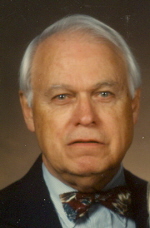 On January 16, 1916, future Little Rock Mayor Martin Borchert was born in Stuttgart. After graduating high school he moved to Little Rock. During World War II, he served as a bomber. He started work at ACME Brick and spent 21 years there before engaging in other business interests. Among these businesses were Martin Borchert Co., ASCO Hardware, Detection Systems Inc. and Component Systems Inc. In 2005 he was inducted into the Arkansas Construction Hall of Fame.
 Little Rock Culture Vulture