Unknown's avatar

About Scott

A cultural thinker with a life long interest in the arts and humanities: theatre, music, architecture, photography, history, urban planning, etc.

Little Rock Look Back: Dr. John J. McAlmont, LR’s 25th Mayor and a founder of UAMS

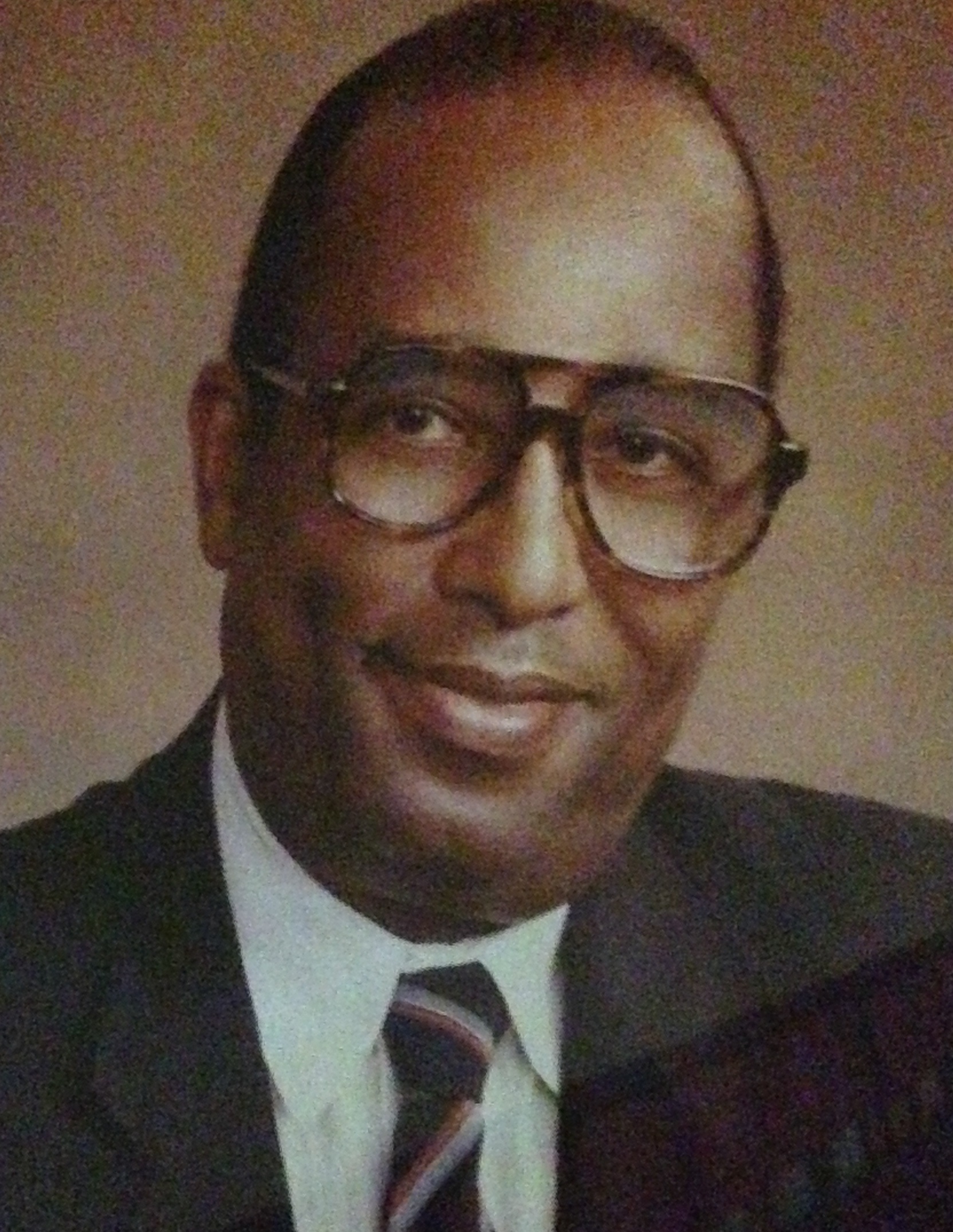
McAlmontJohnJ_fFuture Little Rock Mayor John Josephus McAlmont was born on this date in 1821 in New York state. (Various reports give his birth date as December 22 — but the family reports December 19 as the date.)
After studying medicine in Pennsylvania and Ohio, he arrived in Little Rock in March 1850 with his family.  After practicing medicine in nearby Benton, he returned to Little Rock in 1852.  In addition to being a physician, he was a pharmacist.

During the Civil War, he relocated his family out of Little Rock (to a spot where the present day community of McAlmont bears his name).  Following the war, he moved them back to the City.  In 1866 he was elected Mayor of Little Rock, the first elected Mayor since local government resumed following the Civil War.

In October 1879, he and seven other physicians founded the Arkansas Industrial University Medical Department in Little Rock. This institution has grown into the University of Arkansas for Medical Sciences.  He served on the faculty of the medical school for several years.

Dr. McAlmont died in September 1896.  He is buried at Mount Holly Cemetery.  In addition to the McAlmont community bearing his name, there is a McAlmont street in downtown Little Rock which was named in his memory.

12 Days of Christmas Movies: HOME ALONE & HOME ALONE 2: LOST IN NEW YORK

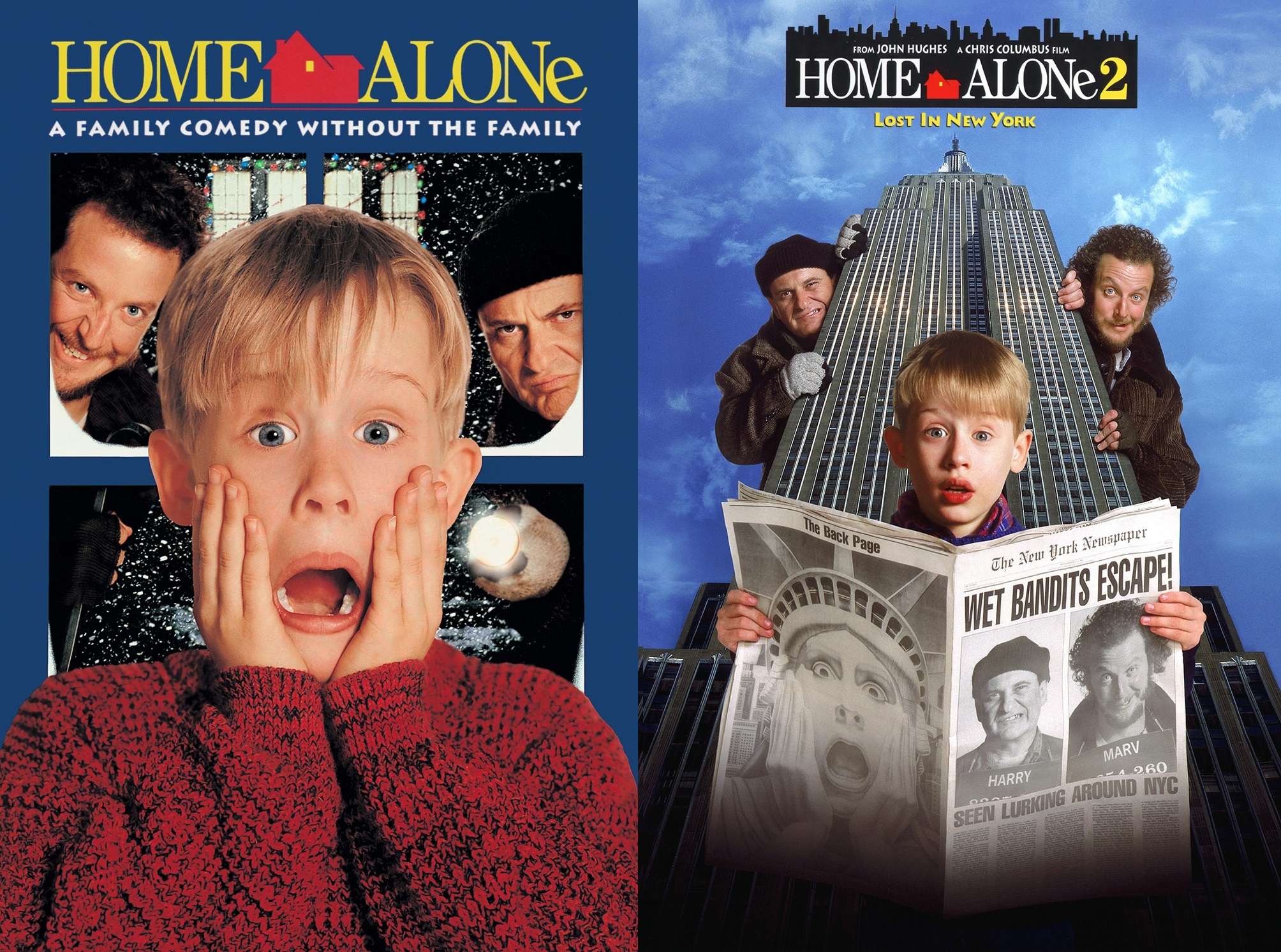
home aloneJohn Hughes’ Home Alone and Home Alone 2: Lost in New York combine the spirit of Christmas with Hughes’ own brand of safe anarchy.

While the original 1990 movie is by far superior, the 1992 sequel still has its charms.  I refuse to consider anything after that because they only weaken the franchise.

These movies nicely balance slapstick with messages of redemption. But they don’t veer too far in one direction or another.

Macauley Culkin (whose aunt Bonnie Bedelia stars in two of my other favorite Christmas movies – Die Hard) is certainly a key reason for the success. He is neither cloying or obnoxious (or obnoxiously cloying).

While the adults are meant to be more cartoonish, they still keep the film grounded.  Joe Pesci and Daniel Stern have wonderful chemistry as the Wet Bandits.  John Heard’s slightly befuddled father is an apt foil for Catherine O’Hara’s intense mother. The latter displays much warmth when needed, as well.

John Candy turns in a fun cameo in the first film. If you blink, you may miss future Tony nominee and The Newsroom actress Hope Davis as a French ticket agent.  The second film loads up on supporting players from Oscar winner Brenda Fricker, Tony nominees Tim Curry and Dana Ivey, SNL’s Rob Schneider and even a cameo from The Donald.  Former movie song and dance man Eddie Bracken plays the NYC toy store owner.

These are light-hearted films which still make me laugh out loud.  They are certainly enjoyable any time of the year, but especially at Christmas.

BLUE VELVET at the CALS Ron Robinson Theater tonight courtesy of Little Rock Film Festival and Arkansas Times

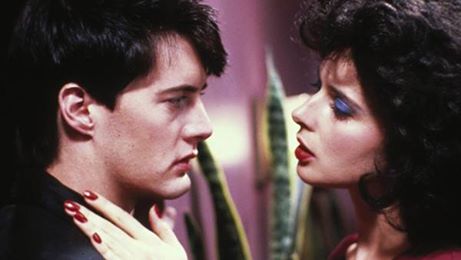
Blue VelvetTonight BLUE VELVET will be shown in downtown Little Rock.  David Lynch’s powerful and deranged 1986 classic is part of the Arkansas Times Film Series co-sponsored by the Little Rock Film Festival.

Two other newspapers bearing the name “Times” have weighed in on this flick.  The Los Angeles Times has called it “the most brilliantly disturbing film ever to have its roots in small-town American life” and the New York Times deemed it “an instant cult classic … one of a kind.” This movie has it all: mystery and intrigue, severed ears, PBR, Roy Orbison.

The screening will be held at Ron Robinson Theater at 7 p.m. on Thursday, Dec. 18 (tickets are $5).

Little Rock Look Back: School Children Sing Christmas Carols at Robinson Auditorium

Christmas Carols

Photo from Arkansas Gazette

Right now, music is silenced at Robinson Center.  During the renovation, violins and tubas have been replaced by saws and heavy equipment.

Similarly, 75 years ago, the halls of that building were alive with only the sounds of construction.  But out front, on December 18, 1939, the sounds of Christmas carols filled the air.

That afternoon, 500 school children from elementary schools were joined by the A Capella Choir of Little Rock High School as they sang Christmas carols on the front steps of the auditorium on a weekday afternoon.  The singers were accompanied by the Little Rock High School Brass Sextet.  The invocation for the event, which was sponsored by the Little Rock Council of Parents and Teachers, was delivered by the Right Reverend Richard Bland Mitchell, the Episcopal Bishop of Arkansas.

A Christmas tree in front of City Hall was lit up as part of the ceremony as well.  Media coverage noted that the audience witnessing the program stood on the front steps of the Pulaski County Courthouse, the side lawn of City Hall and in front of the steps of Robinson Auditorium.  It was also noted that most windows in the nearby government buildings were filled with people watching the ceremony.

Little Rock Look Back: Charles Bussey, LR’s 65th Mayor

Mayor BusseyFuture Little Rock Mayor Charles Bussey was born on December 18 in 1918.  Throughout his life he was a trailblazer.  He was the first African American Sheriff’s Deputy in Pulaski County and expanded the Junior Deputy program into the African American community.

In 1968 he became the first African American elected to the Little Rock City Board of Directors. He was not the first African American to run for the City Board, but he was the first to win a race.  Mr. Bussey sought support not just from the African American community, but from all sectors of Little Rock.  Apparently, while campaigning in 1968, he deliberately went into the Arkansas headquarters of segregationist presidential candidate George Wallace to see about leaving campaign literature.  A hulking man with a broad smile, he shocked the young receptionist. He was undoubtedly the first (and probably last) African American to enter that campaign headquarters.

He served from 1969-1977 and again from 1979 through 1991.  In 1981 he was selected by his fellow City Directors to serve as Little Rock’s Mayor, which made him the first African American Mayor of Little Rock.  He served as Vice Mayor of Little Rock for a total of 8.5 years which is the longest of anyone in the City’s history.

Throughout his lifetime Mayor Bussey championed youth outreach efforts.  He also was active in the Arkansas Municipal League, National League of Cities, West Little Rock Rotary Club, Elks, Shriners and many other organizations.

In 2006 he was posthumously inducted into the Arkansas Black Hall of Fame.  The previous year, 20th Street in Little Rock was renamed in his honor.

12 Days of Christmas Movies: HOLIDAY INN & WHITE CHRISTMAS

Holiday WhiteToday’s Christmas movie(s) are combined because they share a star, a composer and a song.  The latter is often erroneously referred to as a remake of the former.

Irving Berlin’s 1924 black & white Holiday Inn tells the tale of a crooner (Bing Crosby) who retires from show business to start an inn which would only be open on holidays.  Fred Astaire plays his former song and dance partner who has a knack for stealing all of Bing’s girlfriends. The rest of the cast is largely forgettable, indeed most did not have extensive careers before or after this movie.  One exception is the underused Louise Beavers stuck in the role of Crosby’s domestic at the Inn.  She had leading roles in several movies, but due to her race and the time, would still find herself playing maids and cooks with little onscreen time too much of her career.

The real gem here is the score. Though there are some forgettable (“I Can’t Tell a Lie”) and embarrassing (“Abraham”) but this also features “Happy Holidays,” “Be Careful It’s My Heart,” and “Easter Parade” (which Berlin had written for a musical revue in the 1930s).  The knock-it-out-of-the-ballpark breakaway hit was “White Christmas,” which went on to win the Oscar for Best Song.

(As a side note, this movie was the inspiration for the name of the hotel chain when it started in the 1950s.)

Twelve years later, Crosby, Berlin and “White Christmas” reunited for the film White Christmas.  By now color movies were more common, and the powers that be wanted Crosby singing the song in a color movie.  This time Crosby is joined by Danny Kaye, Rosemary Clooney and Vera-Ellen.  Oscar winner Dean Jagger and character actress Mary Wickes round out the leading roles.

For this film, Berlin supplied a new score, only repeating “White Christmas.” Though several of the songs were already popular in the Berlin songbook.  The main joy in this movie is to see Crosby, Clooney, Kaye and Vera-Ellen at the peak of their careers.

Though most of the songs work in this movie, there is one which doesn’t seem to fit. “Choreography” is a spoof of modern dance. It falls flat and drags the movie down. Though if you look at the chorus, you can see future Oscar winner George Chakiris of West Side Story fame.

It may be surprising that Michael Curtiz directed this film. He is often remembered today as the Oscar winning director of Casablanca (and justifiably so). But in his career he often bounded between light fare (Yankee Doodle Dandy, Life with Father) and heavier (Mildred Pierce, Angels with Dirty Faces) with some adventure films (The Adventures of Robin Hood, Captain Blood) thrown in.

Separately or together, Holiday Inn and White Christmas are fun Christmas movies.  White Christmas is the stronger of the two, partly because all of the characters are likeable.

Chris Parker and Kelley Hurt headline tonight’s Local Live at South on Main

chris_parker_web.jpg.190x140_q60_cropThis week’s installment of the free Local Live concert series features Chris Parker and Kelley Hurt! Presented by the Oxford American magazine with support from sponsor Landers FIAT of Benton, Local Live showcases the best of local and regional music talent. Call ahead to make your reservations at South on Main to ensure a table.

A native of Arkansas, Chris Parker’s first training came from a line of great Southern pianists, including Charles Thomas, James Williams, Gene Rush, Robert Talley, Art Porter Sr., Bob Steele, Lee Tomboulian, and Michael Bates. Though his training was primarily in jazz, his teachers always included the study of classical music. In 1991, Chris moved to Memphis to work on his undergraduate degree in jazz performance at the University of Memphis. There he continued his studies with teachers from both the school and from the surrounding region, including Eugene Rush, Daniel Fletcher, Sam Viviano, Herman Green, Fred Ford, Calvin Newborn, Bill Mobley, Alvin Fielder, Kidd Jordan, and Vernel Fournier. Chris also lived in New York City for several years where he studied under masters like Benny Powell, Chris Anderson, Walter Perkins, Barry Harris, Sonelius Smith, Harold Ousley, Warren Smith, and Bill Fielder. In 2008, he received a Masters degree in Jazz from the U of M. During this degree he also studied with Victor Asuncion (classical piano) and Jack Cooper (jazz comp./arr.).

Chris has worked all over the United States, particularly in NYC and the Southeastern region. He has also performed in Brazil, France, Portugal, Austria, and Germany. Artists that Chris has worked with include: Delfeayo Marsalis, Harold Ousley, Benny Powell, Art Jenkins, Kidd Jordan, Alvin Fielder, Bob Stewart, Frank Lowe, Warren Smith, Wendell Harrison, Frank Lacy, John Stubblefield, Kiane Zawadi, Herman Green, Calvin Newborn, J.R. Mitchell, George Braithe, Fred Ford, Bill Mobley, and Jimmy Vass. In more informal situations, Chris has worked with Rashid Ali, Frank Gant, Sonny Simmons, Frank Foster, and others.

Kelley Hurt’s musical accomplishments include winning the Phillips Award for Best New Artist from the Memphis chapter of the Academy of Recording Arts and Sciences. She was a lead vocalist for the band DDT—a jazz fusion and funk band featuring Luther and Cody Dickinson, Paul Taylor, Jim Spake, and Chris Parker.

In addition, Kelley has worked with Screamin’ Jay Hawkins, recording the song “Could Woulda Shoulda” which was produced by Jim Dickinson at Phillips Recording Service. She has toured Italy with the Memphis Blues Revue and has also performed internationally with Bruce Willis and the Accelerators.

The rich musical legacy of Memphis has had a big influence on Kelley but she also listened to such national performers as Shirley Horne, Diane Reeves and Cassandra Wilson. Kelley writes her own lyrics, sings the melody, and then adds the chords. On Raindance she wrote “The Art of Love and War”, “I Can Come To You”, “Black Widow”, and “How Can I Let You Go”.