ARKANSAS GIVES today!

Arkansans have a heart for giving. On April 2, 2015, let’s join together to grow the love for our state’s nonprofit organizations. Between the hours of 8 a.m. and 8 p.m., we’re challenging all Arkansans to give to the charities of their choice.

During this one-day event, each donation you give will help your favorite nonprofit organizations qualify for additional bonus dollars from Arkansas Community Foundation. All participating nonprofits will receive a portion of a $250,000 match pool; the more a nonprofit raises, the more of the bonus dollars it will receive.

There are many worthwhile non-profits participating.  But since this is a Little Rock culture blog, here is a listing of cultural non-profits serving Little Rock which are participating.

Little Rock Look Back: Open House at Robinson Auditorium

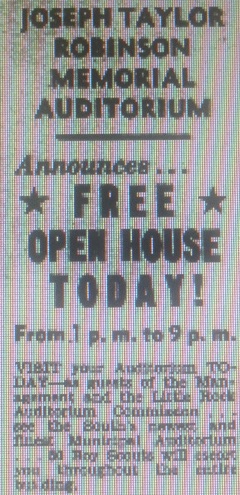
open house adOn March 31, 1940, the City of Little Rock and the Auditorium Commission threw open the doors of Joseph Taylor Robinson Memorial Auditorium to the public for an open house.

The building had officially opened in February 1940, and events had been taking place in the lower level since October 1939. But this was the first time that the public could tour the entire facility from top to bottom.

The event took place on a Sunday from 1pm to 9pm.  Curiously, it took place two days before a special election to approve the bonds to finish the auditorium. Though no one at the time was cynical enough to comment on the connection.

Members of various Little Rock Boy Scout troops led 4,000 visitors on tours of the auditorium.  Visitors were shown all over the building; one scout calculated that the walking tour equated to two miles.  Though most people were from Little Rock, the guest registry indicated visitors from California and Pennsylvania.  Among the last guests to sign the register were Mayor J. V. Satterfield and his family.

The idea for the open house had first been floated in December by Alderman E. W. Gibb after taking a tour of the construction site. He had enthusiastically professed that everyone should be able to tour and see what a magnificent structure it was going to be.  Mayor Satterfield had to tamper the alderman’s enthusiasm. Hagreed with Mr. Gibb that it was a fine building but stated that a public open house could not be scheduled for a few weeks because there was still much work to be done.  Mayor Satterfield noted that the seats in the music hall were going to have to be removed and then reinstalled because they needed to be anchored bette

Peter Gluck presents tonight’s Architecture and Design Network lecture

This evening at 6pm, Peter Gluck, founder and principal of Gluck+ of NYC will speak.  Entitled “What’s Wrong with Us,” the lecture is presented by the Architecture and Design Network.

Gluck +, the innovative architectural firm founded by Peter Gluck, is known for its multi-faceted approach to creating award winning buildings. Responsive to a range and variety of factors – site, cost, time, construction, evolving client needs and attitudes among them – the firm is capable of dealing with a project from conception to completion.

The process, known as Architect Led Design Build (ALDB), requires the architect’s assuming responsibility for all phases of a building’s construction as well as its design. One firm, wielding a hammer as well as a pencil, does it all. in architectural circles, the approach is frequently the exception rather than the rule.

While a student at Yale, where he  earned his bachelor’s and master’s degrees, Gluck encountered the design build culture that subsequently served as the inspiration for ALDB. Architectural luminary Louis Kahn who taught at Yale  during the time Gluck was a student at the School, had an early and significant influence on his approach to architecture, his focus on the important link between design and construction.

Gluck, known for his iconic tree topping Tower House, is  also regarded for his work with moderate income urban housing. In one example, components were prefabricated in Pennsylvania and assembled on site in New York City.

Gluck, who is widely published in architectural journals worldwide, has taught at the Columbia and Yale schools of architecture. Exhibitions of his award-winning work have been held in the United States and Japan. He has curated exhibits for the Museum of Modern Art.

The program will take place in the lecture hall at the Arkansas Arts Center at 6pm.  A reception will start at 5:30 prior to the lecture.

All Architecture and Design Network lectures are free and open to the public. For additional information contact ardenetwork@icloud.com. Supporters of ADN include the Central Section of the Arkansas Chapter of the American Institute of Architects, UA’s Fay Jones School of Architecture, the Arkansas Arts Center and friends in the community.

The Ides of March Are Come

“The Ides of March are come” – so wrote William Shakespeare.

In tribute to the day on which Julius Caesar was felled by assassins in Rome, a look at a two pieces of art featuring views of Rome, which are in the Arkansas Arts Center collection.    
The first presents a classical take on Rome. View of the Piazza del Campidoglio (Veduta della Piazza del Campdoglio) was created in 1774 by Giovanni Battista Piranesi (1720 – 1778). The print is an etching, acquired by the Arts Center in 1990; it was a gift of John and Grace Marjorie Wood Keppel and Nell Wood.

According to the Arkansas Arts Center,

The Campidoglio has been the seat of the city government of Rome from ancient times to the present. At the top of the Capitoline Hill-one of the famed Seven Hills of Rome-the buildings in Piranesi’s etching are the work of Michelangelo. These elegant Renaissance palaces, perched on this ancient site, were important tourist destinations in the 18th century just as they are today.

Piranesi takes a viewpoint from the side of the site, giving us a dramatic diagonal view of one palace and a head-on view of the other. In the foreground are Grand Tourists in their three-cornered hats as well as a number of less well dressed, slightly suspicious-looking figures.

The second piece is John Heliker’s Pertaining to Rome. Heliker was a 20th Century artist from New York living from 1909 to 2000. His painting is an abstract look at the Italian capital city. It was a gift in 2005 to the Arkansas Arts Center from the Heliker-LaHotan Foundation, Inc.
Construction begins on March 16 on new parking deck at CALS downtown

Central Arkansas Library System (CALS) plans to begin construction on a new parking deck at thcalse corner of Rock Street and President Clinton Avenue on Monday, March 16.

Rock Street will close from the corner to the alley on the north side of the Main Library to accommodate construction barriers. Access to Rock Street is from 2nd Street, and through traffic will be routed through the alley.

“We will more than double the number of parking spaces at the Main Library with the addition of the new deck,” said Bobby Roberts, CALS director.

“More than 800,000 people visited the Main Library campus last year, so having more parking spaces will make it easier for our patrons to use books and computers and attend meetings and programs.”

Construction should be completed by November, 2015. The new deck will have about 130 spaces, with an estimated $3.9 million construction cost. Little Rock voters approved a bond issue in 2012, which provided funds for the construction.

For more information contact 918-3086 or sgele@cals.org.

Little Rock Look Back: Robinson Auditorium officially opens

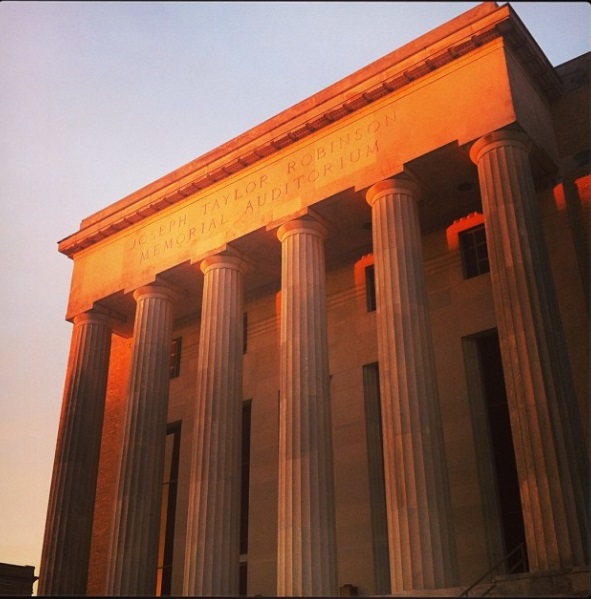
auditoriumduskOn February 16, 1940, after three years of planning and construction, the Joseph Taylor Robinson Memorial Auditorium officially opened. It was a cold, rainy night, but those in attendance did not care.

Searchlights painting arcs in the sky greeted attendees. They were borrowed from the Arkansas National Guard. Newspaper accounts noted that only a few of the men who attended were in tuxedos, most were simply in suits. The work to get the building opened had been so harried, that it was discovered there was not an Arkansas flag to fly in front of the building. Mayor Satterfield found one at the last minute courtesy of the Arkansas Department of the Spanish War Veterans.

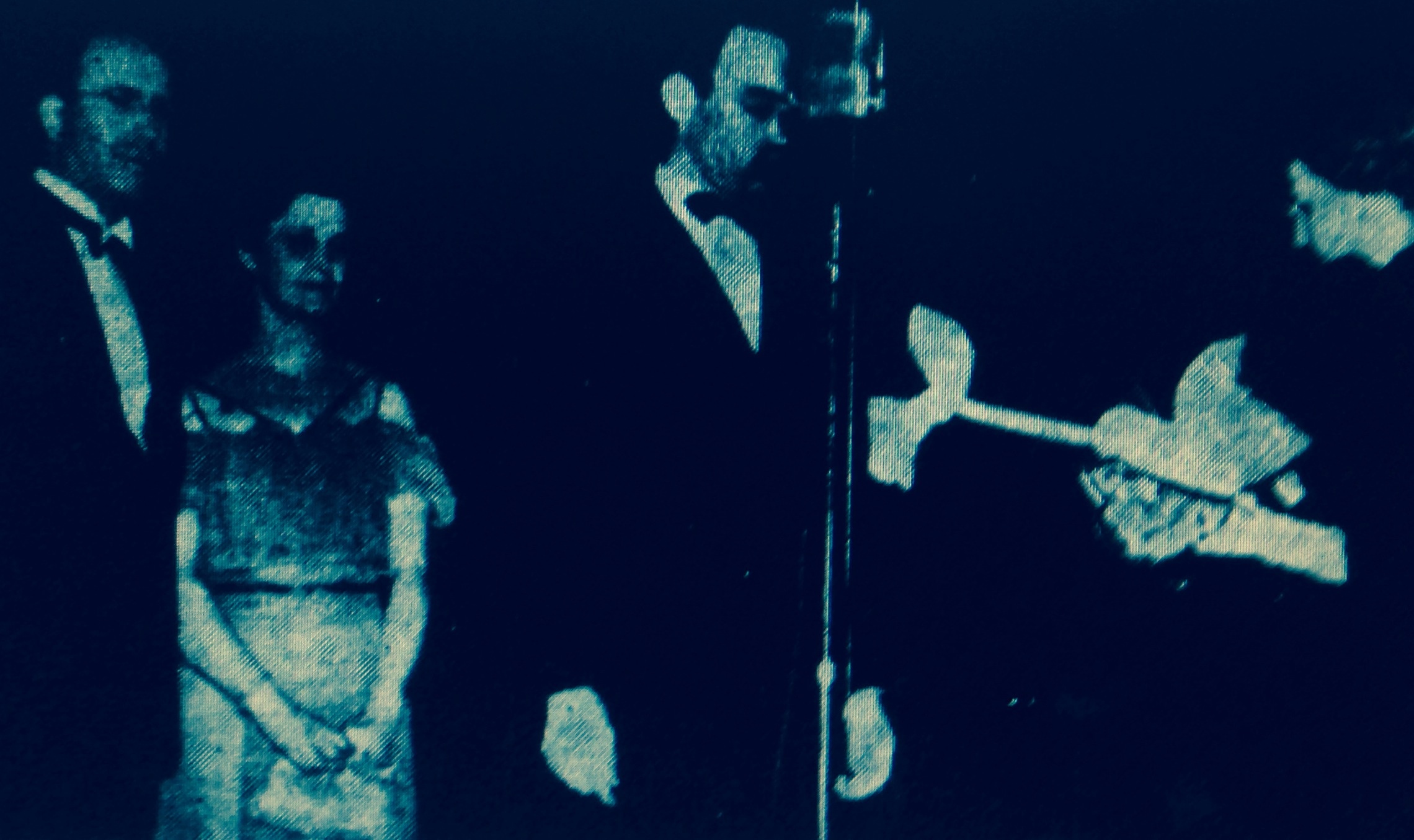
The weather delayed arrivals, so the program started fifteen minutes late. Following a performance of Sibelius’ Finlandia by the fledgling Arkansas State Symphony Orchestra, Mayor J. V. Satterfield, Mrs. Joseph T. Robinson, Mrs. Grady Miller (the Senator’s sister-in-law and a member of the Auditorium Commission) and D. Hodson Lewis of the Chamber of Commerce participated in a brief ribbon cutting ceremony. Mrs Robinson cut the ribbon on her second attempt (once again proving that nothing connected with getting the building open was easy).

The ceremony was originally set to be outside of the building but was moved indoors due to the inclement weather. The ribbon cutting took place on the stage with the ribbon stretched out in front of the curtain. The opening remarks were broadcast on radio station KGHI.

Though he had previously discussed how he had voted against the auditorium in 1937 before entering public life, the mayor’s remarks that evening were appropriately gracious, statesmanlike and a testament to the effort he had invested to get it open upon becoming mayor. “We hope you have a very pleasant evening and hope further that it will be the first in a long series which you will enjoy in this, your auditorium.”

20140215-172047.jpgTickets for the event, advertised as being tax exempt, were at four different pricing levels: $2.50, $2.00, $1.50 and $1.00.

The estimated attendance was 1700. Following the ribbon cutting, the main performance took place. The headliner for the grand opening was the San Francisco Opera Ballet accompanied by the new Arkansas State Symphony Orchestra (not related to the current Arkansas Symphony Orchestra). The featured soloist with the ballet was Zoe Dell Lantis who was billed as “The Most Photographed Miss at the San Francisco World’s Fair.”

At the same time that the gala was going on upstairs in the music hall, a high school basketball double-header was taking place in the downstairs convention hall. North Little Rock lost to Beebe in the first game, while the Little Rock High School Tigers upset Pine Bluff in the marquee game.

Little Rock Look Back: John Wassell the 27th Mayor of Little Rock

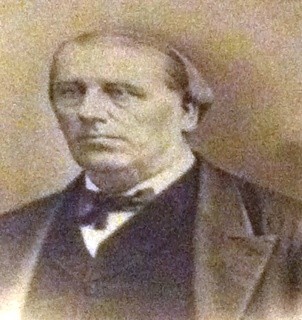
Future Little Rock Mayor John Wassell was born on February 15, 1813 in Kidderminster, England.

In 1829, he came to the United States.  He learned carpentry and construction in Ohio and ended up in Little Rock.  One of his jobs was as the finishing contractor on the State Capitol building, now known as the Old State House.

He later gave up carpentry and became an attorney.  (It is said that he did so after becoming embroiled in a legal dispute arising from one of his construction jobs.) Wassell also served as a judge.

In 1868, he was appointed Mayor of Little Rock by President Andrew Johnson.  He is Little Rock’s only Mayor to have served through a military appointment.  Mayor Wassell died in January 1881 and is buried at Mount Holly Cemetery along with his wife and other family members.  One of his grandsons, Samuel M. Wassell also served as Mayor of Little Rock.