Eliza Borné named new editor of Oxford American

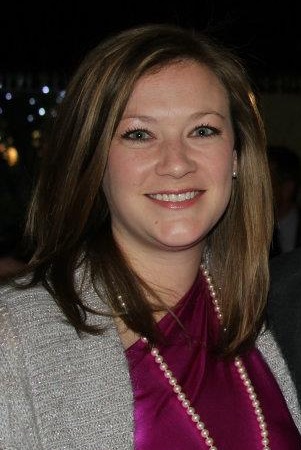
Eliza BorneEliza Borné is the new editor of the Oxford American, succeeding Roger D. Hodge, who left the magazine in June. Borné joined the magazine in 2013 as associate editor and was promoted to managing editor in 2014. Since June 2015, she has served as interim editor.
“This is wonderful news,” said Hodge, who recruited Borné in 2013. “Eliza is a brilliant editor and wonderful person—the Oxford American could not have made a better choice. I look forward to reading her magazine for many years.”
“I am incredibly proud of the work we have done under Roger’s leadership for the past three years,” said Borné. “We have published great stories that transcend genre and give our readers new perspectives on the South. With every issue, I am astounded again by the brilliance of our amazing writers, artists, and contributors. I am honored to have the opportunity to lead our talented editorial staff as we continue creating this vital and spirited magazine that I have loved since I was a teenager.”
Under Borné’s direction, the OA has maintained its high standard of excellence, publishing work as rich and varied as a 12-page poem by Nikky Finney; fiction by Catherine Lacey and Jamie Quatro; and a deep profile of a transgender drug counselor from the U.S.-Mexico border. Since 2013, she has worked with such acclaimed writers as Lauren Groff, Harrison Scott Key, Beth Ann Fennelly, Stephanie Elizondo Griest, Sarah Menkedick, and many others. Pieces Borné edited have been recognized in Best American Essays and Best American Travel Writing.
“Eliza is a member of the next generation of readers,” said Vincent LoVoi, OA board member and publisher of This Land Press. “Her keen insights and long-view will enable the OA to continue to grow in the new media environment. She has a timeless talent that will serve us well.”
Borné is the third editor of the Oxford American. Hodge led the magazine from September 2012 through June 2015, when he became the national editor of the Intercept. Hodge remains on the masthead as editor-at-large. Marc Smirnoff founded the Oxford American in 1992.
A native of Little Rock, Borné, 29, previously worked as an editor at BookPage, a book review publication based in Nashville. She graduated from Wellesley College and she lives in Little Rock with her husband, John C. Williams, an assistant federal public defender (whom she met when they were both Oxford American interns in 2006).
The Oxford American also welcomes longtime contributor Jay Jennings to the masthead as senior editor. Jennings brings decades of industry experience as a former editor with Sports Illustrated, Time Out New York, Artforum, and other magazines. He is the author of Carry the Rock: Race, Football, and the Soul of an American City and he edited Escape Velocity: A Charles Portis Miscellany.

Family bonds and College Football, tonight at the Clinton School

uacs last seasonPolitical strategist Stuart Stevens will speak at the Clinton School this evening about his book, The Last Season: A Father, a Son and a Lifetime of College Football tonight at 6pm at the Clinton School.

In the fall of 2012, after serving as the top strategist for Mitt Romney’s 2012 presidential campaign, Stuart Stevens, having turned sixty, realized that he and his ninety-five-year-old father had spent little time together for decades. His solution: a season of attending Ole Miss football games together, as they’d done when college football provided a way for his father to guide him through childhood–and to make sense of the troubled South of the time. Now, driving to and from the games, and cheering from the stands, they take stock of their lives as father and son, and as individuals, reminding themselves of their unique, complicated, precious bond. Poignant and full of heart, but also irreverent and often hilarious, “The Last Season” is a powerful story of parents and children and the importance of taking a backward glance together while you still can.

Stuart is one of the nation’s most successful political strategists and media consultants. For twenty-five years, Stuart has been the lead strategist and media consultant for some of the nation’s toughest political campaigns such as Senator Portman, Senator Blunt, Governor Haley Barbour, Governor Tom Ridge and President George W. Bush in 2000 and 2004.

In 2014, he was lead strategist for Senator Thad Cochran’s come from behind runoff win and led an 8 state Super PAC campaign to help secure the new Senate Majority. Beginning his political career in his native Mississippi, Stuart first worked on Thad Cochran’s campaigns and has gone on to help elect more governors and US Senators than any other current Republican media consultant.

Stuart has written five books, published numerous essays and articles, written extensively for both film and television, is a former Fellow of the American Film Institute and a current weekly columnist for The Daily Beast.

Monday Musings: Rhea Roberts

rheaSince becoming Executive Director of the Quapaw Quarter Association, Rhea Roberts has led that organization through a planning and rebranding process, expanded programming and outreach efforts, overseen the 50th QQA Spring Tour, and launched a new historic property marker program (new signs are starting to pop up throughout Little Rock).  Tomorrow evening (Tuesday, October 27), the QQA will have its annual meeting and presentation of the Greater Little Rock Preservation Awards. For more information on the awards and other QQA programming, visit their website.

My earliest memory was (age and incident)

I have tons of early memories of playing in the woods and hide and seek at my grandparents’ 1890s farm house.  

When I was in high school and imagined my adulthood, I thought I would be…

Some kind of architect or designer 

Star Wars, Star Trek, Battle of the Network Stars, or Dancing with the Stars?

Star Wars   

 I most identify with the Winnie the Pooh character of…

Rabbit 

The performer I’d drop everything to see is…

Beyonce 

My first paying job was…

After school for the Bandera County Treasurer  

A book I think everyone should read is….

I think everyone should read as much as they can.  I’m a big fan of Letters to My Daughter by Maya Angelou 

My favorite season is…

Summer  

-We are all geeks (or experts) about something. My field is….

Historic Preservation  

Little Rock Look Back: Pratt Remmel born 100 years ago today

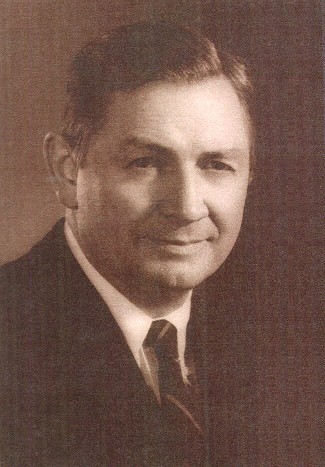
PrattRemmel-2bOne hundred years ago today, on October 26, 1915, future Little Rock Mayor Pratt Cates Remmel was born.  He was one of five children of Augustus Caleb and Ellen Lucy Remmel.  His father died when he was five, leaving his mother to raise five children by herself.  After graduating from high school in 1933, he received a bachelor’s degree in economics from the University of Virginia in 1937.  During World War II, he held the rank of Lieutenant in the US Navy.

The Remmel family had long been involved in politics.  A great-uncle had been the GOP nominee for governor and senator as well as serving on the GOP national committee.  Remmel’s father had been the state GOP chair and his mother was the Arkansas Republican national committeewoman for nearly three decades.  In 1938, shortly after returning from college, Remmel ran for the Little Rock City Council but did not win.  In 1940, he became chairman of the Pulaski County Republican Executive Committee. For the next several decades, he held various leadership posts in the GOP at the county, state and national level.

Remmel made his second bid for public office in 1951 when he challenged incumbent LR Mayor Sam Wassell, who was seeking a third term.  Wassell shared the often held belief at the time that the GOP could not win any races in Arkansas because of the aftereffects of Reconstruction.  Remmel ran a vigorous campaign and won by a 2-to-1 margin becoming Little Rock’s first Republican mayor since Reconstruction.  In 1953, he sought a second two year term and was re-elected.  Though he had worked to build the GOP in Arkansas, he did not emphasize party affiliation in this campaign. He stressed he had been “fair to all and partial to none.”  This campaign included a rally which was aired live on six LR radio stations at the same time, a first for Arkansas. He won by over 3,000 votes this time over alderman Aubrey Kerr.

Remmel had been mentioned as a potential candidate for US Senate or Congress in 1954.  Instead, he ran for governor and was defeated by Orval Faubus in his first race for the office.  Remmel did receive more votes for governor than any GOP candidate had since reconstruction.  He is credited with laying the groundwork for the future successful campaigns of Winthrop Rockefeller.

A month before the election in 1955, Remmel announced he would seek a 3rd term as Mayor.  While later admitting he should have stuck with the customary two terms, he also said he ran to give voters an alternative to the Democratic nominee Woodrow Mann.  Mann, like Remmel, was in the insurance business; Remmel considered Mann to have a questionable reputation.  Several statewide Democratic leaders campaigned for Mann, who beat Remmel by 1,128 votes, one of Little Rock’s closest mayoral elections.

As Mayor, Remmel served in leadership positions with the US Conference of Mayors and the Arkansas Municipal League.  It was during his tenure as mayor that the land which is now Rebsamen Golf Course was given to the City.

After he left office, Remmel returned to business interests and staying active in civic affairs.   He was an active leader of First United Methodist Church and Gideons International.  He was a Mason, a Shriner, a member of the American Legion, and the American Red Cross.   Remmel served on the Arkansas River Basin Commission and chairman of the Arkansas Waterways Commission.  In 1996, he was posthumously inducted into the Arkansas River Hall of Fame.

Married for many years to Catherine Couch, the couple had three children, Pratt Jr., Cathie and Rebecca.  Lake Catherine in Arkansas is named for his wife. Remmel Park and Pratt Remmel Road in Little Rock are named for Mayor Remmel.

Mayor Remmel died on May 14, 1991.  He and Catherine (who died in 2006) are buried in Oakland Cemetery.

Creative Class of 2015: Stephanie S. Streett

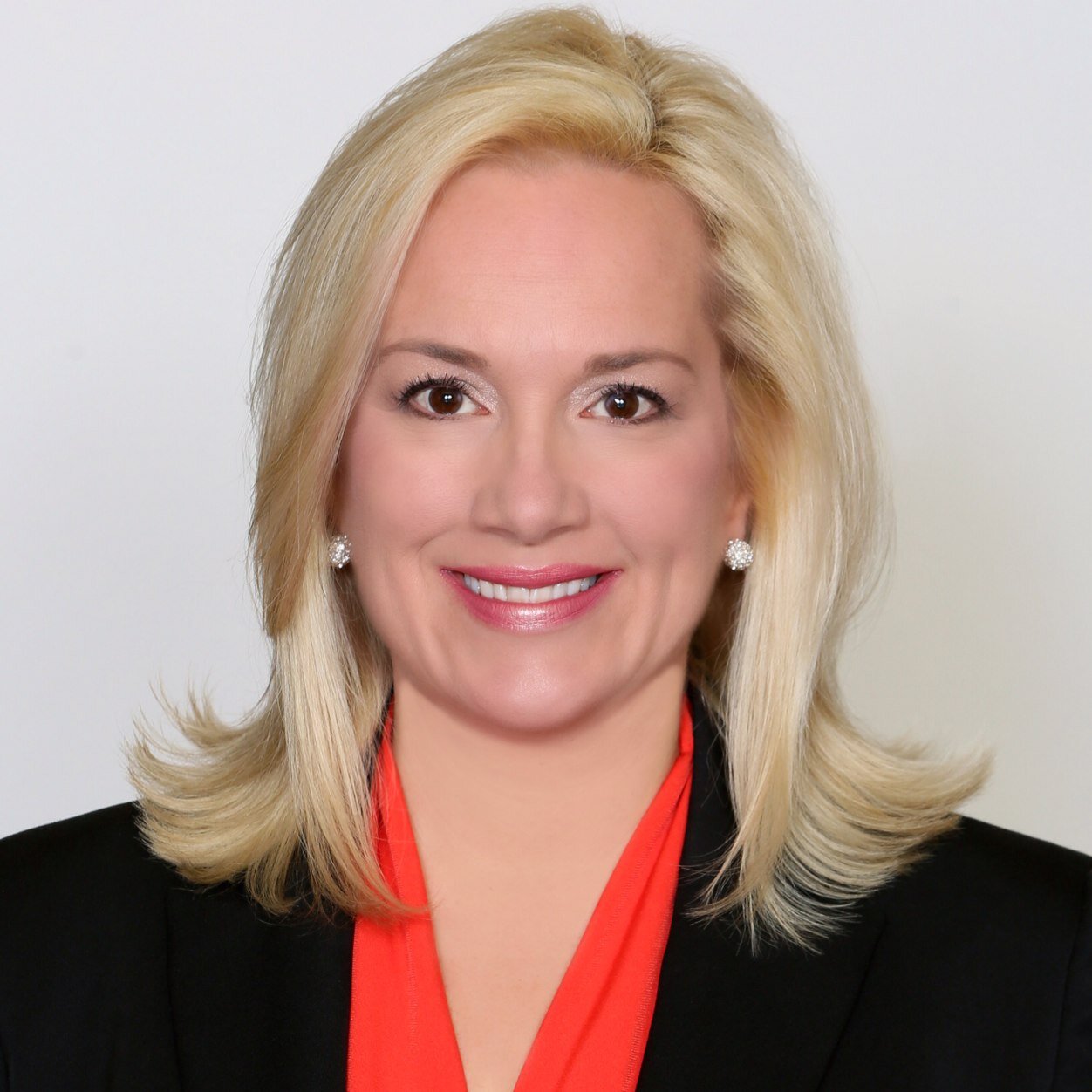
StreettStephanie S. Streett is the executive director of the Clinton Foundation. In this role she oversees the day-to-day operations of the Clinton Presidential Center, including the development and implementation of its educational programs, special events, exhibits, and services as well as staff management. She establishes and cultivates strategic partnerships and cooperative arrangements with state and local governments, the non-profit and private sector, community groups and other organizations. Stephanie also serves as the corporate secretary for the Clinton Foundation Board of Directors.

Stephanie has used her position to broaden culture in Little Rock through the wide variety of exhibits which the Clinton Center has hosted. A wide variety of styles of visual arts, design, contemporary craft, sports, science and history have been showcased in exhibits at the Clinton Center.  She also was instrumental in planning the special events in conjunction with the Clinton Center 10th Anniversary in 2014.  In addition, she has been active in promoting partnerships with the Kennedy Center for the Performing Arts. Together with Kaki Hockersmith, she has facilitated several seminars which have brought key Kennedy Center leaders to Little Rock.

She is the president of the University of Arkansas Alumni Association National Board of Directors and is co-chair of the Board of Directors for City Year Little Rock. She also serves on the Board of Directors for the Downtown Partnership of Little Rock and is a member of the International Women’s Forum Arkansas.

Little Rock Look Back: TR in the LR

TheodoreRooseveltOn October 25, 1905, President Teddy Roosevelt, recently elected to a four year term in his own right, made an appearance in Little Rock.

He was greeted at the train station by Governor Jeff Davis and was the guest of honor in a parade up Main Street to City Park (now MacArthur Park) in where a public meeting was held featuring remarks by the President.  During this remarks, speaking to a largely Democratic crowd, the Republican Roosevelt noted: “The candidate is the candidate of a party; but if the president is worth his salt he is the president of the whole people.”

According to media reports at the time, Main Street from Markham to Tenth was a solid mass of cheering spectators for the parade.  This was the first time a sitting President had spent time in Little Rock away from a train station. The only other incumbent President to visit Little Rock had been Benjamin Harrison, who had made only a brief layover.

Roosevelt would make three more visits to Arkansas.  In 1910, he spoke at the Arkansas State Fair in Hot Springs.  In April and September 1912, he made several campaign stops in the state as he was running to reclaim the presidency, this time heading the Progressive (or Bull Moose) ticket.  Though Roosevelt’s successor, William Howard Taft, would visit briefly once in office and once after leaving office, it would not be until Roosevelt’s cousin Franklin Delano Roosevelt visited in 1936, that another sitting President spent much time in the state after TR’s 1905 visit.

This afternoon at Wildwood Park, the Vienna Boys Choir

A 489925

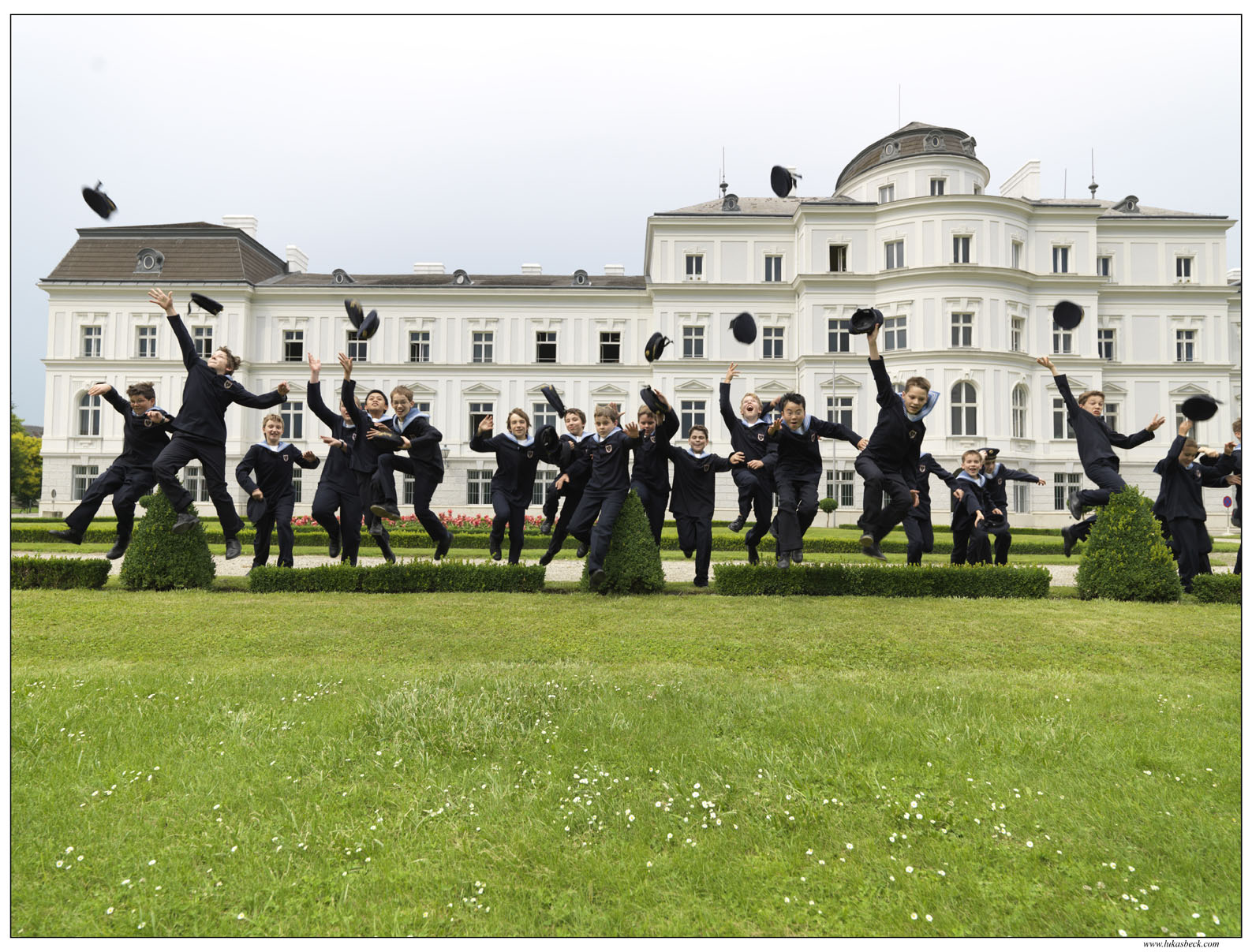
The world renowned Vienna Boys Choir comes to Wildwood for an unforgettable afternoon of music and culture.

On Sunday, October 25th, the newly refurbished Lucy Lockett Cabe Festival Theatre will reopen with the angelic voices of the Vienna Boys Choir. This group of 25 boys tour around the world with a repertoire that spans the classics of Mozart and Schubert to contemporary hits.

Reserved seats are $35 and VIP seats are $75.
VIP Reception begins at 2 pm
Performance at 3 pm

The Vienna Boys Choir was originally founded in the 15th century to perform in the royal court of the Austrian Empire. Today there are around 100 choristers between the ages of ten and fourteen, divided into four touring choirs. The four choirs give around 300 concerts and performances each year in front of almost half a million people. Each group spends nine to eleven weeks of the school year on tour. They visit virtually all European countries, and they are frequent guests in Asia, Australia and the Americas.