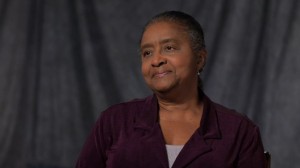
LR Cultural Touchstone: Dr. Sybil Jordan Hampton

sybilDr. Sybil Jordan Hampton made history as the first African American student to attend each high school year at and graduate from Little Rock Central High School.  But her impact on history exceeds that and extends into classrooms throughout Arkansas.

After a career which took her from elementary classrooms to corporate boardrooms, Dr. Hampton returned to Little Rock in 1996 to become the Executive Director of the Winthrop Rockefeller Foundation.  In that capacity, she oversaw many opportunities to broaden the ways the arts and humanities were used in classrooms and outside of classrooms.  Dr. Hampton led the WRF until her retirement in 2006.  Through her vision and leadership, many tens of thousands of dollars of support went to cultural institutions and organizations during her decade at the helm.

Following the untimely death of the Arkansas Symphony Orchestra’s executive director, Dr. Hampton served as acting executive director of the ASO while a national search could be conducted.  She had long been a supporter of the ASO and other cultural institutions as a patron.

Currently serving on the State Ethics Commission and the LR CENT Committee, Dr. Hampton continues to be involved with Little Rock’s cultural life through her involvement in the Mount Holly Cemetery Association. She is a tireless advocate for this living museum of Little Rock’s past.
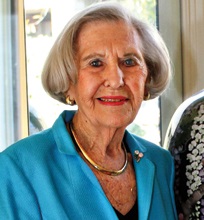

LR Cultural Touchstone: Jeane M. Hamilton

Photo taken for SOIREE

Photo taken for SOIREE

Jeane M. Hamilton is not a native Arkansan. But it was Little Rock and Arkansas’ good fortune that she married a Little Rock native and came here.

Arriving in Little Rock a young wife in 1952, she immediately set about to become involved in her new community as she and her husband James set up a household.  In the mid-1950s, the Junior League of Little Rock tapped her to chair the initiative to create a new art museum for Little Rock.  The two decades old Museum of Fine Arts was threadbare through years of neglect and unfocused programming and collecting.

Hamilton, along with Junior League President Carrie Remmel Dickinson and Vice President Martha McHaney, approached Winthrop Rockefeller (then a relatively new resident) to lead the fundraising effort for the new museum.  He agreed on a few conditions: one was that a base amount had to be raised in Little Rock first, and second that the museum would be for the entire State of Arkansas and not just Little Rock.

Hamilton and her colleagues set about to raise the funds. They raised $645,000 at the same time Little Rock’s business climate was stymied by the aftereffects of the Central High crisis.

Now a lifetime honorary member of the Arkansas Arts Center Board, Hamilton has spent much of her life working on Arkansas Arts Center projects since that visit in 1959.  She has served on the Board, chaired committees, chaired special events, served hot dogs, helped kids paint and danced the night away at countless fundraisers.  She was on the committee which hired Townsend Wolfe as executive director and chief curator.  Jeane has led art tours for the Arts Center to a number of countries over the years.

When she is not at the Arts Center, she is often seen at the Rep, the Symphony or any number of other cultural institutions.  While she enjoys seeing old friends at these events, she also loves to see a room full of strangers – because that means that new people have become engaged in the cultural life of Little Rock.

LR Cultural Touchstone: Charlotte Gadberry

charlotte-gadberryCharlotte Gadberry has long been a supporter of Little Rock’s various cultural institutions. She has both served on boards and consulted with boards in strategic planning.  She is a Cultural Touchstone, however, because of her vision to found ACANSA Arts Festival.

A trip to Charleston, South Carolina, amid it’s Spoleto USA arts festival inspired her to dream that Little Rock could play host to a similar endeavor.  Using her fundraising prowess and connections, she started to raise funds, friends and awareness for this idea.

In September 2013, the inaugural ACANSA Arts Festival was announced for September 2014.  Under her leadership, ACANSA (a name derived from an early Native American variation of what is now called Arkansas) incorporated both local cultural institutions as well as performers brought in for the event.

It kicked off on a Tuesday with a reception at the Governor’s Mansion and concluded the following Sunday with a reception at Wildwood Park for the Arts.  In between there was theatre, dance, mime, puppetry, instrumental music, choral music, opera, jazz, painting, photography, history, lectures, and gallery tours.

Under her leadership as founder, plans are already underway for the next edition.  ACANSA Arts Festival 2015 is scheduled for September 16-20. Tickets go on sale next spring.

LR Cultural Touchstone: Mrs. H. H. Foster

Foster BandshellElizabeth Wallin Foster, known better as Mrs. H. H. Foster, became very active in Little Rock’s music scene when she and her husband arrived from Wisconsin in 1901.  She was a driving force of the Little Rock Music Festival which took place annually during the 1910s.

Though at the time she had been unable to exercise her vote, since this was prior to the passage of the 19th Amendment, Mrs. Foster was not afraid to exercise her voice and address the City Council to work for the City to support cultural life.  Mrs. Foster was very involved with the National Federation of Music Clubs serving in leadership positions and establishing an Arkansas affiliate.  She also organized the Little Rock Festival Chorus (during World War I) and the Little Rock Song Leaders (after the war).

Mrs. Foster appeared before the City Council in June 1926 to speak about the need for entertainment in City Park.  The matter was referred to the Council’s Parks Committee.  The following year the City Council appropriated money for construction of a Bandshell in City Park.  The City Park Bandshell was located in the southwestern corner of the park nearly in line with 13th Street.  The structure was positioned at a diagonal so that the music would be projected out toward the park and away from neighboring houses.  The City agreed to pay $1,500 toward the erection of the structure.  The stipulation was that the members of the Federation of Music Clubs would raise the remaining money.

Mrs. Foster purportedly donated one third of the cost of the bandshell. From 1928 through 1958 the bandshell would be the site of a variety of outdoor events including concerts and speeches.  Three 1952 presidential candidates spoke at the bandshell: Little Rock native General Douglas MacArthur (City Park had been renamed in his honor ten years earlier), General Dwight D. Eisenhower and Adlai Stevenson.  Following Mrs. Foster’s death in 1929, the bandshell was renamed in her memory by the City Council.

The bandshell was torn down in the early 1960s.  Today, the Foster Pavilion in MacArthur Park is named in her memory.

LR Cultural Touchstone: Mimi Dortch

Mimi DortchMadalyn “Mimi” Breitzke Dortch, was known for getting worthwhile projects off the ground.

She was a founder along with dear friend Cliff Baker, of the Arkansas Repertory Theater; hosted the first Arkansas Opera Theatre outdoor perforomance at her home Marlsgate, was a founder along with Helen Walton of Arkansas Committee of National Museum of Women in the Arts, and was the Director of AIC Choir Camp at Subiaco for 22 years.

When Baker had the idea for the Rep, she made use of her personal connections and helped form the first Board of Directors.  She served as an ambassador for the Rep and theatre in general.   Throughout the rest of her life, she would be a stalwart supporter of the Rep.  Her interest in theatre had been nurtured while she was in college.  Her interest in founding community endeavors had been inherited from her father who founded the North Little Rock Boys Club.

The AIC Choir Camp was originally founded by Trinity Episcopal Cathedral.  She oversaw the transition to it being under the auspices of the Arkansas Interfaith Conference of Churches and Synagogues, which she led.

There were few art forms or art organizations in Little Rock and Arkansas that Mimi Dortch did not attend or support.


LR Cultural Touchstone: Anita Davis

anita davisAnita Davis has founded a museum, a sculpture garden and nurtured an eclectic retail community which has transformed Main Street south of I-630 into a thriving SOMA with its own unique identity.

Starting in 2004, she began to acquire property along Main Street in the teen blocks.  After attending a conference and learning about “placemaking” she started to envision ways to transform South Main through various artforms.

On the site of a burned out fast food restaurant, she devised the plans for the Bernice Garden. This sculpture garden and community gathering spot has become a hotspot for festivals (including the annual Cornbread Festival – another of her projects – this year it will be November 3), community events and a farmer’s market.

More recently, she opened the ESSE Purse Museum.  ESSE grew out of a traveling exhibit selected from Davis’ extensive collection. From 2006 to 2011, “The Purse & the Person: A Century of Women’s Purses” (curated by Curatrix Group and managed by Smith Kramer Fine Art Services) traveled the country. The collection was exhibited in Concord, Mass.: Little Rock, Ark.; Edmund, Okla.; Columbia, S.C.; Pasadena, Calif.; Rockford, Ill.; Logan, Kan.; Fullerton, Calif.; Baton Rouge, La.; Dallas; Sacramento; and Seattle.

Now Davis has brought her handbags back to Little Rock for good and given them a home worthy of the part they have played in women’s lives and history. ESSE is housed in a historic building in SoMa, an up-and-coming, hip neighborhood in downtown Little Rock.  The Huffington Post declared it one of the hot museums for 2014.

LR Cultural Touchstone: Lorraine Albert Cranford

Lorraine Albert Cranford formalized ballet training and performance in Little Rock.  Together with her husband, she was the founder of Ballet Arkansas—a company that traces its roots to the Little Rock Civic Ballet of the 1960s—as well as a dance teacher.

Lorraine Albert was born on September 4, 1918, in Steubenville, Ohio, to Henri Albert and Arthurine Van Klempette Albert. Her mother was a ballroom dancer who started her daughter in dance classes. By the time she was three, her family lived in Pittsburgh, Pennsylvania.

Albert studied ballet under Karl Heinrich in Pittsburgh and went to New York at age fifteen to continue her dance training. Her training was not limited to classical ballet, and she studied and danced in the same shows as famous performers such as Gene Kelly and George M. Cohen.

She married D. Cater Cranford, a dancer originally from Little Rock, with whom she had performed. They had one daughter. They moved to Dallas, Texas, and lived in a house formerly owned by the outlaw Belle Starr. In 1957, they founded the Cranford House of Ballet, which developed dancers for the Dallas Civic Ballet, later named the Dallas Ballet. The company was dissolved in 1988.

In 1966, D. Cater Cranford moved to Little Rock, where he founded the Little Rock Civic Ballet; Lorraine Cranford joined him in Little Rock later. D. Cater Cranford died in 1977, and Lorraine Cranford founded Ballet Arkansas in 1978. Ballet Arkansas is perhaps best known for its annual production of The Nutcracker, which had begun with the Little Rock Civic Ballet. Ballet Arkansas has also contributed to the formation of most of the other ballet companies in central Arkansas, such as the Arkansas Festival Ballet, established in 2000. In addition to her work establishing ballet schools and companies in Arkansas, Cranford was a teacher herself and even performed as the grandmother in The Nutcracker.

Cranford died on December 3, 2004.