LR Cultural Touchstone: Kathryn Donham Rice

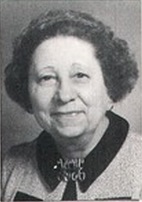
Katy RiceKathryn Donham Rice was better known by her friends as Katy.  As a historian, she was an archivist and an author.

A native of Little Rock, she was a lifelong Methodist.  Her interest in Arkansas Methodist history led to her appointment as the Archivist of the Little Rock Conference of the United Methodist Church. In 1980, she authored A History of the First United Methodist Church in Little Rock, Arkansas 1831 – 1981 to commemorate the church’s sesquicentennial. She served as church historian for twenty-eight years, creating with her husband, James H. Rice, Jr., the History Hall where many Methodist historic photographs and artifacts are displayed. She was a board member of the Commission on Archives and History of the United Methodist Church and a charter member of the Arkansas United Methodist Historical Society.

In the 1970’s she was employed at the Old State House Museum, first as a guide, then as Registrar, a position for which she trained at the Smithsonian Institution, Washington, DC. In 1986 she was appointed to serve on the Arkansas Sesquicentennial Commission as head of the Religious Organizations Task Force. This group sponsored four regional workshops on church history-writing and church archives management during the year.

Katy was an active supporter of Hendrix College, her alma mater.  She volunteered as archivist in the Winfred Polk United Methodist Archives and the Bailey Library.  She also was active in the Aesthetic Club, where she served as President; the Arkansas Women’s History Institute; the Pulaski County Historical Society; and the Arkansas Historical Association.  She wrote two additional histories which were published: The History of Lakeside Country Club and The History of Belcher Lake Farms.

For several years she was a very active volunteer for the MacArthur Museum of Arkansas Military History.  She assisted with registrar duties, including processing many of the photographs in the Allison collection. For several hours every week, she could be found in the basement of the museum with her white archivist gloves on helping out.  She would also give tours of the museum once it opened.
 

LR Cultural Touchstone: Ann Nicholson

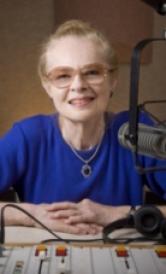
ann_nicholsonAnn Nicholson has been in Little Rock since the 1970s. She maintains the distinctive accent of her native Great Britain, which she puts to use as the “voice of UALR Public Radio” and the host of the weekly interview show “Art Scene.”

For more than 25 years, Ann Nicholson has shared the news and promoted cultural events in Central Arkansas via the KLRE/KUAR airwaves.  Host of “The Arts Scene,” an in-depth interview program that features local and international artists in all genres and a weekly arts calendar, Nicholson has loyal listeners who have enjoyed her interviews, her soothing and inviting British accent and her tireless enthusiasm for the arts. Those at KLRE/KUAR often refer to her as “the heart of Little Rock public radio.”

Being featured on Arts Scene has been a boon to many emerging organizations and institutions.  But more than that, her insightful and engaging interview style allows listeners to learn more about the artists and the artistic process.  The program feels less like an interview and more like a chance to eavesdrop on an entertaining conversation.

In addition to hosting the weekly interview program, she has been an active supporter of Little Rock’s arts community since her arrival.  She has been on the Board of Ballet Arkansas and UALR Friends of the Arts. She is often in the opening night audience at the Arkansas Rep.  She also rarely misses a performance of the Arkansas Symphony Orchestra.  Ann was a longtime member of the Little Rock Arts and Humanities Promotion Commission. She is a supporter of the Little Rock Musical Coterie and the National Federation of Music Clubs. When that organization’s national meeting was in Little Rock in 2002, she was involved in the planning of the meeting.


LR Cultural Touchstone: Cheryl Griffith Nichols

C NicholsCheryl Griffith Nichols is a historian, with an emphasis on historical structures, who has lived and worked in Arkansas since 1978.

She was born and raised in Indiana and graduated from Hanover College in 1974. After working for three years as the executive director of the Bartholomew County Historical Society in Columbus, Indiana, she enrolled in George Washington University in Washington DC, majoring in American studies with a concentration in historic preservation. While living in Washington, she worked for the National Register of Historic Places.

She moved to Little Rock in 1978, where she married attorney Mark Nichols and completed her Masters degree by writing a thesis on the Pulaski Heights community; the thesis was accepted in 1981. Meanwhile, Nichols became acquainted with Charles Witsell (a prominent Little Rock architect and historic preservation advocate) while he was working with F. Hampton Roy (a Little Rock ophthalmologist, historic preservation advocate and Little Rock City Director) to write a book about the history of Little Rock. Nichols did extensive research for the book, which was published in 1984 by August House as How We Lived: Little Rock as an American City.

Nichols then became a free-lance researcher, operating a business in Little Rock which she called History, Inc. This business did research and documentation of historic structures in Arkansas, mostly but not entirely in Pulaski County. Nichols also worked for the Museum of Science and History (now the Museum of Discovery) in Little Rock, served as the Executive Director of the Quapaw Quarter Association from 1984 through 1987 and again from 1991 through 1997, and wrote several books for the Arkansas Historic Preservation Program (Little Rock: Driving Tour of Three Historic Neighborhoods, 1989; MacArthur Park Historic Tours, 1993, Governor’s Mansion Area, 1993; Historically Black Properties in Little Rock’s Dunbar School Neighborhood, 1999, The Arkansas Designs of E. Fay Jones, 1999, Hillcrest: The History and Architectural Heritage of Little Rock’s Streetcar Suburb, 1999, and Construction of the Military Road Between Little Rock, Arkansas, and Fort Gibson, Oklahoma, 2003.)

She has remained active in historic preservation efforts.  She has served on the board of the Historic Preservation Alliance of Arkansas and the National Trust for Historic Preservation.  She also served on a task force to determine the best use of Curran Hall.  Much of her research has been donated to the Arkansas Studies Institute.

LR Cultural Touchstone: Marguerite Pearce Metcalf

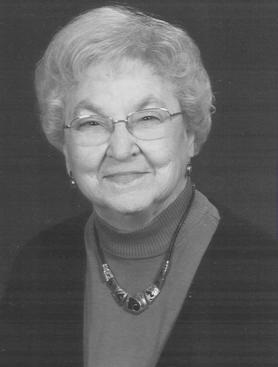
MP MetcalfMarguerite Pearce Metcalf was the dean of speech and drama education in the state of Arkansas.  She taught speech and debate, first at Central, then Hall and later at Parkview from which she retired.  As a teacher and mentor, she influenced most of today’s speech, drama and debate teachers working in Arkansas today.  Though most of her colleagues and former student-teachers have now retired, the students they taught have taken Mrs. Metcalf’s influence to the third, fourth and fifth generations.

Mrs. Metcalf was nationally known for leading Little Rock and the nation in speech education and theatre.  She served as the national president of the speech organization during the 1967-68 school year.  The organization was scheduled to have their meeting in Memphis, TN but it was called off because of the assassination of Martin Luther King.  She also held many leadership roles in statewide and regional speech and education organizations.

Many of Little Rock’s political and business leaders were taught the proper ways to write and deliver speeches by Mrs. Metcalf. To start listing them all would be an exercise in futility.  It is, however, not uncommon to still hear her former students speak of her with a hushed, reverential tone.

She was also an expert in Parliamentary Procedure. As such, it is fitting that the Arkansas Student Congress award for outstanding use of Parliamentary Procedure (which includes not only knowledge about it, but also the grace and skill to be polite) is named in her honor.

LR Cultural Touchstone: Louise Loughborough

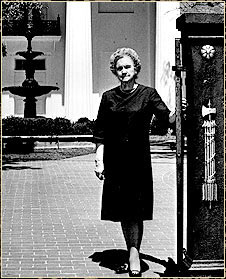
louise_loughborough_fLouise Loughborough could be called the mother of historic preservation and history museums in Arkansas.

Born Louisa Watkins Wright in Little Rock 1881, her ancestors included many early Arkansas leaders. At age 21 she married attorney J. Fairfax Loughborough.  She became active in several organizations including the Little Rock Garden Club, Colonial Dames and Mount Vernon Ladies Association.

Her involvement in historic structures in Little Rock began when the Little Rock Garden Club sought to improve the appearance of the War Memorial Building (now known as the Old State House Museum) in 1928. The grounds were littered with signs and monuments, and the roof of the Greek Revival building sported figurative statues of Law, Justice, and Mercy, which had been installed above the pediment after being salvaged from the Arkansas exhibit at the Philadelphia Centennial of 1876. To take the façade of the edifice back to its original 1830s appearance, Loughborough had the statues removed—without the permission of the War Memorial Commission, which had legal authority over the building.

In 1935, Loughborough was appointed to the Little Rock Planning Commission, and it was in this role that she first heard about the plan to condemn the half-block of houses that she had grown up admiring on Cumberland and East Third streets. Although the neighborhood had fallen on hard times, becoming a red-light district and slum, Loughborough feared the loss of several historic structures, including the Hinderliter House, the oldest building in Little Rock and thought to be Arkansas’s last territorial capitol. She mobilized a group of civic leaders to save these buildings. She enlisted the aid of prominent architect Max Mayer and coined the term “town of three capitols” to try to capture the imagination of potential supporters, grouping the “Territorial Capitol” with the Old State House and the State Capitol.

In 1938, Loughborough secured a commitment from Floyd Sharp of the federal WPA to help with the project, on the condition that the houses be owned by a governmental entity. She persuaded the Arkansas General Assembly to create and support, with general revenues, the Arkansas Territorial Capitol Restoration Commission (Act 388 of 1939). This satisfied Sharp’s condition, and the WPA provided labor and material for the new historic house museum. A private fundraising campaign brought in the remaining monetary support necessary for the completion of the project.

The Arkansas Territorial Restoration opened on July 19, 1941. The project was the first Arkansas agency committed to both the restoration of structures and the interpretation of their history, and it served as a model and inspiration for historic preservation in the state. Around the same time, she was a moving force behind the creation of a museum at the Old State House as well.  Today both Historic Arkansas Museum (as the Territorial Restoration is now known) and the Old State House Museum are agencies of the Department of Arkansas Heritage.

As founding Chairman of the Arkansas Territorial Restoration Commission, Louise Loughborough provided daily direction for the museum house complex through the first twenty years of its existence, yielding her authority to architect Edwin B. Cromwell only as her health began to fail. She died in Little Rock on December 10, 1962 and was buried at Mount Holly Cemetery.

LR Cultural Touchstone: Agnes Loewer

Photo from Arkansas History Commission

Photo from Arkansas History Commission

Agnes McDaniel Loewer was a driving force and the first curator of the Old State House Museum.

Born June 26, 1893, in Searcy, she moved to Little Rock with her family in 1900.  After turning 18, she began her business career working for the Underwood Typewriter Company, Mayor Charles Taylor, and the Little Rock YWCA.  In 1919, at age 26, she married Charles F.W. Loewer.

Throughout the years, Agnes McDaniel Loewer was active in numerous civic organizations, devoting her business and organizational skill to a great many causes. She served as secretary, treasurer, and president of various organizations, and filled leadership roles in accomplishing goals and missions. Loewer was a member of the Arkansas Federation of Women’s Clubs, the Business and Professional Women’s City Club, the Women’s Division of the State Fair, the Arkansas Conference of Welfare Legislation, the National Youth Association, the Canteen Corps of the American Red Cross, and the Arkansas Federation of Garden Clubs, among others.
Around 1939 Loewer and Louise Loughborough lobbied daily in the halls of the State Capitol for the preservation of the Old State House. Successful in this endeavor, Loewer was appointed a member of the Arkansas Commemorative Commission of 1947, which was formed that year to oversee the restoration of the Old State House and create a future museum of Arkansas history. She served as secretary to the commission, a position that later evolved into director.
When the restoration was completed, Loewer was hired as the first curator of the Old State House, beginning July 1951.  Utilizing a small paid staff and an army of well-instructed volunteers, she oversaw the museum.  Throughout her curatorship, she promoted the Old State House as a historic shrine and tourist attraction, and continued to battle threats to its preservation.

Her interest in history extended beyond the Old State House, she was a member of the Quapaw Quarter Association, Arkansas State Historical Society, Pulaski County Historical Society, and Arkansas Landmarks.

In March 1972, she retired at age 78, after 21 years as curator.  Among the honors she received were a commendation from the Arkansas Legislative Council in 1971 for her public service; a certificate of appreciation from the Arkansas Parks, Recreation and Travel Commission in 1974; and an award from the National Trust for Historic Preservation in 1974, presented by former first lady Lady Bird Johnson.
Loewer died on September 18, 1975 and is buried in Roselawn Memorial Park.

LR Cultural Touchstone: Kaki Hockersmith

KakiKaki Hockersmith creates art as a designer. In addition, she promotes arts and heritage through her tireless efforts on behalf of numerous cultural institutions.

In 2010, she was appointed to the President’s Advisory Committee on the Arts for The Kennedy Center.  In that capacity, she serves as a national ambassador for The Kennedy Center. She has also brought programs from The Kennedy Center to Arkansas to help established and emerging arts organizations. She also serves as a commissioner on the cultural committee of UNESCO – the United Nations Educational, Scientific and Cultural Organization.

In 1993, she redesigned the interior of The White House during the Clinton Administration. She was also appointed a member of the Committee for the Preservation of The White House.  Her work on this American landmark was featured in Hillary Clinton’s book An Invitation to the White House: In Celebration of American Culture.

Locally, she serves on the Board of Trustees for the Arkansas Arts Center and the Arkansas Governor’s Mansion Association. She is an active supporter of many cultural organizations in Little Rock.  She and her husband Max Mehlburger open their home to host receptions and fundraisers for numerous cultural institutions and organizations.  Earlier this year she was recognized for this support at Ballet Arkansas’ Turning Pointe gala.

Professionally, she has been honored by the national ASID organization as well as the Washington D.C. chapter. Her projects have won 16 regional ASID awards, including seven gold awards.