LR Cultural Touchstone: Ann Chotard

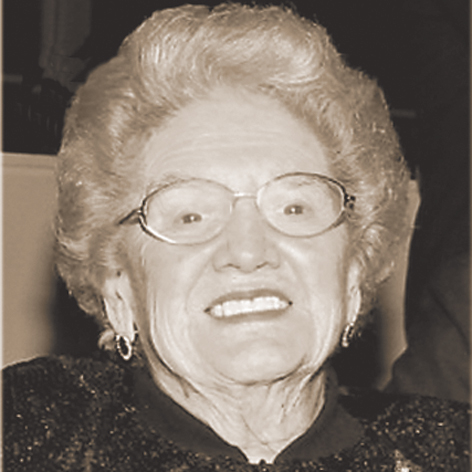
Ann P ChotardAnn Chotard grew up in Little Rock singing.  After graduating from Little Rock High School, she attended Henderson State University and received a Bachelor of Music degree.  She would later receive her a master’s and doctorate in music from the University of Colorado.  In 1966, she returned to Henderson on the music faculty.

In 1973, she formed Arkansas Opera Theatre in Little Rock. By 1976, it was a full-time focus for her as she left Henderson.  From 1973 to 1990, she led the AOT as it performed at various venues around Little Rock and the state.  As the state’s only professional opera company, it presented operas in English in an effort to be accessible to a broader audience.

By the late 1980s, she started looking for a permanent home for the AOT.  Settling on land west of Little Rock, in 1990, Wildwood Park for the Performing Arts was established.  Instead of doing year-round programming, it now presented opera and other arts in a month-long festival format.

The first few years, performances took place in a black box space in the park.  (It later became the backstage area.) In June 1995, the Cabe Festival Theatre opened.  With a thrust stage and over 700 seats, it set performers near the audience.

In 2007, she retired from Wildwood after 34 years leading a professional opera company.  By the mid 1990s, arts education and youth training were capturing more of her attention.  After retirement, she founded the Chotard Institute. It specializes in offering college preparatory training for aspiring young classical singers.

LR Cultural Touchstone: Ellen Turner Carpenter

Mrs CarpenterEllen Turner Carpenter was born on July 30, 1916 on West Ninth Street.  At the time of her death at the age of 93, her life had come full circle.

As a young girl, she was an active participant in the thriving African American life along west Ninth Street in downtown Little Rock. She attended many events at the Mosaic Templars Hall which sat at Ninth and Broadway.

A longtime Little Rock educator, she became the moving force behind preserving the Mosaic Templars building in the 1980s.   In 1992, she became president of the Mosaic Templars Building Preservation Society, which worked to preserve the Mosaic Templars building in Little Rock to create a museum for black history in Arkansas. Mrs. Carpenter served as president of the society until her death.

In the 1990s, the City of Little Rock purchased the building to keep it stable while the Preservation Society sought to raise the funds.  Due to lobbying efforts led by Mrs. Carpenter, the State of Arkansas purchased the building from the City with the intention of turning it into a museum under the auspices of the Department of Arkansas Heritage.  At a ceremony in 2003, Vice Mayor Willie Hinton handed the keys of the building to Governor Mike Huckabee with Mrs. Carpenter nearby beaming.  Governor Huckabee appointed her to the state advisory committee for this new museum.  She would serve as chair of that committee.

On March 16, 2005, tragedy struck.  The building burned to the ground.  That afternoon at a press conference at the State Capitol, leaders expressed their resolve that the project would move forward with a new building following the original design.  One of the speakers that afternoon was Mrs. Carpenter. She started out in her usual quiet voice. But as she recalled her youth spent at the Mosaic Templar’s building, the years melted away. She demonstrated some of the step dancing she had done as a teenager.

On September 20, 2008, she presided over the grand opening of the new Mosaic Templars Cultural Center. It was the culmination of 15 years of official work and many more years of dreaming.  At the ceremonies, she declared “We made it!” “We made it! We made it!”

Mrs. Carpenter remained an active supporter of the MTCC until her death on July 27, 2010, just three days shy of her 94th birthday.

Throughout her life she wore many hats (including numerous ones to church on Sunday). She was an educator, neighborhood organizer, and public servant. Everyone who met her was positively impacted by her.  Due to her vision and endurance, thousands each year are still positively impacted by her when they visit the Mosaic Templars Cultural Center.  Fittingly, the conference room at MTCC is named in her memory.


LR Cultural Touchstone: Lucy Lockett Cabe

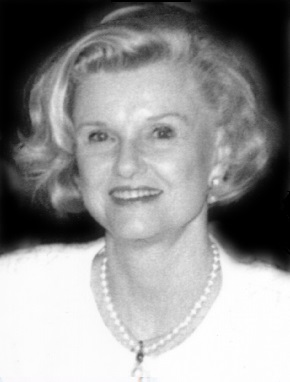
lucy-cabeLucy Lockett Cabe grew up in Missouri and died in Texas, but made an enormous impact on the cultural life of Little Rock and Arkansas.

While best known as the major benefactor of Wildwood Park for the Performing Arts, she also supported many other cultural organizations including the Arkansas Arts Center, Ballet Arkansas, Arkansas Symphony Orchestra, Arkansas Repertory Theatre and many smaller organizations. For over 30 years, it was rare for there to be a musical performance in Little Rock without Lucy as either a performer or in the audience.

A lifelong musician, as she aged, her voice shifted from soprano to alto to tenor while singing. She also served as a church organist. She studied piano from the age of eight.  Meeting her future husband Harold Cabe while summering in Michigan, she moved to Arkansas in 1940. From that time until 1975, she lived in Gurdon but was actively involved in the arts scenes of Arkadelphia and Little Rock.  The couple moved to Little Rock in 1975.  Harold died in 1984.

In 1971 she was one of the original appointees to the state Arts and Humanities Council. For her work with musical and volunteer groups, she was honored as the Arkansas Democrat-Gazette Woman of the Year in 1986. In 1993 she received the Arkansas Arts Council’s Lifetime Achievement Award and the Little Rock Arts and Humanities Ed Hanlin Memorial Award for Outstanding Individual Contribution to the Arts.

Lucy was an honorary life member of the Arkansas Symphony, the Community Theatre of Little Rock and Wildwood Park for the Performing Arts. She was involved in every step of the formation of the Arkansas Opera Theatre, which subsequently evolved into the Wildwood Park. She supported and was honored by Wildwood with the 625-seat Lucy L. Cabe Festival Theatre on the grounds.

In the early 2000s she moved to Dallas to be closer to her family.  She died in 2005.

It is fitting that she be remembered in October, as Halloween was her favorite holiday.  Starting on October 1, the Halloween jewelry, socks and shirts would be donned.

LR Cultural Touchstone: Phyllis D. Brandon

phyllisbrandon_t180Phyllis D. Brandon has played a unique role in shaping and supporting Little Rock’s cultural life.  As the first and longtime editor of the Arkansas Democrat-Gazette‘s High Profile section, she promoted cultural institutions, supporters and practitioners.

Since it started in 1986, being featured in High Profile has been akin to the Good Housekeeping Seal of Approval.  It exposes cultural institutions and events to new and wider audiences.  There is no way to put a monetary measure on the support Brandon gave to Little Rock’s cultural life during her time leading High Profile from 1986 to 2009.  From 2009 to 2011, she served as editor of Arkansas Life magazine, again supporting and promoting cultural life.

With her unassuming manner, she coaxed stories out of interview subjects and captured photos which highlighted events.  A journalist since her junior high school days in Little Rock, Brandon has also been a witness to history.  As a recent graduate of the University of Arkansas, Brandon returned to her alma mater, Little Rock Central High, to cover the events in early September 1957 for the Arkansas Democrat.  Eleven years later, she was in Chicago for the contentious and violent 1968 Democratic National Convention as a delegate.

From 1957 until 1986, she alternated between careers in journalism and the business world, as well as being a stay-at-home mother.  Upon becoming founding editor of High Profile, she came into her own combining her nose for news and her life-long connections within the Little Rock community.  As a writer and photographer, she created art in her own right. A look through High Profile provides a rich historical snapshot of the changes in Little Rock and Arkansas in the latter part of the 20th Century and start of the 21st Century.

Since retiring in 2011, Brandon has kept a relatively low profile. She can be seen from time to time spending time with friends and family and enjoying attending events. Only this time she generally does not have her trusty camera or notepad.

LR Cultural Touchstone: Deborah Baldwin

9 Deborah BaldwinAs a historian, arts patron, and administrator, Deborah Baldwin has had a hand in shaping Little Rock’s cultural scene for nearly thirty years.   As Chair of the UALR History Department from 1986 to 1992, she lead the department as it created the History Institute which sponsors the “Evenings with History” lecture series.  At the time it was started, it was one of the few lecture series in Little Rock (if not the only one).

A member of the UALR faculty since 1980, Baldwin is a specialist in modern Mexican history with a Ph.D. from the University of Chicago. She has published a book on the Mexican Revolution of 1910 and a variety of articles, primarily on Mexican social history topic.

As a History Department faculty member, she has lead the Public History seminar. This program has documented the history of several Little Rock cultural institutions over the years including the Arkansas Arts Center, Arkansas Symphony Orchestra and Museum of Discovery.  The Public History program has trained many of the museum professionals working in Little Rock today.  The Central High Museum, a private forerunner of the National Park Service Central High National Historic Site Visitor Center, was lead in a large part by persons associated with the UALR Public History Program.

Starting in the mid-1990s, Baldwin led the College of Arts, Humanities and Social Sciences.  In that capacity, she oversaw the visual and performing arts programming at UALR.  Under her leadership, the Departments of Art, Music, and Theatre & Dance were all revitalized.  As a part of this, she ensured that cutting-edge technology was being integrated to arts curriculum.  She also led efforts to upgrade the performance facilities.  During her tenure as Dean, the College also played leading roles in the commemoration of the 40th and 50th anniversaries of the integration of Central High School, the centennial of the Mexican Revolution, and the “Life Interrupted” exhibit which highlighted the Japanese-American internment experience in Arkansas.  She also oversaw the creation of Finale!, an event each spring which celebrates the arts in Little Rock and honors arts patrons.

With the creation of the Arkansas Studies Institute (a collaboration between UALR and Central Arkansas Library System), Baldwin took on additional duties as UALR’s supervisor on the project.

In 2014, UALR underwent a campus-wide administrative and academic reorganization.  In conjunction with that, Baldwin became Associate Provost for UALR Collections and Archives.  In that capacity she oversees the campus library system, Center for Arkansas History and Culture and the Sequoyah National Research Center.  She continues to teach in the Department of History.

She is a past member of the board of the Arkansas Humanities Council and the MacArthur Military History Museum Commission.


Chairman of the National Endowment for the Arts to visit Little Rock

NEA LRDr. Jane Chu, a former resident of Arkadelphia, is the new chairman of the National Endowment for the Arts.  On Tuesday, October 7, she will be in Little Rock.

At 1:30, she will be part of a presentation at the Arkansas Repertory Theatre.  Steve Luoni of the University of Arkansas Community Design Center, will lead a discussion of the Creative Corridor.  Dr. Chu will also make remarks.  Mayor Mark Stodola will be the host of the event.  The public is invited to attend.

During her visit in Little Rock, Dr. Chu will also take part in a variety of meetings and tours.

LR Cultural Touchstone: Virginia Bailey

Bailey, Virginia MitchellVirginia Mitchell Bailey was an avid supporter and promoter of visual and performing arts.  A real estate developer, she was a wife, mother, grandmother, and tireless community volunteer as well.  She was a trailblazer in the area of balancing a business career with continued volunteerism.  While today that is common, in the 1960s and 1970s, it was very rare for women to do both.

Virginia served on the Advisory Board of the National Museum of Women in the Arts in Washington, D.C. She was a member of the Fine Arts Club since 1960. She served for 17 years on the Arkansas Arts Center Board of Trustees and for 12 years on the Arts Center Foundation Board. She was Secretary of the Arts Center Board in 1974, President of the Board from 1976 to 1977, and Chairman of the Board from 1977 to 1978. In 1989, she received the Winthrop Rockefeller Annual Award for outstanding service to the Arts Center. In 2001, the Arts Center Board named the Virginia and Ted Bailey Gallery in her honor.

From 1992 to 1995, Virginia served on the Advisory Board of the University of Arkansas School of Architecture. She served as the first President of the Friends of the Arts at the University of Arkansas at Little Rock.  She was also a board member of Wildwood Park for the Performing Arts.

In recognition of their philanthropic support for so many charitable groups in the community and elsewhere, and by nomination from UALR, Virginia and her husband Dr. Ted Bailey received the Philanthropist of the Year Award from the Arkansas Chapter of the National Association of Fundraisers in 1994. In 1990, Virginia received one of the annual Outstanding Women of the Year Awards sponsored by Boatmen’s Bank. She was honored with the Little Rock Arts and Humanities Award (AHA!) in 1995.