
Skip to primary content
Skip to secondary content

Little Rock Culture Vulture

Cultural events, places and people in the Little Rock area

Little Rock Culture Vulture

Main menu

  • Home
  • About the Little Rock Culture Vulture
  • Little Rock Cultural Institutions and Organizations (alphabetical)
  • LR Cultural Sites by Discipline
  • Pulitzer Prize
  • Shows Seen
  • Theatre Reviews
    • Lucky 13
    • NPHS Fall of the House of Usher, ushers in fall
    • PIPPIN’s Magic Just for You
    • The Lullaby of a Golden Tent Season
    • Thoroughly Enjoyable Millie(s)
  • Tony Awards
    • 2014 Tony Award Predictions
    • 2015 Tony Awards
      • 2015 Tony Award Nomination Predictions
      • Tony Award Nomination Analysis
    • 2016 Tony Awards
      • 2016 Tony nomination predictions

Category Archives: Civic Engagement

Post navigation

← Older posts
Newer posts →

John Gould Fletcher, patriarch of Little Rock civic and cultural leaders; LR’s 32nd Mayor, born Jan. 6, 1831

Posted on January 6, 2020 by Scott

Future Little Rock Mayor John Gould Fletcher was born on January 6 in 1831.  He was a mayor and civic leader at a crucial time in Little Rock’s 19th century life. But his lasting legacy is probably more his remarkable children, grandchildren, great-grandchildren, and great-great-grandchildren. (Undoubtedly his great-great-great-grandchildren will be equally remarkable.)

The son of Henry Lewis and Mary Lindsey Fletcher, he later served as a Captain in the Capital Guards during the Civil War. One of his fellow soldiers was Peter Hotze. Following the war, he and Hotze began a general merchandise store in Little Rock. They were so successful that they eventually dropped the retail trade and dealt only in cotton. Peter Hotze had his office in New York, while Fletcher supervised company operations in Little Rock. In 1878 Fletcher married Miss Adolphine Krause, sister-in-law of Hotze.

John Gould Fletcher was elected Mayor of Little Rock from 1875 to 1881. He was the first Mayor under Arkansas’ new constitution which returned all executive powers to the office of the Mayor (they had been split under a reconstruction constitution). Following his service as Mayor, he served one term as Pulaski County Sheriff. Mayor Fletcher also later served as president of the German National Bank in Little Rock.

Mayor and Mrs. Fletcher had five children, three of whom lived into adulthood. Their son was future Pulitzer Prize winning poet John Gould Fletcher (neither father nor son used the Sr. or Jr. designation). Their two daughters who lived to adulthood were Adolphine Fletcher Terry (whose husband David served in Congress) and Mary Fletcher Drennan.

In 1889, Mayor Fletcher purchased the Pike House in downtown Little Rock. The structure later became known as the Pike-Fletcher-Terry House. It was from this house that Adolphine Fletcher Terry organized the Women’s Emergency Committee which worked to reopen the Little Rock public schools during the 1958-1959 school year.

In the 1960s, sisters Adolphine Fletcher Terry and Mary Fletcher Drennan deeded the house to the City of Little Rock for use by the Arkansas Arts Center. For several decades it served as home to the Arts Center’s contemporary craft collection. It now is used for special events and exhibitions.

Mayor Fletcher died in 1906 and is buried in Mount Holly Cemetery along with various members of his family. Several of his descendants still reside in Little Rock.

Share this:

  • Share on Facebook (Opens in new window) Facebook
  • Email a link to a friend (Opens in new window) Email
  • Share on X (Opens in new window) X
  • Share on LinkedIn (Opens in new window) LinkedIn
  • Share on Tumblr (Opens in new window) Tumblr
  • More
  • Share on Reddit (Opens in new window) Reddit
Like Loading...
Posted in Civic Engagement, Government, History, LR Look Back | Tagged Adolphine Fletcher Terry, Adolphine Krause Fletcher, John Gould Fletcher (poet), John Gould Fletcher (politician), Mary Fletcher Drennan, Mount Holly Cemetery, Peter Hotze, Pike-Fletcher-Terry House, Pulitzer Prize, Women's Emergency Committee

Election to annex Pulaski Heights into Little Rock on Jan. 4, 1916

Posted on January 4, 2020 by Scott

010416 PH electionOn January 4, 1916, voters in Little Rock and Pulaski Heights voted overwhelmingly to annex the latter into the former.

First platted in 1890, Pulaski Heights had been incorporated as a city in August 1905.  By 1915, Pulaski Heights was booming.  It was growing so fast, that its infrastructure and public safety needs were far outpacing the city’s ability to pay for them.  Though there was a ribbon of commercial businesses along Prospect Avenue (now Kavanaugh Boulevard), it did not produce enough sales tax revenue to pay for City services. Then, as now, property taxes were also an important part of city revenue sources but not sufficient without sales taxes.

The City of Little Rock, likewise, was looking for ways to grow physically. At the time, the City was hemmed in by a river to the north and low, marshy land to the east. Current development was to the south, but even that presented limits in the foreseeable future. The best option was to grow to the west, but Pulaski Heights was in the way.  In 1915, Little Rock Mayor Charles Taylor (after failing in a previous attempt to re-annex North Little Rock into Little Rock), approached Pulaski Heights leadership about the possibility of annexation.

010516 PH electionIn November 1915, there were public meetings in Little Rock and Pulaski Heights to discuss the issue.  As a part of the annexation, Little Rock promised to build a fire station in the area and to install traffic lights, sidewalks and pave more streets.

On January 4, 1916, Little Rock voters approved the annexation of Pulaski Heights by a ten-to-one margin. The majority of Pulaski Heights residents also approved the deal.  The suburb became the city’s ninth ward.

Another special election was held in January 1916 to select the first two aldermen from the 9th Ward.  L. H. Bradley, John P. Streepey and Tom Reaves ran for the two slots. Bradley and Streepey were the top two vote recipients.  Streepey served until April 1921 and Bradley served until April 1928.

This established a couple of precedents for the City of Little Rock which are in effect to this day.  The first is that Little Rock would not be a central city surrounded by a variety of small incorporated towns (in the manner that St. Louis and other cities are).  It was this thought process which has led the City to continue to annex properties.

Share this:

  • Share on Facebook (Opens in new window) Facebook
  • Email a link to a friend (Opens in new window) Email
  • Share on X (Opens in new window) X
  • Share on LinkedIn (Opens in new window) LinkedIn
  • Share on Tumblr (Opens in new window) Tumblr
  • More
  • Share on Reddit (Opens in new window) Reddit
Like Loading...
Posted in Civic Engagement, Government, History, LR Look Back | Tagged Charles E. Taylor, City of Little Rock, Jonathan P. Streepey, L. H. Bradley, Pulaski Heights b

Election and first meeting of Little Rock Board of Trustees – January 2, 1826

Posted on January 2, 2020 by Scott

On Monday, January 2, 1826, Little Rock voters elected their first Board of Trustees. This five member governing body was authorized by the Arkansas General Assembly in October 1825.  The five men getting the most votes were Bernard Smith, Isaac Watkins, James C. Collins, Ezra Owens and Sam C. Roane.
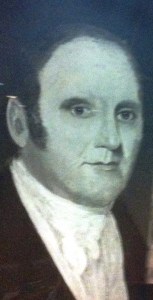
The evening of the election, the Board of Trustees held their first meeting.  They chose Mr. Smith (a former US Congressman from New Jersey) as the president.  To serve as the clerk, the men selected Jesse Brown, who was Little Rock’s first school teacher.

In June 1826, Robert Crittenden was appointed to fill out the remainder of Mr. Owens’ term.  The latter had resigned, though media accounts do not indicate why.

Mr. Smith, whose job was as secretary to the governor of Arkansas, would serve on the Board through 1828.  Mr. Watkins served until his murder in December 1827.  Mr. Collins served in 1826 and again in 1828.  Mr. Roane only served in 1826.  Mr. Crittenden served a full term in 1827 and then again in 1830 and 1831.

The Little Rock Board of Trustees was disbanded with the January 1832 election of Little Rock’s first mayor and aldermen.

Share this:

  • Share on Facebook (Opens in new window) Facebook
  • Email a link to a friend (Opens in new window) Email
  • Share on X (Opens in new window) X
  • Share on LinkedIn (Opens in new window) LinkedIn
  • Share on Tumblr (Opens in new window) Tumblr
  • More
  • Share on Reddit (Opens in new window) Reddit
Like Loading...
Posted in Civic Engagement, Government, History, LR Look Back | Tagged Arkansas Territory, Bernard Smith, City of Little Rock, Ezra Owens, Isaac Watkins, James C. Collins, Jesse Brown, New Jersey, Robert Crittenden, Sam C. Roane

Little Rock’s fourth Mayor – David Fulton, born in Ireland on Jan 2, 1771

Posted on January 2, 2020 by Scott

On January 2, 1771 in Ireland, future Little Rock Mayor David Fulton was born.

He served as the fourth and final mayor of the Town of Little Rock in 1835. His term was cut short by the transition of Little Rock from town to city status. Once that happened in November 1835, a new election had to be held.

Mayor Fulton was also proprietor of the Tan Yard, a tanning operation in Little Rock.   He later served as a judge and was appointed as  Surveyor General of Public Lands in Arkansas by President Martin Van Buren in 1838.

Mayor Fulton married Elizabeth Savin in June 1795 in Maryland.  She died in November 1829, while they resided in Alabama.  One of their children was William Savin Fulton who served as Territorial Governor of Arkansas in 1835 and 1836 and was one of Arkansas’ first US Senators upon statehood in 1836.  Mayor Fulton was serving as Mayor at the same time his son was Governor.

Mayor Fulton came to Little Rock in 1833.  His daughter Jane Juliet Shall and her four children came to Little Rock as well.  The family made the move to be nearer to the future governor.  The Fultons and Shalls rented the Hinderliter House (now part of Historic Arkansas Museum) in 1834.  One of his descendants, Louise Loughborough was the person who saved the Hinderliter House from destruction and was founder of what is now Historic Arkansas Museum.

In addition to serving as Mayor, he was president of the Anti-Gambling Society and a Pulaski County Justice of the Peace.  From 1836 until 1838, he was County Judge of Pulaski County.

Mayor Fulton died on August 7, 1843 and is buried at Mount Holly Cemetery as are several other members of his family.

Share this:

  • Share on Facebook (Opens in new window) Facebook
  • Email a link to a friend (Opens in new window) Email
  • Share on X (Opens in new window) X
  • Share on LinkedIn (Opens in new window) LinkedIn
  • Share on Tumblr (Opens in new window) Tumblr
  • More
  • Share on Reddit (Opens in new window) Reddit
Like Loading...
Posted in Civic Engagement, Government, History, LR Look Back | Tagged City of Little Rock, David Fulton, Hinderliter Grog Shop, Historic Arkansas Museum, Ireland, Jane Juliet Shall, Louise Loughborough, Martin Van Buren, Mount Holly Cemetery, Pulaski County, William Savin Fulton

150, 100, and 50 years ago in Little Rock

Posted on January 1, 2020 by Scott

As a new year starts, a look back to newspapers on January 1 of 1870, 1920, and 1970.  (While people may debate whether those years marked the start of a decade or not – no one can argue they were new years, and were 150, 100, and 50 years ago, respectively.)

150 Years Ago
The Arkansas Gazette of 1870 was four pages. It was still, as it had been up to that point in time and would be for a decade or so, largely a combination of delayed national news and advertisements.  Of the four pages, there was probably only about half of one page that was actually local news.

There were two articles in the Gazette about the requirements for Georgia to be readmitted to the Union. There was also an update on the adoption of the 15th Amendment.  Locally, the Arkansas River had risen eight inches on December 30 and 31.  There was also discussion about the Little Rock Police Department, which consisted of a chief, two sergeants, and ten privates. As the Arkansas Democrat was eight years away from being founded, the Gazette was the only Little Rock daily newspaper in 1870.

100 Years Ago
The January 1, 1920, editions of the Arkansas Gazette and Arkansas Democrat covered pretty much the same stories.  Prices were going up, Bolsheviks were getting deported from Chicago, the League of Nations was being debated in Washington DC.

Local news in both papers included word that a trace of oil had been found in El Dorado (foreshadowing the boom which would occur later in the decade), and that Jack Dempsey was arriving in town to box.  Both papers carried similar editorial cartoons on the front page of the paper with a Baby New Year theme.

The Gazette noted that planning for the 1920 Census was underway and that women’s clothes were going to be cheaper because with changing fashions, they would be wearing fewer clothes.

The Democrat (an afternoon paper) ran an article stating that New Year’s celebrations in DC were somewhat muted, perhaps because of concerns about the health of President Wilson, who had suffered a stroke in October 1919.  There was also an article about planning being underway for the 300th anniversary of the Mayflower with events set for England, Holland, and the US.
The Democrat also noted that Arkansas had seen 12 lynchings in 1919 (though the Elaine massacre was no doubt not included in this number).

50 Years Ago
As 1970 dawned, the Gazette and Democrat both carried stories about Vietnam and the Department of Justice seeking a delay in implementation of school desegregation.  Locally, it was announced that KATV was purchasing the old Worthen Bank Building at Main and Fourth Streets.  The Hogs were getting ready to face Ole Miss in the Sugar Bowl (which the Razorbacks would lose by a score of 27 to 22 to the Archie Manning led Rebels).

The Gazette carried stories about Roy Cohn being indicted in Illinois for financial fraud, the US Supreme Court being asked to define obscenity, and flooding in Appalachia.  The Democrat had a story about five US soldiers being killed during a 24 hour cease fire, which brought the total number of American casualties in Vietnam to more than 40,000 in nine years.  That same day, Vice President Spiro Agnew had visited troops in Vietnam.

Teamsters Union president Jimmy Hoffa, in the middle of an eight year prison term, had indicated he would share information with authorities in return for President Nixon commuting his sentence.  In local crime news, City Hall and the municipal garage behind the building had been broken into. While there had been a failed attempt to pry open the Collector’s office, thieves had apparently only been able to get a small amount of cash by breaking a vending machine in the building.

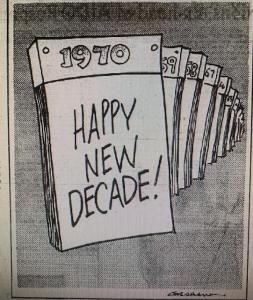
The Gazette and Democrat both ran editorial cartoons (though no longer on the front page) which dealt with the start of a new decade. The former’s merely featured a calendar with “Happy New Decade.”  The latter noted that Communism had been a focus of the 1960s, but that the environment looked to be a focus of the 1970s.

Share this:

  • Share on Facebook (Opens in new window) Facebook
  • Email a link to a friend (Opens in new window) Email
  • Share on X (Opens in new window) X
  • Share on LinkedIn (Opens in new window) LinkedIn
  • Share on Tumblr (Opens in new window) Tumblr
  • More
  • Share on Reddit (Opens in new window) Reddit
Like Loading...
Posted in Civic Engagement, Government, History, LR Look Back, sports | Tagged 15th Amendment, Archie Manning, Arkansas Democrat, Arkansas Democrat-Gazette, Arkansas Gazette, Arkansas Razorbacks, Census, City Hall, Civil War, El Dorado, Jack Dempsey, Jimmy Hoffa, KATV, League of Nations, Little Rock Police Department, Mayflower (ship), Ole Miss, Reconstruction, Richard M. Nixon, Roy Cohn, Spiro Agnew, Sugar Bowl, Supreme Court, Vietnam, Vietnam War, Woodrow Wilson, Worthen Bank Building

New Year’s Day Elections in early Little Rock

Posted on January 1, 2020 by Scott

Matthew Cunningham, elected Little Rock’s first Mayor on January 1, 1832.

One year ago today, Frank Scott, Jr., took the oath of office becoming Little Rock’s 73rd Mayor.  In the early years of Little Rock, his predecessors did not take their oath on this date.  But some of them were elected on New Year’s Day.

In the first few decades of Little Rock, municipal elections usually took place on January 1.  While occasionally they would take place on another day, it was usually when January 1 fell on a Sunday.

On January 1, 1832, Dr. Matthew Cunningham was elected as Little Rock’s first mayor.  He convened the first Town Council meeting at his house later in January.   (More on that meeting in another post later this month.)

By the 1850s and 1860s, elections were still in January but no longer took place on New Year’s Day.   Municipal elections moved to April with the adoption of the 1874 state constitution.  In the late 1940s, they moved to November to be in line with the federal and state general elections.

Share this:

  • Share on Facebook (Opens in new window) Facebook
  • Email a link to a friend (Opens in new window) Email
  • Share on X (Opens in new window) X
  • Share on LinkedIn (Opens in new window) LinkedIn
  • Share on Tumblr (Opens in new window) Tumblr
  • More
  • Share on Reddit (Opens in new window) Reddit
Like Loading...
Posted in Civic Engagement, Government, History, LR Look Back | Tagged City of Little Rock, Dr. Matthew Cunningham, Frank Scott Jr.

19 LR Cultural Touchstones in 2019. Part 6: ACANSA 2019, Rockefeller Trust gift to UA Little Rock, and Mayor Frank Scott, Jr.’s first year

Posted on December 31, 2019 by Scott

As the 2019 look back wraps up, here are items numbered 17, 18 & 19.

17 – A new format for ACANSA.   2019 was the Sixth Annual ACANSA Arts Festival of the South.  This edition has a slightly different format taking place on three successive weekends in September.

The event kicked off on Second Friday Art Night.  The opening event was a double bill of the Arts+Culture Commission’s Open Studios preview inside the CALS Bobby Roberts Library and Ballet Arkansas’ Art with a Twist.  In the latter, the members of the Ballet Arkansas company created artwork by covering themselves in paint and applying the paint to large canvases stretched along walls on buildings in the CALS Library Square campus.

Other highlights of the 2019 ACANSA included: Hot Club of Cowtown, Stewart Fullerton’s Homecoming Queen, Gina Chavez, Bill Bowers: All Over the Map, the first ACANSA produced play production (Tennessee Williams’ A Streetcar Named Desire), American Guitarist & Composer Bill Frisell, Tenors Unlimited, BODYTRAFFIC, Bette Davis Ain’t for Sissies, Tatiana R. Mann and Friends, author & food historian Jessica B. Harris, and the Dallas String Quartet Where Bach Meets Bon Jovi.

The festival ended with an Arkansas Symphony Orchestra collaboration featuring conductor JoAnn Falletta leading the ASO in Ravel’s La Valse, Higdon’s Concerto 4-3 and Rimsky-Korsakov’s colorful musical telling of the Arabian Nights legends, Scheherazade. That evening also included a performance by Time for Three.

18 – Winthrop Rockefeller Charitable Trust gives $2.25 million to UA Little Rock Center for Arkansas History and Culture.  On September 10, UA Little Rock announced that the Winthrop Rockefeller Charitable Trust (WRCT) had gifted $2.25 million to the University of Arkansas at Little Rock Center for Arkansas History and Culture to preserve and educate the public about the history of Arkansas, including the notable contributions of Gov. Winthrop Rockefeller.

The gift will create the Winthrop Rockefeller Archival Fund, a quasi-endowment. It is the sixth-largest cash gift in UA Little Rock’s history. Funds will be used to preserve, house, and catalog historical items of their collections and to support activities related to the Center’s mission.

The Winthrop Rockefeller Charitable Trust donated the Rockefeller Collection to the center in 1980, which was instrumental in establishing UA Little Rock’s archives program.  Plans call for CAHC to increase its archives to include collections of underrepresented groups that will complement its collection of records related to state leaders. The Center will also increase efforts to digitize collections housed in the archive, making this historic information more accessible to the public.

Additionally, the Center will offer more educational opportunities for students by granting awards to conduct research and providing experiential learning opportunities. The gift will allow the center to create educational activities, research initiatives, and events associated with the Rockefeller Collection and other collections housed in the Center.

19 – Little Rock’s new Mayor, Frank Scott, Jr.  January 1, 2019, marked the swearing in of Frank Scott, Jr., as Little Rock’s 73rd Mayor.  Unlike any predecessor, he established a Transition Board to help set goals in a variety of subject areas. One of those areas was Quality of Life.  This should not be a surprise since he is a graduate of Parkview Arts and Science Magnet School.  The arts, humanities, culture and museums throughout the entirety of Little Rock have been prominent in his first-year initiatives.  Additionally, he has:

  • Established a Zoo Task Force has been studying the needs and plans for the future of the Little Rock Zoo. It is reviewing the Zoo’s current business model, developing an action plan for future funding and also examining the Zoo’s current facilities Master Plan developed in 2014 to look for new opportunities in animal habitat design, guest amenity and park design.
  • Created the R-3 Task Force to discuss ways of revitalizing lands that were previously municipal golf courses. A survey of the public received more than 11,000 responses with ideas for repurposing the land.
  • Included arts and cultural entities in discussions of Opportunity Zones as well as recognizing the arts as an important part of education discussions.
  • Created the Public Affairs and Creative Economy Office to coordinate, collaborate, and maximize opportunities with arts, culture, heritage, museums, and creative entities and industries in Little Rock. Plans are underway for Little Rock to participate in a national study looking at the economic impact of the arts.

Share this:

  • Share on Facebook (Opens in new window) Facebook
  • Email a link to a friend (Opens in new window) Email
  • Share on X (Opens in new window) X
  • Share on LinkedIn (Opens in new window) LinkedIn
  • Share on Tumblr (Opens in new window) Tumblr
  • More
  • Share on Reddit (Opens in new window) Reddit
Like Loading...
Posted in Civic Engagement, Dance, Government, History, Museum, Music, Theatre, Visual Art | Tagged ACANSA Arts Festival, Arkansas Symphony Orchestra, Ballet Arkansas, Central Arkansas Library System, City of Little Rock, Frank Scott Jr., JoAnn Falletta, Little Rock Arts + Culture Commission, Little Rock Zoo, Open Studios Little Rock, Tatiana Roitman Mann, UA Little Rock, UA Little Rock Center for Arkansas History and Culture, Winthrop Rockefeller, Winthrop Rockefeller Charitable Trust

Post navigation

← Older posts
Newer posts →

Search the Site

Archives

  • January 2020
  • December 2019
  • November 2019
  • October 2019
  • September 2019
  • August 2019
  • July 2019
  • June 2019
  • May 2019
  • April 2019
  • March 2019
  • February 2019
  • January 2019
  • December 2018
  • November 2018
  • October 2018
  • September 2018
  • August 2018
  • July 2018
  • June 2018
  • May 2018
  • April 2018
  • March 2018
  • February 2018
  • January 2018
  • December 2017
  • November 2017
  • October 2017
  • September 2017
  • August 2017
  • July 2017
  • June 2017
  • May 2017
  • April 2017
  • March 2017
  • February 2017
  • January 2017
  • December 2016
  • November 2016
  • October 2016
  • September 2016
  • August 2016
  • July 2016
  • June 2016
  • May 2016
  • April 2016
  • March 2016
  • February 2016
  • January 2016
  • December 2015
  • November 2015
  • October 2015
  • September 2015
  • August 2015
  • July 2015
  • June 2015
  • May 2015
  • April 2015
  • March 2015
  • February 2015
  • January 2015
  • December 2014
  • November 2014
  • October 2014
  • September 2014
  • August 2014
  • July 2014
  • June 2014
  • May 2014
  • April 2014
  • March 2014
  • February 2014
  • January 2014
  • December 2013
  • November 2013
  • October 2013
  • September 2013
  • August 2013
  • July 2013
  • June 2013
  • May 2013
  • April 2013
  • March 2013
  • February 2013
  • January 2013
  • December 2012
  • November 2012
  • October 2012
  • September 2012
  • August 2012
  • July 2012
  • June 2012
  • May 2012
  • April 2012
  • March 2012
  • February 2012
  • January 2012
  • December 2011
  • November 2011
  • October 2011
Blog at WordPress.com.
Little Rock Culture Vulture
Blog at WordPress.com.
Privacy & Cookies: This site uses cookies. By continuing to use this website, you agree to their use.
To find out more, including how to control cookies, see here: Cookie Policy
  • Subscribe Subscribed
    • Little Rock Culture Vulture
    • Join 668 other subscribers
    • Already have a WordPress.com account? Log in now.
    • Little Rock Culture Vulture
    • Subscribe Subscribed
    • Sign up
    • Log in
    • Report this content
    • View site in Reader
    • Manage subscriptions
    • Collapse this bar
 

Loading Comments...
 

    %d